
compiler engineer for ML hardware
Joined September 2025
- Tweets335
- Following266
- Followers119
- Likes112




hellowww retweeted

Frontier labs making custom chips is not really as hard / as impressive as you might think.
1. They are primarily targeting inference not training. inference is easier
2. They are targeting transformers only. Think large MXU matmul units
3. They are writing all kernels in close to ISA with coding agents RLed for their ISA.
4. They aren’t making high level compilers for codegen
A frontier lab vending a true generic chip like a Nvidia GPU or Google TPU is MUCH harder than spinning up an in house inference program.
Still I think you will see many more inference chip companies as the cost of the software is just the cost of tokens.


hellowww retweeted

It's easy to make inference benchmarks look impressive with random inputs and idealized expert routing. The harder part is making those numbers hold up on real workloads.
Our DeepSeek-V4.1-Flash benchmarks use real input distributions, realistic expert routing, and the same serving configurations validated on @SemiAnalysis_ AgentX.
Fun fact: our results have been online since Oct. 20, even before DeepInfer's release. And we'll deliver even more speedups!
Synthetic benchmarks have their place, but let's be clear about what they actually measure. Check out our blog for the full optimization story and benchmarking methodology!


Scaled out with P/D disaggregation and Wide-EP on a GB300 NVL72 rack, vLLM serves V4.1-Flash on SemiAnalysis AgentX at 954K tokens/s per GPU with 196 tokens/s P90 per user, 7.9× our single-node result.
Our engineering blog covers the work behind it: vllm.ai/blog/2026-10-23-deep…

hellowww retweeted

I'm happy to share that Mojo and MAX are now fully open - for development, extension, and commercial use! This includes the full Mojo programming language, but also the MAX graph compiler, MLRT runtime internals, and hardware abstraction logic.
Get your agents going!👇
hellowww retweeted

Surprisingly good video on a 1 cpu server challenge. Mad respect to the crazy person writing io_uring in assembly!
youtu.be/-BFt49ula08?si=EJAt…


hellowww retweeted

Under the hood everything boils down to a sequence of commands put into a buffer that is sent to the GPU.
With streams, every time you launch, you have to recreate that buffer, which involves both allocation and encoding of information, and then send it to the GPU.
With graphs, we compile the graph first, which does the allocation and encoding of information ahead of time. That compiled information can be reused for multiple launches.
So if you're launching the same work multiple times, then graphs almost always when, because they amortize the compilation overhead.
A long time ago when we were first launching cuda graphs, I did some benchmarks to evaluate the overhead of streams versus graphs for single use. The benchmark evaluated the cost of launching a linear chain of N kernels.
If I recall correctly, both were linear functions, but streams had a y-intercept of zero with a steeper slope (greater cost per additional kernel) while graphs had a non-zero y-intercept (fixed cost) with a shallower slope (lower cost per additional kernel).
At the time (I believe ampere era), the crossover point for single use was about 20 noop kernels in the chain - before that streams would be more efficient, after that graphs would be more efficient.

hellowww retweeted

FPGA CPU News
fpgacpu.org/index.html
This website hasn’t been updated for a long time, but the content that remains still holds some reference value.
Processor and Integrated System Design in FPGAs
fpgacpu.org/papers/xsoc-slid…
Designing a Simple FPGA - Optimized RISC CPU and System on a Chip
fpgacpu.org/papers/soc-gr004…
Building a RISC CPU and System on a Chip in an FPGA
fpgacpu.org/papers/xsoc-seri…
I also resonate with the author’s design philosophy.
for FPGA CPU cores, simple is beautiful. In my experience,
simpler is smaller
smaller is cheaper
smaller is faster
smaller is more power frugal
simpler is easier to test

hellowww retweeted

I spent many hours driving the agent through Discourse threads, slides, source trees, and LinkedIn profiles to generate this AI slop: maskray.me/blog/clangir-and-… ClangIR and the cost of MLIR
I watched the 2023 one, it was really really good. Thanks for sharing it on the internet!

Our Efficient AI course launched in 2022, the same year as ChatGPT, with just 30 students. Then 90, 180, and now 300!
Thanks @Shang_mit for co-teaching! All course materials are freely available at efficientml.ai.

I like this

I started a mini-series on how to use the Universal Sparse Tensor (UST) in nvmath-python. These articles will appear in this show-and-tell section of the nvmath-python forum.
github.com/NVIDIA/nvmath-pyt…
Another interesting thing about register allocation is that, spilling is not that bad, as long as it is not in the hot path, I have seen O3 spills more and get performance improvement instead, because other passes gets more profit and the spills is happening on slow path.

One of the reason why is this happening is that, some aggressive optimizations actually makes it more difficult for register allocator to find live ranges to be colored (i.e. increasing register pressures).

hellowww retweeted

A lot of people have been asking what actually happened during my 1:1 with @JeffDean.
I didn’t expect my original post below to blow up like this, so here’s the full story of what happened:

In 2022, as a Google intern, I sent a random calendar invite to Jeff Dean.
He accepted.
His calendar was accessible even to interns, so I figured I had nothing to lose.
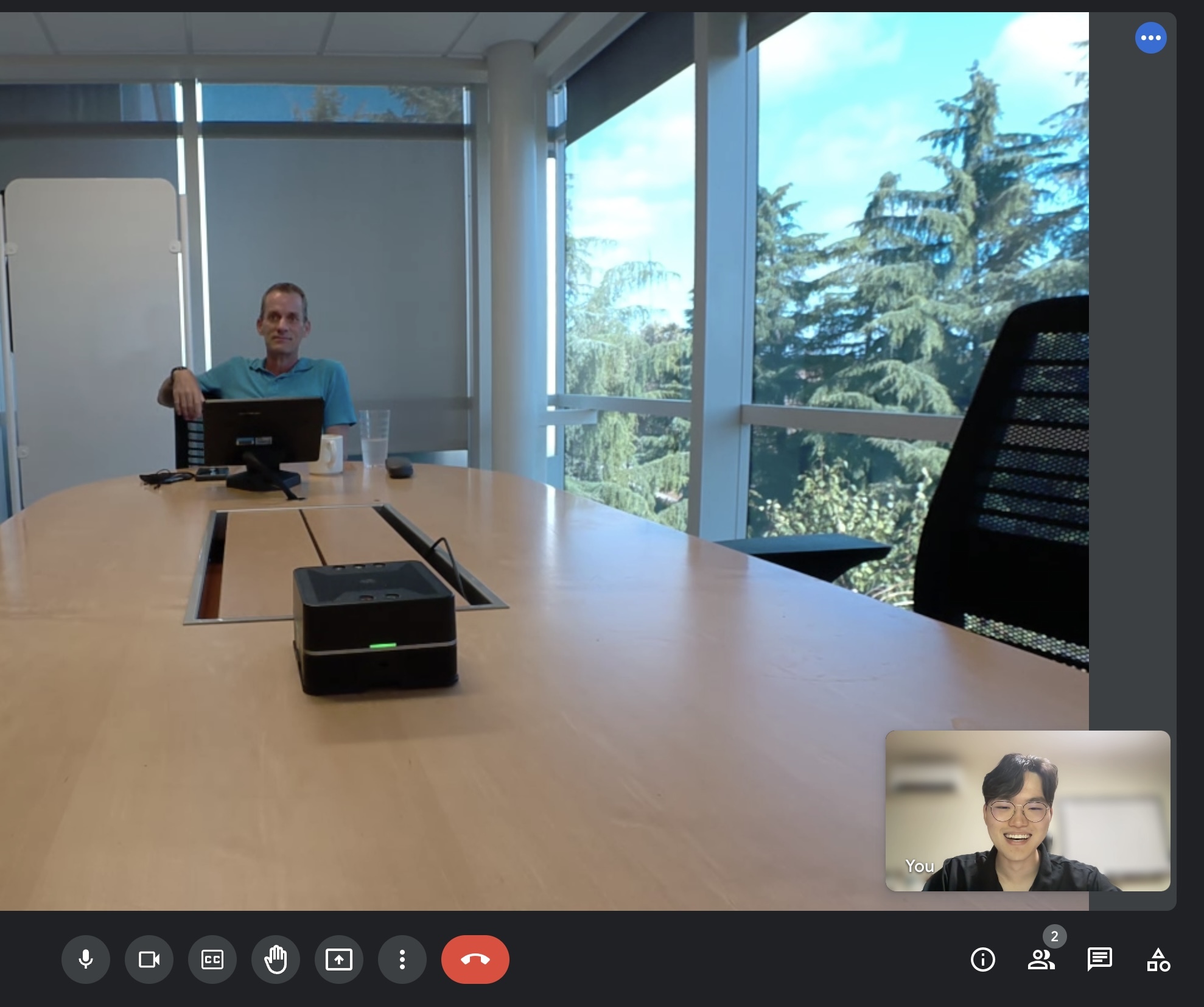
The next day, I sent this photo to my team. Everyone was shocked.
It’s hard to imagine Google without Jeff. He’s been one of my biggest inspirations.
Thank you for everything, Jeff.
in LLVM, does VirtReg means LiveInterval or they use the same term for two different thing ? Just like clang is term used for clang driver and clang frontend ?
If you are talking about live interval/live ranges, why are you using VirtReg as variable name ?
I'm so confused.

Backend is probably the most boring, ugly, and painful part of compilers, but hey, backend is the reason why I love compiler!

hellowww retweeted

How programs get run: ELF binaries (by David Drysdale): lwn.net/Articles/631631

This will increase the compile time by significant amount.
Curious, do people actually like this ?

LLVM Developers Discuss Enabling ClangIR Build By Default
phoronix.com/news/ClangIR-Bu…
