

The Specialist Arm clinics in London and Surrey, UK
London
Joined November 2019
- Tweets345
- Following14
- Followers203
- Likes334






The Arm Doc retweeted

Across 129 NHS trusts, patient recruitment into interventional trials was the strongest research link to lower mortality & better CQC ratings (Jonker & Fisher, Public Health 2018).
Opening trials = safer care. Thank you to all who take part. 🙏
#ClinicalTrials #NHS


The Arm Doc retweeted
It was a great success! Thanks to ORUK and the team.

Day 1 Advanced London shoulder #tendon #transfer masterclass was full of learning, energy, and great conversation. A big thank you to our teaching faculty, sponsors, and delegates for a brilliant start!
Here’s a little look back at day 1 📸
@MoAImam @Stryker_TE @H_Innov8
The Arm Doc retweeted
How to negotiate with your kids. Nice series.

The Gentleman's Father Code: Negotiating with the Children You Are Raising
A Must have book if you want to negotiate with your children.
Tips and tricks!
Link: amazon.co.uk/dp/B0H363ZMND/r…

How to negotiate with your kids. Nice series.
The Gentleman's Father Code: Negotiating with the Children You Are Raising
A Must have book if you want to negotiate with your children.
Tips and tricks!
Link: amazon.co.uk/dp/B0H363ZMND/r…
The Arm Doc retweeted

The Gentleman’s Father Code is a parenting manual by Mario Inmatico that reframes the daily friction of fatherhood as a series of sophisticated negotiations. Link: amazon.com/dp/B0H363ZMND/ref…


The Arm Doc retweeted
Where you read shapes what you remember.
The same chapter read in bed, on a train, and at a kitchen table will leave three slightly different impressions. The brain ties memory to place.
#ReadingLife #Books #Memory #Bookstagram

The Arm Doc retweeted
Every editor has a drawer of books they loved and couldn't save; because the acquisition was driven by taste alone, and the house didn't actually have a path to the reader.
This is one of the questions that separates a house that publishes books from a house that launches them.


The Arm Doc retweeted
Typical pain patterns in radiculopathies
a) C5
b) C6
c) C7
d) C8
e) T1
link.springer.com/article/10…

The Arm Doc retweeted
We don't think books are dying. We think the middle is. The middle shelf. The middle list. The middle voice that gets squeezed out between celebrity memoirs and algorithm fiction.
We're small on purpose. We read every submission.
#MeridianPublishers #IndependentPublishing

The Arm Doc retweeted
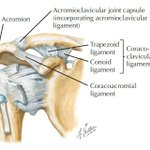
The coracoclavicular bursa is an anatomic bursa located between the coracoid process of the scapula and the clavicle, closely associated with the conoid and trapezoid components of the coracoclavicular ligament. Its function is to reduce friction and facilitate smooth motion between the clavicle and coracoid during shoulder elevation and scapular rotation. Pathology of this bursa, though uncommon, can include inflammation or bursitis, which may contribute to anterior shoulder pain and mimic acromioclavicular or subcoracoid disorders.
Read: wikism.org/Coracoclavicular_…


The Arm Doc retweeted
(a) and (b) The circle of Horii. See text for explanation of stage numbers. LUCL, lateral ulnar collateral ligament; MUCL, medial ulnar collateral ligament; PLRI, posterolateral rotatory instability. (Redrawn from O’Driscoll SW, Jupiter JB, King GJ, et al. The unstable elbow. Instr Course Lect 2001;50:89-102.)

The Arm Doc retweeted
🔹 The AC Joint: Small Structure, Big Impact on Shoulder Function
The acromioclavicular joint is sometimes called the 'forgotten joint' of the shoulder. Clinicians who manage it thoughtfully — understanding both its biomechanical importance and the evidence on when intervention adds value — produce outcomes that remind patients and athletes why it should never be forgotten.
The acromioclavicular joint transmits forces between the upper limb and the axial skeleton during virtually every overhead and loaded activity of daily life. Despite its small size, its disruption in high-energy injury or its progressive arthritic degeneration in older and athletic populations produces symptoms that are functionally significant and, in the right clinical context, highly treatable with excellent outcomes.
The Rockwood classification provides a clinically useful anatomical framework for AC joint injuries. Type I and II injuries — partial disruptions — are managed conservatively with excellent results. Type III injuries — complete disruption of both the AC and coracoclavicular ligaments — sit in genuinely contested territory in the evidence base: multiple prospective studies comparing early operative fixation to non-operative management have not demonstrated consistent superiority for surgery at two-year follow-up. For most patients with Type III injuries, a structured non-operative programme with a clear functional review at three months is the well-evidenced first step.
For Type IV, V, and VI injuries, surgery is appropriate and produces reliable results when performed in a timely fashion by an experienced upper limb surgeon. The principle that guides decision-making is straightforward: the severity of the injury determines the likelihood that spontaneous functional recovery will be adequate for this patient's demands. Matching that assessment to a transparent conversation about what operative and non-operative pathways involve produces well-informed, confident patients whatever path they take.
"The AC joint may be small, but its contribution to shoulder biomechanics and pain is never small. It deserves the same thoughtful clinical assessment as every other structure in the shoulder complex."
💬 How systematically do you assess the AC joint as part of your shoulder examination? Is it the first structure you examine, or is it an afterthought?
—
Professor Mo Imam | MD · PhD · FRCS (Tr&Orth)
#TheArmDoc | MoImam.co.uk
#ACJoint #ShoulderSurgery #SportsSurgery #UpperLimbSurgery #TheArmDoc

