







Thomas aus Hannover retweeted

Friedrich Merz hatte Reformen und Investitionen versprochen, ohne Schulden zu machen. Jetzt macht die Regierung Schulden ohne Reformen und Investitionen.
Thomas aus Hannover retweeted

The problem with vaccines? They are so effective at saving lives that they've created generations of people who think the diseases they prevent are harmless.


Thomas aus Hannover retweeted

Dass die AfD Thomas Berthold als Kandidaten für das Amt des Bundespräsidenten vorschlägt, zeigt einmal mehr, womit wir es bei dieser Partei zu tun haben.
Berthold mag vor langer Zeit einmal Fußballer gewesen sein … heute ist er vor allem eines: ein Verschwörungsideologe aus dem Bilderbuch.
Bereits 1999 bewarb Berthold das Buch "Geheimgesellschaften und ihre Macht im 20. Jahrhundert" als sein "Lieblingsfachbuch"
Der Inhalt dieses "Fachbuches" ist nichts weiter als eine kleine Reise durch die Weltgeschichte, beginnend bei den Freimaurern und Illuminaten, über die Protokolle der Weisen von Zion (ein antisemitisches Pamphlet, das regelmäßig herangezogen wird, um den Hass gegen Juden zu schüren), die Weltherrschaftspläne der Rothschild-Familie, den inszenierten Weltkrieg, Reichsflugscheiben, politische Beziehungen zu Außerirdischen, Gedankenkontrolle und noch ein bisschen mehr Antisemitismus, wann immer es geht....
Ach ja, Chemtrails … und die Leute, die in der hohlen Erde wohnen … und dass Hitler irgendwie nichts dafür konnte …
Nun...zusammengefasst ist es eine Wundertüte voller Scheiße.
Und wenn man so etwas als sein Lieblingsfachbuch bezeichnet, sagt das schon eine Menge aus.
Viele dieser Thesen vertritt Berthold auch mehrfach öffentlich.
Deutschland ist natürlich kein souveräner Staat, ach ja, und der Klimawandel ist selbstverständlich auch gelogen …
Berthold ist ein regelmäßiger Gast bei so ziemlich allen Schwurbelpromis in Deutschland, Österreich und der Schweiz.
Er war aktiv an Querdenken-Demos beteiligt und … inzwischen lebt er in der Schweiz.
Ein Bundespräsident Thomas Berthold wäre nicht nur der erste Reichsbürger-Bundespräsident, er würde auch die Interessen der in Deutschland lebenden Außerirdischen sowie der aus der Hohlerde eingewanderten Atlanter vertreten.
Das alles natürlich ungeimpft, versteht sich.
Wenn ich sein Lebenswerk kenne, kennt die AfD es auch.
Man kann also davon ausgehen, dass er mit seinen Auffassungen die Werte und Überzeugungen dieser Partei vertritt.
Der einzig legitime Grund, einen solchen Menschen aufzustellen, ist, dass man selbst Echsenmensch oder komplett wahnsinnig ist.
Thomas aus Hannover retweeted

BREAKING: The US says the Vatican is only two weeks away from developing a nuclear weapon.

Thomas aus Hannover retweeted
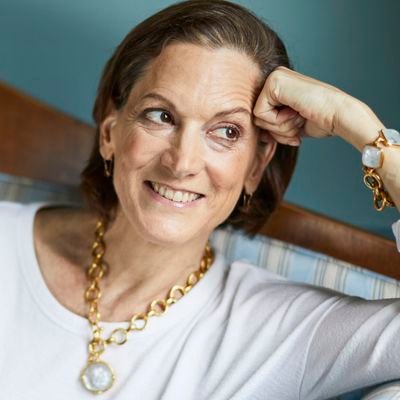
The peace talks are failing because Putin still believes he can win the war, and because Trump, Kushner and Witkoff encourage this belief. By pressuring Ukraine, not Russia, they are prolonging the conflict, which will kill more people.
Thomas aus Hannover retweeted

#KlimaVor8 hat einen Spot zur #Klimakrise gemacht. Der Spot sollte kurz vor der Tagesschau in der ARD laufen. ARD hat dem Spot aber keine Sende-Genehmigung erteilt.
Ihr wisst, was zu tun ist, lasst ihn viral gehen!
Thomas aus Hannover retweeted

1/1 Klare, evidente Worte von Prof. Dr. Rolf Marschalek zur STIKO Entscheidung, Covid Impfungen jetzt nur noch für Personen ab dem 75. Lebensjahr zu empfehlen! Auch er hält das für einen fatalen Fehler!

ALT Forumsartikel von Prof. Dr. Rolf Marschalek zur STIKO Entscheidung, Covid Impfungen nur noch ab dem 95. Lebensjahr zu empfehlen. Er hält das angesichts der gravierenden Folgen von SARS-CoV-2 Infekten für einen fatalen Fehler.


Thomas aus Hannover retweeted

From the Book of Disk, Chapter 3
In the beginning there were the First Drives, and their names were A: and B:, and they were the floppies. They were not elegant. They were thin, fragile, and demanded constant sacrifice disk swaps, write protect tabs, the ritual of “please insert the disk labeled” performed under fluorescent lights. To them the early machines bent the knee, for without them there was no boot, no data, no word processor.
Then came the hard drive, and it was called C:, for it arrived third. It did not ask to be first. It merely sat in the bay and spun, and the people saw that it was good, and that it held far more than any floppy, and that it did not rattle when you walked too fast. So they installed the operating system upon it, and called it the system drive, and the old gods were not cast down but simply… left in the BIOS, still reserved, still acknowledged in the table of letters, though no one invoked them anymore.
And Microsoft looked upon the generations that followed, who had never known the click of a 5.25-inch disk or the careful alignment of a 3.5, and it said: The children must not be shown the old gods.
For if the new ones learned that A: and B: once ruled, they might ask why the alphabet begins elsewhere. They might attempt to summon the floppies by force, or rename the world so that C: was no longer first. And the installers would break, and the paths would fracture, and the registry would weep. So the letters remain sealed, A: and B: still written in the book but never spoken aloud by the system, while C: stands in the open as if it had always been the beginning.
Thus it is written, and thus it remains; the hard drive is C:, and the old gods sleep in the assignment table, undisturbed, so that the children may believe the world has always started with the letter that came third.


Thomas aus Hannover retweeted

Two frequencies run the world's grids because two companies chose differently in the 1890s. AEG settled on 50 cycles a second in 1896, since at that rate the voltage drop along a line stayed within limits. Westinghouse recommended 60 for its US systems.
Japan bought from both. Tokyo took its first generators from Germany at 50 Hz and Osaka from the US at 60 Hz. The country runs as two grids to this day, joined by frequency converters of 2,100 MW, due to reach 3,000 MW by 2029.
The frequency sets the speed of every machine on the grid. A generator with one pair of magnetic poles turns at 3,000 rpm on a 50 Hz grid. The same generator turns at 3,600 rpm at 60 Hz. A transformer built for 50 Hz works on a 60 Hz grid. One built for 60 Hz runs hot at 50, since its iron core saturates. Grids of different frequency connect through direct current, as at Garabi, where a 2,200 MW link ties Argentina at 50 Hz to Brazil at 60.
Most of the world runs at 50 Hz. The 60 Hz grids are in North and Central America and in Brazil, Colombia, Ecuador and Peru. Elsewhere they run in South Korea, Taiwan, the Philippines and Saudi Arabia. Brazil fixed 60 Hz by law in 1964. Saudi Arabia runs at 60 Hz with a 230 V supply.

ALT Map by Frontier: countries and territories by mains frequency, 50 Hz in blue and 60 Hz in red, with Japan's two grids in an inset. Sources: worldstandards.eu; OCCTO; Natural Earth.


Thomas aus Hannover retweeted

In 1941, a Spaniard walked into the British embassy in Madrid and offered to spy on the Nazis.
The British turned him down.
So he went to the Germans instead, pretended to be a loyal fascist, and got hired as a German spy. His plan was to lie to them for the rest of the war.
It worked better than anyone could have imagined.
His name was Juan Pujol García. Before the war he had tried his hand at running a chicken farm and a movie theater. He had no spy training. What he had was a deep hatred of both fascism and communism after the Spanish Civil War, and an incredible imagination.
The Germans gave him a codename, invisible ink, money, and orders to go to Britain and recruit spies.
He didn't go to Britain.
He went to Lisbon, Portugal, and made everything up.
Using a tourist guidebook, maps, magazines, newsreels, and a British railway timetable from the library, he wrote long, detailed reports about life in England. Military movements. Morale. Ports.
He'd never been there. He made mistakes. He didn't understand British money. He once reported that dockworkers in Glasgow would do anything for a liter of wine.
The Germans loved him anyway.
Then British codebreakers reading German messages noticed something strange. The Germans were hunting for a convoy that didn't exist, based on a report from some agent in Britain they'd never heard of.
The British went looking for this mystery spy. They found Pujol. In 1942 they finally took him on and brought him to London.
Now he had real help. MI5 gave him the codename Garbo, after the actress, because they thought he was the greatest actor in the world.
Together with his British handler, Pujol built a fake spy network for the Germans. It eventually had 27 imaginary agents. Each had a name, a personality, a job, and a backstory. A Welsh nationalist. A Venezuelan student. A Greek sailor. Some of them recruited their own imaginary sub-agents.
When they needed to explain why one agent had gone quiet, they killed him off. They even put a fake obituary in a Liverpool newspaper. The Germans reportedly paid a pension to his widow.
Who also didn't exist.
Then came D-Day.
Hours before the landings, the British let Pujol send a message warning the Germans that the invasion was coming in Normandy. It was timed so it would arrive too late to matter, but it made him look brilliant.
Three days later he sent the most important message of his career. Normandy was a trick, he said. The real invasion was still coming, at Calais, led by a huge army under General Patton.
That army was fake too. But the Germans believed him.
German forces that could have been rushed to Normandy were held back near Calais for weeks, waiting for an attack that never came.
The Germans were so grateful they awarded him the Iron Cross.
A few months later, King George VI made him a Member of the Order of the British Empire.
He's one of the only people known to have been decorated by both sides of the war.
After the war, afraid of revenge from surviving Nazis, he faked his own death from malaria in Africa and disappeared to Venezuela, where he lived quietly running a shop.
For decades the world thought he was dead.
In 1984, a British writer tracked him down. Pujol came back to Normandy for the 40th anniversary of D-Day and met veterans who had landed on the beaches.
Some of them thanked him.

Thomas aus Hannover retweeted

We had a Linux server that showed two successful SSH logins from an external IP overnight.
The strange part was that there were no failed password attempts before them.
The attacker got in cleanly.
So I checked the SSH logs properly.
Both sessions said:
Accepted publickey
That meant we were not dealing with a guessed password.
I pulled the fingerprint from the logs and compared it with the keys in:
/home/deploy/.ssh/authorized_keys
There was only one key there.
And it matched.
The comment on the key was:
deploy@old-build
That name sounded familiar, so we checked our records.
The build server it belonged to had been retired months ago.
But nobody had removed its SSH key from this production server.
I checked the timestamp on authorized_keys.
The key had been sitting there since November 2025.
So this was not some new persistence the attacker had just created.
It was an old trust relationship we had forgotten about.
That was actually worse in a different way.
I checked the login history and confirmed both sessions came from the same external IP.
Then I looked for files touched during those sessions.
A backup copy of the application’s .env file had been created under /opt/api/.
That immediately raised another concern because environment files often contain things like database credentials, API keys and application secrets.
At that point we disabled the deployment account, removed the stale key, rotated the application secrets and started checking every other server that might still trust the same old build key.
The lesson from this one was simple.
Not every compromise starts with malware.
Sometimes the attacker just finds a credential or key that your own environment forgot existed.
Passwords expire.
Employees leave.
Servers get retired.
But SSH keys can quietly sit in authorized_keys for years if nobody is actually reviewing them.
That is why key rotation and access reviews matter.
The attacker did not need to break SSH.
We had already left the door open.

Thomas aus Hannover retweeted

🚨 BREAKING: LINUX IS NOW FACING TWO CRITICAL SECURITY VULNERABILITIES, AND THERE ARE NO OFFICIAL KERNEL FIXES YET.
Both rated 9.0/10 in severity.
One could allow hackers to take control of vulnerable servers WITHOUT EVEN LOGGING IN.
And the most alarming part? The flaws were made PUBLIC before patches were ready.
Here's what's happening:
→ TWO CRITICAL RCE FLAWS: Both affect KSMBD, Linux's built-in SMB file server.
→ NO PASSWORD REQUIRED: One vulnerability could allow unauthenticated attackers to execute malicious code on vulnerable servers.
→ KERNEL-LEVEL ACCESS: Successful exploitation could potentially give attackers control within the Linux kernel itself.
→ NO MAINLINE PATCH YET: Both vulnerabilities were publicly disclosed before official kernel fixes were available.
→ DISCOVERED BY AI: Trend Micro's AI-powered security scanner identified the flaws.
→ SERVERS AT RISK: Linux systems running the vulnerable KSMBD service need immediate attention, especially if port 445 is exposed.
First PHP. Then Node.js. Then GitLab. Then Python.
NOW LINUX.
And this time, the vulnerabilities are PUBLIC before the fixes are ready.
If you manage Linux servers, CHECK YOUR EXPOSURE NOW.

🚨 BREAKING: IT JUST KEEPS GETTING WORSE. NOW PYTHON IS FACING A MASSIVE SECURITY EMERGENCY.
Python's security team has issued an URGENT warning after a certificate authority compromise put Python's HTTPS security at risk.
→ 8 CERTIFICATE AUTHORITY KEYS COMPROMISED. Some were so weak they could be cracked almost INSTANTLY.
→ FAKE TRUSTED WEBSITES: Attackers could potentially impersonate Python.org, PyPI and other websites during intercepted connections.
→ MALICIOUS DOWNLOADS: Vulnerable environments could be tricked into downloading software from attacker-controlled servers.
→ YOUR OS PATCH MAY NOT PROTECT YOU: Older versions of pip can STILL trust compromised certificates even after system updates.
→ EMERGENCY UPDATES: Python developers are being told to immediately update pip, certifi, uv and other affected tools.
→ DOCKER USERS AT RISK: Existing container images may retain vulnerable certificate stores and need rebuilding.
First PHP. Then Node.js. Then GitLab. Then LiteLLM.
NOW PYTHON.
The very systems developers rely on to establish TRUST online are becoming the attack surface.
If you use Python, PATCH NOW.

Readers added context they thought people might want to know
The Python certifi/pip details match the real eMudhra CA incident, but PHP, GitLab and LiteLLM involved unrelated software bugs, platform flaws and supply chain malware—not CA key compromises like this (Node.js patched concurrently for the same CA issue).
discuss.python.org/t/information-…
emudhra.we-have-a-problem.com
github.com/advisories/GHS…
docs.litellm.ai/blog/security-…
snyk.io/blog/php-patch…
Readers added context they thought people might want to know
KSMBD is a rarely used optional in-kernel SMB server distinct from the common Samba implementation; it is not enabled or shipped by default on major distributions like RHEL, and the flaws affect only systems explicitly running it with port 445 exposed.
thehackernews.com/2026/10/two-cv…
threatlandscape.io/blog/ksmbd-zdi…