

Making the case for freer people, freer markets, more pluralism, less centralized control.
Joined August 2026
- Tweets1.6K
- Following1.1K
- Followers339
- Likes6.5K



The transformation


President Trump is the most transformative political leader in American History — and he has single-handedly saved America from those who would destroy it.
It has been the privilege of my lifetime to have served on his team from Day One, and I am honored beyond words to serve as his White House Chief of Staff.
I want to thank the incomparable Susie Wiles for her years of devoted service to the President and the Country, and for her friendship.
The mission now is more clear than ever: Fight with all of our soul to support our President and defend this magnificent Republic.
This is a directionally libertarian win from James Talarico.
He's absolutely right that removing outdated regulations that restrict housing construction would help bring down costs and make homeownership more affordable.
I'd love to see him apply that same thinking to healthcare and the rest of the economy.
We could accomplish an enormous amount by removing government-imposed barriers that restrict competition, limit supply, and drive up prices.

Fox host: Give our viewers an idea of what that piece of legislation looks like that brings down costs. How do you define that?
@JamesTalarico: I would love to work with President Trump on suspending the federal gas tax and diesel tax. This is a hidden tax you pay every time you go to the pump, and if we suspend it, we could drop the price of gas by 18 cents a gallon immediately to provide relief. On housing, we have to get rid of all these outdated regulations so we can build millions of new homes so young people can afford to buy their own home.
We could do so much more at the federal level if we're willing to cut this red tape.
Directionally Libertarian retweeted

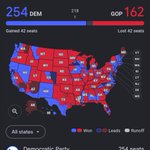
The only thing worse than the Republicans not understanding the repudiation that just occurred is that Democrats actually believe they won based on their policy positions.


Directionally Libertarian retweeted

The biggest lessons tonight are
End the Iran War
End tariffs and scatterbrained economic policy
Stop focusing on things that don't matter like ballrooms and reflecting pools and Trans people using the bathroom and focus on kitchen table issues.
Trump is now a lame duck. The GOP would be wise to track a future as far removed from him as possible.
No one in this administration should be their nominee in 2028.
If Republicans can count on your vote even when you hate them, why would they bother trying to win you over?

Directionally Libertarian retweeted
If any of my followers are Democrats, I imagine you'll have a good night tomorrow, but be prepared for me to be as critical of you as I am of Republicans when they controlled Congress (or the White House)
If you are the party in power, you really own the bad and the good.
I hope you understand I will be an objective critic, but if you think I only disliked Republican controlled government, well, you are mistaken.
Buckle up Donkeys!
Directionally Libertarian retweeted

Here’s the pitch: The reason why housing, food, energy, and more are expensive is because of the regulation of markets, not markets themselves.

Directionally Libertarian retweeted

What about government spending? Surely Rogers is better than Sanders, right? Sadly, no.
Both will want more spending—albeit in different areas—but it’s Rogers who is more likely to support any given omnibus or continuing resolution that grows government.
In any case, votes on spending are generally close—if at all—only in the beginning, performative stages. The final product that becomes law almost always ends up bipartisan, lopsided in the vote tally, and bad for the American people. The circumstances in which someone like Rogers or Sanders will be the deciding vote are exceedingly rare.
I think it’s fair to view El-Sayed as someone who mostly will follow in Sanders’s footsteps on policy and therefore will be far less dangerous in practice than Rogers.
(Again, El-Sayed as a senator will do many things that are bad. The question addressed at length is not whether he’s good but simply whether he’s better on the whole than Rogers.)
The bottom line is that you can’t evaluate a candidate in a vacuum.
You need to consider the context:
Which office will they hold?
How many allies will they have for their worst ideas and what else stands in their way?
What will be their impact on the issues that are most in play?
Now, get out and vote! 😉
I hear liberals talk a lot about electability when discussing the divide in the Democratic Party. Moderates tend to outperform DSA candidates, and that's supposed to be reassuring.
But suppose the most extreme revolutionaries were the most electable. Would that make their policies worth supporting?
Electability isn't the same thing as good governance. If the policies that produce good governance aren't particularly popular right now, the political project of liberals should be to make them popular.
And while moderate Democrats may win more primaries, that doesn't mean the DSA is losing the argument. They're still influencing the direction of the party and moving its political center further left.

Hey gang! TODAY we go LIVE 4pm EST!
Me, Dev, @PSA_Sitch @Friended4Ever @talibotz and @notinline will all be talking about the MIdterms!
Who is gonna win?
Who deserves to?
What does it mean for the future of America?
Come see, link below

Directionally Libertarian retweeted

Amy Acton ad in Ohio: Totally blew up in Vivek's face.
Mary Peltola recruiting Dan Sullivan: Totally blew up in Peltola's face.
Trump gerrymandering everywhere: Totally blowing up in GOPs face.
Maybe the lesson here is instead of doing scumbag political trickery you just try to go win our votes on the merits!
Scary stuff, indeed. The sources are particularly illuminating.

From me @NRO, with a frightening warning to voters:
A List of Things Democrats Might Do If They Retake Power
nationalreview.com/corner/a-…

Easier prediction: Both parties will continue concentrating political and economic power, protecting their well-connected friends, and telling voters they have no choice but to support them because the other party is too dangerous.
This quoted post is unavailable.
Directionally Libertarian retweeted

If you believe free speech is for you but not your political opponents, you're illiberal.
If no contrary evidence could change your beliefs, you're a fundamentalist.
If you believe the state should punish those with contrary views, you're a totalitarian.
If you believe political opponents should be punished with violence or death, you're a terrorist.
Ted Brown would be the next U.S. senator from Texas if the state had ranked-choice voting.

Meet @TedBrownLiberty, the @LPTexas candidate for Senate who is running against @KenPaxtonTX & @jamestalarico--and covering the spread. I talked to Brown for @reason about what limited gov't would actually look like. youtu.be/WkS9o9aIgR8?si=EqEc…

Directionally Libertarian retweeted

Policing operates much like fractional-reserve banking. Just as banks hold only a fraction of deposits in reserve because not everyone withdraws their money simultaneously, police departments maintain only a fraction of the officers needed to protect everyone simultaneously. Both systems rely on not everyone needing it at the same time. Just as banks are vulnerable to runs, police departments can be overwhelmed by simultaneous emergencies.
Thus, strangely enough, the state’s capacity to provide protection depends on sufficiently few people needing it at the same time. Universal protection is promised, but its provision depends on demand never becoming universal.
If ever I needed an image of government failure…

The MAGA libertarians have done enormous damage to the credibility of libertarianism.
They've spent years defending a president who imposes tariffs, expands executive power, empowers federal agents to violate civil liberties, and starts wars he can't finish.
They celebrate shuffling government responsibilities between agencies and abruptly pulling the rug out from under people who depend on existing programs as victories for liberty.
And what will they have to show for it when Democrats return to power? A few regulatory cuts that can be reversed? An even more powerful executive branch for the next president to inherit?
They've sacrificed their political independence and credibility for a president who routinely violates their supposed principles.
Spare me the IQ talk. You can be the smartest person alive and still be spectacularly ineffective at advancing your own goals.
This Post is from a suspended account. Learn more
The interesting thing about "dumb people" is that they don't believe they're dumb. And if you think they're dumb, they probably think you are too.
So who's right? How would you know?

I want a political party that prioritizes fixing the underlying policies that make housing, healthcare, and other necessities so expensive in the first place.
Not one that prioritizes finding new pools of money to expand subsidies for these already unaffordable systems.
What does directionally libertarian healthcare reform actually look like?
It doesn't mean waking up tomorrow and abolishing the government services that millions of people depend on. Any proposal to simply pull the rug out from underneath them deserves to be ignored.
The healthcare reform idea gaining the most political energy right now is Medicare for All — the Democratic Socialist idea to nationalize healthcare financing.
And I think one of the biggest reasons that idea is gaining traction is because most people understandably have very little knowledge of how this system actually works, why it became so expensive, how other countries provide universal coverage, or the problems they continue to have after achieving it.
American healthcare barely resembles a functioning market.
For large parts of American healthcare, we've removed or badly distorted the things that would normally put downward pressure on prices. You often don't know what something costs before you buy it. The person receiving the service is often separated from the full price by an insurer, employer, or government program. Most people don't shop for health insurance because their employer chooses what is available to them, and even if you do buy your own insurance, you generally can't just switch plans whenever you want.
Then we also restrict who can provide different kinds of care, make it difficult to build new healthcare facilities, limit the number of people entering certain professions, and pile regulation on top of new drugs, providers and business models.
The system keeps getting more expensive, people get angrier, and politicians learn that voters will reward simple answers.
The problem with "free healthcare" isn't just that "nothing is really free." It's that without prices, you lose the mechanism that coordinates supply and demand. Prices don't just tell people what something costs. They communicate scarcity. High prices attract investment. They encourage competitors. They tell producers where additional supply is valuable. That's how markets respond to scarcity.
Directionally libertarian healthcare reform should do the following:
Make prices visible before treatment. Let patients directly control more healthcare spending. Let insurance protect against large and unpredictable expenses instead of serving as an intermediary for every routine transaction. Make insurance portable instead of tying it to employment. Remove barriers that prevent doctors, nurses, clinics, telemedicine providers, drug manufacturers and new healthcare models from competing and increasing supply.
And when someone can't afford to participate in that market? Subsidize that patient. Give them purchasing power. Let providers compete for it.
I don't want a healthcare system where poor people simply don't get healthcare because they can't afford it. We can provide universal coverage without making the federal government the payer for everyone.
There are many ways countries provide universal coverage, and even countries with universal systems still struggle with costs, staffing, capacity, waiting times and difficult decisions about rationing scarce medical resources.
Changing who pays the bill doesn't solve scarcity. Doctors still only have so many hours. There are still only so many nurses, hospital beds, specialists, operating rooms and MRI machines. Spreading the cost across taxpayers or making government the purchaser doesn't create more of those things.
Libertarians believe in free markets because they believe markets produce better outcomes for more people over time. But they need a better answer than simply "get the government out of healthcare."
We need to be able to explain why healthcare became so expensive in the first place, which parts of the system are preventing markets from working, and how we get from the system we have to something better without taking healthcare away from millions of people along the way.
And libertarians need a coalition to make this happen. We need a legible libertarian bloc and the political savvy to work with liberals, conservatives and anyone else who wants universal coverage but is skeptical that concentrating even more power over healthcare in Washington is the best way to achieve it.
Preserve the safety net. Rebuild the market underneath it.
