

🌟 Fellow @AAAS 🌟 Fellow @AIMBE 🌟Fellow @RoySocChem 🌟 SM @NAI 🌟 Immunotherapy 🌟 Optogenetics & Chemogenetics🌟Calcium Channels 🌟 Protein Engineering 🌟
Houston, TX
Joined August 2011
- Tweets1.2K
- Following701
- Followers411
- Likes1.4K





🧬🅈🅄🄱🄸🄽🧬 retweeted

What if you could control a cell with just light? 🚦🔬 A new toolkit from @TAMU_IBT researchers makes it possible—opening new doors in cancer and neurodegenerative disease research.
Learn more about this cutting-edge breakthrough: tx.ag/Opto

ALT Illustration of a cell under a microscope, showing its complex internal structure. Includes various molecular processes like protein transport on microtubules. Different segments highlight cellular components, such as mitochondria and organelles, with arrows indicating movement and interaction pathways.
🧬🅈🅄🄱🄸🄽🧬 retweeted
Drs. Hegemann and Nagel of German universities just won the #NobelPrize for discoveries that enabled optogenetics, a technology first used to study the brain. At #TAMUHealth, Dr. Yubin Zhou is applying it to control cancer-fighting CAR T cells with light: tx.ag/NanoOpto

ALT Dr. Yubin Zhou sits at a desk looking at a computer screen displaying colorful scientific datan showing optogenetics in action. Light activates the cells, triggering calcium entry into the cytosol, as indicated by the increase in fluorescence.
Grateful to @CD_AACR and Elie Dolgin for including our work in its Nobel coverage of optogenetics in cancer. Much remains to be done before these approaches can help patients. Cancer Discovery | Nobel Prize Spotlights Optogenetics’ Reach into Cancer aacrjournals.org/cancerdisco…

🧬🅈🅄🄱🄸🄽🧬 retweeted

BREAKING NEWS
The 2026 #NobelPrize in Physiology or Medicine has been awarded to Karl Deisseroth, Peter Hegemann and Georg Nagel “for their discoveries concerning light-gated ion channels and optogenetics.”

New study opens doors for precise control of cells using light vitalrecord.tamu.edu/new-stu…


🧬🅈🅄🄱🄸🄽🧬 retweeted

Texas A&M researchers used AI-guided protein design to develop a caffeine-operated system that can reversibly control protein interactions and potentially improve the safety of cell and gene-based therapies.
thebatt.com/featured/texas-a…
Sharing latest @NatureComms work from @Yun_Nancy_Huang @ZhouLaboratory introducing VIPbodies—viral protease-operated nanobodies that repurpose antiviral drugs as molecular switches to control protein binding, gene expression, Boolean logic, and even cell fate. 🧬💊
doi.org/10.1038/s41467-026-7…
🤖 Made with AI


🧬🅈🅄🄱🄸🄽🧬 retweeted

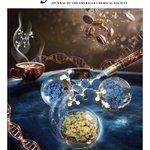
On the cover of this week's issue: "AI-Guided De Novo Design of a Caffeine-Induced Protein Dissociation System"
Read it here 🔗 go.acs.org/etf

🧬🅈🅄🄱🄸🄽🧬 retweeted

Protein design is starting to look surprisingly like mechanical engineering.
Imagine opening a CAD program, drawing the shape you want at the nanometre scale, a curve, a twist, a helix, and asking a generative model to build a protein that physically takes that form.
A new bioRxiv preprint from UCSF moves surprisingly close to that idea.
The researchers combined CAD blueprints with diffusion-based protein design so that global geometry itself becomes a programmable variable. Instead of specifying only sequence or local structure, they can control properties such as curvature, twist, handedness and the overall 3D envelope of a protein.
They designed single-chain proteins, unusual twisted architectures and large superhelical assemblies, then actually built them. 31 of 59 designs were structurally validated by X-ray crystallography or electron microscopy.
But the experiment that caught my attention comes at the end.
They designed helical protein propellers with geometries optimized for fluid flow and attached them to the rotary F1-ATPase molecular motor. Feed the motor ATP, and the resulting construct becomes a prototype molecular swimmer.
There is something conceptually important here. Protein design has often worked from the microscopic level upward:
sequence → local interactions → fold → function
This work introduces another direction:
desired physical form → molecular architecture → sequence
We should not jump from this to programmable nanomachines, the swimmer is still an early prototype, and successful shape generation does not guarantee useful biological function.
But biology has always exploited shape: curvature bends membranes, chirality controls assembly, and geometry determines motion.
We may now be gaining the ability to specify some of that geometry before the protein even exists.
biorxiv.org/content/10.64898…


🧬🅈🅄🄱🄸🄽🧬 retweeted

From Caffeine to Aspirin: Everyday Molecules as Triggers for Genetically Encoded Proximity Systems #machinelearning #compchem chemistry-europe.onlinelibra…

Single-component optogenetic toolkit from @ZhouLaboratory @Yun_Nancy_Huang enables #optogenetic control of #microtubules with spatiotemporal precision, opening new possibilities for cell engineering, cancer, and neurodegenerative research.
cell.com/cell-reports-method…

🧬🅈🅄🄱🄸🄽🧬 retweeted

A single-component optogenetic toolkit for reversible visualization and programmable control of microtubule dynamics dlvr.it/TTd9yQ

Our latest JACS Cover | A caffeine-powered molecular “pool shot”: caffeine triggers CODS to release an AI-designed protein binder, enabling programmable control of gene expression, cell fate, and immune-cell activity. pubs.acs.org/doi/10.1021/jac…

Congrats to @Yun_Nancy_Huang being elected as a Fellow of @RoySocChem (FRSC), a distinguished international honor recognizing exceptional leadership and impact in the chemical sciences from one of the world’s oldest and influential scientific societies dating back to 1841.
