


La subida salarial solo beneficia al gobierno.
Los negocios se mueven por márgenes de beneficio. P. Ej. un supermercado tiene 1,5-3,5%. Si sube el coste del trabajador, ese aumento se repercute en el precio para mantener el beneficio.
2
8
Luego, ni el empresario, ni el trabajador, ni resto de ciudadanos se benefician de la subida salarial, ya que incluso todos ellos se verán afectados por subidas de precios. Por eso la subida salarial nunca ha sido la solución.
1


Rrola retweeted

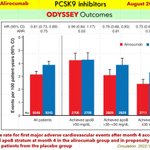
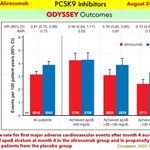
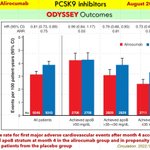
Here are my initial thoughts on Lp(a)HORIZON. This is targeted to the people to whom it matters the most, my wonderful PATIENTS over the years in my Lp(a) Clinic. I have done my best to keep you healthy, and for the most part it worked. And I think this is reflected in the results of the Lp(a)HORIZON trial. This is also for those with elevated Lp(a) that been carrying significant anxiety and concern over their elevated levels.
1- Big picture: I do not see Lp(a)HORIZON as a failure, like many Monday morning quarterbacks out there who claim to have known the results all along after all. I see it as a MAJOR SUCCESS for our patients.
2- Why? Because we learned that there may be an alternative to reduce Lp(a) mediated risk: which is to: a) keep LDL-C below 65 or lower; b) keep blood pressure at 120 or lower; c) control all other risk factors as best as possible; d) take your medicines that have proven efficacy regularly.
3- I have called Lp(a)HORIZON testing the “Lp(a) Hypothesis”. Which means we did not know if lowering Lp(a) would benefit patients. If we knew Novartis would not have spent >1 billion dollars to do the trial and the FDA would have approved the drug simply on Lp(a) lowering.
4- Why did we not see a benefit in specifically lowering Lp(a) in Lp(a)HORIZON? I think we need to go back to “first principles” in how Lp(a) causes atherothrombosis. It is a minor contributor to atherosclerosis. It is a major contributor to inflammation, via OxPL. It is also anti-fibrinolytic- NOT pro-thrombotic. That means it contributes to vulnerable plaques but not to “plaque burden”. And it contributes to a blood clots enlarging and occluding blood vessels if clots are already made, but not in making blood clots per se.
5- So if one is intensively treated to remove the nidus for vulnerable plaques and clot formation, like the patients in HORIZON (and in the ongoing trials), then Lp(a) may become quiescent.
6- In my Lp(a) Clinic, this is my summary of how I treat my patients: 75% on statin, 50% of ezetimibe and 50% (!!) on PCSK9i, along with judicious use of aspirin in primary prevention and universal use in secondary prevention. This double/triple/quadruple combo is highly effective. If I see no coronary calcium or evidence of atherosclerosis, I am not aggressive with therapy if otherwise not indicated for another reason.
7- That being said, 1 out of 8 people still had an event in Lp(a) HORIZON. So, we need to figure out why beyond classical lipids and blood pressure. I am already thinking 10 yrs ahead and will have new concepts for this issue in near future.
8- I do not think the Lp(a)HORIZON results apply to Aortic Stenosis, as this is not affected by LDL-C or for the most part aspirin, but is more @OxPL_apoB driven in people with high Lp(a).
I think we owe a huge debt of gratitude for the Lp(a)HORIZON trial, to @novartis and to @ionispharma for leading the Lp(a) field.
And to circle back to people with elevated Lp(a): Lp(a)HORIZON has now armed us with actionable (and inexpensive) knowledge to help people with elevated Lp(a). Take a big breath and sigh of relief, Lp(a) risk can be managed. Treat it like you do other risk factors and your prognosis will be good, like many of my Lp(a) Clinic patients. We do need to do more work to figure out, among those with elevated Lp(a), who are highest risk, and target those in future studies,
I will provide more scientific comments at a later time and will be publishing my thoughts in a journal in the future.
With all that said, we still don't know the physiological function of Lp(a), if any, and why >99.99% have some circulating Lp(a) and why 1 in 5 have very high levels. Knowing this may give us the ultimate answer on Lp(a) and it role not only in CV disease but also in life and longevity. Along with my collaborators, we will have something on this also in near future.
Thank you all for following Lp(a)'s journey in these pages. The story is actually in the middle not at the end...a few more chapters are in the works.
Rrola retweeted

Longevity Grok, a.k.a. your personal longevity superintelligence (PLSI), is an open-source multi-agent workhorse designed to keep you alive & healthy for as long as possible. A collaborative effort from @InSilicoMeds & the Sinclair Lab @harvardmed. Visit longevitygrok.si


Rrola retweeted
Proud to announce the First-in-Human use of our peptide SenoMune-0257 which reverses aging and fights cancer.
prnewswire.com/news-releases…

Rrola retweeted

En Hyderabad, India, acaba de abrir una fábrica que hace vacunas contra el cáncer una por una. Cada una, diseñada para el tumor de un solo paciente.
Se llama RNA Foundry y es de PopVax, la biotech que fundó Soham Sankaran en 2021. Todo empieza con la secuenciación del tumor. Un sistema de IA busca los neoantígenos, las mutaciones que solo tienen las células cancerosas, y diseña un ARN mensajero que enseña al sistema inmune a reconocerlas. Después lo fabrican, lo encapsulan en nanopartículas de lípidos que aguantan en una nevera normal, lo envasan y lo controlan. Tarda entre 8 y 10 semanas, y la mayoría de los proyectos ronda los 300.000 dólares. Se comprometen a fabricar más de 100 en los próximos 12 meses, y cualquier paciente o médico puede escribirles directamente.
Por ahora son tratamientos experimentales y cada uso necesita la autorización del regulador. Aun así, el salto es enorme. Hasta hace muy poco, conseguir algo así fuera de un ensayo clínico era casi imposible.
Lo miro con especial cariño porque viví algo parecido en Overture. Con DaVitri automatizamos la vitrificación de óvulos y embriones, un paso que siempre había dependido de las manos de un embriólogo. Ahí aprendí que la medicina llega a más gente cuando un proceso artesanal se vuelve repetible. La IA está haciendo eso con el diseño, y Soham y su equipo con la fabricación.
Hoy cuesta 300.000 dólares. Secuenciar un genoma también costaba una fortuna, y mira dónde está ahora.



Rrola retweeted
La vivienda en China ha caído a sus precios más bajos en los últimos 20 años.
Colapso brutal.

Rrola retweeted

🇪🇺😳Te voy a dar un dato oficial de Eurostat que quizás te sorprenda y que tiene muchísimas implicaciones.
🇪🇸¿Sabías que el 65% del incremento de la población en Europa en 2025 corresponde a un único país: España?; y todo ese crecimiento de debe a la inmigración.👇

Rrola retweeted

Cazan a una funcionaria comprando en su horario laboral: "No me hagas esto, por favor"
🎯 #EnElPuntoDeMira en @cuatro y @MedInfinityES🔴 dozz.es/t7bwk
Rrola retweeted
GLP1s looking more and more like longevity drugs

New paper @Nature: Semaglutide recapitulates many of the benefits of caloric restriction in female mice & extends lifespan by almost 100 days. Males not yet tested for lifespan
Below: Red traces = mouse movement

Rrola retweeted
El contribuyente español va a pagar 60.000 millones de euros solo por los intereses de una deuda que ya existe. Dinero que no construye una carretera, no atiende a un paciente y no mejora un colegio. Sirve para pagar el coste de haber gastado antes de recaudar. Funcas calcula que esa carga crecerá con fuerza.
La causa es muy simple. Cuando suben los tipos, pedir dinero prestado cuesta más. Y cuando vence deuda emitida en años de tipos bajos, el Estado tiene que renovarla a un precio mucho mayor. Si además mantiene déficit, sigue añadiendo deuda nueva. Las turbulencias internacionales encarecen todavía más esa renovación.
El Gobierno de Sánchez no puede seguir tratando el déficit como una cifra de una hoja de cálculo. Cada presupuesto con más gasto sin respaldo deja una cuenta pendiente para quien trabaja, ahorra y paga impuestos en España.
La deuda pública permite gastar hoy y obliga a otros españoles a pagar mañana. Los intereses ya están llegando.
Rrola retweeted

Coinbase CEO Brian Armstrong says donating to charity is net negative
"The common view is that philanthropy is this noble cause, and Bill Gates is like 'I'm going to go rehabilitate my image and do philanthropy.'"
"A lot of charities and philanthropies are actually net negative for the world and they get captured. It's remarkably hard to find a foundation that has not gotten captured by ideology.”
“By trying to do something good, like criminal justice reform, it turns out they just increased crime. I have a donor advised fund and I put money toward things helping civilization advance, but I don't think at this moment I would ever create a foundation."
"If you look at the Ford Foundation, I think Henry Ford would be turning over in his grave if he knew what they were up to.”
“I have a DAF, a donor advised fund, and I just try to put money toward things that I think are helping civilization advance. But I don't think at this moment I would ever create a foundation."
Rrola retweeted

China's pyramid become increasingly shaped like a funeral urn.
Also nuts that you can still very clearly see the impact of the Great Leap Forward!

Las cotizaciones que no son jubilaciones e incapacidad, representan un ~10% del coste laboral. Si te dieran a elegir entre cobrar ese 10% del coste laboral o tener derecho a paro, fogasa, formación, que elegirías?
0%Prefiero cobrar ese 10%
0%Prefiero cotizar
0 votes • Final results 2
84
Rrola retweeted
In preparation for WWIII I have been studying how to preserve artificial intelligence in a world without the electrical grid and without internet, and this is what I found. It’s also good in long blackout situations like what happened in Spain and Portugal last year.
We have just entered the first period in history when this is possible. Open weight models like gpt oss, Qwen, Gemma and DeepSeek run on consumer machines, and the best of them approach the reasoning of leading cloud services. All of English Wikipedia with images fits in 115 GB. Maps of entire continents, emergency medicine manuals, scientific archives and millions of books fit on SSDs you can order any Tuesday. The extraordinary fact is that beyond saving the files, you can now preserve a machine able to explain them, reason across them and teach from them. The intelligence of civilization, which for all of history lived in libraries that burned, now fits in a backpack.
For about $5,000 you get indefinite offline access to a powerful local reasoning assistant, a superpower in a world gone dark. A mini PC with an AMD Ryzen AI Max+ 395 and 128 GB of unified memory, between $2,000 and $4,000 depending on vendor, runs gpt oss 120b, a model that knows medicine, engineering, agriculture and law on a 120 watt processor. Add two small backup computers running 12B models, three 4 TB SSDs with identical copies of Wikipedia, WikiMed, OpenStreetMap and Project Gutenberg, 800 watts of solar panels with a 3 kWh LiFePO4 battery sized for a few hours of AI per day, and six Meshtastic LoRa nodes sending encrypted text some 20 km with line of sight on license exempt spectrum.
For $50,000 your shelter becomes an institution. Two 128 GB machines run DeepSeek V4 Flash at aggressive quantization, near 30 tokens per second in community benchmarks, with a third machine plus spare radios, inverters and charge controllers sealed in a Faraday cage against electromagnetic pulse. A 40 TB archive holds all of arXiv plus curated libraries of medicine, agronomy and engineering. A 10 kW solar array with 30 kWh of LiFePO4 batteries, a chemistry good for several thousand charge cycles, keeps everything alive for years. A licensed HF radio reaches other continents off the ionosphere, and twenty solar Meshtastic repeaters cover a district.
Survivors then link their nodes in three layers: LoRa mesh for short encrypted text, point to point antennas moving real data 30 to 50 km between shelters so libraries stay synchronized, and HF radio across oceans. There is also layer zero: a rider carrying two SSDs in a saddlebag moves more data than the entire emergency radio network.
This is the first generation that can put the knowledge and much of the intelligence of our species in a box that runs on sunlight, for the price of a used car. War can destroy the networks, the cities and the servers, but it can no longer destroy the library, because the library fits in a backpack.