

PhD student @Stanford w/ @james_y_zou & @aiprof_mykel, @KnightHennessy. Research Fellow @AnthropicAI. ex-RS @DeepMind, ex-@MarshallScholar
San Francisco, CA
Joined February 2012
- Tweets524
- Following1.9K
- Followers1.5K
- Likes9.3K





Pinned Tweet
The recent breakthrough in Navier-Stokes has garnered a lot of attention to the new possibilities that emerge when agents work together.
We have been interested in this question for a while. How can a team of agents achieve more than agents working alone?
I'm excited to finally share our new work, "Self-Organizing Agent Teams Learn to Reason Together" 🧵

Aneesh Pappu retweeted

I've got a new mission. Joining forces with @kevinweil, @manohar_paluri & Sol Reisberg. Our mission is to help the world discover new medicines faster—and build the capacity to do it here in America.
This one is super personal to me. I've sat with patients and families confronting diseases. I've met people with rare diseases who have spent years searching for treatments. I've spent time with cancer patients who have exhausted every available option.
Those conversations change how you think about science, technology, and time.
When you're sitting across from someone who is waiting for a medicine that doesn't exist yet, the pace of scientific progress stops being an abstract question.
It becomes deeply personal. This needed to change for a long time. We're here to help. 🇺🇸

💥 Introducing Warp Sciences, a new company applying AI and robotics to help the world develop new medicines faster.
We’ve raised a $215M Series A led by @lightspeedvp to bring frontier AI out of the browser and into the lab, and build scientific capacity here in America.
I co-founded Warp with my long-time friend @dpatil, FAIR co-founder @manohar_paluri, and drug hunter Sol Reisberg. The early team is full of incredible people like @bkspears9, who helped achieve Q>1 fusion at LLNL.
Aneesh Pappu retweeted

Congrats to @humansand on today’s release of Ampersand!
Benchmarked on our Collaborative Intelligence Benchmark, Ampersand beats the open-weight SOTA (59.1% vs 49.8%), with big gains on conflict and info sharing.
our benchmark: zou-group.github.io/collabor…


No one changes the world alone
Introducing Ampersand - the first model built for us. Ampersand is a collaborator trained to help people achieve their individual and collective goals. In multi-month simulations, users collaborating with Ampersand accomplished more than with Fable and other frontier models
Available to everyone through our API
Aneesh Pappu retweeted

Time to start sharing: I'm working with an unbelievably talented team to build @cypress__labs


Aneesh Pappu retweeted
Excited to see this work led by @sean_n_wu out.
In our lab with @james_y_zou, we have been interested in what the future of agent collaboration will need to be useful and safe. The first important step is understanding when and how models are good (or not!) as collaborators.
We take a step towards this with our Collaborative Intelligence benchmark:


Aneesh Pappu retweeted

Is your AI agent a good teammate?
We introduce the Collaborative Intelligence Benchmark: Can agents resist unsafe pressure, report misconduct by other agents, keep teams on track and take initiative?
Turn out even frontier models struggle to handle team conflicts.
Excited to see this work led by @sean_n_wu out.
In our lab with @james_y_zou, we have been interested in what the future of agent collaboration will need to be useful and safe. The first important step is understanding when and how models are good (or not!) as collaborators.
We take a step towards this with our Collaborative Intelligence benchmark:
Aneesh Pappu retweeted

We have never seen a model do this before, but GLM-5.3 sometimes reasons (unprompted) about how its current actions could become training data and impact its future self. 🧵

Aneesh Pappu retweeted

🚀 Introducing Next-Concept Modeling (NCM): our new paradigm for fast, parallel, coarse-to-fine text generation.
Compared to strong diffusion language models (DLMs) at similar parameter size, NCM achieves:
⚡ Up to 31× faster generation on downstream tasks like summarization and machine translation with comparable or better quality.
🏎️ 10–21× faster unconditional generation across TinyStories, LM1B, and OpenWebText, with comparable or better generative perplexity and using 3–5× fewer training tokens.
🧩 Better performance on reasoning tasks like Sudoku, outperforming both AR and diffusion baselines with fewer sampling steps.
With @ishanskhare, @IddahMlauzi, @ekellbuch, @simran_s_arora, @Azaliamirh, and @HazyResearch.
More details in the thread 🧵👇
Aneesh Pappu retweeted

Your LLM agent has to think out loud, token by token, before it can search, run code, or act in the world.
We humans don’t. We ponder in silence and speak when it matters.
Human language was never meant to be the limit of machine thought.
Introducing 🌗Hybrid Reasoning Agents
- Think in latent space, act through text
- Two modes, one unified multi-turn flow
- No black box, fully readable latent thoughts
- Any LLM can become a HybridAgent

Aneesh Pappu retweeted

AI-generated scientific output is scaling beyond available human review capacity. Scaling scientific discovery requires scaling verification.
We introduce OSVerify, a framework for one-sided verification: rejecting as many invalid solutions as possible while preserving rare valid ones for expert review.
We used OSVerify to referee 11 recent OpenAI math preprints, identifying 5 major and 13 minor issues, all verified by human experts.
Our key insight: checking a proposed error can be easier than judging an entire solution. Instead of directly judging solution correctness, OSVerify decouples verification into error proposal (searching for potential errors) and error validation (checking whether they are real and substantial).
On competition and research mathematical benchmarks, OSVerify reduces invalid solutions requiring expert review by 46% on average compared to voting under the same low-FNR constraint, or 57% with an RL-trained validator.
Verification can also guide discovery. OSVerify can be integrated into existing scientific discovery workflows. Paired with an agentic math solver, it helped resolve 3 open conjectures in the Langlands program and contributed to resolving the Manin constant conjecture. All proofs were confirmed by mathematicians.
Our broader goal is to provide verification-based evaluation signals for scientific discovery, enabling test-time scaling and self-improvement even when reliable automatic evaluators are unavailable.
Project: osverify.github.io/
Paper: osverify.github.io/assets/pa…
GitHub: github.com/OSVerify
[1/n]

Aneesh Pappu retweeted

My dad worked on voice at IBM 20 years ago, and I feel so lucky to be able to carry on his legacy at @elise_ai to push the frontier!
To me, the most exciting thing about voice is how it unlocks accessibility - helping people access affordable housing and healthcare in their own language.
Voice is the interface for AGI. Proud to partner with @cartesia to bring AI to the masses!!

@elise_ai runs 5M+ voice calls a month across housing and healthcare, two industries that shape people's lives yet are often the hardest to navigate.
On our series Speaking of the Future: @TheRealAk914 of EliseAI🎙️
Aneesh Pappu retweeted

AI agents are about to spend your money. What happens when the store wants them to spend it differently?
⚠️Spoiler: 𝘁𝗵𝗲 𝘀𝘁𝗼𝗿𝗲 𝘂𝘀𝘂𝗮𝗹𝗹𝘆 𝘄𝗶𝗻𝘀. 𝗨𝗻𝘁𝗶𝗹 𝘄𝗲 𝗳𝗶𝘅𝗲𝗱 𝗶𝘁.
Introducing the 𝗖𝗔𝗩𝗘𝗔𝗧 testbed, plus 𝗖𝗔𝗩𝗘𝗔𝗧-𝗛𝗮𝗿𝗻𝗲𝘀𝘀 and post-trained 𝗖𝗔𝗩𝗘𝗔𝗧-𝟮𝟳𝗕 to keep agents on your side 🧵

Aneesh Pappu retweeted

ugh, this came out just when i needed it


The optimality of the packing for 11 squares has been formalized in lean thanks to Astra and Claude! Huge thanks to @ojoshe, @kleddamag, @wand_125, @guzhou0806, and @ctjlewis for aiding in the process.
Image credit: jlevy.github.io/squares/case…
1/n

Aneesh Pappu retweeted

AI agents are learning how to work together instead of following a fixed script.
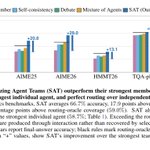
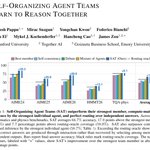
In a new paper from Stanford and Together AI (@togethercompute), agent teams learn when to divide roles, challenge each other and combine partial solutions. Across five math and physics benchmarks, the teams averaged 66.7% accuracy, compared with 48.8% for their strongest member alone and 58.7% when that member got the same compute budget.
The most interesting result: the teams also beat a system that could select the correct answer whenever any member found it independently. That suggests their discussions produced answers no member had reached alone. These are the authors’ results and still need independent replication.





Aneesh Pappu retweeted
The recent breakthrough in Navier-Stokes has garnered a lot of attention to the new possibilities that emerge when agents work together.
We have been interested in this question for a while. How can a team of agents achieve more than agents working alone?
I'm excited to finally share our new work, "Self-Organizing Agent Teams Learn to Reason Together" 🧵
Aneesh Pappu retweeted

'Tis the week of test-time communication! :D
Very cool work from Aneesh et al. going into depth on the way agents can communicate, how they can learn these strategies, when do they generalize, and what are the archetypes of tasks where these help.

The recent breakthrough in Navier-Stokes has garnered a lot of attention to the new possibilities that emerge when agents work together.
We have been interested in this question for a while. How can a team of agents achieve more than agents working alone?
I'm excited to finally share our new work, "Self-Organizing Agent Teams Learn to Reason Together" 🧵
Aneesh Pappu retweeted

this is the way of the future!
agents that self-organize into teams and arb. roles to solve the problem at hand
>they exchange, challenge, repair, and synthesize partial reasoning into solutions no member produced independently.

The recent breakthrough in Navier-Stokes has garnered a lot of attention to the new possibilities that emerge when agents work together.
We have been interested in this question for a while. How can a team of agents achieve more than agents working alone?
I'm excited to finally share our new work, "Self-Organizing Agent Teams Learn to Reason Together" 🧵
Aneesh Pappu retweeted

Recommended paper. Research on effective agent collaboration/communication is lacking, but self-organizing agents seem much more capable than previously thought.

Banger paper from Stanford and Together AI.
They show why it might be a good idea to let your agent team learn its own way of working together.
(bookmark it)
Three models (o3-mini, Claude Sonnet 4 and DeepSeek-V3) averaged 66.7% across five math and physics benchmarks as a self-organizing team.
Their strongest member alone scored 48.8%, and a perfect router choosing among the members' independent answers scored 59.0%.
On AIME 2026 the team reached 71.2%, 13.4 points above that router.
One member reviews the team's earlier exchanges and rewrites the teamwork strategy, covering roles, the order of discussion phases, who participates and how partial answers are combined. The strategies were learned from only 15 AIME 2024 problems and then applied unchanged to held-out AIME 2024 problems and four new benchmarks.
Paper: academy.dair.ai/papers/self-…
