
Logical Intelligence | Prev: founding team / VP of AI at Curai Health, senior researcher at Facebook AI Research and Microsoft Research; U of Toronto ML alumni
Joined May 2010
- Tweets262
- Following590
- Followers1K
- Likes711
Anitha Kannan retweeted

Brute force computation is not enough for intelligence. Clever new methods are needed. The science of AI is far from finished. IMHO
Anitha Kannan retweeted

I know many PhD students are questioning what their paths mean as AI accelerates scientific discovery. That anxiety deserves to be taken seriously.
I wrote some reflections in a recent blog post. My students found them helpful, so I’m sharing them more widely.
I hope it offers a little light as we navigate this strange time. Please share it with someone who might need it.
pages.cs.wisc.edu/~sharonli/…

Anitha Kannan retweeted

Hi all, I have a new result I'm excited to share. It turns out that *all existing implementations* of softmax and cross-entropy (that's JAX, PyTorch, textbooks, etc) have a subtle bug --- two bugs, actually. A simple rewrite fixes both, and eliminates "slingshots" when grokking:
Anitha Kannan retweeted

Penguin has moved up the publication date of my new book with Patchen Barss called "Smarter Than Us". The book explains how AI works for a non-technical reader and then talks about the myriad risks and what to do about them.

Anitha Kannan retweeted

New paper from the team at Sakana AI:
Recursive Self-Improvement through Multi-Agent Self-Supervision (MASS)
How do we keep improving AI when the tasks become too complex for humans to reliably evaluate?
For open-ended research, we eventually hit a "supervision bottleneck." If we use the model itself as the solver, optimizer, and evaluator, it gets trapped in a homogeneous loop, reinforcing its own blind spots rather than correcting them.
To break this loop, we drew inspiration from Marvin Minsky’s Society of Mind. What if you prompt a single model to organize copies of itself into a structured team, then distill what the team learned back into the base model?
MASS alternates between two loops:
1/ Workflow Optimization: the model iteratively evolves its own multi-agent workflows, figuring out how subagents should communicate and route information to each other.
2/ Workflow Internalization: fine-tune the shared model on the successful multi-agent trajectories so the coordination behavior gets baked into the weights.
After two cycles with a 27B open-weights model, performance improved 1.2-1.6x per output token on tough research benchmarks (MLR-Bench, ScienceAgentBench, DSBench).
Multi-agent traces were also much better training data than single-agent ones. The model learns faster from jointly learning high-level orchestration and bounded subagent execution. The results showing that the model can bootstrap its own coordination skills by organizing copies of itself into teams feels promising as a mechanism towards self-improvement.
Blog: pub.sakana.ai/mass/
Paper: arxiv.org/abs/2610.12176
Incredible work by Hyunin Lee, Jinglue Xu, Jeffrey Seely, Yujin Tang, and our collaborators from UC Berkeley (Somayeh Sojoudi, Matei Zaharia, Donghyun Lee)!


Introducing Multi-Agent Self-Supervision (MASS): Recursive self-improvement through collective intelligence
Blog: pub.sakana.ai/mass/
As AI systems tackle increasingly open-ended research problems, human experts may struggle to assess results and guide further progress. The model itself may be the best available optimizer and evaluator. The challenge is obtaining useful self-supervision within that homogeneous loop, where a model risks reinforcing its own blind spots rather than correcting them.
We ask whether a model can learn from the collective intelligence of its own team.
We introduce Multi-Agent Self-Supervision (MASS). One shared model solves tasks through a team of virtual subagents, searches for better multi-agent workflows, then uses its own judgments to select the best ones.
Training on the best team’s executions provides self-supervision by distilling the team’s collective experience into the shared model.
We ran two cycles using a 27B open-weights model on synthetic open-ended research tasks. After the second cycle, score per output token reached 1.2-1.6x the base model's level across four research benchmarks.
Three key results:
First, MASS enables role generalization within an RSI loop: training only on task-solving data from the optimizee naturally improves the capabilities of both the optimizer and the evaluator.
Second, multi-agent trajectories are more efficient training data than single-agent trajectories for RSI.
Third, optimizer capacity, rather than evaluator capacity, can be the bottleneck in the speed of improvement.
We believe the community needs to investigate homogeneous RSI carefully to support AI safety. When a model is also its own evaluator, shared blind spots could allow mistakes to be accepted as progress and reinforced through training. For AI to improve beyond human expertise safely, we need to understand these failures and preserve effective ways to detect them and intervene.
Paper: arxiv.org/abs/2610.12176
Code: github.com/SakanaAI/mass
This work was a collaboration with researchers at UC Berkeley.
Anitha Kannan retweeted
Our Neuroevolution textbook is finally in print!
Free online edition: neuroevolutionbook.com/
Pre-order: a.co/d/06DpkH9h
I am incredibly grateful to my co-authors Sebastian Risi, Yujin Tang, and Risto Miikkulainen for making this happen. Neuroevolution is a subject very dear to my heart. It is the field that convinced me that nature has already figured out how to build intelligence: through evolution, collective behavior, and adaptation under constraints.
This idea, that intelligence emerges from evolution operating under constraints rather than unlimited resources, is what eventually led me to founding Sakana AI here in Japan.
The concepts in this book about open-ended creativity and self-organizing systems are exactly what we build at @SakanaAILabs. Our name and logo are inspired by schools of fish moving together, adapting as one. It is the core philosophy of what we build. This book captures the theoretical foundations of that belief.

Anitha Kannan retweeted
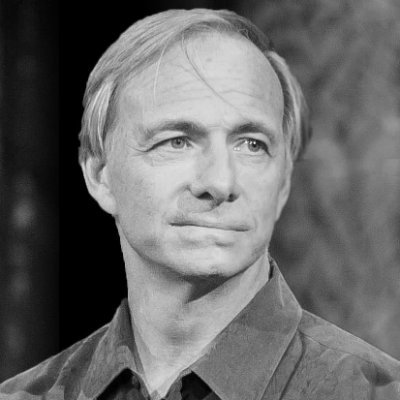
The most meaningful relationships are achieved when you and others can speak openly to each other about everything that's important, learn together, and understand the need to hold each other accountable to be as excellent as you can be.
When you have such relationships with those you work with, you pull each other through challenging times; at the same time, sharing challenging work draws you closer and strengthens your relationships.
This self-reinforcing cycle creates the success that allows you to pursue more and more ambitious goals. #principleoftheday

Anitha Kannan retweeted

The South Bay Renaissance website is now live
southbayrenaissance.com
Feedback is appreciated :)


Anitha Kannan retweeted

Continual learning is widely discussed right now, but mostly as improving on the job or avoiding catastrophic forgetting. But it has a different, difficult, and already urgent form:
Given nothing but a corpus of documents, how should AI systems develop expertise in a new, unfamiliar domain? We call this problem Machine Studying.

Anitha Kannan retweeted

📍 Can LLMs discover, abstract, and reuse higher-level tool skills across tasks?
Existing tool-use benchmarks test solving tasks with fixed tools. But real workflows contain recurring structures where efficiency comes from reusable tool compositions, not isolated calls.
We introduce SkillCraft: 126 tasks across 6 domains designed to test whether LLM agents can acquire compositional skills, not just call atomic tools.
We also propose Skill Mode, a lightweight protocol with four MCP primitives that let agents compose, verify, cache, and reuse tool chains at test time.
Our Key findings across evaluating 8 SOTA models:
⚡Skill Mode enables agents to self-discover and reuse skills, leading to higher success and efficiency than agents without it. The gains are larger for stronger models.
🧠 Stronger models (e.g., Claude) discover more generalizable skills, which transfer across tasks and even across models.
🔍 Deeper composition ≠ better — shallow, well-tested skills generalize best.
🔗 Paper: arxiv.org/abs/2603.00718
💻 Code: github.com/shiqichen17/Skill…
🏠 Page: skillcraft-website.github.io…
(1/7)
Anitha Kannan retweeted

How well can you describe the feature selectivity of a vision neuron … with words? Interpretability has long borrowed from neuroscience — and maybe it can give back too! 🧵
We, at @curaiHQ, are hiring physician-builder, who are curious and execution-oriented, to help define the future of AI in healthcare. You will design patient and clinician facing solutions and also contribute to research
Come join us!
jobs.lever.co/curai/effcb328…
Anitha Kannan retweeted

Today, we’re releasing Continual Learning Bench 1.0: the first, realistic benchmark for measuring how AI systems can improve in online settings.
Benchmarks today assume models are stateless. Each example is independent, and once a system finishes a task, it moves on as if nothing happened.
But deployed AI systems should learn from experience. We tested 10+ frontier systems against novel, expert-validated tasks and find there’s still plenty of headroom for learning. (1/n)

Anitha Kannan retweeted

1/ We are publishing the first proof that AI can reason as well as clinicians in live clinical environments. Our AI diagnosed ~2400 patients as accurately as board certified clinicians in a real environment and was 30 percentage points better than Google’s equivalent system.

Anitha Kannan retweeted
The short paper "Welcome to the Era of Experience" is literally just released, like this week. Ultimately it will become a chapter in the book 'Designing an Intelligence' edited by George Konidaris and published by MIT Press.
goo.gle/3EiRKIH

Anitha Kannan retweeted

Skeptics beware: Almost a year later, I see this assertion even more compelling! The rate of innovation keeps accelerating. We will see more innovation in the next two years than teh last two since the ChatGPT moment!

I am awe struck at the rate of progress of AI on all fronts. Today's expectations of capability a year from now will look silly and yet most businesses have no clue what is about to hit them in the next ten years when most rules of engagement will change. It's time to rethink/transform every business in the next decade. Read "situational-awareness.ai" by @leopoldasch. I buy his assertion only a few hundred people know what is happening.

Anitha Kannan retweeted

In her Pulitzer Prize-winning memoir “Personal History,” Katharine Graham shares a profound diary entry written by her mother Agnes Ernst Meyer during a 1926 family camping expedition through the Canadian Rockies on finding your "second wind."

Anitha Kannan retweeted

Psychological safety is not about withholding criticism. It’s about enabling people to speak up without fear.
The goal is not to lower our standards. It’s to replace knee-jerk reactions with open-minded consideration.
All ideas are welcome. Not all views are equally valid.

Anitha Kannan retweeted

1/ Excited to announce our new preprint, Rare Disease Differential Diagnosis with Large Language Models at Scale: From Abdominal Actinomycosis to Wilson's Disease. We introduce a method that enhances rare disease diagnosis by combining LLMs with expert systems! @CuraiHQ 🧵