






anukool retweeted

What a fabulous word this is and how it has always resonated 😍
#UniqueWords #Tarantism #DanceForLife

anukool retweeted

Mathematics, physics.
Life explained. Distributions on parade.
By Rasmus Bååth, @rabaath, github.com/rasmusab/distribu…, Used with permission.

anukool retweeted

The #WordOfTheDay is ‘irascible.’
ow.ly/xosa50Q1g70

ALT Merriam-Webster Word of the Day October 28, 2023 'irascible' adjective | ir-RASS-uh-bul "easily angered" Background Image: A mad cat
anukool retweeted

Mind-blowing, getting goosebumps as I watch, the sheer perfection!
"What a role model" is an understatement I think🙏.
She is the epitome of unwavering determination. Congratulations #SheetalDevi 🇮🇳, THANK YOU for everything ! #AsianParaGames2023

Sheetal, a 16 years old teen from Jammu, was born without arms due to Phocomelia. She is the first female archer without arms to compete internationally. Two gold, one silver in Asian Para Games, and one silver in World Para Games. What a role model!
nitter.gq/TheKhelIndia/status/17…
anukool retweeted

Making LLMs More Accessible To The GPU Poor - Flash Attention and Flash Decoders
By now it's common knowledge that LLMs take boatloads of money and tons of compute to train and host.
Fundamentally, LLMs require a hefty amount of memory, which increases quadratically with the length of the sequences they process.
As models grow, capturing long-range dependencies becomes increasingly challenging. LLMs have a gargantuan number of parameters, which demands significant computational resources and sophisticated optimization techniques to train efficiently.
TLDR; each of these challenges can impede the training, deployment, or the real-time responsiveness of LLMs, especially as they grow in size or are tasked with processing longer sequences of data. One of the biggest complaints with GPT-4 is it's latency.
Flash Attention digs into the core of transformer architectures to tweak the attention mechanism for better scaling, particularly catering to the needs of Large Language Models (LLMs)
LLMs hog High Bandwidth Memory (HBM) to store, read, and write keys, queries, and values. Flash Attention is IO-aware it's finely tuned to optimize the Input/Output (IO) operations between the GPU's High Bandwidth Memory (HBM) and on-chip SRAM, minimizing the number of memory reads and writes.
By employing a technique known as tiling, Flash Attention segments the attention computation into smaller, more manageable chunks, reducing the memory burden. It's like breaking down a hefty tome into smaller booklets, making it easier to handle.
The algorithm reorders the attention computation in a way that enhances the efficiency, ensuring that the computational resources are utilized in the best way possible. It's like rearranging the assembly line in a factory for optimal performance.
Unlike the standard attention mechanism that has a quadratic scaling with respect to sequence length, Flash Attention scales linearly. This is a major leap in terms of optimizing memory and computational resources
when it comes to LLMs as they are often required to process long sequences of data.
Amidst all the optimization, Flash Attention doesn't compromise on the quality of attention computation. It provides 'exact attention' which is crucial for maintaining the model's performance. With Flash Attention you get computational efficiency without trading off the accuracy.
Flash attention significantly reduces training and inference times. This is extremely important for production traffic where latency and response times are fairly important. This technique has made it possible for the GPU poor to work on and fine-tune LLMs.
By using Flash Attention, it is possible to fine tune LLMs using a technique called LoRA that is more efficient and takes up less memory than a LoRA adapter that is trained with just the standard attention mechanism.
By using Flash Attention in the fine-tuned Llama models, it is possible to reduce the amount of time and memory required to perform inference. This makes it possible to deploy fine-tuned Llama models on more devices and to make them more accessible to users.
Earlier this month, Flash Decoding was introduced. This technique takes Flash Attention a step further, by specifically targeting long-context inference, introducing an additional parallelization dimension based on the length of the keys/values sequence
Flash Decoding helps with parallelization by splitting the keys/values into smaller chunks and computing the attention for each chunk in parallel. This strategy is tailored to harness the GPU's power fully, especially when the batch size is small but the context length is large
Flash Decoding orchestrates a three-step workflow - splitting the keys/values, parallel computing of attention using Flash Attention, and then a final reduction step using log-sum-exp to compute the actual output. This triad of steps is orchestrated to maintain the integrity of the attention outputs despite the parallelization.
Flash Attention has already made a big difference in the open-source world. Flash Decoding is bound to be hugely helpful as well. These clever techniques will reduce computational costs, make LLMs accessible and increase LLM speeds while not sacrificing performance
👏👏

ALT Image credit - https://huggingface.co/docs/text-generation-inference/conceptual/flash_attention
anukool retweeted

Impostor syndrome is not a clue that you're unqualified. It's a sign of hidden potential.
When you think others are overestimating you, it's more likely that you're underestimating yourself.
They have an outside view. They see capacity for growth that's not yet visible to you.


anukool retweeted
Do you think the number "1" will ever again be considered a prime number?
In the mid-18th century, mathematician Christian Goldbach listed 1 as prime. However, Euler did not consider 1 to be prime. In the 19th century many mathematicians still considered 1 to be prime, and lists of primes that included 1 continued to be published as recently as 1956.
By the early 20th century, mathematicians began to agree that 1 should not be listed as prime.
Source: bit.ly/3FrM2Rw

anukool retweeted
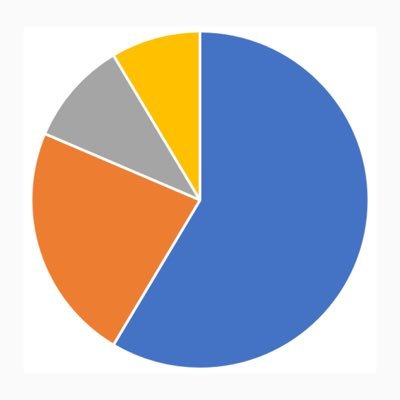
% of people that believe in God or a supreme being:
Indonesia 🇮🇩 - 93%
Turkey 🇹🇷 - 91%
Brazil 🇧🇷 - 84%
South Africa 🇿🇦 - 83%
Mexico 🇲🇽 - 78%
USA 🇺🇸 - 70%
Argentina 🇦🇷 - 62%
Russia 🇷🇺 - 56%
India 🇮🇳 - 56%
Poland 🇵🇱 - 51%
Italy 🇮🇹 - 50%
Canada 🇨🇦 - 46%
Hungary 🇭🇺 - 29%
Australia 🇦🇺 - 29%
Spain 🇪🇸 - 28%
Germany 🇩🇪 - 27%
UK 🇬🇧 - 25%
Belgium 🇧🇪 - 20%
France 🇫🇷 - 19%
Sweden 🇸🇪 - 18%
South Korea 🇰🇷 - 18%
China 🇨🇳 - 9%
Japan 🇯🇵 - 4%
anukool retweeted

Top ML Papers of the Week (Oct 16 - Oct 22):
- Llemma
- Self-RAG
- GenBench
- OpenAgents
- Video Language Planning
- LLMs for Software Engineering
...
----
1/ Llemma - an LLM for mathematics which is based on continued pretraining from Code Llama on the Proof-Pile-2 dataset; the dataset involves scientific paper, web data containing mathematics, and mathematical code; Llemma outperforms open base models and the unreleased Minerva on the MATH benchmark; the model is released, including dataset and code to replicate experiments.
nitter.gq/zhangir_azerbay/status…
2/ LLMs for Software Engineering - a comprehensive survey of LLMs for software engineering, including open research and technical challenges.
nitter.gq/omarsar0/status/171394…
3/ Self-RAG - presents a new retrieval-augmented framework that enhances an LM’s quality and factuality through retrieval and self-reflection; trains an LM that adaptively retrieves passages on demand, and generates and reflects on the passages and its own generations using special reflection tokens; it significantly outperforms SoTA LLMs (ChatGPT and retrieval-augmented Llama2-Chat) on open-domain QA, reasoning, and fact verification tasks, including factuality improvements.
nitter.gq/AkariAsai/status/17151…
4/ Retrieval-Augmentation for Long-form Question Answering - explores retrieval-augmented language models on long-form question answering; finds that retrieval is an important component but evidence documents should be carefully added to the LLM; finds that attribution error happens more frequently when retrieved documents lack sufficient information/evidence for answering the question.
nitter.gq/omarsar0/status/171498…
5/ GenBench - presents a framework for characterizing and understanding generalization research in NLP; involves a meta-analysis of 543 papers and a set of tools to explore and better understand generalization studies.
nitter.gq/AIatMeta/status/171504…
6/ A Study of LLM-Generated Self-Explanations - assesses an LLM's capability to self-generate feature attribution explanations; self-explanation is useful to improve performance and truthfulness in LLMs; this capability can be used together with chain-of-thought prompting.
nitter.gq/omarsar0/status/171466…
7/ OpenAgents - an open platform for using and hosting language agents in the wild; includes three agents, including a Data Agent for data analysis, a Plugins Agent with 200+ daily API tools, and a Web Agent for autonomous web browsing.
nitter.gq/ChengZhoujun/status/17…
8/ Eliciting Human Preferences with LLMs - uses language models to guide the task specification process and a learning framework to help models elicit and infer intended behavior through free-form, language-based interaction with users; shows that by generating open-ended questions, the system generates responses that are more informative than user-written prompts.
nitter.gq/AlexTamkin/status/1715…
9/ AutoMix - an approach to route queries to LLMs based on the correctness of smaller language models (done via few-shot self-verification); a meta-verifier is introduced to check the verifier's output (typically a smaller model) and route the query to a larger language model if needed. Experiments using LLAMA2-13/70B, on five context-grounded reasoning datasets demonstrate that AutoMix surpasses established baselines, improving the incremental benefit per cost by up to 89%.
nitter.gq/omarsar0/status/171538…
10/ Video Language Planning - enables synthesizing complex long-horizon video plans across robotics domains; the proposed algorithm involves a tree search procedure that trains vision-language models to serve as policies and value functions, and text-to-video models as dynamic models.
nitter.gq/du_yilun/status/171429…

Introducing Video Language Planning!
video-language-planning.gith…
By planning across the space of generated videos/language, we can synthesize long-horizon video plans and solve much longer horizon tasks than existing baseline (such as RT-2 and PALM-E).
(1/5)
anukool retweeted

11 different interpretations of Quantum mechanics explained in brief ✍️
1. Copenhagen Interpretation: The "standard" interpretation where quantum systems exist in superpositions until measured, at which point they "collapse" to a definite state.
2. Many-Worlds Interpretation (MWI): Every quantum event spawns countless parallel universes, with each possible outcome actually occurring in a different universe.
3. De Broglie-Bohm (Pilot Wave) Theory: Quantum systems are guided by "pilot waves" that determine their behavior, implying that particles have definite positions at all times.
4. Objective Collapse Theories: Quantum systems spontaneously collapse to definite states over time, without requiring a measurement.
5. Quantum Bayesianism (QBism): Quantum states are subjective beliefs about the outcomes of experiments, emphasizing a Bayesian approach to probability.
6. Relational Quantum Mechanics: The properties of a quantum system are relative to the observer and do not exist absolutely.
7. Transactional Interpretation: Quantum events involve a time-symmetric exchange of "offer waves" and "confirmation waves" between source and detector.
8. Ensemble Interpretation: Quantum mechanics only applies to ensembles of systems, not individual systems, emphasizing statistical outcomes.
9. Consistent Histories: Focuses on establishing a consistent framework to discuss sequences or "histories" of quantum events over time.
10. Quantum Logic: Proposes a modification of classical logic to account for quantum phenomena.
11. Participatory Anthropic Principle (PAP): Observers play a role in bringing the universe into existence through quantum processes.
None of these interpretations alter the core mathematical formalism of quantum mechanics, but they provide different perspectives on what's "really" happening beneath the calculations. The debate over which interpretation, if any, correctly describes nature is ongoing and remains one of the central philosophical questions in the foundations of quantum theory.


anukool retweeted
Mathematics.
First recorded use of the symbol π as the ratio of a circle's circumference to diameter, 1706, by William Jones. bit.ly/2mFBwNo


anukool retweeted
Bizarre and beautiful Pi Clock haunts our dreams.
By Antonella Perucca, bit.ly/3XNWgUG, antonellaperucca.net, Used with permission.


anukool retweeted

"Here lies the paradox of solitude. Look long and hard enough at yourself in isolation and suddenly you will see the rest of humanity staring back."
Wonderful read: themarginalian.org/2021/10/1…

anukool retweeted

“The simple things are also the most extraordinary things, and only the wise can see them.”
— Paulo Coelho

