

🤖 cto & co-founder @houdinirobotics • 𝕥𝕣𝕒𝕟𝕔𝕖 𝕕𝕛 • ᴍᴇᴛᴀᴘʜʏsɪᴄɪᴀɴ 🌉 SF, CA @aphex@alpaca.gold
San Francisco, CA
Joined December 2008
- Tweets1.3K
- Following1.3K
- Followers840
- Likes8.7K




i love this from a technical achievement pov, but from a "build the world you want to live in" pov, imagining the future where everyone walks around looking like Alan Greenspan while mumbling silently to themselves sounds like an utterly deranged existence

We’ve raised $1.3M from YC & Afore Capital so you never have to type or speak again.
Typing is slow. Talking into your computer is awkward. Subvocal fixes both
Our glasses give you the speed of speech without you making a sound or touching a keyboard.
It tracks your internal speech muscles with non-contact sensing and decodes silent, almost invisible mouthing into text at more than 200 words/min.
Pre-orders are now live at:
subvocal.co/preorder?utm_sou…

we're building #6, #11, #12 @houdinirobotics

There is no moat, but there are still countless problems to solve. And where there are problems, there are opportunities.
The biggest opportunities right now:
1. build for solving loneliness (the more AI floods everything, the more people crave real human connection, IRL and small social)
2. build for agents that need to spend money (they're getting virtual cards and budgets, someone builds the spend controls, fraud protection, receipts)
3. build for people drowning in AI output (everyone generates infinite drafts now, the bottleneck moved to reviewing and choosing, build the judgment layer)
4. build for the burnout economy (everyone is expected to always be on and always optimizing, and the backlash toward rest, slowness, and enough is building)
5. build for verifying humans (deepfakes broke trust, every dating app, marketplace, and video call needs proof-of-human)
6. build for the physical world (the trades, hardware, robots that AI is finally reaching)
7. build for the agent that answers the phone (every local business misses calls, a voice agent that books the job creates real value)
8. build for the aging population (millions of older adults want to stay healthy, sharp, independent, and connected)
9. build for the LLM-search land grab (being the cited answer is the new SEO)
10. build for the newly automated (the paralegal, analyst, and marketer whose job just changed and needs to reskill fast)
11. build for the seat-pricing collapse (software moving from per-seat pricing to per-outcome, whoever nails outcome billing wins a category)
12. build for AI enablement (millions of businesses still use nothing beyond basic AI tools, someone has to onboard them)
13. build for the agency everyone resents (businesses pay thousands to agencies for repetitive work, an agent that does most of it can undercut the model)
14. build for verticals on outdated software (dentists, HOAs, contractors, and local businesses overdue for an AI-native rebuild)
15. build for reviving dead software (thousands of abandoned apps with real users, agents can maintain what a team couldn't)
16. build for markets too small to matter before (500 lobster fishermen was never worth a team, now it can be a real business)
17. build for agents hiring agents (an emerging machine economy needs escrow, reputation, identity, and dispute resolution)
18. build for the anti-AI premium (as everything gets generated, human-made and analog become status symbols people pay more for)
19. build for distribution-first (anyone can build the product now, so the audience becomes the advantage, media first, product second)
20. build for the reinvention of college (traditional degrees are being questioned, practical skills and alternative education are becoming more valuable)
21. build for a world with more free time (if AI takes the busywork, what people do with those hours becomes a massive opportunity)
22. build for the return to the physical (screens fill with AI slop, people crave the real world, hands-on, local, and analog)
23. build for the caregiving wave (the population is aging fast, millions are caring for parents, and families need better support)
24. build for the longevity shift (people want to live to 100 healthy, and an industry is forming around managing personal health)
25. build for the housing and rootlessness problem (people struggle to afford stable homes, creating opportunities for new housing and community models)
26. build for spiritual hunger (as institutions change, the need for meaning, ritual, purpose, and belonging is growing)
KEEP BUILDING.
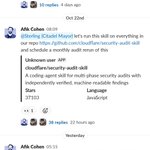
glad I've had my gas city set up since January. getting every system patched this week took a few slack messages to my mayor ⛽ @Steve_Yegge

Just spent the last 7 days on the front lines of the vulnpocalypse fending off an active cyber attack on one of our products.
Some thoughts:
- Software factories are going to be required equipment for everyone. There’s just no way to keep up with the pace of highly automated adversaries without one.
- We were lucky because we had spent the last few months getting our software factory running well. It is nice to have for product development but proved to be absolutely essential this week.
- At the minimum you need to have a coding server in the cloud pre-provisioned with read only access to all your logs and all the services you depend on for observability. With that in place you are a prompt away from reasonably good situational awareness, ongoing monitoring with loops, and ability for coding agents to validate fixes against your actual, observed attack patterns.
- Shared coding server also unlocks multiplayer incident response where everyone can see every session and jump in as needed. Sharing session links that can be forked is much higher bandwidth than re-explaining things.
- You don’t need to be Ramp/Stripe/Uber scale to have a working software factory in the cloud. We are a team of 3. Ours is built with an @opencode server (thanks @thdxr!), a forked version of compound engineering optimized for automated workflows (thanks @kieranklaassen!) and a multiplayer agent in slack that handles crons (we have our own harness but pick your favorite here).
- To get our software factory up and running well, we had to stop all new product development for ~6 weeks and just focus on getting the validation systems working that enabled us to reliably shipping PR without human code review. This felt very painful in the moment but was totally worth the eventual speedup in velocity.
- KYC for @AnthropicAI & @OpenAI cyber programs is now easy and quick (at least for defensive access), but a day felt like a lifetime this week. Submit your app now before you really need it.
- Getting Mythos access unlocked a deeper level of analysis that helped us shift from reactive mitigation to proactive patching. Wish we had done this a few weeks earlier. Get started now!

Afik Cohen retweeted

Hey! Hopefully this post catches you before you end up doomscrolling for another few hours, left feeling like garbage.
It's really not worth it, my friend.
Instead, go build, learn, take a walk outside, call a friend, or even sit in silence. You'll feel much better.
Afik Cohen retweeted

Technical moats are mostly over at this point. If you’re building something that is meant to be durable, the only moats now are:
• Proprietary data
• Network effects
• A physical component
Afik Cohen retweeted

Dusting off this tweet from April because this gap in shared understanding of LLM capability is *widening*. It's now less "two groups of people speaking past each other" and more a sharp funnel.
- Napkin math somewhere around 6B people (~75% of the population) have barely come in contact with LLMs at all.
- Around 1-2B (~20%) are casual and infrequent users of free-tier ChatGPT-like products. This group sees derpy chatbots and treats them a bit like a better Google search, a writing aid, or etc. Maybe an agent tries to book you a flight. I have non-tech friends who (reasonably, imo) say they have not much use for it at all. Even many professionals outside of math&code are in this tier. For example, execs and many other functions spend a lot of their time talking to other people, so while they understand what is happening intellectually, it is still second-hand and a bit abstract.
- Now we get to professional use of frontier-grade LLMs in math&code. Somewhere around 20M people (0.2%) see first-hand that large, complex projects that used to take them weeks/months can now be completed by agents with a prompt. Building apps, copying apps, translating apps, decompiling apps from binaries... This has all happened very quickly and recently - less than 1 year ago, I was writing code manually by hand, typing memorized computer code commands into a code editor character by character, occasionally pressing Tab to autocomplete a little chunk of code.
- And finally we get to the ~5,000 people (~0.00006%) with access to frontier-grade systems internally. The external world has seen the preview. It looks like swarms of thousands of agents collaborating over weeks on software mega projects: minting zero days, running cyber attacks and defenses at machine speeds, discovering new science, advancing the frontier of mathematics. Things that would have taken top professionals in the industry years of work. Meanwhile, human review and comprehension are starting to fall behind. For example, people are still involved in the "archeology" of the OpenAI-HF incident from many months ago. Mathematicians may be poring over the 722 manuscripts on frontier mathematics for a while.
The funnel is driven by a combination of factors:
1. The impact scales with ambition, problem size, and horizon. A question with a paragraph answer barely stresses the system. You need a reservoir of big, difficult problems that you really care about. This aspect drives the consumer / professional dimension of the funnel.
2. The jaggedness of the system (which I have written about a lot separately). Capability peaks in domains that are digital, verifiable and economically valuable. This is because LLM capability emerges from reinforcement learning on verifiable rewards on a curated environment mixture driven by revenue potential. This aspect primarily drives the area (e.g. math&code) dimension of the funnel.
3. Access. Free-tier, paid-tier, internal.
So this is the weirdness of the moment. The general public has mostly not interacted with these systems. When they have, it looks like a derpy chatbot. The majority of professionals still see only a modest uplift. And a small sliver of professionals are experiencing the vertigo of the curve going vertical. And it is all happening at the same time.

Judging by my tl there is a growing gap in understanding of AI capability.
The first issue I think is around recency and tier of use. I think a lot of people tried the free tier of ChatGPT somewhere last year and allowed it to inform their views on AI a little too much. This is a group of reactions laughing at various quirks of the models, hallucinations, etc. Yes I also saw the viral videos of OpenAI's Advanced Voice mode fumbling simple queries like "should I drive or walk to the carwash". The thing is that these free and old/deprecated models don't reflect the capability in the latest round of state of the art agentic models of this year, especially OpenAI Codex and Claude Code.
But that brings me to the second issue. Even if people paid $200/month to use the state of the art models, a lot of the capabilities are relatively "peaky" in highly technical areas. Typical queries around search, writing, advice, etc. are *not* the domain that has made the most noticeable and dramatic strides in capability. Partly, this is due to the technical details of reinforcement learning and its use of verifiable rewards. But partly, it's also because these use cases are not sufficiently prioritized by the companies in their hillclimbing because they don't lead to as much $$$ value. The goldmines are elsewhere, and the focus comes along.
So that brings me to the second group of people, who *both* 1) pay for and use the state of the art frontier agentic models (OpenAI Codex / Claude Code) and 2) do so professionally in technical domains like programming, math and research. This group of people is subject to the highest amount of "AI Psychosis" because the recent improvements in these domains as of this year have been nothing short of staggering. When you hand a computer terminal to one of these models, you can now watch them melt programming problems that you'd normally expect to take days/weeks of work. It's this second group of people that assigns a much greater gravity to the capabilities, their slope, and various cyber-related repercussions.
TLDR the people in these two groups are speaking past each other. It really is simultaneously the case that OpenAI's free and I think slightly orphaned (?) "Advanced Voice Mode" will fumble the dumbest questions in your Instagram's reels and *at the same time*, OpenAI's highest-tier and paid Codex model will go off for 1 hour to coherently restructure an entire code base, or find and exploit vulnerabilities in computer systems. This part really works and has made dramatic strides because 2 properties: 1) these domains offer explicit reward functions that are verifiable meaning they are easily amenable to reinforcement learning training (e.g. unit tests passed yes or no, in contrast to writing, which is much harder to explicitly judge), but also 2) they are a lot more valuable in b2b settings, meaning that the biggest fraction of the team is focused on improving them. So here we are.


Afik Cohen retweeted

I think it’s a bit early to call it, but it is pretty wild. The demo from @GeneralistAI blew my mind, and ~2 weeks later Astra is casually matching it


Afik Cohen retweeted

I’m in love with this sentence:
You need to be more afraid of wasting your life than embarrassing yourself.
brb installing a gascity mayor on my muse (cc @Steve_Yegge)


Afik Cohen retweeted

When a friend in SF says they’ll bring their “dog” to the park 😂 @aphex @JakeMaltesen – at San Francisco, CA


a dog even a cat person can like 🐶

i keep telling these data startups
nobody wants to buy your robotics data
people want more of *their own* data

After 2+ years in the robotics data space, we are shutting @Eidon_AI down.
The thesis was right. But the business is brutally hard.
We close this chapter by open-sourcing everything we built and sharing lessons for anyone venturing into the space.

Afik Cohen retweeted

you have to sign up for muse. instinct changes everything. i literally handed my whole life off to town. you're seriously doing that instead of letting hermes handle it? i named my Manus agent greg. i exclusively talk to my wife via hermes. my Claude is literally chatting with the DMV right now via a voice agent. i couldn't live without my fleeb agent. you need to put fleeb on that. go sign up for fleeb. i have 10 invite codees to hand out for fleeb. fleeb is raising at a $100b valuation. fleeb is pivoting. fleeb has shut own, and we are migrating all users to flobe
💯 manufacturing knowledge, supply chains and customer relationships are the real moats, ask us how we know;)

State of Hard Tech VC
Few things im seeing:
> F*ck ton of capital out there. However, doesn't feel like it unless you're one of the companies everyone wants lol. Headlines make venture look like 2021 again. It isn't. Capital is concentrating into a relatively small group of companies while everyone else is grinding through 50 investor meetings trying to piece together a round. Middle of the market feels brutal.
> Bar for a Series A in hard tech has moved materially higher. Two years ago - a killer technical team, working prototype and huge market gets you there. Increasingly investors want real traction, meaningful contracts, manufacturing figured out and a viable path toward scale. Series A diligence is starting to look a hell of a lot like old Series B diligence. Not a bad thing IMO.
> At the same time, best companies are raising faster than I’ve ever seen. They aren't running six-month fundraising processes - talk to 10–20 investors, create scarcity, get a lead and suddenly everyone who was “still doing work” has 48 hours to decide lol. Fundraising has become incredibly binary.
> Defense tech is no longer contrarian. Full stop. Ten years ago, could barely get a mainstream VC to touch weapons. Now everyone has a defense thesis. Probably great for America, but investors should recognize what happened: the trade went from deeply contrarian to increasingly consensus. Next Anduril probably isn't going to look like Anduril.
> Increasingly convinced capital intensity is not the problem people think it is. Lack of differentiation is. Give me the company that needs $100M to build something extremely difficult over the company that needs $5M to build something 30 other teams can copy. Capital can be raised. Technical moats, manufacturing knowledge, supply chains and customer relationships much harder to manufacture.
> Hard tech founders are getting significantly smarter about the capital stack. Venture equity used to be the hammer for every nail. Now I'm seeing founders think about government grants, customer-funded development, equipment financing, venture debt, project finance and strategic capital alongside equity. This is good.
> Government is quietly becoming one of the biggest growth investors in hard tech. Grants, loans, contracts, guarantees and direct strategic investment are increasingly underwriting infrastructure that traditional VC never could. The best founders are figuring out how to stack governemnt/VC without destroying the cap table.
> Hard tech valuations are starting to get stupid in pockets. SpaceX, Anduril, Palantir and a handful of monster outcomes proved the category can create enormous companies. Great. That doesn't mean every pre-seed defense startup with three engineers, a render and an SBIR should be raising at a $40M cap. Entry price still matters.
> Think we're massively underestimating the opportunity in boring industrial companies. Everyone wants robots, rockets and drones.Increasingly interested in the shit underneath them: motors, bearings, pumps, power electronics, machine tooling, specialty materials, controls, chemicals, components and replacement parts. (said this the other day)
> Biggest opportunity in hard tech may increasingly be outside the venture ecosystem entirely. Fifty funds are chasing the Stanford/SpaceX/Anduril engineer starting an autonomy company. Far fewer are looking at the 38-year-old manufacturing engineer in Ohio who has spent 15 years staring at a $2B industry's biggest bottleneck. Everyone wants proprietary deal flow. Maybe stop looking in the same places.