










Matt retweeted

Let me make one more thing crystal clear. We do not support Clarity with the stripped version of BRCA proposed by Sen. Cortez Masto. For other members of the committee, this is a with us or against us moment. Stand up for developer rights or vote no.


Matt retweeted

Institutional adoption of @Bitcoin is accelerating.
Our analysis of Q4 2025 shows growing exposure to spot Bitcoin ETFs from endowments, pensions, and governments, while hedge funds, asset managers, and wealth advisors have trimmed theirs.
The data reveals who is allocating and how institutional positioning is evolving.
Read @bc1matt’s full report: coinshares.com/insights/rese…


Matt retweeted

📚 The Institutional Investors Rebalance: Inside the 13F Filings of Bitcoin ETFs Q1 2025
Those filing SEC Form 13F must report their ownership of securities when managing over $100 million of Bitcoin ETFs.
Matthew Kimmell, @bc1matt, digital asset analyst at CoinShares, shares his insights on the first report of 2025 and explains why numbers only tell part of the story.


Matt retweeted
⚡️How long will the bitcoin primary last?
In this new article, Matthew Kimmell, @bc1matt, Digital Asset Analyst at CoinShares, examines @Bitcoin's dominance in a maturing crypto market. Through history and analysis of previous cycles, he answers questions such as: Why is bitcoin so different from other cryptos?
Read our new article to discover his insights for bitcoin in the short and long term: coinshares.com/insights/rese…


Matt retweeted

Was Bitcoin’s Lightning network overhyped? ⚡️
@cbspears and @bc1matt dive into how Lightning works, it’s current challenges, and where it has succeeded to-date
Only on @btcszn2
Notes
- Lightning whitepaper published in 2015 (decade ago)
- Three softforks enabled Lightning functionality
- Trump used Lightning for burger purchase on camera
- Many Lightning wallet providers have shut down
- Channel liquidity management remains a major UX issue
- Binance and major exchanges now support Lightning
Timestamps:
00:00 Start
02:17 What is the Lightning Network?
08:50 History of Lightning
21:34 Web3
26:35 Arch Network
27:07 New use cases
30:05 Lightning successes
37:49 Lightning failures
41:30 OP_NEXT
48:06 UX challenges
Matt retweeted

Is Bitcoin Mining Actually Investable?
Where does the game of chase end? For Bitcoin miners, maybe never.
Welcome back to The Mining Pod! Today we are joined by @C_Bendiksen of @CoinSharesCo to discuss investing in Bitcoin mining! What’s the value prop of miners? How should we think about their go-to-market strategy? What about the huge ASIC orders that get zeroed out so quickly overtime? For retail investors, Chris thinks its not a great purchase and certainly not when compared to Bitcoin. Check out the show for more thoughts!
👉 Get tickets to OP_NEXT by visiting the website! And use discount code OCTOBER to get 25% off at check out!
Timestamps:
00:00 Start
01:29 Story reading
09:16 Story origins
11:04 Can miners get more efficient?
16:31 New efficiency methods
20:53 Access to new ASIC models as strategy
23:39 ATMs & PubCo balance sheets
29:09 New financing models
34:55 Bitcoin treasury
36:47 Wrap up
Matt retweeted

Gm
Should most ASIC owners be worried that they will never achieve positive ROI..?
Probably yes.
blog.coinshares.com/no-end-i…

Matt retweeted

I recommend very few things, but here's one: @theMiningPod is criminally under followed. Their content is well above what I generally find within the space: youtube.com/@theminingpod/vi…
Matt retweeted

Digesting the recent Bitcoin ETF 13F filing data, the filings capture a limited amount of data - 25% so far representing US$15bn. There are over 1900 owners of the US ETFs, with the average portfolio position being 0.6%% in bitcoin. 1/3

Matt retweeted
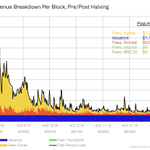
Following our mining report, we have also published our thoughts on fee revenue for the miners - particularly important given the highest fees this year post halving - written by @MatthewKimmell
medium.com/@mkimmell/the-loo…


Matt retweeted

The Inconvenient Truth About State Bills to Protect Bitcoin Rights
Bitcoin has a Federal Government problem and the states can’t do a thing about it.
Over the past year or so, roughly a dozen states have introduced bills to protect one’s right to buy, mine, self-custody Bitcoin, and run a node on its network.
Public policies that would restrict Americans’ abilities to use and privately own bitcoin loom at the Federal level. Recently, I’ve seen a bad argument abound on this site, which is that state bills could protect people against such policies.
To be clear, state bills to codify rights for Bitcoin users cannot insulate anyone from federal policy. At best, state-level bills do nothing to stop infringements on the rights they enumerate. At worst, these bills of rights for Bitcoin make federal (and very real) policy threats to American users of the network more likely.
A consultation of the United States Constitution is helpful to understand why these bills will have zero impact in the case of conflicting federal policy. According to the Supremacy Clause (Article VI, clause 2) of the United States Constitution,
"This Constitution, and the Laws of the United States which shall be made in Pursuance thereof; and all Treaties made, or which shall be made, under the Authority of the United States, shall be the Supreme law of the land; and the Judges in every State shall be bound thereby, any Thing in the Constitution or Laws of any State to the Contrary notwithstanding."
From this clause, we get the doctrine of federal preemption. When federal policy and state legislation conflict, federal law overrides state law. Preemption applies regardless of whether the conflicting laws come from the legislature, the courts, administrative agencies, etc.
In the context of Bitcoin, if the federal government were to pass legislation contradicting state-level protections, the state laws would quickly be moot.
You may recall a similar issue from a few years ago when states saw bills introduced to make Bitcoin legal tender. Those efforts were, of course, unconstitutional and, subsequently, failed entirely to have any impact.
Make no mistake, state bills offer no protection against Elizabeth Warren’s crypto bill. To suggest that state bills could protect the ability to hold and use Bitcoin when federal policy would restrict those abilities is preposterous.
Espousing such a view not only betrays a lack of a fundamental grasp of American law but also signals that things like self-custody, sending Bitcoin, running a node, and mining Bitcoin are not already rights.
The passage of impotent state bills undermines the notion that we have a constitutional right to use Bitcoin and self-custody.
While practically ineffective, one could argue that these bills are symbolically meaningful, and in some sense, I’m afraid that may well be true.
While pro-Bitcoin bills have afforded lawmakers in Republican-led states opportunities to swear fealty to the blockchain, they have further cemented the mistaken perception that Bitcoin is partisan.
While state bills risk no material positive impact for bitcoin users, they certainly risk creating a more hostile federal regulatory environment. The more Bitcoin is branded as a conservative cause, the more challenging it becomes for moderate Democrats to oppose bills pushed by the likes of Elizabeth Warren, such as her DAAML bill. Furthermore, by fortifying the misconception that Bitcoin is a tool of the political right, these bills may provoke Democratic lawmakers to push for more stringent regulations simply to counter what they perceive as a partisan agenda.
The risk of a partisan backlash not only comes at the federal level, but also from blue states and from the very states where this legislation is passed. Indeed, state legislatures, emboldened by the belief that they can regulate one’s ability to own or use bitcoin, might turn over and pass inverse bills to ban self-custody and sovereign use of Bitcoin, citing these bills as precedent.
Finally, it is unlikely that Bitcoin rights bills would ever prevent anti-Bitcoin policy from a given state. This is paradoxical. A state that would, for example, infringe on the right to mine, is not a state that would actually pass these bills and a state that would pass these bills is not likely to be a state that would ever infringe on those rights in the first place.
State bills to protect Bitcoin may do numbers when posted on X, but are obviously Sisyphean in the face of federal opposition. They are easily unraveled by, and actively increase the risk of, conflicting federal policy undermining private Bitcoin usage in America.
Matt retweeted
🚀Exciting update! @CoinSharesCo secures an option to acquire @ValkyrieFunds, uniting our strengths to create a global one-stop-shop in digital asset investments. This marks a strategic leap towards market leadership and bolsters our strong presence in the U.S.!
coinshares.com/news/coinshar…
Matt retweeted

1/ last week's @BlackRock spot Bitcoin ETF filing was big news!
but, it's not the only story. many of the largest financial institutions in the US are actively working to provide access to Bitcoin and more.
a quick glance - $27 trillion of client assets here!

Matt retweeted
Great work by @C_Bendiksen & @MatthewKimmell on Global bitcoin ownership - Emerging Markets is where much of it is happening.
blog.coinshares.com/2023-glo…


Matt retweeted
is 2023 the year bitcoin mining will stabilize? @MatthewKimmell from our @CoinSharesCo research team shares his perspective with @compass_mining
education.compassmining.io/e…
Matt retweeted
Join us tomorrow with @RyanTheGentry from @lightning alongside @C_Bendiksen and @MatthewKimmell to discover Taro protocol nitter.gq/i/spaces/1RDGlaLraprJL

