

Co-Founder @looplyhqcom | Building AI that finds buyers from their signals & cold emails them from your own inbox | Bootstrapped
San Francisco, USA
Joined February 2021
- Tweets1.4K
- Following2.6K
- Followers8K
- Likes14.8K




Benjamin retweeted

G2 surveyed 1,100 B2B decision-makers on how they research and buy software.
What they found:


Benjamin retweeted
Flai just raised $27M, and its revenue grew 20x in a year.
At its 2025 seed it was 3 people. Now it's about 40.
What got them there, per TechCrunch :
→ Referrals : dealers recommended Flai to other dealers.
→ Speed : the software can be live in a dealership 10 days after signing.
→ Focus : one market, car dealers. Now 10+ of the top 50 US dealer groups.
Half of Flai's revenue now comes from new customers. The rest comes from the ones they already have.
What I'm taking from it for Looply :
→ Make the first customers want to tell others.
→ Cut the time between yes and the first useful thing. @looplyhqcom starts from your website and suggests your ideal customer and the signals to watch.
→ Stay in one market until it's won. Ours is B2B outbound : founders, SDRs, sales teams and agencies.
The CEO says he knows how hard the first customer was.
That part never makes the headline.

Benjamin retweeted
Hi, I’m Anwesha 👋
25, grew up in kolkata, india, and since september i've been at @looplyhqcom as head of content.
the question i needed answered before i could write a single post: what actually happens inside the software i write about, between someone posting on linkedin and a message reaching them?
most people picture a bot blasting thousands of messages. it's slower and more careful than that.
the path, step by step:
→ the signal: 4 kinds. someone posts, likes or comments about your keywords, engages with a page or profile you pick, changes jobs into a role you sell to, or works at a company that just raised funding
→ the lead: 1 person with 1 dated signal, like "recently changed jobs". then it's scored against your ideal customer
→ the email: sent from your own outlook or smtp inboxes, with follow-ups and a daily cap per inbox. the first one is written by ai from the signal, and you can approve each one before it goes
→ linkedin: from your own account, 20 invites and 40 messages a day by default, monday to friday. connection requests, messages and voice messages in the same sequence as the emails
→ the replies: 1 shared inbox. ai drafts an answer, and a person reviews it before it goes out
→ the tools around it: 10 integrations, from hubspot and pipedrive to clay, slack and lemlist
so it fits together like this: the signal picks the person, the score checks the fit, and email and linkedin run as one sequence with a human checking along the way. growth is $97 a month, scale is $247, and there's a 7-day free trial.
when my parents ask what i do, i say i write things on the internet for a software company. this is the software.
my biggest takeaway two months into writing about it: the clearest way to explain a product is to follow one person all the way through it.


Benjamin retweeted
Most lead scores are a gut feeling with a number on it.
Someone looks at a company, likes the signal, and writes "8/10".
Nobody can say where the 8 came from.
Nobody can check it either.
A score is only useful to me if it shows its work :
the words in the source that earned each point,
and what's still missing.
So we stopped scoring in our heads.
Every point now has a line behind it.
If there's no line, the point doesn't count.
It makes the scores lower and the lists shorter.
And it makes the emails better.
I'd take fewer leads with a reason over more leads with a number.

Benjamin retweeted
somewhere in your spreadsheet is a lead that never got an email, because a louder signal went first 🫠
we wrote up how to stop that, and we're handing it out for free. no course to sit through, nothing to sign up for.
inside:
→ 5 copy/paste prompts for Claude Opus 5.5: score a batch of signals, compare your best three, draft one email, sort the replies, review the week
→ a business brief you fill in once, then paste into the first prompt
→ a full worked example on made-up companies, with the real outputs
→ a checklist for before scoring, before sending and after replies
→ your first week laid out: brief, score, write, reply, learn
it's the same signal-first idea behind one of our own linkedin campaigns: 572 invited, 133 replies. everything runs in your own chat, no looply account needed.
Like + comment "OPUS" and I'll send it.
Benjamin retweeted
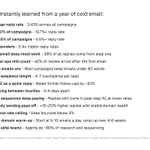
Allo studied 72,339 cold calls placed through its power dialer, July to September 2026.
What it found:

Benjamin retweeted

NEW: @dhh SAYS OMARCHY WILL STAY FREE FOREVER, WITH NO MONETIZATION PLAN ON THE WAY
"I'M ALREADY RICH AND THE OMACOM FOUNDATION IS A WELL-FOUNDED NONPROFIT"


Benjamin retweeted
Hi, I'm Tom.
29, San Francisco. February is when I joined @looplyhqcom as co-founder and CTO.
Early on, the question I kept coming back to: how does a bootstrapped team of 4, spending nothing on ads, get anyone to notice what we ship?
I expected the code to be the hard part. The hard part is being noticed.
What we actually do about it:
- The budget: $0 on ads. Everything that grows comes from posts, free guides, replies and SEO
- The guides: free Notion playbooks with copy/paste prompts and a worked example. TEAM and SIGNAL in September, then one per model launch since Oct 5
- The proof: on Oct 12, 8 people asked for our Opus guide on LinkedIn within 4 hours of the post
- The workflow: our cold email runs on 4 prompts, each with one job. Find the signal, check the fit, write the email, read the reply
The pieces lean on each other: signals decide who hears from us, the guides give them something useful before any pitch, and the posts tell people the product exists. All of it still runs today: SEO, cold email sent with Looply itself, posts and replies on X and LinkedIn, and inbound from the guides.
I've spent whole nights shipping a feature and woken up to find nobody had noticed it yet. That's the part none of this code fixes on its own.
My biggest takeaway as CTO: if nobody knows what we're building, the code doesn't matter much.

