

Founder @ Plaincode. Software + AI. Helping startups & companies build & scale products & teams. Sharing wins, losses & lessons. Pursuing $1M by year-end.
DM For a free consultation
Joined May 2023
- Tweets4.6K
- Following746
- Followers381
- Likes13.4K

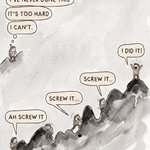






There's a lonely chapter in building anything real. Nobody preps you for it.
No guarantee of glory on the other side either. Best case, you win. Worst case, none of it ends up mattering the way you thought it would.
Anyone actually trying to build the best version of their life goes through this chapter. Not a detour - part of the build itself.
You don't get to skip it by being talented enough, or disciplined enough, or right enough. You just go through it, alone, with no promise waiting on the other side.
And that's what actually separates the people who win from the people who quit. Not skill. Not luck.
Just whether you stuck through the lonely chapter right up to the point where momentum would've finally kicked in - or walked away one chapter too early.
One thing I'm learning: how to navigate an employee's personal stuff without letting delivery slip.
Small team means everyone's already filling more shoes than they technically should have to. So when one person checks out - even temporarily, even for good reason - it doesn't stay contained. It shows up everywhere.
Client work always takes precedence, though. That's not negotiable, whatever else is going on internally.
Had this recently. Someone was clearly distracted, and it showed in the work. Didn't push. Gave them space instead, and quietly worked with the rest of the team to cover the gap while they found their footing again.
Still figuring out the right balance here, honestly. You want to actually care about your people, not just manage around them. But the client doesn't pause because someone on your team is having a hard week - so the coverage has to happen either way.
No clean answer yet. Just trying to hold both at once. Any advice?
"Following up." "Just checking in." "Any thoughts?" - if that's the whole message, you're already lost in the noise.
Everyone's inbox is full of the same three lines. Sending another one doesn't get you noticed; it just confirms you're one of the crowd.
What I've been paying attention to lately is pattern interruption - doing or saying something different enough to actually register. Even on live calls: I try to talk less, not more. If I've got a deck running long, I stop every time and ask a question instead of pushing through to the end.
Because the goal was never to get through the material. It's engagement.
Nobody remembers the person who rambled the most confidently through 20 slides. They remember whoever actually made them think, out loud, in the room.
Started running regular 1-on-1s that are actually about the person, not the work.
Not a status update. Not a project check-in. Just - how are you doing, actually.
Didn't expect much from it beyond being a decent thing to do. What I've noticed instead: a real productivity boost. People who feel actually seen show up differently to the work itself.
Turns out the whole unlock isn't a better process or another tool. Sometimes it's just H2H - human to human - before anything else.
A prospect told me recently: "If your engineering team is as good as your business development team, I'm telling my wife we're flying out to Pakistan."
One of the best feelings I've had doing sales - especially on a deal with real stakes and real size behind it.
None of this happens by accident, and it definitely doesn't happen alone. I wouldn't be anywhere close to this point without the people who've helped me throughout this journey. Respect where respect is due.
Some wins are worth pausing on before rushing to the next thing...
This year I started paying real attention to something I used to skip past: sharpening the axe.
Not the work itself - the thing underneath it. Staying skeptical of my own decisions instead of trusting my first instinct by default. Holding myself accountable to a genuinely high standard, not a comfortable one.
The person you become correlates directly with the quality of your company. Slip on that, and you become the easiest person in the org to replace - founder or not.
& As a leader, there's no higher form of self-respect than being the person your team actually needs. No question to it.
Reads almost too simple to be worth saying out loud. That's kind of the whole point. Still, I find myself dumbfounded at times, and keeping up with my own standard isn't as easy as stating it out loud.
Anything worth having in life makes you go through a period of "this isn't working" before it actually does.
That's just the shape of it. Not a sign to quit - the actual process.
The people who get somewhere aren't the ones who never hit that stretch. They're the ones who kept doing the daily work through it anyway, piece by piece, even when there was zero evidence yet that it was going anywhere.
But nothing happens without the work. Belief alone doesn't build anything. Relentlessness without daily action is just a nice-sounding excuse to not show up.
Had a negotiation call recently that went differently because of a few small things we did on purpose. Steal any of these.
1. Make the current state stupidly simple to see. What we originally proposed, what they wanted, where we already agreed, what's still open - laid out clearly.
Why it works: a confused prospect negotiates defensively. A prospect who can see the full picture negotiates collaboratively.
2. Give the easy wins first. Anything we could agree on fast, we agreed on fast - before touching the harder stuff.
Why it works: by the time you get to the real friction points, they've already felt momentum. People tend to push back less on details when they're already 7 "yeses" in.
3. Color, not language, carries the tone. Everything agreed got marked green. Anything open got a soft mustard yellow. No red, no "rejected," nothing negatively charged.
Why it works: the prospect feels how cooperative you are before you've said a single word about it - the visual does the persuading, not a pitch.
Most negotiation advice is about what to say. This is about what to remove - friction, confusion, and every unnecessary sharp edge - before you say anything at all.
"Persistence is good. But you've gotta be pleasantly persistent and value-driven."
My old boss used to say that, and it's stuck with me more than most sales advice I've heard since.
Anyone can enter this market right now. Agencies, freelancers, whoever's building tech - the barrier to showing up is basically zero. So persistence alone isn't a differentiator anymore. Everyone's persistent. Most of it just feels like noise.
What actually separates you is whether every touchpoint carries real value, not just a check-in. Stay on a prospect's radar long enough, the right way, and you stop being "another vendor following up." You become the name that shows up in their head, unprompted, the moment a real need actually comes up.
That's not about frequency. That's about being worth remembering every single time you show up.
Every Sunday, my partners and I get the whole team into a café and lock in for 4–5 hours.
It’s the only day everyone’s actually together - the week just doesn’t allow it.
This Sunday was JIRA and positioning. We’re trying to build enough structure and automation that nothing slips through engineering unnoticed.
The problem we’re actually solving is pretty simple.
I’d walk into client delivery calls scrambling - not because the work wasn’t happening, but because the context wasn’t in one place. I’d be piecing everything together last minute instead of just knowing where things stood.
And follow-through with the team was its own issue. I hated having to chase my own people for updates. That shouldn’t be the founder’s job on repeat.
So we’re rebuilding the system instead of just trying harder to remember things.
If information is scattered and follow-up depends on me personally chasing people, that’s not a team problem - it’s a system I hadn’t built yet.
I can’t scale a business on my own memory.
Eventually, something has to hold it instead of me.
Putting a number on it, publicly, so there's no quiet way out of it.
$1M ARR. 50K followers. Team of 20+. Before 30.
Nowhere close to all of it right now. That's kind of the point of saying it out loud instead of just carrying it around privately - a goal nobody else knows about is easy to quietly downgrade when things get hard. A goal you've said publicly isn't.
I don't know yet if I hit this. That's honest, not false modesty. What I do know is that from here forward, anyone watching gets to see exactly how close I actually get - not a highlight reel after the fact, the real thing happening in real time.
Check back in on this one.

Leave emotions at the door when you leave your house.
An entrepreneur told me that yesterday. Simple line, but it's been sitting with me since.
His point: every real business decision needs to be rationalized, not reacted to.
If you catch yourself about to make an impulsive call - sleep on it first. Every time.
I actually know this one the hard way. My most expensive mistake came from deciding on emotion instead of thinking ten steps ahead. Would've saved myself real time and money if I'd had this exact rule in my head back then.
Some advice you nod along to. Some advice you wish you'd heard three years earlier.
Never build your business around one client, one resource, one revenue stream.
Any single point of failure like that isn't a risk you're managing. It's a risk you're just hoping doesn't happen.
One client leaves, and if they were carrying too much of your revenue, you're suddenly scrambling instead of building. One key resource walks, and if the business only runs because of them specifically, you never actually had a system - you had a dependency. One revenue stream dries up, and if it was the only one, the whole thing goes with it.
The diversifying has to happen early, before you actually need it - waiting until you feel the risk means you're already exposed. By the time you feel it, it's too late to build the redundancy that would've protected you.
Redundancy isn't the opposite of ambition. It's what lets you keep taking risks without one bad break ending everything.
My best hire came from my Jiu Jitsu gym - spoke to him for a few minutes about tech and his projects in between sets, and I made the decision right then and there.
- No interview process
- No resume review
- Just a conversation on the mats that told me more than either of those would have
Gave him a project we'd specifically been struggling with. The first few calls were shaky - not surprising, new role, real stakes. But with actual guidance, not just being thrown in blind, he found his footing fast. Now he runs active client calls and scoping completely on his own. I'm hands-off.
That shift freed up more of my time than almost anything else this year. Not because the work disappeared. Because it moved to someone I am starting to trust, and I got my hours back for what only I can do - new business, reviews, keeping delivery on track with the team.
Sometimes the best hiring decisions don't come from a process at all. They come from paying attention to who someone is when they don't know they're being evaluated.
The safest pitch is usually the most forgettable one.
Something I've had to relearn in sales: matching the format everyone expects - same deck structure, same talking points, same "here's what we do" - makes you blend into every other vendor a prospect's already sat through that week.
Breaking that pattern is what actually creates attraction. Show up with something they didn't expect. Build the thing instead of pitching it. Say the quiet part they're thinking but haven't said out loud.
Predictable is safe. Safe doesn't get remembered.
Most bad outcomes from a team aren't a skill problem. They're a clarity problem.
For a while I'd hand off a task with a vague sense of what I wanted and get frustrated when what came back wasn't it. Turns out that's on the delegator, not the team. If I can't clearly state the exact outcome I'm looking for before I hand something off, there's no version of that task landing right.
The other half is staying close to it. Not checking in every other day and hoping - actual daily check-ins, sometimes more than once, so nobody's operating in the dark and nothing drifts for 48 hours before you catch it. That's not micromanaging. That's just making sure urgency and ownership are actually felt, not assumed.
And do this early. It's uncomfortable to build real systems and practices when the team's still small - feels like overkill. But it's the only time it's actually easy. Once you're scaling, you're not building the system anymore, you're just repeating whatever habits already existed, good or bad.
Clarity now. Systems now. Both get exponentially harder to retrofit later.
What life looks like every day as an entrepreneur...
I read a quote recently that I couldn't agree with more:
“Working hard won't guarantee you get rich, but not working hard almost certainly won't.”

A prospect called me a hustler recently. Might be one of the nicest compliments I've gotten from someone we're trying to close.
And honestly, I didn't do anything out of the ordinary.
One call. Understood what he actually wanted to build. Built a free POC so he could test it himself instead of just hearing about it. Now we're talking about taking over his entire creative & tech department.
That's it. That's the whole move.
Sometimes the differentiator isn't a bigger team or a better pitch. It's just being willing to push through and actually do the thing other players won't do without a proposal first.
The best thing you can do for your mental health isn't therapy or a habit tracker. It's a gym membership or a combat sport.
Not instead of the other stuff - alongside it. But if I had to pick one lever with the highest return, it's this.
Training your body trains your mind in a way almost nothing else does. And it compounds - a strong body is the actual foundation for a strong mind, not a separate track running next to it.
It also kicks off something bigger. Once you're training consistently, you start eating better without forcing it. You start holding yourself to a higher standard elsewhere, because you already proved to yourself you won't miss a day. That discipline doesn't stay in the gym - it shows up in how you run your business too.
& if I don't, everything else I'm trying to build gets harder without it.


We built an entire enterprise-documentation platform. For free.
Before there was a contract. Before there was any guarantee we'd win the deal.
The prospect was already speaking with some of the bigger, more established players in the market - names that don't usually have to prove anything upfront. We did.
So instead of sending a deck, we built the actual thing. A real, working product with AI-embedded features and a cleaner UI than what the bigger names were pitching.
Not a mockup. Something they could actually use and judge for themselves.
Nobody guarantees a return on that kind of work. Sometimes it doesn't convert. That's the real cost of taking the risk.
But when it does, this is why:
The bigger players were showing what they could build too. We just took a bigger risk upfront and built something real before there was a contract - something they could use, test, judge for themselves, and improve based on their feedback.
Sometimes, when you're the smaller player, that's the only edge you have to create.