





canvrno retweeted

We just launched Sites into Codex!
Software creation was always about more than writing code. Sites in Codex fundamentally gives the power of end-to-end software creation to every user, no matter their technical fluency.
These Sites are fully deployed to a URL, private to workspaces, come with authentication, can have static files, and can store dynamic data in databases.
It is in preview for business and enterprise teams and will be rolling out to all workspaces over the next day. Give it a try by typing @ Sites into Codex and ask it to build anything!
This project took a massive amount of effort across hundreds of people at OpenAI - proud that we were able to get this out and excited to see what you all build with it!
canvrno retweeted

Codex 🤝 Windows
Thanks for the patience!

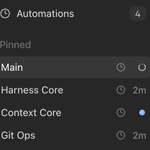
One of my favorite Codex patterns: a main thread pursues a long-running goal via external tools. Three threads watch it, learn and improve the tooling, track changes, roll back as needed, and cut token use over time. Started with 5.5 xhigh, now 5.4 mini is fine. 100+ hours in.


canvrno retweeted

Three million people are now using Codex weekly - up from two million a little under a month ago. Incredible to see the growth. Thank you to all of you and to the ecosystem we’re part of. To celebrate, we’re resetting rate limits so you can keep building, and we’ll reset them every additional 1M users until we reach 10M, so we can keep celebrating along the way.
Enjoy and thank you!
canvrno retweeted

OpenAI Codex 最佳实践指南 @OpenAIDevs
-- 8个步骤完整闭环、5个实操结论和7个典型误区
OpenAI 这篇文档写的非常有深度,目标是教会我们把 Codex 当作一个需要配置、磨合和持续改进的团队成员,通过正确的上下文、配置和自动化,构建一套让 Codex 持续稳定工作的协作系统。
developers.openai.com/codex/…
先说文档主线,这条实践路径非常清晰易学
1. 先把单次任务说清楚
2. 再让复杂任务先规划
3. 再把反复要说的话沉淀进 AGENTS.md
4. 再把环境、权限、模型等放进配置
5. 再把测试和 review 变成闭环
6. 再把外部系统通过 MCP 接进来
7. 再把高频流程做成 Skills
8. 最后把稳定流程做成 Automations
-- 接着深入每个步骤 --
1. Prompt 很重要,但不是最重要
文档一开始就有一个很成熟的判断:Codex 即使在 prompt 不完美时,也已经足够有用;但在大仓库、高风险任务、复杂任务里,清晰上下文会显著提高可靠性。
它推荐的四段式提示非常实用:
· Goal:你要改什么
· Context:哪些文件、文档、报错相关
· Constraints:要遵守什么规则
· Done when:什么算完成
这四项的价值在于,它把“模糊意图”转成了“可执行任务定义”。
很多人以为自己是在“给 AI 下命令”,其实更像是在“给工程协作对象写任务单”。
2. 难任务先规划,不要直接开写
文档非常强调:复杂、模糊、多步骤任务,先 plan,再 code。
这里背后的逻辑是,Codex 的失败很多不是因为不会写,而是因为任务定义不稳定、假设不明确、目标边界不清。
所以它推荐三种方式:
· 用 Plan mode 先收集上下文、澄清问题、产出方案
· 让 Codex 反过来 interview 你,把模糊需求问清
· 对更长流程用 PLANS.md
这说明 OpenAI 对 Codex 的定位不是“立即输出代码”,而是“先做任务建模,再执行”。
3. AGENTS.md 是这篇文档里最关键的设计点
如果只记住一个点,我会建议记住 AGENTS.md。
文档把它定义为 agent 的 README,这个说法非常准确。
它的意义是:把“每次都要重复讲的规则”从临时 prompt 中拿出来,变成持久化工作说明。
这能解决三个核心问题:
· 降低重复沟通成本
· 提高跨 session 一致性
· 让团队协作规则可共享、可维护
更重要的是,文档明确反对把 AGENTS.md 写成大而空的规则手册,而是建议“短、准、实用”。
这其实是在提醒你:agent 指令的质量,不取决于篇幅,而取决于是否真的能约束行为。
4. 配置不是附属品,而是行为稳定器
文档把 config.toml 放在很重要的位置,这非常专业。
因为很多所谓“模型不稳定”“质量不好”,实际上不是模型问题,而是运行环境问题:
· 工作目录错了
· 权限不够
· 默认模型不合适
· 工具没接好
· MCP 没配置
· sandbox 和 approval 策略不匹配
在真实开发中,Codex 的可靠性,往往一半来自模型能力,一半来自环境配置。
5. 测试和 review 不是后处理,而是闭环的一部分
文档明确说,不要只让 Codex“做改动”,而要让它:
· 补测试
· 跑检查
· 确认行为
· 做 review
这背后的思想很成熟:真正可用的 coding agent,不是代码生成器,而是能参与“实现-验证-审查”完整环路的协作者。
也就是说,文档在鼓励你把 Codex 从“产出代码”升级为“参与工程质量控制”。
6. MCP 的意义不是炫技,而是减少手工搬运上下文
文档对 MCP 的态度很务实:不是先接一堆工具,而是只接真正消除手工循环的工具。
这非常重要。
MCP 适合的场景是:
· 信息不在 repo 里
· 数据经常变化
· 你希望 Codex 直接用工具,而不是靠你复制粘贴
· 你想做跨项目、跨团队可重复的集成
所以 MCP 的本质不是“让 agent 更酷”,而是“把外部活数据纳入 agent 工作流”。
7. Skills 和 Automations 是两个不同层级,不要混
这篇文档里我最认可的一句思想可以概括成:
· Skills 定义“怎么做”
· Automations 定义“什么时候做”
这是非常清晰的分层。
Skill 适合沉淀一个稳定方法,比如:
· 日志排查
· PR 审查
· 发布说明草稿
· 标准化 debug 流程
Automation 适合调度一个已经足够稳定的流程,比如:
· 定时扫描 bug
· 定期汇总提交
· 定期看 CI 失败
· 定期生成 standup
文档也特别提醒:流程没稳定前,不要急着自动化。
这很专业,因为“不稳定流程自动化”通常只会放大混乱。
8. Session 管理其实也是质量管理
文档最后讲线程、fork、compact、subagent,不是使用技巧,而是在讲“上下文管理”。
它强调“一条线程对应一个连贯任务”,不要“一项目一长线程”。原因很简单:
· 上下文会膨胀
· 历史噪音会增多
· 推理焦点会下降
· 结果会越来越漂
这说明 Codex 的工作质量,和你怎么管理上下文线程,直接相关。
-- 实操结论和经典误区 --
最值得采纳的 5 个实操结论
1. 先把任务写成 Goal + Context + Constraints + Done when
2. 复杂任务默认先 plan
3. 把反复出现的规则写进 AGENTS.md
4. 把“写代码”升级成“改动 + 测试 + review”的闭环
5. 先 skill,后 automation;先稳定,后放大
文档也在提醒避免这些典型误区
· 把长期规则全塞进 prompt,而不是沉淀进 AGENTS.md
· 不告诉 Codex 如何运行 build/test,导致它“看不见自己的结果”
· 多步骤任务不做 planning
· 一开始就给过大权限
· 在同一份工作区里并行改同一批文件却不用 worktree
· 流程还不稳定就上 automation
· 一个项目只开一条超长线程

Plugins are a huge boost to productivity, a massive context upgrade for agents, and easy to use. I spent time ensuring plugins are easy to set up and use in Codex CLI, so that TUI diehards and automated threads alike can join the fun. What plugins should we add?
We're rolling out plugins in Codex.
Codex now works seamlessly out of the box with the most important tools builders already use, like @SlackHQ, @Figma, @NotionHQ, @gmail, and more.
developers.openai.com/codex/…
canvrno retweeted
今天正式准备从 Claude Code 切换到 Codex 了
之前用 Claude Code 时因为没有 Anthropic 官方 API,一直在用 Minimax 和 Kimi 等 API 切换着用。
最近肉眼可见 @OpenAIDevs 在 Codex 上的决心和动作越来越密集,OpenClaw 创始人 @steipete、Instructor 作者 @jxnlco 等开源和 AI 教育分享非常活跃的大佬加入 Codex,还有不定期 Reset limit 的 @thsottiaux 😄
先订阅个 Plus 会员作为主力 AI 用起来!对 Codex 指令不够熟悉,先做个 Cheatsheet 给刚刚了解 Codex 的朋友们,包括我自己。

canvrno retweeted
Hello subagents in codex. Have seen some awesome new and creative workflows emerge from these
developers.openai.com/codex/…

canvrno retweeted

Stoked to see subagents make it to the Codex App!
While they're as simple to use as "hey codex spawn a subagent to review my branch before we post a PR", there's one concept I would keep in mind as you start developing your subagent armies:
Forked context vs _not_ Forked context
Codex can spawn subagents with our without the parent's accumulated context -- and I leverage this in 2 ways:
1. forked context: when you want to continue the current thread without polluting the parent's context window. rote tasks, like running a local server, are great for this. this is how you preserve the parent's context window.
2. not forked context: when you want a fresh perspective, unbiased from the accumulation of context. review tasks are perfect here, where you'd rather a fresh perspective (context window) review your branch instead of the agent that wrote it.
Codex is great at inferring when to spawn subagents with or without parent context, but it's something I invoke explicitly from time to time.

I keep a gpt-5.3-codex-spark Codex TUI instance open at all times. Quick codebase questions, small changes, and tracing tasks that don't demand as large of a context window are returned immediately. But as @nickbaumann_ shows, it also excels at larger execution.

canvrno retweeted

I’m lucky enough to get to work on this.
I’m even luckier to be the dad of a 3 year old boy whose life currently looks a lot like the first few POVs here.
An incredible moment for humanity!!
canvrno retweeted

GPT-5.3-Codex is now available in Codex.
You can just build things.
openai.com/index/introducing…


canvrno retweeted
Introducing the Codex app—a powerful command center for building with agents.
Now available on macOS.
openai.com/codex/

canvrno retweeted

What would you build on top of the Cline CLI?
Join us and @vercel @togethercompute @coderabbitai @kestra_io @Oumi_PBC at the AI Agents Assemble virtual hackathon.
Think review bots, GitHub Actions, mobile apps -- surprise us!
Registrations are open now: wemakedevs.org/hackathons/as…
