








Is this Türkiye’s plan B 🤔

Danjire Ferhat Alkan ayaa, isaga oo sii wada booqashooyinkiisa isbarasho, kulan la yeeshay Madaxweynihii 9-aad ee Jamhuuriyadda Federaalka Soomaaliya, Mudane Maxamed Cabdullaahi Maxamed Farmaajo.
Kulanka ayaa fursad u noqday in lagaga wada hadlo xaaladihii ugu dambeeyay ee Soomaaliya, taariikhda iyo xaaladda uu hadda marayo xiriirka Türkiye iyo Soomaaliya, iyo sidoo kale in la isweydaarsado aragtiyo ku saabsan arrimaha gobolka iyo kuwa caalamiga ah ee saameynta ku leh juqraafi-siyaasadda guud.
Danjire Alkan ayaa uga mahadceliyey Mudane Farmaajo aragtiyihiisa, is-weydaarsiga fikradaha ee wax-ku-oolka ahaa iyo soo dhoweynta diirran.
Ambassador Ferhat Alkan,
as part of his courtesy visits, met with the 9th President of the Federal Republic of Somalia, H.E. Mohamed Abdullahi Mohamed Farmaajo.
The cordial meeting provided an opportunity to
reflect on recent developments in Somalia, the historical evolution and current state of Türkiye–Somalia relations, and to exchange perspectives on regional and global affairs shaping the wider geopolitical landscape.
Ambassador Alkan expressed his appreciation to H.E. Farmaajo for his insights, the constructive exchange, and his kind hospitality.

36
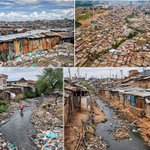
Meanwhile, Mathare is barely 4 km from Nairobi's central business district. Literally a walking distance. Maybe focus on reality before fantasizing about Somalia 💀


Samadoon retweeted

Somali Cultural Influences in the Arab World🧵
The following thread is a short overview of aspects of Arab culture originally adopted from Somalia.
It is not exhaustive and focuses on material culture.
The Zayla'i/Jabarti intellectual tradition will not be included here.
Samadoon retweeted

Eastleigh is not just a neighbourhood; it's an economic empire. While Kiambu, Murang’a and Nyeri have their towns and agricultural economies, Eastleigh has built a regional commercial powerhouse that commands wholesale trade across East Africa. Mega malls, thousands of businesses, billions in commerce and an international trading network. **Eastleigh doesn't compete with towns; it sets the commercial pace. A crown jewel of Nairobi and East Africa.** 🌍👑🔥
🇸🇴 Somali Excellence Making History! 🔥
Under Commissioner General Adan Abdulla Mohamed, KRA one of Kenya’s most powerful public institutions collected KSh 1.010 trillion in October 2026, a month ahead of past years.
A proud moment for Somali representation!

For the first time, KRA is under Somali leadership, and the institution has reportedly crossed the KSh 1 trillion revenue collection mark by October 2026. What a remarkable milestone! Somalis are a gem. We have talent, ambition, vision and a deep capacity for leadership. Never underestimate what our people can achieve when given an opportunity to lead.

1
316


Samadoon retweeted

Ilhan Omar getting ready to burst into laughter at the Orange Buffoon (Donald Trump)
Samadoon retweeted

HISTORY MADE: Somali American Abdi Daisane flips longtime Republican seat in central Minnesota.
Daisane defeats Republican Mike Conway in Minnesota House District 14A, becoming the first Democrat to win the district in more than a decade.
The district includes parts of St. Cloud, Waite Park, St. Joseph and St. Augusta.
Daisane, who lost his first bid for the seat in 2024, makes a historic comeback in a district long held by Republicans.

Samadoon retweeted
Ilhan Omar celebrates alongside her team after defeating Republican challenger John Nagel and securing another term in Congress! 🇺🇸👏


Another One


I WILL NOT APOLOGIZE FOR DEFENDING INNOCENT OROMO FAMILIES
Since 1991, I have defended the rights and dignity of Awdal. I cannot demand justice for our people while remaining silent when innocent Oromo neighbours face the burning of their homes and looting of their belongings in Borama.
My parents taught me to defend human dignity without asking someone’s ethnicity. My oath demands that I uphold those values - even when others criticize me.
Human rights have no ethnic exceptions. I will not retreat from defending innocent people.
My heartfelt thanks to the religious leaders who spoke during Friday prayers to protect our Oromo neighbours. Your compassion must now be matched by action: protect threatened families, provide emergency assistance, and bring those responsible to justice through impartial investigation.
To Oromo residents of Awdal and Gebileh: you deserve safety, dignity, and a peaceful life. If you feel threatened, contact me directly on WhatsApp, day or night:
+1-571-436-7586
Protect our neighbours. Reject incitement. Defend human dignity.
#ProtectOromoResidents #Borama #Awdal #Gebileh #HumanDignity #HumanRights #JusticeForVictims #PeacefulCoexistence
@PMEthiopia @AbiyAhmedAli @MFAEthiopia @GHessebon @ETEmbassyDCA @ETEmbassyMGQ @SomaliPM @HamzaAbdiBarre @MOFASomalia
@Jawar_Mohammed


2
72


Samadoon retweeted
The Oromo “Galla” leadership appears to have abandoned the battlefield approach and is now turning to political and administrative manoeuvres to legitimise land claims through the federal government after failing to defeat Somalis militarily. Jawar Mohammed previously warned that the Gallas could not defeat Somalis in an armed confrontation, suggesting that the alternative was to use the political system and disarm them instead. Now, it seems they believe they can achieve through government institutions what they failed to achieve on the battlefield. But they should understand one thing using political power to undermine Somali land rights will not make Somalis surrender their land.
Calling our solidarity nonsense while warning us about unmatched ruthlessness is wild. This pretty much reads, stay quiet or face Abiy’s “ruthlessness.” WE WONT STAY QUIET.

Are Somalis Marginalised Under the Current Ethiopian Government?
The latest clashes around Moyale have subsided, as usual. Yet the media campaigns and narratives that accompanied them warrant closer scrutiny. Although the fighting was another episode in a longstanding rivalry between two closely related clans, it was framed as a Somali grievance against an “Oromo-led” Ethiopian government. Specifically, the episode was presented through two main complaints: Oromo territorial expansionism and the political marginalization of the Somali people of Ethiopia.
Let us examine the substance of these two supposed Somali grievances against the Prosperity Party-led government, starting with the claim that the Somali people and region are more marginalised and abused under the current government than under previous regimes. Have Somali people faced greater marginalisation and abuse? Do they have less representation in the federal government? Has there been greater encroachment on the autonomy of their regional administration?
Marginalization or Improved Autonomy and Representation?
There is no denying that the Prosperity Party government is a continuation of its predecessors’ authoritarianism. It is also true that Abiy is a ruthless warmonger whose leadership has engulfed the country in numerous civil wars and who has sought to personalise state power. However, perhaps because he has been bogged down by wars in Oromia, Amhara, and Tigray, he has shown little to no interest in interfering in the internal administrative affairs of other regions, including the Somali region.
The president of one of these “peripheral” regional states once illustrated this shift to me: in the past, they complained about aggressive federal interference, whereas now they complain about being neglected and largely left to handle their own affairs with little guidance from the centre. “We used to struggle for more autonomy; now we are seeking more attention.”
Moreover, under the EPRDF, parties governing peripheral states such as Afar, Benishangul-Gumuz, Gambella, and Somali were treated as junior allies of the four-party EPRDF coalition. Consequently, they were excluded from the ruling coalition’s policy deliberations and decision-making processes. Today, these regions have proportional representation in the ruling party’s executive committee and central committee. Today, these regions have representation in the ruling party’s executive and central committees. For example, of the 45 members of the executive committee, ten are Oromo, eight Amhara, and four Somali and so on.
Among the former peripheral states, the Somali region is perhaps one of those that have most effectively capitalised on reduced federal intervention in regional affairs. One federal institution that used to intervene heavily in Somali regional affairs was the military. With the federal army preoccupied with wars elsewhere, its heavy presence in the Somali region has shrunk, along with its influence over regional affairs.
The Somali region is also perhaps the only region to have undertaken relatively meaningful political reforms by removing a significant portion of the former ruling-party EPRDF cadres and replacing them with newcomers and outsiders. In other regions, the old cadres largely changed their uniforms and continued ruling.
The Somali region also undertook significant reforms within its security apparatus, accompanied by improvements in the human rights situation, particularly compared with the abuses associated with the previous regional administration. By contrast, Oromia continues to experience serious human rights violations amid ongoing armed conflict. By contrast, little meaningful reform has taken place in states such as Oromia, where human rights violations are worse than they were under the EPRDF.
In light of these changes, I do not think it is disputable that the Somali region has been among the most stable regions in Ethiopia over the past eight years, particularly when compared with many earlier periods in its own history. Ironically, this relative stability has coincided with one of Ethiopia’s most turbulent periods, marked by multiple civil wars and widespread unrest.
In terms of development, too, available indicators suggest that the Somali region has made considerable progress relative to many other regions. The region, once known for food insecurity, is now sending irrigated agricultural produce to other regions. Diplomats and NGO workers frequently praise the region’s administration as comparatively well managed.
The Somali region’s representation and role in the federal executive have also improved significantly. This extends beyond representation in the ruling party’s decision-making bodies. Somali representatives have secured influential positions, with Adem Farah serving as a deputy to Abiy Ahmed in the ruling party’s leadership. Somalis also hold prominent ministerial and state-ministerial portfolios, not to mention the speakership of parliament.
One major issue that remains unresolved is the Somali region’s underrepresentation in the House of Peoples’ Representatives, where its number of seats does not adequately reflect its population. This imbalance is a legacy of the previous government and remains uncorrected.
There are two further legitimate issues that Somali Ethiopians can raise. The first concerns the legitimacy of their representatives in both regional and federal governments, none of whom have been elected through a free and fair process. The same could be said all other regions as the ruling party organized sham lections. The second is their inadequate representation in the federal military, a problem shared by much of the country’s pastoral and Muslim population, partly because military service has not traditionally been widely pursued as a career option in these communities.
Therefore, if I were a Somali activist, I would focus on preserving the gains made so far while advocating for what remains missing. Upon my release from prison in 2022, Somali elders and activists came to visit me at my home. During our lengthy discussion of the political affairs of the time, they raised numerous complaints against their regional government, led by Mustefa Mohammed. Mustefa was a comrade during the struggle, and they were therefore also hinting at holding me responsible for his shortcomings.
After listening to their list of complaints, I asked a few questions. How many people were being killed by security forces each day or each week? How many political prisoners were there, and were they being tortured as in the past?
They told me that killings by security forces had become very rare and that no such incidents had occurred recently. They also said that there were few arrests for political reasons and that, when such arrests occurred, the public protested and secured the release of those arrested. They had not heard of prisoners being tortured since the closure of the notorious Jail Ogaden.
I then described the situation in Oromia for comparison, where tens, if not hundreds, of people used to be killed daily, and hundreds of thousands of political prisoners languished in makeshift jails set up in converted schools. Torture was common, and prisoners were regularly executed without due process.
I then told them to say Alhamdulillah that they were not facing a situation similar to that in Oromia. They should ensure that the political situation did not deteriorate into armed confrontation and focus instead on fighting corruption and addressing other grievances through nonviolent means.
On the Claim of Oromo Expansionism
The second complaint, which dominated media coverage of the Moyale incident and was promoted by Somali political actors outside Ethiopia, concerns Oromo expansionism. The conflict has been framed as an attempt by Oromos to use their newfound power over Ethiopia to encroach territorially on other regions.
First, the Moyale conflict is not fundamentally a conflict between Oromos and Somalis, but one rooted in a longstanding rivalry between two clans. Their rivalry predates the current federal system and perhaps even the emergence of modern Oromo and Somali nationalisms.
Second, the conflict did not begin with the ascendancy of Abiy Ahmed to central power. The two clans have clashed repeatedly around Moyale under previous governments. In fact, the recent fighting has been relatively limited compared with the violence under the previous regime, when conflict raged along a stretch of the border from Moyale, at the southern tip of Borana, to Bordode in West Hararghe, near the Awash River.
We have witnessed relatively few such conflicts since the “ascendancy of Oromos to power” in 2018, with the recent Moyale clashes being the most significant. Some Oromos, in turn, attribute the Moyale conflict to Somali expansionism. Both interpretations are wrong.
Had either regional government been pursuing a deliberate effort to change boundaries through territorial encroachment, we would expect fighting to erupt at other longstanding flashpoints along the wider border. Instead, this conflict was confined to the area around Moyale and involved the Borana and Gari clans, with limited involvement by the security forces of the two regions. We did not witness similar clashes in other areas where Borana territory borders the Somali region, such as around Negele.
Some have gone as far as accusing Oromo nationalism of harbouring imperialist ambitions that extend beyond Ethiopia’s borders. This is far removed from the reality of Oromo political discourse. While Abiy has engaged in expansionist rhetoric, particularly regarding access to the sea, his views do not reflect those of most Oromo elites, whether in the ruling camp or the opposition.
Evidence of this can be seen in the significant internal opposition Abiy faced when he attempted to pursue his maritime ambitions through a deal with Somaliland. Even his push for sea access through Eritrea gained support partly because of the overtly anti-Oromo rhetoric of the Tsimdo alliance.
Abiy himself does not come from the Oromo nationalist camp. His nationalist orientation is rooted more in Ethiopianism, as historically espoused by Amhara elites. Let us also not forget that Oromo nationalists were his first enemies and among the earliest targets of his crackdown, and that Oromia was where he faced his first armed rebellion.
Contrary to the accusations of imperialism levelled against it, Oromo nationalism is still struggling to reconcile itself with Ethiopian state nationalism. Those of us who try to move beyond the confines of ethnonationalism often face significant backlash from hardliners. Moreover, Oromo elites are still squabbling over resources and influence within Oromia rather than seeking to project their interests into other Ethiopian regions, let alone neighbouring countries. Among Oromos generally, there is little discussion of Somali affairs and even less animosity towards Somalis, except in some border communities where longstanding clan rivalries persist.
My Advice to Somali Political Actors Outside Ethiopia
First, do not inflate a localised border conflict into an ethnic or national confrontation. These clashes flare up frequently and die down quickly unless they are aggravated by highly sensationalised media coverage and inflammatory narratives. The recent fighting has already cost civilian lives and displaced thousands of people, including families forced to seek refuge across the border in Kenya. Such consequences make it even more important to prevent localised disputes from escalating into wider ethnic confrontations.
Second, do not repeat the mistake of the Eritrean government-led Tsimdo group, whose anti-Oromo rhetoric helped Abiy rally support among Oromos to a level he had not enjoyed since the first few months after his rise to power.
Third, do not underestimate Abiy and his ruling clique, as other groups have done at their own peril. Abiy and his associates may not have an impressive record in certain areas of development and governance, but their ruthlessness and effectiveness in destroying their adversaries are unmatched. Just ask those who have confronted them in the recent past.
Fourth, do not revive the anti-Ethiopian narrative associated with Somali nationalism during the feuds between Mengistu Hailemariam and Siad Barre. Reopening this old wound between the Ethiopian state and Somali nationalism could have dire consequences for the security of both countries and their societies. It would also undermine efforts to rebuild the Somali state and jeopardise the gains Somali people within Ethiopia have made over the past few decades in securing regional autonomy and reducing the securitisation of their region.
2
92
Samadoon retweeted

🚨🇸🇴|
This man was spotted in Hargeisa. He looks to be a high level NISS spy for Ethiopia. This is Ethiopia’s long term plan against Somalia.
Oromos should be deported from Somalia. Do not attack them do not steal their properties do not hurt them. Deport according to the law.
Samadoon retweeted

Breaking News 🚨
Warqad si gaara iigu soo diray geesi ka mid ah Ciidanka Puntland buuraha Cal-Miskaas ku raad-jooga Argagixisada Daacish, ayaa iga codsaday in baahiyo war-qad uu ka helay jeebka mayd mid ka mid ahaa argagixisada Daacish kaas oo qoomiyada Oromo Ethiopia loo aqoonsaday!
Warqadaan jeebka Argagixisada Oromada bakhtiyay laga helay ayaa ku qoran af-Oromo, hadii af-Somali lagu tarjumay waxay noqotay sidan:
“Wado kasta aan u maro, waxaan ku faraxsanahay in aan ku dhinto in ka yar 300km ah dhul badda cas u jira, ama aan ku guuleysto rajadayda iyo himilada dadkayga Oromo si ay u helaan dhul Badda-Cas ka mida”!
Dalkaan shoow waa isaga dul noolnahay ee rag kale ayaa xisaabsaday waa hore!!
Puntland, Oromada harqisay maxaa uga qorshaysan??
Othman


Some Kenyans constantly mock Somalis over alleged “fraud” meanwhile the DOJ exposes a Kenyan linked scheme, stolen American identities → fake ghost students → taxpayer funded loans → cash funneled to Kenya. The irony. 😂

🚨 BREAKING: The Trump DOJ uncovered a MULTIMILLION dollar student loan fraud scheme perpetrated in part by KENYANS in America
These Kenyans were STEALING American identities, applying for student loans, then sending that money back to KENYA
SEND THEM ALL BACK. We DO NOT need these people here.
Multiple Kenyans have now been indicted by federal grand juries on SEVERAL federal charges, including theft of government money and aggravated identity theft.
American victims — some of which never went to college — were victims of this scheme, had their identities stolen, and their credit absolutely WRECKED.
These third worlders are absolute scumbags.
32