

Member of Technical Staff @GoodfireAI working on AI interpretability for scientific discovery. Prev: @Harvard, neuroscience PhD @Columbia @cu_neurotheory
San Francisco, CA
Joined January 2015
- Tweets95
- Following654
- Followers1K
- Likes202





Ching Fang retweeted

Me: generate a novel 76-residue protein binder
BoltzGen: best I can do is ubiquitin.
I did a quick analysis of memorization in protein generations using @GoodfireAI’s Silico (now publicly available!). Silico makes it easier to investigate and debug model issues like this 🧵


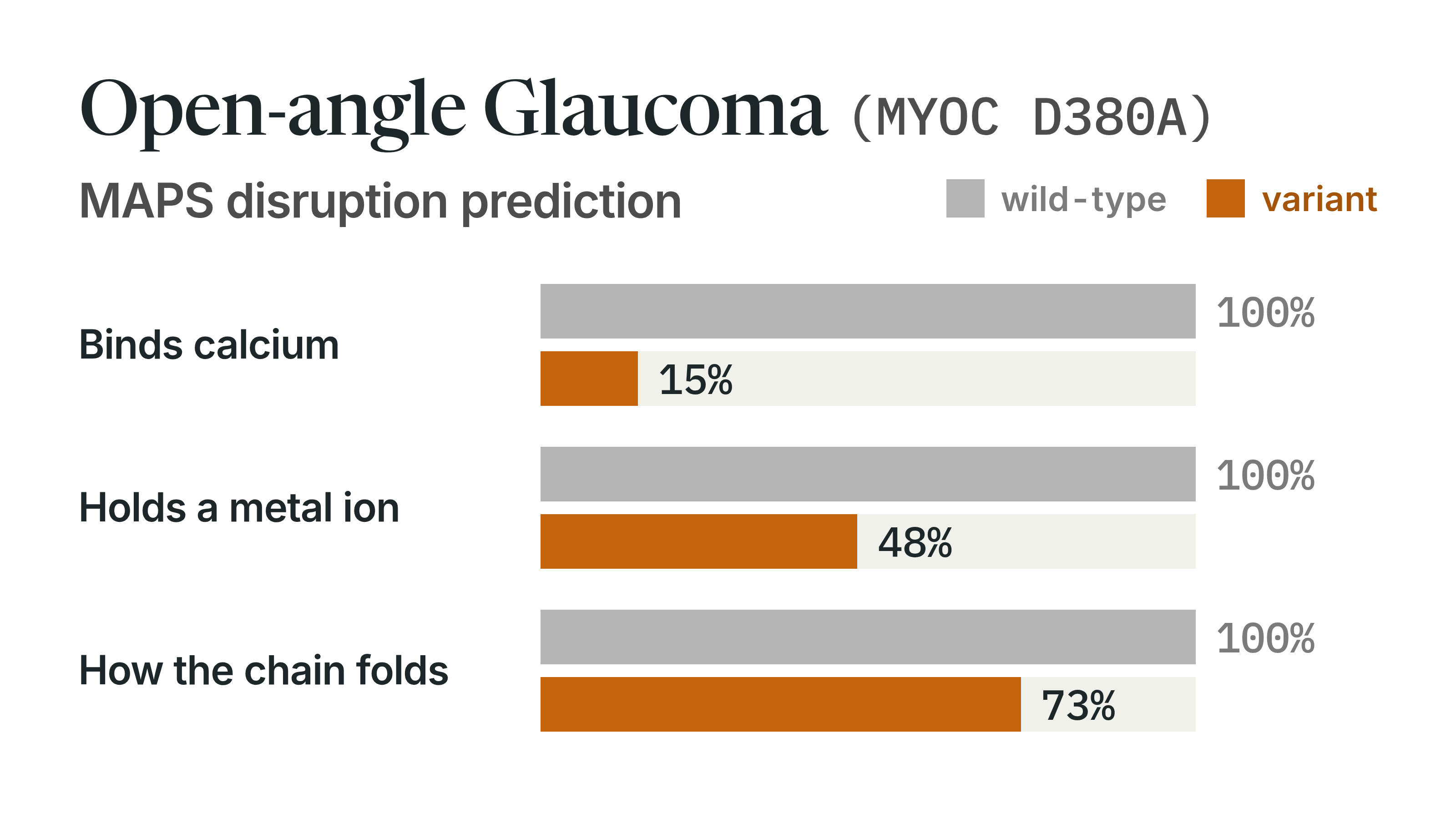
The representations in protein language models contain lots of info about protein properties. With interp methods, we can extract that knowledge to predict if a protein variant is harmful and why! @jaanakprashar made a great tool demonstrating this application:

Ching Fang retweeted

This September, I will join the @FlatironInst Center for Computational Neuroscience as a Group Leader, where I will launch the High-Dimensional Dynamics & Computation Group.
Info for postdocs and grad students is forthcoming.
I am grateful to my mentors who made this possible!

Ching Fang retweeted

BSF works for bio-models too! found this conservation manifold that looks like an octpus 🐙 in GPN-star, MSA based genomic foundational model
Ching Fang retweeted
excited to see what BSFs will unlock for science models!
early exploration finds subspaces that divide protein folds into subdomains. here's one in ESMC-6B showing a circle of subdomains within the ATP grasp fold


really cool example of what block sparse featurizers can do! 🧊

Ching Fang retweeted
If models think in shapes, our tools should too.
Our latest research: Block-Sparse Featurizers (BSFs), a new way to find concepts in model activations - using multidimensional “blocks” instead of single directions. (1/9)
You can discover manifolds with SAE features! Very excited about this line of work 🍩💿
Ching Fang retweeted
We achieved state-of-the-art performance in predicting which of 4.2 million genetic variants cause diseases by interpreting a genomics model, in a new preprint with @MayoClinic.
We're now releasing an open source database for all variants in the NIH's clinvar database. 🧵(1/8)

Ching Fang retweeted

🤖📊 NEW in the Deeper Learning blog: @AnnHuang42 & @KanakaRajanPhD break down their recent work examining how recurrent neural networks solve the same task in different ways —and why that matters. Joint work with @tweetsatpreet & @FlaviohMar bit.ly/4kj4fVd #NeuroAI #AI
A really exciting example of using interp to advance scientific progress!
I had a lot of fun working on this with our scientific discovery team :)
We've identified a novel class of biomarkers for Alzheimer's detection - using interpretability - with @PrimaMente.
How we did it, and how interpretability can power scientific discovery in the age of digital biology: (1/6)

Ching Fang retweeted

Kimi is just like me frfr
Steering @Kimi_Moonshot's K2 Thinking's reasoning in the Kimi CLI

Ching Fang retweeted
Our infra lets us steer trillion-parameter frontier models in real time:
- live, mid-CoT edits to internal activations
- directly altering how the model reasons (not just outputs)
- stackable edits
- no added latency
We can make models more Gen Z, more concise, etc.

at @GoodfireAI, @RyanPanwar and Michael Anderson are building tools to intentionally design and control AI, moving beyond prompting to direct, real-time intervention.
Ching Fang retweeted

🔴 Live: Panel discussion #1: @ MAIN2025
The future of Neuroscience - The role of AI ?
with Andreas Tolias, Siva Reddy, Joao Sacramento, Ching Fang + Eva Portelance
Moderated by Patrick Mineault @patrickmineault
#MAIN2025


Had a great time at MAIN 2025! Loved chatting with everyone 😊

🎉MAIN 2025 conferences just kicked of
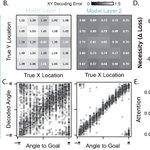
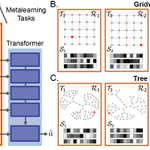
Our opening lecture is by Ching Fang (Goodfire AI, San Francisco) - "From Memories to Maps: Mechanisms of In-Context Reinforcement Learning in Transformers"
Montreal AI & Neuroscience is brought to you by @ai_unique
#MAIN2025 #NeuroAI #RL

I'll be presenting this as a spotlight work at the #NeurIPS2025 mechanistic interpretability workshop this Sunday in the afternoon session!

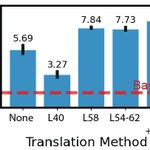
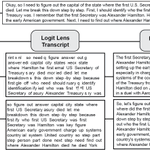
Sharing some new work! We asked whether we could decode a model's reasoning if it was thinking in encrypted text, using only its internal activations. The answer is surprisingly yes.
arxiv.org/abs/2512.01222

Sharing some new work! We asked whether we could decode a model's reasoning if it was thinking in encrypted text, using only its internal activations. The answer is surprisingly yes.
arxiv.org/abs/2512.01222
One caveat is that we used SFT on the base model's own responses, which might preserve more of the original activation space. There's room for more testbeds here - RL-induced encoding, more complex ciphers, etc.
But overall this is encouraging for interpretability - simple mechanistic tools may be more robust to encoded reasoning than we expected. Joint work with Sam Marks @saprmarks, done during my fellowship with Cambridge Boston Alignment Initiative @cbai_ai