

Pastor, King’s Cross (Nashville) PhD, Midwestern Seminary Mostly tweeting my excitements and frustrations with Kentucky basketball and football 🙃
East Nashville, TN
Joined May 2009
- Tweets14.5K
- Following160
- Followers984
- Likes22.7K





Pinned Tweet
Why am I starting a Substack (when the rest of you already have one and it's probably just more noise)?
open.substack.com/pub/eastan…

Me, telling my kids about the Reformation…
My 4 year-old son's summary: "So, the bad guys nailed Martin to the church door?"
Close!
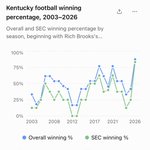
We are more than halfway through the college football season and Kentucky has the best resume of any team in the SEC.*
*I am not saying they are the best team. But only one loss, win against LSU, and three road conference wins is the best SEC resume.
I know our kicker stinks, but I don't get going for it when you have to get 4 against a top 5–10 defense, and leaving the door open for a FG to beat you. This is gonna be a 16–14 final, I'm afraid…


If beating SC in Columbia drops you out of the Top 25, is Florida going to get demoted to FCS football?


Thankful for this question. A major problem in SBC and conservative evangelicalism broadly is the impulse that the only reason someone can disagree with me is because they don’t believe the Bible or are “liberal.” We need more charitable impulses and greater eagerness to listen.

Here’s what disheartens me about #SBC26 :
1. Folks who voted for the amendment calling everyone who didn’t an egalitarian.
2. Folks who voted against
predicting a witch hunt against every women who does anything in ministry.
Both are dishonest and disingenuous.
Here’s what encourages me:
New missionaries commissioned, 51% CP allocation to IMB, strong, balanced resolutions on immigration, complementarianism, and political violence, 5 straight years of baptism growth, 4 straight years of attendance growth, 699 church plants last year!
What is instructive here is how Megan and others in her tribe continue to conflate so political liberalism with theological liberalism. That Keller believed in white privilege (setting aside whether he was right or wrong) does not make him a smuggler of a "social gospel."

The consideration of Keller's legacy on broader evangelical thinking is going to be ongoing and those who have a vested interest in maintaining a gloss on his reputation (think TGC or fellows from The Keller Center for Cultural Apologetics) will understandably resist inclusion of those aspects that have come in for strong critique. (I believe for good reason).
It's understandable those who today work in ministries Keller founded or was connected to would resist this part of his review, and we shouldn't leave out the parts of Keller's teaching that were sound and valuable and his ability to gain a hearing with less receptive audiences.
But this discussion must also include the central role he played in trying to make a progressive social gospel palatable to theologically conservative evangelicals.
His promotion of Gustavo Gutierrez and liberation theology, for instance. His insistence, as in the first clip, that black men are incarcerated at higher rates because of white bias rather than higher rates of black criminality.
Or his argument that negotiating for the best price on a car deal is an example of systemic racism and sexism. He calls it a form of rebellion against God. (Never mind there are many scenarios where white people would be poorer negotiators--are minorities taking advantage of them and in rebellion against God then?)
Or his finding of systemic racism in missionaries raising their funding (a practice that applies to missionaries of all ethnicities) because he claims some ethnic backgrounds have access to more wealth. He includes Asians among those who are supposedly at a disadvantage here without acknowledging that Asians have higher overall median household and individual earnings than whites do.
In the third video, he promotes idea of "white skin" being a "historical asset." And he argues white people have a responsibility to be conscious of the fact that this skin color advantage was earned for them through unjust practices of past generations of white people (thus, everyone with white skin bears some guilt for this even if their ancestors didn't personally participate in racial oppression).
And there are many more such examples from Keller, taking ideas from liberation theology and disseminating it to the broader evangelical church.
So I think it's important to acknowledge the part of his ministry that was heavily focused on social justice rather than challenging the views of his urban, progressive audience that would certainly align with that worldview. This part of Keller's preaching acted as reassurance to his minority audience that they have been wronged and are justified to some degree in embracing grievance and envy.
This was some of his most influential teaching that shaped much of the evangelical landscape on how young pastors spoke and wrote about the church needing more focus on becoming champions against this alleged social injustice.
So by all means, let's not throw out the meat that the Keller produced through his ministry. But these bones were a significant part of his influence and we cannot ignore it either.