

co-founder @elementlpower | building new nuclear former submariner opinions my own
Joined August 2026
- Tweets294
- Following234
- Followers715
- Likes120


Pinned Tweet
Nuclear is having a moment. People want new nuclear, but can we build it?
I've been writing the story of how we got here, what we learned, and why we started Elementl.
How We Got Here: the 2020 "melting ice cube" thesis x.com/davidefaherty/status
Nuclear's Missing Business Model: the industry needed projects, not more designs x.com/davidefaherty/status
Then Demand Showed Up: from replacing the fleet to load growth x.com/davidefaherty/status
Testing the Thesis: lots of meetings and lots of noes x.com/davidefaherty/status
The Mental Model of a Utility Executive: why utilities don't build x.com/davidefaherty/status
A Reactor Is Not a Project: lessons from PJM and Oklo x.com/davidefaherty/status
Making Nuclear Investable: development is using dollars to retire risk x.com/davidefaherty/status
Who Actually Builds a Nuclear Power Plant?: designing a reactor isn't building a plant x.com/davidefaherty/status
More coming.
Andrea Jokisaari makes an important point in the attacehed post.
Some of the toughest challenges in moving from a successful experimental reactor to a commercially operating power plant come down to materials engineering.
And the operating fleet has taught us some expensive lessons. Steam generator degradation, creep, thermal aging, stress-corrosion cracking, and irradiation embrittlement can lead to costly inspections, extended outages, and major component replacements. Material behavior can ultimately determine plant reliability and economics.
Selected materials need to perform reliably, predictably, and economically for decades.
That's an enormous distinction between demonstrating a reactor technology and delivering a power plant.
And it will be a critical diligence issue for reactor OEMs and developers seeking project financing for their first commercial plants.
It's very difficult to underwrite project debt without a credible basis for projecting plant availability, capacity factor, and maintenance costs over the life of an offtake contract. Uncertainty about long-term materials performance translates directly into uncertainty about project cash flows.

Thanks Shayle! Really enjoyed it

The next generation of nuclear power in the U.S. faces a big challenge. It's not so much new reactor design, but rather the complicated, messy work of turning a reactor design into a high capacity-factory, low-capital cost 30+ year infrastructure asset on the grid.
@davidefaherty, co-founder of @ElementlPower, talked through the nuances of new nuclear development and capital formation with me on @CatalystPod. IMHO, required listening if you care about new nuclear.
Watch: lnkd.in/gnvQJ9nX
Listen: lnkd.in/gNpFVWyg
There's a new version of this post
1
59
NYPA named Elementl Power yesterday as one of six potential developers for large-scale reactors in upstate New York.
New York is running a serious process, and we're glad to be in it. Congrats to all on the milestone!
syracuse.com/news/2026/11/ne…

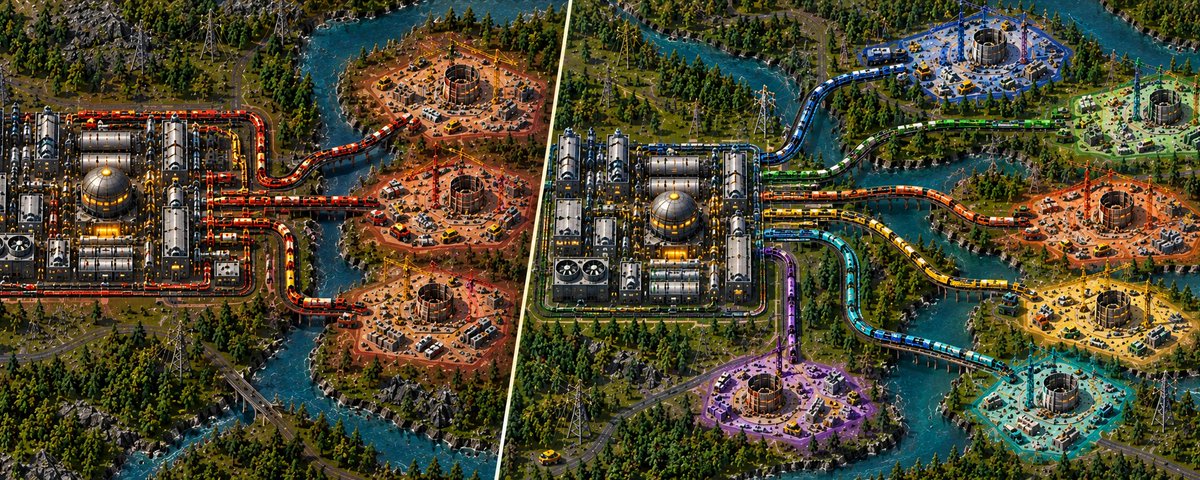
A reactor design isn't a project.
A project is a site where a customer needs power, a community that wants the plant, and a clear answer to who carries which risk before anyone pours concrete.
@shaylekann and I got into what that takes on Catalyst.
youtu.be/hIoTWnAekCc
10
880
Here’s a local look at the nuclear project we’re developing in Meigs County, Ohio.
I appreciated Liv Jacobs taking time to chat with us!
thepostathens.com/article/20…

How do you finance new equipment in the nuclear supply chain when every reactor designer wants a different part?
I talked about this yesterday on a panel with Jay Surina at @US_NIC 's New Nuclear Capital event at @jpmorgan . Jay is a managing director at Pelican Energy Partners, a Houston private equity firm with a $450 million fund for nuclear services and equipment companies.
One of them is MillenniTEK in Knoxville, which makes boron carbide ceramics. Jay compared these parts to spark plugs: small, cheap next to the machine, and the machine doesn't run without them.
They are hard to make. Boron carbide is the third-hardest material known, after diamond and cubic boron nitride, so it takes diamond tooling to grind it to size. Every lot is traced, tested and documented under a nuclear quality program.
A little reactor physics. Boron carbide (B₄C) is a ceramic made of boron and carbon. About one in five naturally occurring boron atoms is boron-10, the isotope that does most of the neutron absorbing. When a boron-10 nucleus catches a neutron, it splits into lithium-7 and an alpha particle. That neutron is out of the chain reaction, and that boron-10 atom is used up.
How good boron-10 is at catching a neutron depends on the neutron's speed. For slow neutrons it is one of the best absorbers there is. For the fast neutrons in a sodium-cooled reactor it is roughly a thousand times worse.
Reactor designers put that physics to work in very different ways.
•In a boiling-water reactor, operators insert control blades containing boron carbide to absorb neutrons and shape where the core produces power.
•In some pressurized-water reactors, ring-shaped ceramic pellets act as a "burnable poison." They hold down the excess reactivity of fresh fuel, then deplete along with it, leaving more neutrons available later in the cycle.
•In Kairos Power's fluoride salt-cooled design, boron carbide goes inside the shutdown rods. Each absorber assembly takes more than 500 welds to seal.
•In some microreactor designs, a curved segment of boron carbide sits on one side of a rotating drum outside the core. Turn that side toward the fuel and it captures neutrons that would otherwise scatter back in.
•In India's sodium-cooled Prototype Fast Breeder Reactor, the neutrons are fast, so natural boron isn't enough. The control rods call for pellets in which more than 65% of the boron atoms are boron-10, and only a handful of plants in the world produce enriched boron.
Each of those is a different part, with its own tooling, testing and qualification. Small batches built to different customer requirements make it difficult to invest in capital equipment. That is Jay's central challenge right now.
The fix starts with those of us developing projects. Standardized projects built on the same technology give the supply chain standardized products to manufacture. Standardized products with repeat orders are what justify real capital investment. Each repeat order then spreads the tooling and qualification cost across more parts, and the next plant costs less.
Until we get there, suppliers are guessing.

My partners and I encountered these challenges again and again when we were looking for supply chain investments.
Ultimately, these experiences drove us to found Elementl Power to help address the central challenge the nuclear industry faces - the need for real projects.
More here:

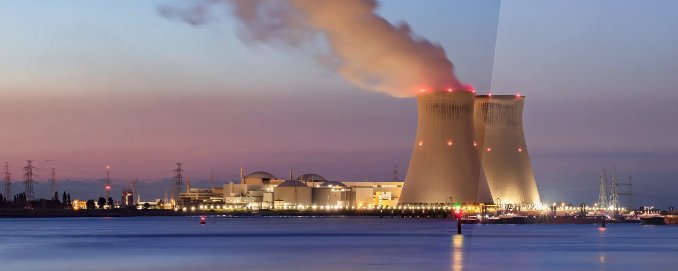
2020 thesis: nuclear was a melting ice cube. Buy services businesses. Underwrite the fleet, but position for growth.
We ended up asking: how do we accelerate the growth?
Chapter 1: How We Got Here.
(consolidating an old thread)
120
Thanks for the continued dialogue.
To clarify my earlier post: I think companies starting from scratch today are too far behind to warrant investment. The teams that recently reached criticality or won Janus awards have a fighting chance to win the military opportunity and to serve remote communities and mines, with two cautions. First, criticality proves the physics, not an operating power plant. Second, I think the market is much smaller, and the fixed capital needed to serve it much larger, than multibillion-dollar valuations imply.
My view would change when an investment-grade customer signs a sizable, firm PPA with upfront capital at risk. Not an MOU, not an LOI, not a preorder. A firm PPA. A customer investing directly in the supply chain would be an even stronger signal.
Rather than compare assumptions, let's take the view of a potential customer: a remote mine running on trucked-in diesel and weighing its alternatives.
- Keep running diesel and buy carbon credits. The gensets are paid for, the crews know them and they're easy to maintain. Low operating risk, though the mine stays exposed to fuel prices.
- Improve efficiency. Heat recovery, load management and better dispatch are the cheapest savings available. Low risk.
- Build a grid line. Usually the best answer when the grid is close, and out of reach for the most remote sites. Low risk where it's feasible.
- Switch to renewable diesel. It drops into the engines the mine already owns and shows a commitment to clean power without new equipment or capital. It can be blended to match what regulators require or what buyers will pay for a greener mineral, so the cost lands on the customers who value it. If the corporate goal is to check the box, it's a solid option. Its premium over regular diesel is the most the mine should pay anyone else to cut the same emissions. Low risk.
- Add wind, solar and batteries. Gold Fields' Agnew mine in Western Australia gets 50–60% of its energy this way, from a microgrid EDL has owned and operated since 2020 under a 10-year contract. Remote sites sometimes have space. Low risk, but rarely a full solution.
- Wait for orbital solar, which venture investors also fund. Overview Energy plans to beam power to existing solar farms and has scheduled its first orbital demonstration for 2028. (I'm being cheeky 🙂, but it's plausible.)
- Sign for a microreactor.
The customer weighs cost, commitment and risk, and the options don't compare neatly. Some decisions are reversible, and some are bridges that put off larger commitments. Site leadership can make some calls locally. Others need board approval, serious planning and capital, and nuclear is one of them.
The customer also has to underwrite to a different standard than a venture investor does.
So what has to be true for a mine to pick a microreactor? It has to be cost-competitive and reliable, and the community has to accept it.
Cost. Start with fuel. Cheaper HALEU TRISO needs large investments in enrichment and fabrication. Some of that is happening, but it isn't clear where all the money will come from or how far costs can fall. The problem is circular. The larger the firm order book, the faster costs come down. X-energy's deal with Amazon shows how it can get done. Amazon anchored the round that funds the first phase of X-energy's TRISO-X fuel plant. But few customers can play that role, and it's hard to know how much capacity Amazon's investment will fund beyond its own needs. The first plant will make enough fuel for up to 11 Xe-100s, and Amazon's own target of more than 5 GW implies about 60.
Then the site. Even a plug-in unit needs a pad, a security perimeter, roads, a hookup to the mine's system, an environmental review and, for some designs, added concrete shielding (5 ft?). Maybe a hole in the ground as well. In dollars, that's far less than an SMR or a large light-water reactor needs. Per megawatt, it's meaningful, because the cost is spread across one megawatt instead of hundreds.
Then operations. How many operators per site? How much security? What will maintenance cost? How will it affect the rest of the site?
Then capital. How much has to be committed upfront, and by whom? At a remote site with one offtaker, it's fair to ask the customer to put in capital or credit support. If it won't, third-party finance will be hard to attract, and the vendor ends up funding more of it. Even at $15 million a unit, a fleet of 100 ties up $1.5 billion.
Reliability. Lost production costs a mine far more than fuel, so the diesel fleet stays as backup and the reactor replaces only fuel. A 90% capacity factor is an assumption that will take years of operation to prove. There's also the risk of problems that only show up over time and force a fleet-wide standdown. When France found stress corrosion cracking, EDF halted about a dozen of its 56 reactors to replace cracked pipes, and its nuclear output fell to the lowest since 1988. For a vendor that owns the fleet, a common defect stops revenue from every unit at once.
Social license. Every host community asks what happens to the fuel. With no US repository, the vendor has to take the reactor back and defuel it, and defueling facilities take capital too. The NRC must certify a package to ship it. Part 71 wasn't written for a whole irradiated reactor, and the agency proposed changes only in July. The route needs NRC approval, with armed escorts through populated areas. Each state and tribe along the way gets advance notice, and many states charge fees. And it's more than one move. The fueled reactor goes back to the vendor, and its spent fuel and activated hardware later need their own trips to storage or disposal. At Radiant's stated 20–30¢/kWh, a 1 MW unit earns roughly $8–12 million over a five-year core, so each $1 million spent moving it takes about a tenth of that.
It's a tough sale. For a mine, or any other customer, choosing a microreactor is a bet on the site's power supply, so the threshold is higher and the tolerance for risk is lower. It also rests on lifecycle assumptions that are hard to validate, and with a reactor this small there isn't much juice to squeeze if any of them miss.
Management teams and boards who have to diligence all of this will ask, "Why should we even take time to look at this for 1 MW of power?"
Many vendors answer with an easy button. They offer to own and operate the reactor, or at least to handle its fuel from start to finish. Delivering that means funding factories and, depending on the company, part of the enrichment buildout, fuel fabrication, spent fuel logistics and defueling facilities. That may be the right answer for customers, but it puts much of the capital on the vendor's balance sheet. The more of it that comes from equity raised at the parent company, the harder today's valuations are to underwrite.
Again, a sizable, firm PPA with the customer's own capital at risk would show that someone has underwritten all of this. That's when multibillion-dollar valuations start to make sense.
Disclosure: I co-founded Elementl Power, an independent nuclear developer.

Even some of nuclear energy's biggest fans cannot figure out why investors like @nucleationvc are so interested in micro reactors. They believe the maths, as my British Commonwealth friends say, do not pencil out.
We believe that they do when the computations begin with a different set of assumptions. One can be exceptionally good at following math rules and still get a wrong answer by starting with an incorrect or incomplete set of assumptions.
Here are a few assumptions I've seen on well-crafted pitch decks that change the final results to the question - "Do micro reactors make economic sense?" We believe incorporating some or all of them into your calculations might change your attitude from dismissal to cautious interest and perhaps even acceptance.
1. Small reactors that produce power in the range of hundreds of kilowatts to tens of megawatts do not compete in the same market as extra large reactors connected to large power grids.
2. In the markets they address, some of which are much larger than many assume, the ONLY current competition is a combustion engine – either diesel or Brayton cycle – that consumes some kind of distillate fuel oil. Just in case you have not been paying attention, the current world price of distillate fuel - at the rock bottom wholesale level - is approaching $5.00/gallon. At 14 kWh/gallon, that's roughly $350/MWh. That is JUST the fuel cost.
3. Regulators have been making huge strides – often with a strong push from legislation enacted by overwhelming majorities – towards adapting rules that recognize the low consequences of events associated with small reactors.
4. Regulators are also enacting rules that recognize that reactors don't have to be tied to a single site, that identical reactors coming from the same factory do not need a completely new license review and that modern methods of risk analysis can help provide adequate assurance of public protection.
5. Micro reactors are not just scaled down large reactors. They have a completely different set of systems, structures and components. If those reactors are designed to be cost competitive, their parts lists, both safety and non safety, are far shorter than those of conventional reactors.
6. Many customers care deeply about cleanliness, CO2 emissions, independence from constant fuel deliveries, dependability and small power generation footprints. They want on-demand power in all seasons and in the worst of weather conditions.
The ways that these assumptions change the maths is challenging to express in a brief post or even a lengthy thread. But rest assured, there are a growing number of well-informed people who have done the calculations with enough detail to become excited.
Some have invested their careers. Others, like the team @nucleationvc, have invested their money and that of their limited partners.
The teams at @RadiantNuclear, @AntaresNuclear, @DeployableE, @AaloAtomics, @LastEnergy, @nano_nuclear, @CphAtomics, @ApolloAtomics, Blykalla and others are not ignorant, ill-informed or crazy. Some of them may not survive in their current form, but they are not chasing a chimera.
PS - In many decks making the case for smaller reactors, I have also seen some poor assumptions.
1. Military customers are not cost sensitive. (I spent 9 years doing military budget work. Cost is far more important than many think.)
2. Future fuel prices can be predicted by simply inflating today's prices.
3. A newly formed team without any members that have been working on new approaches for many years can catch today's leaders.
4. Small reactors can make lots of money selling medical isotopes while they are seeking entry into the power market.
Disclosure: Nucleation Capital is an investor in Radiant, Deployable Energy, Aalo, Blykalla, Copenhagen Atomics and Apollo Atomics. All of them are developing reactors with power ratings below 60 MWe. Accredited investors can join us as we continue finding new companies performing math based on well considered assumptions. Link in reply.
Advanced nuclear needs similar solutions to fund projects. Raising billions at the topco is too dilutive and drives valuations that are hard to stomach.
There’s a playbook for this in infrastructure, but it’s a very different world than VC. I know the team at the @newindustrialco is working on the challenge

Discussed this with a bunch of folks now, but it really does feel like there needs to be some funding mechanism somewhere between VC and PE for many of these new manufacturing companies getting started/built...
2
367
No idea how new microreactors are investible at this stage, let alone worth $5 bn pre-money.
They need ~$1 bn to design and license, and that is before fuel fabrication, standing up the supply chain, and standing up a FOAK project.

One of the more fascinating developments over the past 9-12 months has been the reversal of relative valuation metrics between public and private markets in the #nuclear reactor space. Venture Capital, coming off big wins in AI is throwing money at hard tech aggressively and that’s leading to very lofty pre-money valuations for micro reactors. A year ago public market valuations were trading at very high premiums to private comps. That has completely reversed and public nuclear tech companies now trade at major discounts to private rounds.
You can buy $XE @xenergynuclear at a $2B valuation net of cash with great backers (Amazon, Dow, Energy NW, AEP, Centrica), a developed orderbook with sites and on the cusp of an NRC construction license. However, half the VCs in the market are trying to pitch me an earlier stage microreactor company with a much smaller TAM at $5B pre-money… not sure if the VCs or public markets are right but they can’t both be… ill take public market liquidity at a discount over an illiquid VC hype story anyday… #uranium
The insanity of that decision is difficult to fathom.

There is no reason Germany shouldn't be leading this industrial revolution. This is a country of engineers… It's got amazing AI talent. But… they decided to turn off their nuclear capabilities, so they are not competitive anymore… The biggest risk becomes that you don't actually innovate.
6
518
When SpaceX bought xAI, Musk argued Earth can’t power AI without real costs to communities, and proposed putting data centers in orbit.
A reactor doesn’t have that option.
Part 2 of Venture Blind Spots in Nuclear
There’s a lesson here for nuclear.
Higher temperatures, lower pressures and fewer components can be real engineering advantages. Whether they add up to more competitive electricity is a different question.
You have to account for the whole plant: construction, fuel, materials, maintenance, reliability and financing. An advantage in one area can create expensive problems elsewhere.
Meanwhile, light-water reactors keep evolving, supported by decades of operating experience and an established industrial base. The AP-1000 and BWRX-300 are part of that evolution.
The challenger has to offer enough value to justify the cost and risk of building a new ecosystem.
You don’t get to assume twenty years of progress for your technology and twenty years of stagnation for the competition.

Why rotary engines never became the next piston engine,
- In the 1950s, the Wankel rotary engine promised a revolution. It eliminated conventional pistons, connecting rods and valve trains, offering a smaller, lighter and remarkably smooth alternative.
- Its compact design delivered impressive power relative to its size. Major manufacturers, including General Motors, Mercedes Benz and Toyota, licensed the technology, exploring its potential for mass production.
- Mazda demonstrated just how capable it could become. In 1991, its rotary powered 787B won the 24 Hours of Le Mans, covering nearly 5,000 kilometres without a race delaying mechanical failure.
Yet the anticipated transition never happened.
- General Motors abandoned its rotary programme in 1974, struggling to achieve competitive fuel economy while meeting increasingly strict emissions requirements.
- One fundamental obstacle was combustion efficiency. The rotary's long, narrow combustion chambers increased heat losses and complicated complete combustion, hurting fuel economy and emissions.
- Sealing created another challenge. The rotor's apex seals required precise lubrication and wear resistant surfaces, while specialised housings demanded difficult machining and manufacturing processes.
- The 1973 oil crisis made these disadvantages increasingly costly. Mazda spent years improving fuel economy, but its rotary engines struggled to match conventional piston engines in everyday use.
- Meanwhile, piston engines kept improving. Fuel injection, advanced combustion designs and more efficient manufacturing strengthened an already enormous industrial ecosystem.
- Even after decades of refinement, rotary engines never achieved widespread adoption. Mazda returned to rotary production in 2023, but in a compact generator role rather than as a direct replacement for piston propulsion.
Ultimately, rotary engines never lacked extraordinary engineering. Their advantages in compactness, smoothness and power density were real, but they couldn't consistently outweigh the compromises in fuel efficiency, emissions and manufacturing.
The larger lesson is that a promising new technology cannot displace an established one simply by being better in a few areas.
The incumbent technology keeps improving too, backed by decades of investment, manufacturing experience and industrial scale.
To replace it, a challenger must offer advantages substantial enough across performance, operating efficiency and cost to justify changing an entire industry.
The power problem doesn’t go away in 2028

He who shapes power, data centers, chips and models into an economically feasible endpoint, disproportionately shapes AI/SI right now.
Why?
Power is THE binding constraint in AI/SI. Few really have it.
Data centers don’t work without power. This is not about promises of power tomorrow. Or forecasted power in 2028. Power TODAY.
Chips can’t operate profitably unless installed in a functional data center. If you can install chips, it’s because you’ve solved the power problem.
Models aren’t economically viable unless run on cost effective infrastructure which requires a functional data center with low input costs and reliable management. This can’t happen without power.
AI/SI ROI doesn’t pencil unless models generate profitable outputs which necessarily needs functional data centers as the critical input. Again, power.
Ergo, he who can shape data centers, chips and models together into a tightly coordinated stack is someone who has solved power.
Solving power allows you to disproportionately shape AI/SI right now.
2
340


I had dinner recently with the chief engineer of a Gen IV reactor design. It's a great team and an impressive technology. As we talked through some of the engineering challenges, she acknowledged that certain things would be a lot easier if they were using water. Her team was developing complex solutions for functions water handles very well.
It’s a useful way to think about why water-cooled reactors are the mainstay of our current fleet.
Start with moderation. Hydrogen’s nucleus is almost the same mass as a neutron, making it exceptionally effective at slowing neutrons down. That makes them more likely to cause fission in U-235. The same water then carries the heat out of the core.
And there’s a lot more:
• High heat capacity means water carries substantial heat and gives the coolant inventory thermal inertia.
• Boiling transfers heat very effectively. Vaporization absorbs substantial energy, and a BWR produces steam for the turbine directly in the reactor vessel. No separate steam generator.
• Density differences drive natural circulation, allowing heat removal without running pumps.
• Water provides cooling, radiation shielding, and visibility during underwater fuel handling. You can actually see what you’re working on.
• It’s liquid at room temperature. You don’t have to keep the coolant hot throughout shutdown and maintenance just to prevent it from solidifying.
• Filtration, ion exchange, and control of dissolved gases give us established ways to manage coolant chemistry and corrosion.
• In many PWRs, dissolved boric acid provides another way to control reactivity over the fuel cycle.
• It’s cheap, abundant, and supported by decades of experience with the equipment and materials that go into a plant.
Many Gen IV designs are pursuing much higher temperatures, a fast neutron spectrum, or both. Higher temperatures improve thermal efficiency and open up more industrial heat applications. Sodium and molten salts can operate much hotter at low pressure.
And in a fast reactor, water’s effectiveness as a moderator becomes a disadvantage. You want those neutrons to stay fast. If you want a thermal spectrum without water, a separate moderator such as graphite brings its own materials and lifetime challenges.
Water also comes with serious engineering obligations: pressure boundaries, corrosion, coolant-loss protection, boiling limits, and the potential for steam to react with overheated zirconium cladding and generate hydrogen.
But decades of safe, reliable operation are a testament to how well we’ve learned to manage those challenges.

David Faherty retweeted

The Savannah River Site Area Emergency was terminated at 9:45 p.m. Protective actions have been lifted, and site barricades have reopened.
When more specific information is available, it will be provided to you via SRS.GOV and Facebook.com/savannahriversi….
David Faherty retweeted

Anthropic's IPO was filed on October 26, 2026, and I value it's equity at about $1.475 trillion, which will inform my decision on whether to buy or sell its shares. To make your Anthropic choice, though, you should value it yourself, and I will provide a story and input structure to help you. bit.ly/3UTo3Gj
This @DOE_EDF initiative addresses a major barrier to building nuclear: the cost of capital before construction even starts.
Financing long-lead equipment can reduce reliance on expensive development equity, secure manufacturing capacity and lower schedule risk, driving down financing costs and ultimately the cost of power.
A standardized design and a credible project pipeline make that approach possible at scale.

The Dept of Energy will provide $17.5 billion in loans that will finance the construction of ten AP1000 reactors in the US. Purchases of long-term components (e.g., reactor vessels) may start late this year. Article link in reply.

5
190