
PDG / President & CEO @iedm_montreal
Montréal, Québec
Joined May 2013
- Tweets2.7K
- Following1.5K
- Followers1K
- Likes9.7K




Pinned Tweet
President Trump's trade war against Canada is a lose-lose proposition. He is penalizing American consumers in pursuit of a domestic economic policy that won't work, while antagonizing one of his country's closest allies in the process.
Retaliating with counter-tariffs isn't a winning strategy for Canada either. It presupposes that Trump will abandon trade views he has held since the 1980s because he is backed into a corner.
On one hand, counter-tariffs mean Canadian consumers absorbing a hit to stand up to Trump and there is a risk of making our own companies less competitive.
On the other, Canadian counter-tariffs fit into Trump's vision of a more walled-off world, one where trade runs into ever more friction. Let's be clear: this is not a win for Canada.
The pro-Canada stance has to be about making ourselves stronger, more competitive and more attractive to foreign capital.
This means lowering corporate and capital gains taxes, fully unleashing our natural resources sector and really, truly getting serious about interprovincial trade as well as the deregulation of our economy.
As they say: don't get even, get ahead.
Daniel Dufort retweeted

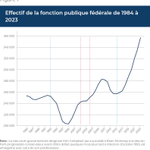
Public spending in Canada by age.
When Ottawa looks for savings, it reviews the public service and operations. Most of that isn't on this chart.
The elephant in the room is the bulge after 65: health care (red) and OAS/GIS (blue).


Reminder that Canada under the Harper government *did* raise the OAS eligibility age.
Had Trudeau not reversed this courageous reform, we would be spending $11 billion less on OAS by 2029, according to the PBO.
When OAS was created in 1952, the benefit began at age 70. Life expectancy was 68, and the ratio of workers to retirees was 8 to 1.
Eligibility is now at 65, with life expectancy at 81, and the ratio of workers to retirees down to 3 to 1.
The current system represents a massive, unjust intergenerational transfer of wealth which is obviously unsustainable.
Daniel Dufort retweeted
Depuis 2018, Postes Canada a accumulé 6,1 G$ de pertes d’exploitation. L’équivalent de plus de deux ponts et demi de l’Île-aux-Tourtes.
Pendant ce temps, les activités postales de Deutsche Post en Allemagne ont généré 13,8 G$ de bénéfices.
Il serait temps d’ouvrir le marché à la concurrence.


Ottawa prévoit verser 1,4 G$ à Postes Canada sur deux ans, tandis que le prix du timbre passera de 1,44 $ à 2 $ en 2027. Plutôt que de multiplier les renflouements, le Canada devrait s’inspirer de l’Allemagne et privatiser son service postal. #polcan #PostesCanada
lapresse.ca/affaires/2026-11…
Pour en savoir plus, lisez notre publication sur la question :
iedm.org/fr/privatiser-poste…

Daniel Dufort retweeted

Quebec’s new Premier @PaulPlamondon just announced he’s ending the corporate subsidy for a Quebec battery plant.
Ontario needs to follow suit.
Ontario spent $11.5B in corporate welfare in 2025 (@iedm_montreal )
Directed to corporate tax reductions, Ontario’s corporate rate could be cut from 11.5% to 5.5%, making it the most competitive jurisdiction in Canada (and among the top in NA)
Une bonne nouvelle.

NEMASKA LITHIUM, L’EXEMPLE D’UN CHANGEMENT DE CAP EN MATIÈRE ÉCONOMIQUE
Durant la campagne électorale, nous avons promis à la population que notre gouvernement allait changer d’approche économique. On garde le cap sur notre objectif de mettre fin au bar ouvert de subventions pour financer une baisse d’impôts historique aux PME québécoises.
Hier, on a annoncé qu’on passait de la parole à l’action avec un exemple clé du virage qu’on souhaite entreprendre. Dans les dernières années, j’ai été très critique des projets comme Northvolt. C’était également le cas pour Nemaska Lithium qui, au cours des dix dernières années, a grugé 1,2 milliard de fonds publics pour un projet d’usine risqué de la filière batterie.
Le ministre du Développement économique, de l’Innovation et de l’Énergie de mon gouvernement, Stéphane Paquet, a donc annoncé qu’on ne jouerait plus dans ce mauvais film et que notre gouvernement n’allait pas mettre « une cenne de plus » dans le projet Nemaska Lithium. Nous avons d’ailleurs bien mis au clair que le travail de M. Paquet dans les prochaines années n’était plus de choisir les gagnants au pif, mais bien d’assurer un environnement d’affaires qui soit propice à l’innovation et au développement de la créativité des entrepreneurs d’ici.

Daniel Dufort retweeted

En refusant de risquer à nouveau de l'argent dans ce projet, le gouvernement passe ce premier test et résiste au sophisme du coût irrécupérable.
Le développement du Québec ne s'est pas fait à coup de subventions, mais bien malgré celles-ci. C'est le génie de nos entrepreneurs qui a permis à notre province de s'enrichir, pas les éléphants blancs choisis par nos fonctionnaires.
Si cette décision augure bien, on attend impatiemment de voir le FDE et autres véhicules subventionnaires être abolis, et l'argent épargné être utilisé pour réduire les impôts de l'ensemble des entreprises québécoises.
#polqc #assnat #subventions
Québec ne veut pas mettre « une cenne de plus »
lp.ca/gPFCbB?sharing=true

Daniel Dufort retweeted

One clear bright spot is the Canada Growth Incentive modelled after the U.S. to allow for capital gains tax exemption on successful investments and an expanded small biz rollover. I'd quibble with the design and narrow nature but it's a bright spot. Not big bang though.
Daniel Dufort retweeted

One of the most pernicious aspects of Trump's threats and provocations towards Canada is that it has provided social license to old ideas about Canadian economic nationalism that were widely tested and roundly defeated in previous generations.
As we wait for the Carney government's second budget, its prepositioning suggests that we're going to rerun the experiment once again. The ghost of Walter Gordon (whose biography by Stephen Azzi is a must read in Canadian historiography) will regrettably loom over today's budget speech.


The path to a higher quality of life for Canadians is exactly the opposite.

Opinion: If Canada wants economic security, it must tolerate a bigger government hand in business theglobeandmail.com/business…

Daniel Dufort retweeted
Counterpoint: Our low productivity stems from excessive government involvement in the economy through high taxes and regulation. In turn, it has made us less resilient.
#cdnpoli
Opinion: If Canada wants economic security, it must tolerate a bigger government hand in business theglobeandmail.com/business…
Daniel Dufort retweeted

Now we’re talking.
Alberta, Saskatchewan and now Ontario.
- Canadas premiers are leading the build-out of supercomputing infrastructure while AI doomers scared vast crossover voters away from it in the US midterm elections.
- Most of the USA doesn’t have Canadas combination of cold weather, vast energy assets, industrial capacity, remote areas and talent and cost advantages to scale this infrastructure.
Huge opportunity.
National Post Op-ed
nationalpost.com/opinion/dav…
Global News Ford approving data centres
globalnews.ca/news/12134754/…

Daniel Dufort retweeted

Sondage révélateur : l’excellent reportage d’Enquête semble avoir convaincu le public de l’importance de freiner la spéculation. Très bien.
Malheureusement, à peine 3,9 % des répondants privilégient la libéralisation du marché, pourtant déterminante pour augmenter l’offre et réduire la pression sur les prix. Peut-être que le libellé aurait dû être plus clair : libéraliser et déréglementer.
Rappelons qu’à Austin, l’augmentation massive de l’offre de logements a fait reculer les loyers et qu’à Auckland, l’assouplissement du zonage aurait réduit les loyers de 23 % par rapport au scénario sans réforme.
À quand un reportage d’Enquête sur les effets de la surréglementation? Zonage d’exclusion, interdictions de densification douce (intergénérationnel et logements accessoires), marges de recul, ratios de stationnement, délais des procédures d’autorisation, normes de construction, exigences relatives aux ascenseurs et aux cages d’escalier… Autant de contraintes dont il faudrait analyser sérieusement les coûts et les bénéfices.
lapresse.ca/dialogue/2026-11… via @lp_lapresse

Daniel Dufort retweeted
My op-ed for the National Post on ignoring the AI doomers (especially OpenAI) and building supercomputing infrastructure in Canada as fast as possible.
This is the future for Canada.
Don’t let doomers steal it like they did with hydrocarbons.
nationalpost.com/opinion/dav…
Daniel Dufort retweeted

Notre dernière étude fait jaser! 👀
Avant d’être député QS, M. Grandmont travaillait pour un organisme financé par l’État québécois, qui a pris position à répétition contre le projet de 3e lien appuyé par la majorité des gens de Québec.
Cet exemple est révélateur des enjeux démocratiques posés par le lobbying circulaire. 🤔
Le débat sur la mobilité à Québec n’a rien d’une affaire de « droits humains » qui serait au-dessus de la politique. C’est un débat comme tant d’autres, où plusieurs opinions existent dans la population québécoise, et sur lequel l’État ne devrait pas prendre position en subventionnant des militants d’un côté ou de l’autre. ❌
Une société civile autonome, soutenue financièrement par des citoyens plutôt que des subventions, est la garantie d’un débat d’idées vraiment libre, où l’État ne met pas son poids dans la balance pour appuyer les idées de quelques-uns avec l’argent de tous.

Daniel Dufort retweeted

This is a thoughtful piece.
I'm genuinely happy for Cohere that they're growing and scaling, but I will admit I've been asking myself a lot of bigger picture questions since this was announced, starting with: what problem does this solve?
Cohere isn't short of capital. Schwarz, Nvidia and Aramco invested. And the $1.68B announced comes after $240M in federal compute funding and stakes from PSP, EDC and BDC in earlier funding rounds.
So if it's not capital, what is the goal? The AI minister himself was quoted in a Betakit article saying the stake gives Ottawa "a seat at the table to control" this technology.
What does that mean? What are the terms of the deal? Is the intent here really for the Government of Canada to control the technology that Cohere is developing? I think Canadians deserve to know what kind of control is contemplated.
Beyond this specific deal, the bigger picture points to an evolving pattern in Canada’s industrial policy.
Equity stakes in private companies have historically only been taken by the Government of Canada in times of crisis to rescue strategically important companies. Most lost taxpayers money, e.g. GM, Trans Mountain, de Havilland. Cohere isn't in crisis, which makes this feel like a new policy direction, not a rescue.
$1.6B in Cohere. A $500M tech fund built to take equity in tech companies. A $1.75B government VC plan. A proposed sovereign wealth fund. Canada Growth Fund. On top of EDC and BDC and our pension funds which have a mandate to invest public dollars.
Ottawa is becoming the owner, the funder, the customer and the regulator of the same companies. That trend towards state-led capitalism is hard to reverse and Canadians should be asking questions abut the long term implications of that direction on our economic competitiveness.
Big picture: Canada wins when markets reward builders, not when ministers pick them.
The better path we might consider is focusing on making Canada the best place in the world to build and scale. Competitive taxes. Faster approvals. Real AI adoption.
We should be focusing on ensuring our most successful companies won't need a federal cheque to stay.

Ottawa is taking an equity stake of up to $1.6B in Cohere, a company with no shortage of private investors.
It follows a $1.75B venture capital plan that entrepreneur groups applauded.
When our entrepreneurs cheer for handouts, 🇨🇦 has a problem
Latest charleslammam.substack.com/p…

Daniel Dufort retweeted

👉 « Tôt ou tard, il faudra se poser la question franchement : garantir l’accès universel aux soins exige-t-il que l’État finance — et fournisse lui-même le plus souvent — un panier de services toujours plus large ? Il ne s’agit pas ici de remettre en question l’universalité, mais de se demander jusqu’où elle doit s’étendre.
En Europe, l’accès aux soins repose aussi sur le principe d’universalité. […] De plus, l’État n’est pas à lui seul le prestataire des soins et services. Public et privé y cohabitent sans menacer l’universalité. Ce qui est inconcevable ici est normal là-bas. »
ledevoir.com/opinion/idees/1…

Daniel Dufort retweeted

🚨 56 % des Québécois ont renoncé à consulter un médecin en raison des longs délais d’attente.
Le @partiquebecois doit faire de l’accès aux soins de santé une vraie priorité.
montreal.citynews.ca/2026/10…
#AssNat

Daniel Dufort retweeted
While details remain scant on Carney's Canadian sovereign wealth fund, it would be important to remember that the similar fund he advised to create in the UK has been losing money consistently since its creation.
#cdnpoli

Predictably, Mariana Mazzucato welcomes £20.4bn more for the state lenders, provided "the public shares in the returns". The public has only shared in the losses, with the National Wealth Fund in the red four years running. Her "missions" have no clear test of success, so no one is ever accountable when the money is wasted.
Il n'y a jamais eu de raisons sensées de produire des cannettes d'aluminium, avec une masse volumique faible et donc des frais d'exportation élevés, loin des sites d'embouteillage. C'est une vérité de la palisse.

1/3 Mélanie Joly souhaite relancer le projet d’un laminoir d’aluminium au Québec. Mais un obstacle économique demeure : la demande canadienne est trop faible pour rentabiliser une telle usine. Faut-il vraiment que les contribuables en assument les coûts ?
#aluminium #commerce
Daniel Dufort retweeted

In the Financial Post, MEI economist Jonathan Vitti and CEO Daniel Dufort explain how this year’s Nobel Prize in economics highlights a fundamental lesson: economies are shaped by millions of individual decisions, not just government policies. Policymakers should remember this. #economics #economy
financialpost.com/opinion/op…
