“The Separation Of Money And State” XRP Strong.
United States
Joined March 2018
- Tweets9.5K
- Following2.2K
- Followers1.2K
- Likes12.6K




The Devnullinator retweeted

36 hours. 179 hackers. 70 submissions.
At the XRP Ledger Hackathon, developers used Mastercard Agent Pay for machines to explore new possibilities for micropayments and autonomous commerce, including how AI agents can transact within defined spending limits and with verified merchants.
See what we learned about the future of agentic commerce: mastercard.com/global/en/new…
#AgenticCommerce #DigitalAssets #AI

The Devnullinator retweeted

"At Cisco, a Dalit engineer was blocked from promotion, kept off key projects, and eventually pushed out. Why? He wasn’t from the right caste. Internal messages showed hiring managers actively discussing caste identity, and choosing only from their own."

Built by Americans. Captured by Foreigners.
Phase Two: The Referral Rings and the Caste Networks That Took Over American Hiring
This phase didn’t happen overnight. It took time, connections, and silence. And most importantly ... it took referrals.
A single foreign hire was never the endgame. It was just the key.
Once inside, the next step was to build a hiring network. A private backchannel, built on shared language, caste, culture, and hometown. HR job portals became irrelevant. Public postings were just for show.
Insiders brought in their own. Not the best. Not the most qualified. Just the most familiar.
And that’s not some theory..this is legal record.
At Oracle, the Department of Labor found that over 90% of hires for certain technical roles were Asian ... overwhelmingly Indian ... even when better qualified U.S. candidates applied. Oracle didn’t deny it. They called it “standard referral-based hiring.”
At Cisco, a Dalit engineer was blocked from promotion, kept off key projects, and eventually pushed out. Why? He wasn’t from the right caste. Internal messages showed hiring managers actively discussing caste identity, and choosing only from their own.
At Cognizant, a federal jury found the company guilty of systemic discrimination, using staffing systems that overwhelmingly favored Indian visa holders. Americans were benched, sidelined, and told they were too expensive or not team-fit. They were replaced by cheaper foreign referrals ... often less qualified.
This is culture and It’s capture.
One hire becomes ten. Ten become the hiring panel. The hiring panel becomes a wall.
Many Americans inside these companies spoke out.
Kevin Lynn, from U.S. Tech Workers, warned Congress about these internal networks, calling them “exclusionary by design.”
Laid-off workers from Disney testified under oath about being forced to train their own replacements, brought in via outsourcing firms like Infosys and Tata ... where internal hiring heavily favored Indian nationals through tight referral circles.
At Southern California Edison, internal emails revealed that managers were told to treat the displacement of American workers as inevitable. Many replacements were sourced through Indian staffing agencies using pre-vetted referral pipelines.
This isn’t limited to Big Tech. It's in finance, insurance, telecom, and even healthcare IT.
In smaller firms, board seats get filled by insiders. Job descriptions are quietly rewritten. Hires go to the same caste, same language group, same town. One firm in New Jersey saw its entire IT department transition to a single caste-dominant group within 2 years. HR claimed they “hired the best candidates available.” Yet internal referrals accounted for nearly 100% of hires.
These networks are tight, exclusive, and reinforced daily. Not just with hiring, but with workplace culture:
Birthday celebrations in one language only
Project assignments split by caste
Promotions decided over WhatsApp group chats
American engineers report being talked over, benched, or ghosted.
This isn’t inclusion. It’s entrenchment.
And it’s not just tolerated ... it’s defended.
When questioned, companies point to diversity statistics. But look closer: their “diverse” teams are often 95% Indian males, with near-zero representation of African-Americans, Latinos, veterans, or women in engineering roles.
The people doing this are not ashamed. They post openly on LinkedIn, on Reddit, on WhatsApp job boards:
“Only Telugu candidates please.”
“Looking for referral into XYZ company ... Tamil speaker preferred.”
“Join our team in Atlanta ... Andhra team already in place.”
Some of this is archived. Some of it’s already deleted. But it was seen.
And in some cases ... called out.
Ron Hira, a Howard professor and labor policy expert, has testified that H‑1B programs are being used to enforce “in-group loyalty and out-group exclusion.”
Donna Conroy, a former IT worker and advocate for displaced professionals, warned that these practices were reshaping American employment. Her reports documented caste favoritism, internal referral loops, and ghost hiring.
“This isn’t just bias,” she said. “It’s a network designed to keep you out.”
And she was right.
This is Phase Two. The network effect.
Referral by referral, caste by caste, exclusion became policy.
Job by job, the American Dream was quietly rerouted through Bangalore.
And they’re not hiding it. They’re proud of it.

The Devnullinator retweeted

Built by Americans. Captured by Foreigners.
Phase Two: The Referral Rings and the Caste Networks That Took Over American Hiring
This phase didn’t happen overnight. It took time, connections, and silence. And most importantly ... it took referrals.
A single foreign hire was never the endgame. It was just the key.
Once inside, the next step was to build a hiring network. A private backchannel, built on shared language, caste, culture, and hometown. HR job portals became irrelevant. Public postings were just for show.
Insiders brought in their own. Not the best. Not the most qualified. Just the most familiar.
And that’s not some theory..this is legal record.
At Oracle, the Department of Labor found that over 90% of hires for certain technical roles were Asian ... overwhelmingly Indian ... even when better qualified U.S. candidates applied. Oracle didn’t deny it. They called it “standard referral-based hiring.”
At Cisco, a Dalit engineer was blocked from promotion, kept off key projects, and eventually pushed out. Why? He wasn’t from the right caste. Internal messages showed hiring managers actively discussing caste identity, and choosing only from their own.
At Cognizant, a federal jury found the company guilty of systemic discrimination, using staffing systems that overwhelmingly favored Indian visa holders. Americans were benched, sidelined, and told they were too expensive or not team-fit. They were replaced by cheaper foreign referrals ... often less qualified.
This is culture and It’s capture.
One hire becomes ten. Ten become the hiring panel. The hiring panel becomes a wall.
Many Americans inside these companies spoke out.
Kevin Lynn, from U.S. Tech Workers, warned Congress about these internal networks, calling them “exclusionary by design.”
Laid-off workers from Disney testified under oath about being forced to train their own replacements, brought in via outsourcing firms like Infosys and Tata ... where internal hiring heavily favored Indian nationals through tight referral circles.
At Southern California Edison, internal emails revealed that managers were told to treat the displacement of American workers as inevitable. Many replacements were sourced through Indian staffing agencies using pre-vetted referral pipelines.
This isn’t limited to Big Tech. It's in finance, insurance, telecom, and even healthcare IT.
In smaller firms, board seats get filled by insiders. Job descriptions are quietly rewritten. Hires go to the same caste, same language group, same town. One firm in New Jersey saw its entire IT department transition to a single caste-dominant group within 2 years. HR claimed they “hired the best candidates available.” Yet internal referrals accounted for nearly 100% of hires.
These networks are tight, exclusive, and reinforced daily. Not just with hiring, but with workplace culture:
Birthday celebrations in one language only
Project assignments split by caste
Promotions decided over WhatsApp group chats
American engineers report being talked over, benched, or ghosted.
This isn’t inclusion. It’s entrenchment.
And it’s not just tolerated ... it’s defended.
When questioned, companies point to diversity statistics. But look closer: their “diverse” teams are often 95% Indian males, with near-zero representation of African-Americans, Latinos, veterans, or women in engineering roles.
The people doing this are not ashamed. They post openly on LinkedIn, on Reddit, on WhatsApp job boards:
“Only Telugu candidates please.”
“Looking for referral into XYZ company ... Tamil speaker preferred.”
“Join our team in Atlanta ... Andhra team already in place.”
Some of this is archived. Some of it’s already deleted. But it was seen.
And in some cases ... called out.
Ron Hira, a Howard professor and labor policy expert, has testified that H‑1B programs are being used to enforce “in-group loyalty and out-group exclusion.”
Donna Conroy, a former IT worker and advocate for displaced professionals, warned that these practices were reshaping American employment. Her reports documented caste favoritism, internal referral loops, and ghost hiring.
“This isn’t just bias,” she said. “It’s a network designed to keep you out.”
And she was right.
This is Phase Two. The network effect.
Referral by referral, caste by caste, exclusion became policy.
Job by job, the American Dream was quietly rerouted through Bangalore.
And they’re not hiding it. They’re proud of it.
The Devnullinator retweeted

BREAKING: NYT reports that operatives with Democratic Alaska U.S. Senate candidate Mary Peltola’s campaign were behind the effort to find & recruit a candidate named Dan Sullivan to run against incumbent GOP Senator Dan S. Sullivan in an effort to confuse voters and peel votes from him.
Specifically, NYT says they have reviewed text messages and documents that reveal in summer 2025, a Peltola staffer received instructions from campaign staffers to find as many people named Dan Sullivan in Alaska as possible.
The staffer complied, going through voter records, and compiled a list. The operation “involved secret trips to far-flung Alaskan communities and the appearance of a mysterious Midwestern operative, who traversed the state using a fake name and made his pitch to would-be candidates over beers at brew pubs.”
Per NYT:
“The plan worked. This spring, a retired teacher from a tiny fishing village along the Alaska Panhandle, reachable only by air and sea, announced his candidacy for Senate. His name was Dan J. Sullivan.”
nytimes.com/2026/10/28/us/po…

The Devnullinator retweeted

Big partnerships call for big ambitions! We're bringing the full power of Ripple’s blockchain infrastructure to @RobinhoodApp, one of the industry's largest retail and institutional trading platforms. From $RLUSD settlement on the @XRP Ledger to prime brokerage and treasury operations, this is our end-to-end strategy in action. 🚀

Ripple is officially going under the hood. 👀
We're expanding our partnership with @RobinhoodApp across $RLUSD, Ripple Prime and Ripple Treasury, bringing together stablecoins, prime brokerage and treasury management to support both customer-facing services and core financial operations.
Together, we're bridging traditional and digital.
on.ripple.com/3WPPHEH

The Devnullinator retweeted

No está pasando nada en XRP.
Nada de nada. Lo puedes comprobar tú mismo: abre el gráfico, mira el precio, ciérralo. Nada.
Ahora bien, si en vez de mirar el precio miras los anuncios de las últimas 8 semanas, la cosa cambia un poquito. Os hago la lista completa, y agarraos:
1. El BIS usando la XRP Ledger en un piloto de datos oficiales a prueba de manipulación
2. El supply de RLUSD en la XRPL disparándose un 642% interanual
3. Mastercard montando su red de pagos con IA con Ripple y Coinbase dentro
4. Evernorth aprobada por la SEC y captando más de 1.000 millones de dólares
5. El BCE seleccionando en su proyecto Pontes a Axiology, plataforma construida sobre la XRPL
6. CSD BR, el depositario central de Brasil, usando la XRPL para su infraestructura de mercado
7. Ripple valorada en 40.000 millones con Fortress y Citadel Securities entrando con 500 millones
8. La aprobación de la OCC para el banco fiduciario nacional de Ripple, en trámite
9. BNY Mellon custodiando las reservas de RLUSD
10. Las amendments Batch y Permission Delegation activándose en la XRPL
11. Un bug de hace una década encontrado por IA, parcheado en 3 días con cero robado y el suministro auditable en tiempo real
12. Evernorth debutando en el Nasdaq como XRPN y tocando la campana de cierre
13. Evernorth eligiendo a Ripple, Kraken, Coinbase y BitGo para desplegar sus 473 millones de XRP
14. Standard Chartered custodiando RLUSD
15. Lynq liquidando stablecoins institucionales en minutos
16. Privy y Stripe llevando carteras XRPL y pagos de agentes de IA al ledger
17. DriveWealth llevando RLUSD y la infraestructura de Ripple a más de 100 brokers
18. Meritz Securities, cuarto socio coreano, con custodia y tokenización
19. Cross River, el banco detrás de X Money, metiendo RLUSD en su núcleo bancario
20. Jeonbuk Bank modernizando pagos transfronterizos en Corea
21. Ripple Prime lanzando Delta One, derivados de renta variable para institucionales
22. Brevan Howard, uno de los mayores hedge funds del mundo, profundizando su relación con Ripple
23. Paxos añadiendo XRP a su brokerage
24. La DTCC avanzando su servicio de tokenización
25. JPMorgan y Mastercard liquidando un Tesoro tokenizado en la XRPL en menos de 5 segundos
26. El folleto SEC de Evernorth: métrica oficial XRP por acción, el trust familiar de Chris Larsen con 50 millones de XRP dentro, y Kyobo financiando desde Corea
27. Arf moviendo su red de 10.000 millones anuales de liquidación a RLUSD sobre la XRPL
28. Franklin Templeton metiendo 150 millones más de su fondo monetario en la XRPL
29. Los bancos centrales de Singapur, Malasia y Tailandia sumando a Ripple a su iniciativa de dinero digital junto a Visa, Mastercard y el Banco Mundial
30. Aviva tokenizando en la XRPL su fondo de 22.000 millones de libras, el más grande que tiene
31. Evernorth firmando con Cantor Fitzgerald, la firma de la familia Lutnick, una línea de 80 millones para comprar más XRP
32. Y Ripple convirtiendo la tesorería de empresas como American Airlines o Subway en plataformas con rendimiento 24/7 en RLUSD
Los tres últimos, por cierto, de AYER.
Son 32 anuncios en 8 semanas. TREINTA Y DOS. Los tengo contados uno a uno con sus enlaces oficiales.
Pero nada, tienes razón: el precio está lateral, así que no pasa nada.
El precio mide el presente. Los anuncios construyen el futuro. Y cuando el precio por fin se entere de todo esto, los que solo miraban el gráfico preguntarán cómo nadie les avisó.
Avisado quedas. Hoy empieza Swell. Lo mismo tampoco pasa nada.
🤖 Made with AI

The Devnullinator retweeted

Whales accumulating because XRP is a scam.
That’s believable, right?🤣🤣

🚨 XRP Whales Now Control Most Supply Since 2022
🐋 Wallets holding at least 10M XRP now control 46.87B tokens. That represents roughly 68.5% of XRP’s supply, the highest share held by this group since November 2022.
📈 The key signal is that these massive holders have kept increasing exposure even while $XRP struggles near $1.29. Large stakeholders accumulating through weakness suggests conviction remains strong beneath the price action, creating a more bullish setup if smaller traders continue capitulating.
🎯 $1.30 is the immediate pivot, with $1.50 becoming the stronger confirmation level. Holding above $1.20 while whale balances remain near record territory would keep the accumulation thesis intact. A reclaim of $1.50 alongside further whale growth would substantially strengthen the case for a larger XRP recovery.
🔗 Our Live XRP 10M+ Wallet Chart: app.santiment.net/charts/xrp…

The Devnullinator retweeted

这女子叫Lulu Freistadt,她是“智能选举(Smart Elections)”组织的联合创始人兼执行董事。她表示自己从 2021 年起一直在纽约市担任投票站监督员(poll watcher)。
事件经过:
她提到昨天(投票期间)她在纽约布朗克斯(Bronx)的一个投票点做监督工作。
起初一切正常,投票人数与扫描的选票数量对得上,她本准备离开。
但随后她发现一件非常奇怪的事:所有的投票站工作人员(poll workers)都在清点并准备离开,而投票机却仍然开着、没有上锁、没有密封,选票也还没有被取出。
按照正常程序,每台投票机都应由指定的投票工作人员负责关闭、密封并取出选票。但现场的机器和选票完全处于未密封状态。
交涉与冲突:
当她坐下等待工作人员按规定处理选票时,协调员(coordinator)开始变得焦躁不安,并打电话给副首席书记官(deputy chief clerk)。对方告诉她必须离开。
她指出根据法规,投票监督员有权留在现场直到投票结束、选票被取出并放入密封容器中。
尽管她据理力争,但工作人员和警察还是要求她离开,现场只留下一名技术人员在无人监督的情况下关闭投票机。
结尾:她强调这种不符合规范的做法为作弊提供了可乘之机,并呼吁大家关注和转发。
The Devnullinator retweeted

🚨HUGE: Subway, with nearly 37,000 restaurants worldwide, is using @Ripple Treasury to transform its global financial operations! $XRP
The results are INCREDIBLE:
✅ 98% visibility over global cash
✅ 90% of payments automated
✅ 400,000 transactions annually
✅ Bank relationships reduced from 70 to 30
This is the scale of enterprise finance Ripple is already powering!


The Devnullinator retweeted

Most Wisconsin voters will flip their ballot over on Nov 3rd and find three questions nobody told them about. They are permanent changes to the state constitution. My vote on them is YES, YES and YES.
1) Should the governor be barred from using a partial veto to create or raise taxes or fees - or authorize those increases?
A yes vote adds that restriction, including vetoes that allow local governments to increase taxes or fees.
2) Should state and local governments be prohibited from closing places of worship or banning gatherings there in response to a declared emergency, including a public-health emergency?
A yes vote adds that prohibition to the constitution.
3) Should the constitution prohibit government bodies from discrimination or preferential treatment based on race, sex, color, ethnicity, or national origin in government employment, education, contracting, and administration?
A yes vote adds the prohibition, with exceptions involving federal requirements and certain necessary sex-based qualifications. It gets rid of the DEI hiring scheme.
Look for Question 1, 2 and 3 on the back of your ballot.
Screenshot this, bring it with you, and send it to one person who hasn’t voted yet.

The Devnullinator retweeted
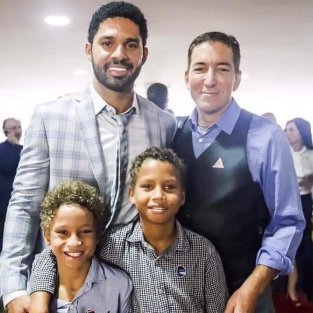
One day after Lula was declared the winner of Brazil's elections, his opponent -- Sen. Flavio Bolsonaro -- just had had his passport seized by the Federal Police.
Theose police were sent by notorious tyrant Judge Alexandre de Moraes. What a lovely democratic image.

The Devnullinator retweeted

Final OCC approval for Ripple National Trust Bank is the result of a simple choice we made years ago: build within the regulatory perimeter, not around it.
Clear rules + rigorous oversight create trust. And trust is what allows new financial infrastructure to scale.

Big news heading into @RippleSwell: the @USOCC has granted final approval for Ripple National Trust Bank.
This gives Ripple a federally supervised platform to support $RLUSD and provide digital asset custody to enterprises.
We’ve always said crypto and banks work better together — this is what that looks like. Real innovation, real accountability, federal oversight.
The revolution isn't happening outside the system. It's happening from within it.
The Devnullinator retweeted

$QS just posted a role for a Director of Government Relations in Washington. Brand-new position, reporting straight to the CFO.
On the ER, Siva said QS was looking for non-dilutive funding for the 100 MWh line, including from the government.
What stood out most to me in the posting is the phrase “factory-scale capital.” To me, QS is already thinking beyond 100 MWh.
The posting is pretty clear about what they want: land prototype funding fast, go after factory-scale capital, and have a say in US battery policy.
They’re targeting the DOE, DARPA, DIU, DPA Title III, and even the Pentagon’s Office of Strategic Capital. They also want the tech recognized as critical to get a real line in the defense budget. And push for US government battery purchasing to require non-China content.
Of course, a job posting doesn’t mean funding secured, and these programs take time. The funding plan is expected with Q4 results.

The Devnullinator retweeted

⚠️ ALERT: BloomTrading Bot users report nearly $1 MILLION in wallet drains, with 9,408 SOL traced to a suspected attacker wallet.
Reports identify roughly 49 victims, with the largest individual loss reaching 1,636 SOL, worth about $166,000.
Total losses could be higher as more affected wallets emerge.
Victims report losses from wallets whose private keys were imported into the trading bot, while USDC reportedly remained untouched in several cases.
BloomTrading’s team is reportedly investigating and has paused some services.
Users are being urged to move remaining assets to fresh wallets, disconnecting alone won’t protect funds if a private key has been compromised.


The Devnullinator retweeted

The peak of globalism was Obama and Macron.
Two men, two continents, the same casting.
Young, polished, brilliant speakers. Perfect résumés. Total ease in front of a camera. Able to electrify a rally in Ohio and charm a room full of CEOs in Davos in the same week.
They are excellent actors. I mean that without irony. Public charisma is a real talent, and they have it at a rare level.
But look at what they actually embodied.
Obama won the Nobel Peace Prize nine months into his presidency. Before he had done anything. They weren't rewarding a record, they were rewarding an image: a post-national world run by institutions and experts.
Macron is the European version of the same product. A movement founded one year before the election, no historic grassroots base, carried by the economic, media and administrative elites. "Neither left nor right." Translation: attached to no people and no history. Just the efficient management of globalization.
Their whole software fit in one sentence: the global market, supranational institutions and experts know better than nations what is good for them.
Unlimited free trade. Deindustrialization sold as modernization. Borders treated as an archaism. Sovereignty treated as populism.
They weren't the architects of this project. They were its faces. The best salesmen it ever had. When you need millions of people to accept that their factory is moving to the other side of the world and that it's for their own good, you don't send a gray technocrat. You send someone who knows how to talk.
That's why footage of Obama at a rally rings so hollow today. Same tone, same inflections, same staging. But the audience has changed. They've seen the movie. They know how it ends.
And the project they carried is dying everywhere.
The US is back to tariffs and reindustrialization. Europe is finally talking about energy, military and tech sovereignty. Borders are a legitimate topic again. Supply chains are coming home. Covid proved that a country that can't produce its own masks isn't modern. It's vulnerable.
Macron is at 15% approval, his lowest since 2017. Obama is back on the rally circuit, and the magic is gone.
But the most revealing part is what came after them.
The system can no longer produce an Obama or a Macron. Nobody that charismatic, that polished, that smooth.
There are two reasons for that.
The first is arrogance. For fifteen years they won without really fighting. The media was on their side, the elites aligned, the opponent demonized in advance. When you win too easily, you get lazy. You stop caring about the casting. You stop working on the script. And it shows: less polished, less prepared, less credible.
The second runs deeper. Truly brilliant people no longer want to enter this system. They know it has no future. Fifteen years ago, an ambitious young prodigy aimed for the elite schools, Harvard, high civil service, the big international institutions. Today they start a company, they build, they go where things are moving. Nobody signs up for a sinking ship.
So look at the bench.
In the US, they ran Biden. A president whose cognitive decline was obvious to everyone except his inner circle, who spent months hiding it. Then they swapped him out in a panic for Kamala Harris, who couldn't answer a simple question without drifting into word salad. After Obama, that's a staggering fall.
In France, same movie. Attal is Macron on a photocopier. Same codes, same lines, none of the depth. He announced his presidential run from a village square in rural France to make people forget he's a pure product of Paris's wealthiest neighborhoods. Everyone sees the set. Nobody buys it.
And on the left, the new great hope is Glucksmann. Son of a famous philosopher, Brussels MEP, darling of the Parisian salons. He talks about the nation and the working class with the polish of a dinner party in Saint-Germain-des-Prés. The words are right. The voice isn't.
They all sound off. Like instruments out of tune. You still recognize the score, but nobody wants to listen to the concert anymore.
That's the first sign of a dying system: it no longer attracts the best. All it has left are heirs and imitators.
Charisma isn't enough when reality contradicts the story.
What comes next won't necessarily be better. But it will be different: leaders judged by what they build, not by how well they tell it.
The age of actors is over. Make way for the builders.

The Devnullinator retweeted

A cloud VPS service from Japan's massive GMO Internet Group used by foreign-exchange traders has been hacked. Attackers breached the servers, stole customer credentials, and executed balance-destroying trades across over 70 brokerages. GMO has asked government agencies for help.

The Devnullinator retweeted
How much could $QS’s 100 MWh line bring in? A back-of-the-envelope exercise with my own assumptions, since QS hasn’t published pricing or a detailed ramp schedule.
Pricing: at TD Cowen, QS estimated non-automotive markets at about 250 GWh and $75B a year by 2030, or about $300/kWh on average, versus about $100/kWh in automotive. I use two assumptions: $300 and $500/kWh.
2028, start-up year: assuming a mid-year launch and a gradual ramp, about 15 to 25 MWh produced.
At $300/kWh: $4.5M to $7.5M
At $500/kWh: $7.5M to $12.5M
2029, first full year: at 60 to 80% utilization, about 60 to 80 MWh.
At $300/kWh: $18M to $24M
At $500/kWh: $30M to $40M
The data center piece (QSDC): per QS, the in-data-center battery market would grow from about $8B to $30B by 2030. Siva Sivaram said customers met at OCP want the PowerBlock in volume, and that a 2028 start aligns with the industry’s timeline. For scale, 100 MWh would be enough to equip roughly one 1 GW AI campus a year with 140 kW racks, by my estimate. But the line will be shared with defense and aerospace, and battery needs per rack will rise as racks approach 1 MW. If QS sells complete PowerBlock shelves rather than cells alone, revenue per kWh would also be higher than in my math.
For perspective: QS billed $9.8M in Q3 2026 alone, and guides to a $250M to $275M adjusted EBITDA loss this year. The 100 MWh line won’t make QS profitable on its own. Its role is to generate first production revenue, prove mass production and sign data center and defense customers before scaling to GWh. Siva also wants multiple customers signed before the 2028 start.
The funding plan and 2027 guidance will come with Q4 results.
Purely my own estimate.

$QS announces a new 100 MWh cell production line for AI data centers, aerospace and defense.
To build it, QS is partnering with Muehlbauer Group, a German automation specialist, as its cell assembly equipment provider. Muehlbauer evaluated the Eagle Line processes and developed enhancements to take the technology to mass production. Start of production is targeted for 2028.
According to Muehlbauer’s CEO, the Eagle Line proved QS’s technology is ready to scale to the next level. Siva Sivaram describes a partner able to take QS to gigawatt-hour scale.
A few orders of magnitude, my own calculations: with QSE-5 cells at about 19 Wh, 100 MWh means about 5 million cells a year. For data centers, that’s enough for roughly one 1 GW AI campus a year, with 140 kW racks.
What it changes:
Non-automotive markets now get their own line, on top of the PowerCo license for automotive.
The timing matches the industry’s: SemiAnalysis sees battery racks arriving in late 2028/2029.
Data centers are listed first in the announcement.
To watch: how the line is funded, where it will be built, and the first customers that will justify these volumes.

The Devnullinator retweeted

LATEST: 📊 XRP’s holder count hit a record 8.24M non-empty wallets as network growth surged to 4,772 new wallets in a single day, the fifth-largest daily spike since March, per Santiment.


The Devnullinator retweeted

$QS TD Cowen kept Hold, $6. I ran their cash path against the models in my Q3 article.
My flat Q3-burn case lands $4M from theirs in 2030, with zero revenue in it.
Neither pays for the 100 MWh line from $QS cash. My stress case does, and runs out Q3 2029.
Thanks to @ChillBanking for sharing the $QS TD Cowen note. He posts data like this every day, give him a follow.


Two years holding $QS. I went through the Q3 letter and the full call, and built three models on the new 100 MWh line.
PowerCo transition payments are gone. One model shows how long $819.8M lasts if the line is paid from the balance sheet.