





Could Pakistan become the next major hub for global oil trade?
With a proposed $4.5 billion refinery in Hub, Balochistan, and another $6 billion in potential investment to upgrade existing refineries, Pakistan is eyeing a major shift in its energy economy.
@SaleemFarrukh
Words from a pulpit are not policy. But when a sermon attributed to Maulvi Ateeq Ullah Siddiqui urges the Taliban, ISK, al-Qaeda, the IMU and the TTP not to lay down their guns until “full victory” over Pakistan, Iran and others, it exposes a contradiction the Taliban have never resolved. They promise the region that Afghan soil will not be used against others, while tolerating a pulpit that says the opposite.
That gap is the subject of Part III of Digital Debate’s latest brief, The Unsigned Guarantee (see below for link). The numbers are hard to wave away. Russia’s foreign ministry puts the armed groups on Afghan soil at 20,000–23,000 fighters, more than half of them foreign. UN monitors report that the Taliban give the TTP logistical, operational, and financial support. In Pakistan, PICSS recorded 1,063 attacks in 2025, up 17%, with combat-related deaths up 73% to 3,387. PIPS, using a narrower definition, counted 699 attacks, up 34%. The methods differ, but the direction is the same.
The Taliban’s own line is more cautious. Some of their figures have condemned TTP attacks in Pakistan as “un-Islamic,” saying only the emir can declare jihad. But if that is the leadership’s position, a sermon calling for the opposite should be answered by that leadership, not left to circulate, and the TTP’s continued operations suggest the message has not landed.
The cost no longer stops at Pakistan’s border. China, Russia, and Central Asia all carry it. A guarantee that no one has signed and no one enforces is not a guarantee. The test now is conduct, not rhetoric.


The controversy began at a July rally in Kasur, when Fazlur Rehman brought soldiers’ salaries into a discussion of martyrdom. Defence Minister Asif heard an insult to fallen soldiers. Fazlur Rehman’s supporters said the clip had been stripped of context.


Amid Israel's genocidal war on Palestine, 250 Palestinian couples have tied the knot in Gaza. The UAE-backed Operation Chivalrous Knight relief campaign organised this mass wedding event.
Pakistan FO Spokesperson on Trump's plan to deport Afghans through Pakistan:
"We will continue to act in accordance with our international obligations and established protocols. The matter is currently under consideration."
WAR DOESN'T END WHEN THE FIGHTING DOES
Nature is a casualty of war. Its destruction can outlast the conflict by decades. Armed conflict contaminates soil and water, destroys ecosystems and threatens food security, livelihoods and biodiversity. The damage does not stop when the guns fall silent.
Past wars, still unpaid
500,000 m3 of dioxin contaminated soil is still being treated at Bien Hoa, Vietnam. The cleanup takes 10 years and costs up to $450 million.
90% drop in Gorongosa's wildlife (Mozambique) during the civil war.
+44% rise in Colombia's deforestation the year after the 2016 peace deal.
Kashmir
After the Pahalgam attack on 22 April 2025 killed 26 people, India placed the Indus Waters Treaty in abeyance. It also suspended the exchange of hydrological data, including flood warnings, and halted inspections by the Permanent Indus Commission. Since then India has fast tracked several Chenab hydropower projects, and a ministry panel cleared 197 hectares of forest land for Kirthai II. Pakistan calls the suspension unilateral and illegal.
Gaza
About 78% of buildings were damaged or destroyed, creating roughly 61 million tonnes of rubble. About 15% of it may be contaminated with asbestos, industrial waste or heavy metals. UNEP says some of the damage could take decades to recover from.
Ukraine
The UN Mine Action Service estimates 139,000 km², about 23% of the country, is contaminated with mines and unexploded ordnance. Ukraine's government estimated $71 billion in environmental damage and 180 million tonnes of carbon released in the first 1,000 days.
Iran and the Gulf
The conflict began at the end of February 2026 with US and Israeli strikes on Iran. The Conflict and Environment Observatory recorded more than 400 environmentally concerning incidents early on. Black rain fell near Tehran after oil sites were hit. An oil slick from a struck refinery reached Shidvar Island, a protected wildlife refuge.
The law is weak. No international crime of ecocide exists yet. Peace lasts only if rebuilding also cleans the soil, repairs the water and protects the forests.

This week, Pakistan test-fired its Fa’az air-to-air missile and India its Pralay.
India’s Pralay, a quasi-ballistic missile, was launched off the Odisha coast. The Defence Minister said the test met all stipulated objectives, as validated by data from range instruments.
The announcement did not say what range was achieved, where the missile landed, or how many were fired.

Pakistanis are paying more for electricity, food and everyday essentials. But can the economy sustain this burden?
Former Finance Minister Miftah Ismail argues that reducing government expenditure is essential to tackling Pakistan’s economic crisis and easing the pressure on ordinary citizens.
Abu Bakar or Abdul El-Sayed?
Social media users are drawing comparisons between Pakistan’s viral “Dare Nijaat Abu Bakar” and newly elected US Senator Abdul El-Sayed.
What’s behind the Abu Bakar mania? Swipe through to find out!

BREAKING: Several US Army C-17 Globemaster military transport aircraft have landed in the UAE, indicating another Army division on its way.
Parliament divided the former state into two union territories, Jammu and Kashmir and Ladakh. The decisions came under President’s Rule, with no sitting elected state legislature to debate them. India’s Supreme Court upheld the abrogation in 2023.
With global debt mounting and billions being invested in AI, could Bitcoin emerge as the new store of wealth?
The economist @SaleemFarrukh shared his analysis.
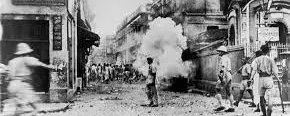
6 Nov 1947: about 70 trucks of Muslim families left Jammu for Sialkot. A few miles out, they were attacked, according to the Alexander and Symonds report in the Civil & Military Gazette, 18 Dec 1947. Today we remember them.
1/3


About 4,000 Muslims left Jammu city on 5 Nov 1947. Roughly 900 reached Sialkot, says the account the Civil & Military Gazette published on 18 Dec 1947. 79 years later, we remember those who never arrived.
2/3


BREAKING: Reportedly, at the request of Beijing, Russia is considering to suspend the Taliban government recognition in Afghanistan.
Garment workers in Bangladesh are demanding a minimum monthly wage of 30,000 takas, about $242, up from 12,500 takas. The protest is now in its fifth day.
digdebate.com/bangladesh-gar…
