

I like seeing how things are related - etymology and genealogy. I'm also into theology. And for my puns - no apology.
Joined January 2011
- Tweets927
- Following1.8K
- Followers378
- Likes6.2K




Pinned Tweet
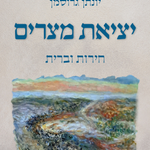
So happy to announce that my first book has been published: Kohelet - A Map to Eden:
korenpub.com/products/kohele…

My first substack post abt AI and Torah study. Not about how AI can enrich Torah study, but the similarities in their end goal. Love to hear what you think.
davidcurwin.substack.com/p/c…
@DBashIdeas @ZoharAtkins @ZachEFish @dzkalman
David Curwin retweeted

Iran was on its last legs and ready to collapse until the U.S. came along and gave it a life-line in the form of the Iran Deal: $150 billion
David Curwin retweeted
What a rotten deal we made with Iran. We get nothing (except laughter at our stupidity). They get everything, including delay and big cash!
David Curwin retweeted
The deal with Iran will go down as one of the most incompetent ever made. The U.S. lost on virtually every point. We just don't win anymore! – at Manhattan, NY
Here’s my new essay, “Love Bends the Line,” on love in Jewish texts and thought: how it can pull us beyond reason while still having a logic of its own.
thelehrhaus.com/jewish-thoug…

34
Today I celebrate twenty years (!) of my blog about the origins of Hebrew words and phrases - Balashon . Here’s a quick anniversary interview with myself—how it began, what kept it going, and what the numbers look like:
balashon.com/2026/02/20th-an…
1
43
My new essay @ Tradition: Rambam says “Torah will never change.” R. Soloveitchik: Torah can be lived fully in modern public life. R. Hirschensohn: the real threat is freezing halakha into rigid dogma.
traditiononline.org/the-tora…
1
64
Tradition just published my essay on cringe - looking at both The Office and the story of Lot and his daughters:
traditiononline.org/the-best…
1
1
31
I created a new personal web page to share my writing and projects:
davidcurwin.com/
4
33
I’ve been thinking about how Jewish law treats visual evidence, now that deepfakes make images unreliable. This new essay of mine examines why the Torah insisted on human testimony and how that perspective speaks to the challenges of our AI era:
18forty.org/articles/deepfak…
Jonah and Hallel sing alike, yet point in opposite directions. My new piece for Yom Kippur:
blogs.timesofisrael.com/jona…

1
48
Just published my review on the Seforim Blog of Mikra Pashut (Koren, 2024), a new edition of Tanakh with modern layout and punctuation that lets you read it as flowing prose and poetry while keeping the Masoretic text intact.
seforimblog.com/2025/09/mikr…
1
57
Excited to share my new essay in Lehrhaus for Parashat Shoftim:
On the surprising link between Eden’s trees and the Torah’s laws of siege — and how the Torah asks us to balance conquering with protecting life.
thelehrhaus.com/scholarship/…
1
38

The connection between ghibli and the Hebrew kibel קבל:
balashon.com/2025/04/ghibli-…
1
2
99
David Curwin retweeted

The world of writing has changed forever.
AI is getting really good, really fast. ChatGPT is already a better writer than most humans and some professional writers. So, what’s the future of writing?
18 thoughts from Tyler Cowen:
1) Don't let AI smooth out your idiosyncrasies. Let your writing stay weird and uniquely yours.
2) Generic content is dying and the burden is on you as the writer to be distinctive.
3) The more personal your writing becomes, the more future-proof it is. Nobody wants to read memoirs from AI, even if they're technically "better."
4) Use AI as your secondary literature when you read — not just for quick answers, but as a thinking companion. As Tyler puts it, "I'll keep on asking the AI: 'What do you think of chapter two? What happened there? What are some puzzles?' It just gets me thinking... and I'm smarter about the thing in the final analysis."
5) Hallucinations aren't the crisis everyone makes them out to be. No matter the source, if you're going to use a piece of information, you should double-check it. This is true for both books and AI.
6) Secrets will become more valuable in an AI-driven world.
7) One way to use AI as a writer is to research fields you aren't as familiar with before you start writing about them. Tyler said: "I just wrote a column about declassifying classified documents. I don't know that law very well. I asked the AI for a lot of background... now I feel like I'm not an idiot on the topic."
8) AI changes what books are even worth writing. "Predictive books and books about the near future. They don't make sense to write anymore."
9) Editing trick: Try running your writing through AI and asking what some people might find obnoxious. It’s a surprisingly powerful editing trick.
10) When prompting AI, put humans out of your mind and imagine you're talking to an alien or a non-human animal.
11) Many of the most significant AI advancements are likely happening behind closed doors. For example, I hear that Google allows employees to use Gemini with virtually unlimited context windows.
12) What possibilities do large context windows open up? Researchers will be able to load entire regulatory frameworks, historical archives, or massive datasets like "tax records from Renaissance Florence" into a single query.
13) The rate of AI improvement matters more than its current capabilities. As Tyler puts it, "This is the worst they will ever be" is key to understanding their trajectory. "A lot of people don't get that. They're impressed by what they see in the moment, but they don't understand the rate of improvement."
14) The best way to appreciate the current rate of improvement is to use the latest models.
15) Being non-technical can sometimes be an advantage when thinking about AI. Here’s Tyler: "If you're not focused on the technical side, you will see other things more clearly... You just focus on what is this actually good for? And not, am I impressed by all the neat bells and whistles on this advance with AI?"
16) How Tyler uses AI to prep for podcast interviews: Don't waste time asking AI for generic interview questions or broad topics. Tyler says that's the worst question you can ask an AI. It’s “too normy.” Instead, ask specific questions about historical examples and get context. Then, let your own creative questions emerge.
17) Your relationship with mentors and peers becomes more crucial, not less, in an AI world. "Two pieces of general advice with or without AI in the world." Tyler says: "Get more and better mentors and work every day at improving the quality of your peer network."
18) The divide between AI and humans creates a striking paradox. As Tyler puts it: "On one hand the AIs are getting so much better, so learn how to use the AIs. On the other hand, the AIs are getting so much better, so invest in these other things that aren't AI—pure networks. You've gotta do both."
I've shared the full conversation with @TylerCowen below.
In the replies, I've also linked to a full transcript and relevant links to YouTube, Spotify, and Apple Podcasts if you want to listen there. And if you want a bite-size entry to the episode, I've shared some clips in the replies too.
Just published my new essay! 🎉
“The Orthodox Literary Approach: Opening Doors and Closing Gaps” explores how the literary approach to Tanakh bridges traditional and academic study. I examine its development, key figures, and deep roots in Jewish thought.
static1.squarespace.com/stat…
3
5
298
Maimonides and Rabbi Joseph B. Soloveitchik provide important foundations for the literary approach to Tanakh. In the essay, I explore how their thought connects to this method and its place in Jewish interpretation.
1
2
76
@DBashIdeas @AriLamm @vpcalabrese @yhazony @TanachStudy @GilStudent - I think you will find my essay interesting. I'd love to hear what you think.
1
64