

🧬🧪🧫🔬🎼 🇪🇨 SynBio Student @CSIC Passionate about iridescence and plants IG account where I post stuff: https://nitter.gq/t.co/qOzmYCWxoK
Joined November 2011
- Tweets1.1K
- Following559
- Followers205
- Likes7.7K






Pinned Tweet
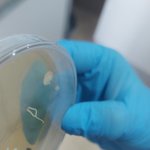
This is my first #FluorescenceFriday . These are e.coli expressing different chromopreoteins and(or) fluorescent proteins. I'm in love with fuGFP, the protein that produces that amazing brightness. Thanks to @ATinyGreenCell for making these tools accessible.

Erick Moreta retweeted

*PhD Opportunity – Fully Funded (Adelaide, Australia)***
We're looking for a PhD student to join our team at Flinders University to work on a project tackling “wicked problems” – complex, interconnected challenges shaping modern life.
1/


Erick Moreta retweeted

¡8 meses impagos!
¿Quién puede subsistir de esta forma?

🔴Trabajadores de limpieza y seguridad del Hospital Docente de #Calderón, en el norte de #Quito, denunciaron que llevan ocho meses sin recibir sus sueldos.
🔴Santiago Padilla, gerente de la empresa que presta el servicio de limpieza, aseguró que más de 190 personas de su equipo atraviesan esta situación. “Son ocho meses que no recibimos nuestros sueldos”, reclamó.
Más información aquí 👇
primeraplana.com.ec/trabajad…
Fuente: @onlypanasec
Erick Moreta retweeted

Over 600+ people registered for the @Synbio4allA Plant SynBio Course.
We've now closed registration to focus on our active learners. All course materials and recordings will be made open-access at the end.
Webinars remain public and ongoing.
Email [email protected]

Erick Moreta retweeted

#JustIn on Plantae: Back to Basics: Contributions of Plant Science to Fundamental Scientific Concepts by ASPB Plantae Fellows, @gourav_arora_g, Elise Krespan, and @AbiraSahu.
plantae.org/contributions-of… #plantsciencejob
#plantscience

Erick Moreta retweeted

Engineered resistance: Nanobody fusions enhance plant immunity against diverse pathogens
@JiorgosKourelis, @ClemMarchal, @adnroide, @Adeline_Harant, & @KamounLab.
@ScienceMagazine
🧵 1/9

Erick Moreta retweeted

🔍#LupaForEducation |🚨 ¡Atención, docentes de periodismo y comunicación! 🚨
¿Te gustaría enseñar fact-checking en tu aula y combatir la desinformación? 🧐📢
💡 En abril de 2025 iniciamos el curso gratuito "Enseñanza del Fact-Checking para Profesores de Periodismo", una oportunidad única para aprender a verificar información y enseñar estas habilidades a tus estudiantes.
🎯 4 semanas de aprendizaje práctico y metodológico
🎓 Certificación + acceso a la Red Latinoamericana de Formadores en Fact-Checking.
🔗 Inscríbete ahora 👉 forms.gle/4gXjhPQZmWAkCsuc9
Más detalles del curso aquí: lupa.com.ec/novedades/curso-…

Erick Moreta retweeted

I genetically engineered the amazing Arabidopsis to mimic the striking patterns of my Tradescantia zebrina🧬🌱
From concept to creation, here's the story behind transforming this plant into a living work of art! (1/7) 🧵"

Erick Moreta retweeted

Episode #2 of my show Tears In Rain is live!!! I interviewed Susanna Harris, and she gave us a peek into what it took for her to become the scientist she is today. Highly recommended viewing for PhD students pushing themselves to grow as researchers.
youtube.com/watch?v=7R6MdYeK…
Erick Moreta retweeted

Las "Gloriosas Fuerzas Armadas del Ecuador", hoy convertidas en SICARIOS del Presidente Noboa.
Porqué estos "valientes soldados" no están cuidando las fronteras por donde entra el Narco Tráfico?
Porqué estos "valientes soldados" se empecinan con los niños y jóvenes? ¿Frágiles?

Más de 42 organizaciones sociales denunciaron una campaña de estigmatización y desinformación impulsada desde el gobierno en el marco de los niños desaparecidos de Guayaquil.
Además revelaron más casos similares ⬇️
goo.su/278us7

Erick Moreta retweeted

📄 Production of Plant Virus-Derived Hybrid Nanoparticles Decorated with Different Nanobodies 👥 Enrique Lozano-Sanchez, José-Antonio Daròs, Fernando Merwaiss 🔗

Erick Moreta retweeted

Gracias por haber sido siempre lucha, siempre entrega total por tus hijos, siempre luz. Te amamos eternamente.


Erick Moreta retweeted

I've been reading a lot about "plant biosensors" or "plant sentinels" lately, which are crops that have been engineered to sense molecules in the environment (like pesticides or toxins) and then change color in response.
I think they could be incredibly useful for farmers and help stop infections before they spread. Here's how they work...
About two decades ago, Sean Cutler (who I met last weekend at Lake Arrowhead) did seminal work to discover protein receptors that bind to a plant hormone called abscisic acid, or ABA. This plant hormone regulates how plants respond to stress during, say, droughts.
Now, plants sense ABA in a slightly complicated way: First, ABA binds to a protein called PYR1. This forces PYR1 to shift into a different shape, revealing a "binding pocket" that latches onto another protein called HAB1. Over time, this causes HAB1 levels to drop in the cell, which plants use as a signal to activate their stress response.
Okay, so those are the basics. Now how are these proteins actually engineered to sense *new* molecules?
That's the cool bit. Cutler's group at UC Riverside is basically really good at engineering the ligand-binding pocket in the PYR1 protein. They've solved its crystal structure, and they know exactly which amino acids are responsible for grabbing onto the ABA molecules. So in one of their papers (see here: nature.com/articles/s41589-0…) they randomly mutated these amino acids and then searched for PYR1 mutants that were able to grab onto NEW molecules, rather than just ABA.
And it actually worked.
They found mutated PYR1 proteins that can grab onto lots of different things. Cutler's team has made PYR1 variants, for example, that can grab onto banned organophosphate pesticides, like azinphos-ethyl and diazinon, with nanomolar sensitivity and without grabbing onto ABA (in other words, the *new* proteins are orthogonal to the old ones.
But what about the RESPONSE? When a mutated version of PYR1 grabs onto a pesticide, how does that trigger the plant to physically change color?
That's where the "synthetic biology" comes in. When the engineered PYR1 binds to the target molecule, it then grabs onto a MODIFIED VERSION of HAB1 (called HAB1*, and which is also orthogonal to the normal HAB1), which in turn activates genes of the scientists' choosing. For example, Cutler's team can encode the betalain biosynthesis pathway into these plants --- the same genes that give beets their dark red color --- and have the plants make those pigments after sensing a desired molecule. They've basically built orthogonal, programmable biosensors inside of plants.
So here's the breakdown:
- Engineer PYR1 to detect new molecules. The sky is the limit; this could be toxins, molecules associated with soil nutrient levels, pathogen proteins, and much more.
- Rewire the genetic output so that PYR1, when activated, triggers the production of red pigments or something else (and not drought response.)
- The plants change color when they sense the target molecules.
Hopefully there will be field trials for these plant biosensors soon. Regulations will obviously slow this work down, but the good news here is that farmers could plant JUST A FEW of these "plant biosensors" among the tens of thousands of plants in their fields. And these biosensors would not be sold as food! They could just act as sensors, and be discarded at the end of every growing season.
Thanks for reading!

Erick Moreta retweeted
Dear plant friends, what flowers have the coolest patterns on their petals?
I will start: Saxifraga rotundifolia
Erick Moreta retweeted

"Maize roots sense histamine from Bacillus, producing p-coumarate exudates, which stimulate nanoparticle biosynthesis in selenobacteria"
Harnessing biosynthesized selenium nanoparticles for recruitment of beneficial soil microbes to plant roots
doi.org/10.1016/j.chom.2024.…

Erick Moreta retweeted

Here’s a simple, cheap, rapid, and solvent-free DNA extraction method that might be worth trying for plants that contain high levels of PCR inhibitors,
It was developed by Selvarajan et al. (2015) to help detect banana bunchy top virus (a single-stranded DNA virus) in banana leaves. Banana leaves contain high levels of polyphenols, polysaccharides, and tannins which can complicate DNA extraction and inhibit PCR. And if it works in this difficult case, then maybe it’ll work for other difficult plants too?
The method involves maceration of plant tissue in Tris-HCl buffer with 0.65% sodium sulphite and 1.5% polyvinylpyrrolidone (PVP), followed by 10 mins incubation at 95 °C and centrifugation. The supernatant can then be diluted 10x and used directly for PCR.
In this protocol sodium sulphite (a reducing agent) is used to prevent the activity of polyphenolic oxidases that produce PCR-inhibiting polyphenolic compounds (often seen as browning of plant tissues or extraction homogenates). PVP is used to adsorb and remove polyphenolic compounds and other PCR-inhibiting compounds.
The authors' DNA extraction and PCR workflow gave a 99.1% success rate from 224 samples, allowing the detection of single-stranded viral DNA in crude extract diluted up to 512 times. The method was estimated to be 20x cheaper than a CTAB/chloroform extraction and 280x cheaper than a kit DNA extraction.
The really nice part of this method (if it works for your application) is that sodium sulfite and PVP are relatively safe, cheap, and accessible chemicals. Because of this, it could be very useful for high-throughput projects, resource-limited scenarios, or field and home applications.
Here’s the article:
Selvarajan et al. (2015). A simple, rapid and solvent free nucleic acid extraction protocol for detection of banana bunchy top virus by polymerase chain reaction and loop-mediated isothermal amplification. European Journal of Plant Pathology, 142, 389-396.
buff.ly/4hd8sHW
The image below shows banana plants infected by banana bunchy top virus, image CC0 by Scott Nelson.

Erick Moreta retweeted

Free scientific illustrations for biologists! 😍
@NIH has released a library of 500+ free scientific illustrations to create figures, presentations, and illustrations!
all freely available in the public domain.
Retweet and spread the message!
bioart.niaid.nih.gov/

Erick Moreta retweeted

Saccharomyces cerevisiae artwork created by a young Cuencano artist. The yeasts were used to draw the image over a Sabouraud medium plate coloured with food coloring. A friendly strategy to awake children & young people interest in Microbiology. #microbeart2024 #MicroversoCuenca


Erick Moreta retweeted
Please take 10-mins to complete our nature connection research survey:
qmunature.github.io/Survey
Please also repost.
Thanks! 🍃

