

MD/MPH/PhD. UNC@Chapel Hill Alumna. Research CVD Epi/Preventive Cardiology. Teach research methods. Behavior Change Counseling. Traded tenure 4 sunshine. Dancer
The Beautiful Blue Planet
Joined September 2008
- Tweets2.5K
- Following546
- Followers384
- Likes11.6K





Georgeta Vaidean retweeted

I rarely comment on posts like this, but this one needs a correction.
The Ennezat et al. meta-analysis (J Cardiovasc Pharmacol 2023) of 60 trials and ~324,000 patients does not show that “nobody lived longer.” It shows that active or more intensive lipid-lowering therapy reduced all-cause mortality (RR 0.92). What it did not find was an additional mortality benefit from more intensive LDL reduction beyond standard therapy.
More importantly, lack of a large mortality benefit in modern trials is not the right test of whether lipid-lowering (or other interventions) works.
Today, case fatality for acute myocardial infarction is under 4% thanks to primary PCI and modern acute care. The vast majority of patients survive an acute event. We are also very good at preventing recurrent events with secondary prevention. When acute events are highly treatable and further events are largely preventable, it becomes statistically very difficult to show large differences in total mortality.
In a recent study from our group of nearly 19,000 first-time STEMI patients treated with primary PCI, those who survived the first 90 days and received high rates of guideline-directed preventive therapy (including statins) had a 10-year mortality only 2 percentage points higher than an age- and sex-matched general population (HR 1.04).
jacc.org/doi/10.1016/j.jacc.…
Patients who were not well treated had higher mortality. Unless one believes that a STEMI does not identify someone at high long-term risk, this is hard to interpret as anything other than evidence that modern secondary prevention (including LDL lowering) largely eliminates the excess mortality that would otherwise be expected.
Not everyone needs lipid-lowering therapy. Not at all. The same applies to blood pressure–lowering treatment. One could even argue that many people with type 2 diabetes or who smoke will never develop cardiovascular disease, even without intervention. But that does not mean these risk factors should be ignored. This is precisely why absolute risk matters: the absolute benefit of treatment is small in people at very low risk. However, claiming that substantial LDL-C reductions do not reduce mortality, based on a selective interpretation of a single meta-analysis, is simply not supported by the totality of evidence.


I think this chart should be framed and hung in every cardiologist's office in the world.
60 trials. 323,950 patients. Every cholesterol-lowering drug ever made. Statins. PCSK9 inhibitors. Ezetimibe.
They reduced LDL by up to 80%.
Nobody lived longer.
In some trials, more people died.
(Ennezat et al., J Cardiovasc Pharmacol 2023) 🧵

Georgeta Vaidean retweeted

Truncation by death in RCTs:
Causal formalists: assume deaths away in an attempt to isolate the main response from death, usually while acting as if survival is predestined and that clinicians treating patients know which of their patients are predestined to survive
Biostatistician RCT modelers: death is an outcome; treat it as one; use models likely to reflect the data generating process; model multivariate outcomes and get an intent-to-treat estimand having all assumptions out in the open that matches the clinical decision process at time zero
Naive researchers: analyze results on survivors and don't think about any of this
fharrell.com/post/trunc
Georgeta Vaidean retweeted
🫀 Can coronary atherosclerosis actually regress?
Our new randomized FLOWPROMOTE trial analysis, published TODAY in JAMA Cardiology, shows remarkable coronary plaque regression with intensive LDL-C lowering!
Atherosclerosis is not necessarily a one-way process.
📄 JAMA Cardiology:
doi.org/10.1001/jamacardio.2…
#Atherosclerosis #LDL #Cardiology #CCTA

Georgeta Vaidean retweeted

Lots of debate this week on whether journals should ban AI in peer review.
We actually tested this in our new preprint, and the results were pretty clear to me.
For context, I've reviewed for most of the big journals and evaluated 1,000 human reviews as an editor. I love to read and evaluate science.
TLDR: From now on I won't do any peer review without AI. For clinical trials, I'd even call human-only review dangerous 🧵

Georgeta Vaidean retweeted

Some very good points here. Perhaps the biggest abomination I see in #meded is emphasis on specificity and sensitivity; this is highly bizarre stuff, and I share Moon’s and Frank’s piece as much as I can pubmed.ncbi.nlm.nih.gov/1280…

Georgeta Vaidean retweeted

💬 Perspective by Adam Sawatsky, MD, MS, and Andrea Leep Hunderfund, MD, MHPE: #PhysicianBurnout may reflect more than overwork. #Burnout can also indicate an identity crisis in #Medicine when market, managerial, and platform priorities conflict with professional commitments to patients and public trust.
Addressing burnout may therefore require structural changes in workflows, metrics, and technologies so that practice conditions support patient-centered care and professional judgment.
ja.ma/4dbnPQY

Georgeta Vaidean retweeted

Thank you @HypertensionAus especially President @markus_schlaich for inviting me to present at next month's webinar - #Gratitude & delighted!
Hope you will join us🙏
@NthSydHealth @KollingINST @thecsanz @HypertensionAus @CouncilonHTN @KidneyInCVD @WomenAs1 @HerHeartCharity @GlobalHeartHub @AHAScience @Ravinay @escardio @EAPCPresident

Georgeta Vaidean retweeted

🔬Using GWTG Clinical Registry Data to Address Gaps in Care of Patients with CVD or Stroke
This opportunity supports early career investigators interested in learning how to use GWTG data on the Precision Medicine Platform
•Up to $50,000 per award
professional.heart.org/en/re…

Georgeta Vaidean retweeted

Which is better at fueling endurance sports, keto- or carb-based approaches? The debate between keto and carb has dominated the sports nutrition world for decades. Here, in an excerpt from a longer discussion with @mackinprof and @gibalam , @LouiseMBurke sets up the fundamental reason why keto is so compelling.
Full episode:
realexercisescience.com/p/ca…
#carbs #keto #ketogenic #nutrition #endurance

Georgeta Vaidean retweeted

This is why we started our movement.
We are committed to being the most author-friendly and reviewer-friendly journal in the world.
-easiest submission process in existence
-rapid reviews and editorial decisions
And All our science is accessible to anyone, everywhere in the world, for free. Forever.
Join the movement!
Opensourcecardiology.org


Our lead author just pulled one of our papers from a prominent #MedEd journal because it’s been 8 months and the editors still couldn’t find any reviewers.
You were wondering when this #PeerReview model would hit its breaking point?
That time is now.
Georgeta Vaidean retweeted

If you just control for metabolic health tightly enough (selecting the youngest, fittest, leanest, healthiest etc. participants) then elevated ApoB/LDL-C doesn't explain plaque.
This is the healthy-of-the-gaps argument. The god-of-the-gaps argument applied to lipidology.
🧵1/9

wait, what on earth??
in listening to dave in that clip, what is he truly trying to say? on one hand, these people are (according to his criteria) "healthier than average" and some people like the woman he mentions or the other person with the high CAC before entering the study, may not have been healthy beforehand. ok sure, I get that. but they clearly were in different/better states of metabolic health by the time they entered the study and after a year of it were they not?
so now is it that LMHR does not appear to more substantially increase risk for plaque development if the person is a super healthy, fit athlete with little to plaque before starting eating keto?
this makes no sense.
the question at hand as I understand it is what happens when you go on keto regardless of your state of health beforehand, especially when we consider that many people choose this path because they are not in a good state of health. you could even make the argument, that the results on the less healthy people in their cohort are the MOST IMPORTANT OF ALL to pay attention to, when it appears as though he is trying to explain their rapid progression rates away based on their prior health metrics.
Georgeta Vaidean retweeted
The theme for #WorldHypertensionDay 2026 is ‘Controlling #Hypertension Together!’
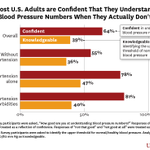
A reminder for all of us to measure #BloodPressure accurately🙏
Aust Prescr 2026;49:50–4
doi.org/10.18773/ austprescr.2026.016

Georgeta Vaidean retweeted

Wait...this is brilliant. @doctordaoud
Georgeta Vaidean retweeted

Wisdom. We need a lot more of this.

A new narrative review in @CureusMedical highlights that the most effective #health interventions happen outside the clinic walls.
Across nearly 1,000 studies, integrated #community-based strategies combining health #education, local screening, community health workers, and policy changes like better #walkability or healthy #food access, consistently improve outcomes.
Think lower blood pressure, better diabetes control, fewer late-stage cancer diagnoses, and more equitable access to care. The magic isn't in any single tactic. Behavioral support plus early detection plus #environmental changes make healthy choices easier.
Importantly, when communities co-design these efforts, engagement and trust skyrocket.
cureus.com/articles/482161-c…

Georgeta Vaidean retweeted

This study demonstrates that GLP-1 and GLP-1/GIP agonists favorably reshape body composition. The meta-analysis shows significant reductions in fat mass and visceral adipose tissue with relative preservation of lean mass, directly addressing concerns about excessive muscle loss.
nature.com/articles/s41366-0…

Georgeta Vaidean retweeted

I wrote this in a moment I never would have chosen. A sudden pause that made me see my life clearly.
The meaning of our work is profound. This experience simply helped me see more clearly what matters most.
“Time is Finite” JAMA
jamanetwork.com/journals/jam…

Georgeta Vaidean retweeted

The bottom line:
Exercise remains the single best intervention for preserving function in older adults. Full stop.
I've always advocated that Rapamycin should NOT be used outside of FDA-approved indications and clinical trials
Paper: onlinelibrary.wiley.com/doi/…

Georgeta Vaidean retweeted

👉 HDL and ASCVD: is high HDL-C protective, harmful, or simply misleading?
👆 HDL is biologically complex and multifunctional — lipid transport, immune modulation, endothelial signaling
👆 HDL-C reflects cholesterol content, not biological function → surrogate, not mechanism
📍 Observational epidemiology:
Reports U-shaped associations between HDL-C and mortality
However:
Highly prone to confounding and reverse causation
Driven by comorbidities (liver disease, alcohol, inflammation, frailty)
→ Not suitable to infer causality
📍 Causality hierarchy matters:
Mendelian randomization (MR):
No consistent causal protection from HDL-C
Strong causal signal for ApoB-containing lipoproteins
→ Genetic evidence overrides observational noise
📍 Interventional trials:
Raising HDL-C → no reduction in ASCVD events
CETP inhibition: benefits align with ApoB lowering, not HDL-C increase
📍 Mechanistic paradigm shift:
From HDL quantity → HDL function
Key metric: cholesterol efflux capacity (CEC)
📍 Clinical implications:
High HDL-C ≠ protective
Very high HDL-C should not reassure
📍 Focus remains on:
ApoB / LDL-C
Lp(a)
Non-HDL-C
👆 Take-home:
U-shaped HDL curves are epidemiology, not biology
Reverse causation ≠ protection
If it’s not causal, it’s not a target
HDL-C is a marker. ApoB is the mechanism.
🔓 Open Access journals.lww.com/co-lipidolo…
@society_eas
@JohnKastelein
@CO_Lipidology


Georgeta Vaidean retweeted
Delighted to have this in print @AustPrescriber!
Perfect 🎯 timing ahead of May Measurement Month #MMM26 as reminder HOW we measure #BloodPressure matters‼️
Thanking your Editorial Board for the invitation🙏 & delighted to be advised by your Managing Editor that April issue distributed to yr 100,000+ subscribers!
australianprescriber.tg.org.…
@NthSydHealth @KollingINST @Ravinay @HypertensionAus @thecsanz @OzCvA @WomenAs1 @HyperAHA

Georgeta Vaidean retweeted

In my opinion, most statin skepticism isn’t irrational.
I think it is more a function of misapplied reasoning.
👉🏻There’s usually a nugget of truth behind most concerns.
My job is not to dismiss concerns - I try my best to refine them.
The following is a potential framing with step-by-step interaction…allow me to demonstrate my ability to be a pharma shill and an LDL denier at the same time 🤣
🧵