






cp retweeted

I did not expect this. Anthropic just published a Lean proof of Fermat's Last Theorem.
The proof is +13M LoC, more than 5 times the size of Mathlib.
Kevin Buzzard's post: xenaproject.wordpress.com/20…
The proof: github.com/anthropics/fermat…
Anthropic's post: anthropic.com/research/forma…


cp retweeted

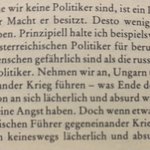
This is an amazing quote from Lindsey Graham about when he realized how politics works. theatlantic.com/ideas/2026/0…

cp retweeted

You have to admit this is pretty cool.

We're opening the waitlist for our Monetization Gateway, which will allow you to charge for any web page, dataset, API, or MCP tool behind Cloudflare. The charges will settle in stablecoins over the x402 open protocol. cfl.re/4eUFdt6

cp retweeted

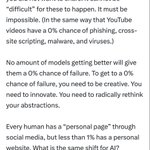
The computer is being reinvented in the agentic era:
- The model is the new CPU.
- The harness is the new OS.
- Hallucinations are the new bugs.
- The context window is the new RAM.
- Skills are the new apps.
- Markdown files are the new config.
- Evals are the new QA.
- Context is the new moat.
- Permissions are the new firewall
- Trust is the new bottleneck.
- Prompt is the new programming language
- Agent is the new software.
Anything you dream of, you can build.
This is the greatest time ever to be building with computers.
cp retweeted

I once talked to a Mistral researcher who told me that even internally everyone just uses Claude Code or Codex.
I asked him how does the company survive given that it's models are so far from the frontier and he told me that Mistral hovers up contracts with all the major EU enterprises like Airbus and BMW. Likely with French government backing.
It is remarkable that the Germans and the English are letting the French get away with this. It seems both countries are too caught up with their own domestic issues.
If there were actual competition like in the Chinese ecosystem I imagine EU AI sovereignty might be somewhat of a realistic prospect.
cp retweeted

Using an anecdote to illustrate a point I, and everyone else with a brain, can see: the nuclear shutdown has made energy more expensive and more dirty. Germany is deep in an absurd scarcity mindset.

cp retweeted

Luis (and @pietergaricano) are correct below, and @paulkrugman is much too sanguine about Europe's challenges.
As it happens, the same wealth point that Luis mentions also struck me when I traveled to Nashville a few weeks ago.

We stopped everything to write an answer (link below) to Paul Krugman's two posts of today (one informal, one with a simple model) arguing that Europe is broadly not falling behind the United States.
The change measured by the Draghi report, he argues, is mostly due to growth in the technology industry, which has distorted GDP numbers without actually leading to higher standards of living. We should believe our eyes when we walk around France and walk around Mississippi.
Krugman is wrong. The measures he uses understate European stagnation. This matters enormously. Divergence with the United States is the strongest evidence for reform in Europe.
1. The growth numbers
Krugman compares the United States, France, and Germany at purchasing power parity in current prices. On that measure, France's and Germany's position relative to America has been roughly constant since 2000.
But current price comparisons miss productivity gains in sectors where prices fall. If America produces twice as much software while the price of each unit halves, the value of American software output looks unchanged even though the volume has doubled.
Most economists therefore use constant prices, which fix the base-year PPP level and apply each country's real output growth on top of it. American output growth has concentrated in tech, where prices have fallen tremendously as productivity rises. In terms of the volume of things produced, America has pulled away from Europe.
2. Is it all the tech industry?
Krugman concedes this tech divergence but says it is not welfare-relevant. The American growth lead is an accounting artefact of measuring more iPhones at base-year prices, not a sign that Americans are actually richer, because Europeans buy the same iPhones at the same world prices.
This is not the right way to think about the world today, as an earlier Paul Krugman would have argued.
His model assumes tradable goods, interchangeable workers, marginal-cost pricing, and no profits. Each assumption fails.
Most of what households buy is non-tradable: housing, healthcare, childcare, education. When American tech firms bid workers from haircutting to coding, American haircut wages rise. Germany has no growing tech sector to do the bidding, so German wages stay flat.
Technology is not priced at marginal cost. Apple's margins are around 40 percent. Anthropic's inference margins are at 70 percent. The major platforms enjoy network effects, switching costs, and lock-in that hold prices well above what a competitive market would deliver. A large share of the productivity gains in technology stays as profit.
A lot of the value of American technology dominance shows up in equity, not in wages. Apple, Microsoft, Nvidia, Alphabet, Meta, and Amazon together are worth $21 trillion, more than the entire combined stock market value of all European stock markets. Around 60 percent of US equity is held by American households. The median French or Spanish household holds almost no equity.
The median employee at Meta, a company with almost 80,000 employees, earned $388,000 in 2025.
This advantage is not going to go away. Krugman's own 1991 paper, cited in his Nobel prize, showed that comparative advantage in modern industries is produced by increasing returns to scale, specialized labor markets, supplier networks and the agglomeration of suppliers, workers, and ideas in particular places. Once an industry concentrates somewhere, the concentration is self-reinforcing. Europe is being pushed away from the next round of technology industries (AI!).
3. What about inequality?
Another retort is that GDP per capita hides substantial inequality, and so even if America is rich on average, this is mostly due to the super wealthy.
But despite the US's high pre-tax income inequality, it also achieves higher median incomes than Europe, in part because of such a high base, and in part because it actually redistributes more than many European countries.
The cleanest comparison is median equivalised disposable household income: income after cash taxes and transfers, adjusted for household size and purchasing power. According to the OECD's 2021 numbers, the median American earns 30 percent more than the median Dutchman, about 31 percent more than the median German, and about 52 percent more than the median Frenchman.
4. What about hours worked?
Krugman points out that while American GDP per person is higher, most of this is because Americans work more. For this divergence to be an hours worked story, Americans must work more relative to Europeans now than they did in 2000.
The opposite has happened. Birinci, Karabarbounis, and See in a 2026 NBER paper show that about half of the American-European hours gap that existed in the 1990s has reversed by the end of the 2010s. Americans work fewer hours per person than they did in 2000, while most Europeans work more.
5. Is America not a bad place to live?
Walk around Alabama and France: surely the former cannot be substantially richer than the latter?
American cities often have poorer centres and richer suburbs or exurbs. European cities preserve richer and more attractive historic cores. A visit to a city as a tourist in America compared with a city in France will leave one having seen different spots on the income distribution. Americans in Europe go to the nicest and richest European cities.
Rather than a walking around test, do a driving around test. Go to the periphery of any modern American city and see a level of new-built material wealth that is extremely uncommon in Europe, with thousands of enormous four- or five-bedroom homes. In the South, in places like Nashville and Austin, drive around the downtowns to see hundreds of luxury apartment buildings springing from the ground. This construction boom is replicated virtually nowhere in Europe today.
The other question is generational. Housing often costs more in Europe than in the United States, despite the quality of the housing stock generally being much better. Europe has nice city cores but these are inaccessible to young Europeans.
Consider the salaries available to entry-level workers. The starting pay for a London police officer is $57,000. In Washington, DC, $75,000. The entry-level Deloitte consultant job in Madrid pays around €28,000, roughly $33,000 per year. In Charlotte, the entry-level Deloitte job pays $63,000.
There are many things to dislike about life in America. But relative to 25 years ago, the gap in material wealth has shifted dramatically in America's favor.
siliconcontinent.com/p/europ…

cp retweeted

A German startup has just signed an agreement to build the world’s FIRST nuclear fusion plant.
@proximafusion has signed an MOU securing €400m from its home state of Bavaria to build the €2bn plant.
The rest of the funding is expected to come from the federal government.
Proxima Fusion is hoping to get the plant up and running by the early 2030s.
It comes at a time when Europe’s energy security is being scrutinised more than ever.
Germany in particular has been criticised for closing down all of its nuclear power plants, but this could see the country become a global energy powerhouse.
Backed by Wilbe, Cherry Ventures and Balderton, Proxima has become one of Europe’s most exciting companies.
If this works Proxima could truly become a trillion dollar company.
It is AMAZING to see European founders building the most exciting, and potentially impactful, technologies in the world.

cp retweeted

Amazing

Every bit of code the government runs for Freedom.gov will be open source, meaning anyone can independently verify our security & privacy assertions

cp retweeted

Gonna spell this out explicitly.
The whole “Europe is bravely dumping Treasuries to stick it to evil America” story is mostly nonsense propaganda created to disguise the truth to ordinary European citizens who don't have the knowledge about how financial plumbing actually works.
In reality, Europe has very little real leverage here. Trying to weaponise Treasury sales would hurt Europe dramatically more than it hurts the US — and could end up forcing Europe to beg China for help instead.
European governments know this deep down and are unlikely to actually do it voluntarily.
The Greenland story is mostly posturing — Europe pushing back a bit, but ultimately having to give in because the financial asymmetry is so one-sided.
Europe dumping (or massively selling) US Treasuries to “punish” or weaken America is a terrible idea that would backfire badly on Europe itself.
Here's the simple version of why
Europe still really needs dollars.
Lots of European banks, companies and investors operate in dollars — they borrow in dollars, lend in dollars, trade in dollars, etc. They depend on a steady supply of dollars to keep everything running smoothly.
The US can cut off easy dollar access.
In a crisis the Federal Reserve (US central bank) provides dollars to Europe through special “swap lines”. These were super important in 2008 and 2020 to prevent European banks from collapsing. If the US gets angry (e.g. over Greenland/tariffs or bigger conflict), it can simply turn those swap lines off.
Selling Treasuries creates a dollar shortage in Europe
If European pension funds / asset managers sell huge amounts of US Treasuries: They get dollars back.
But then those dollars either go back into European banks (which then buy Treasuries again → no real change) or leave the European system → European banks suddenly run short of dollars they need to fund their dollar loans and activities.
→ This triggers a panic, the euro crashes against the dollar, and Europe gets a currency & banking crisis.
No swap lines = no easy fix
Without Fed help, Europe can't get enough dollars quickly. Banks and companies start defaulting, businesses can't function normally, people get poorer.
It's basically self-harm.
The only other big source of spare dollars is… China
Japan is aligned with the US, so that leaves China. But China would demand a very high price — probably political/economic concessions that would make Europe far more dependent on Beijing (and indirectly on Russian energy via China).
Europe would basically be swapping US “vassal” status for Chinese “vassal” status… on much worse terms.
Well done Europe in that case. So much for your ESG principles.
cp retweeted

1/12
This talk about Europe's ability to wield its holdings of US Treasuries as a political tool is as divorced from reality as the talk about China's ability to wield its holdings of US Treasuries as a political tool.
ft.com/content/7d64364f-467d… via @ft


cp retweeted

#Grönland #Zölle - Wenn es jetzt, und es sieht ganz danach aus, zu einem Kräftemessen mit den USA kommt, muss man klar sehen, dass wir derzeit keine Chance haben.
Denn in den letzten 20 Jahren hat man sich eben voll darauf konzentriert, Dinge wie eine feministische Außenpolitik und ein „grünes Wirtschaftswunder“ zu kreieren, was nicht nur krachend, sondern fundamental gescheitert ist.
Die Bundeswehr ist im Vergleich zu den USA ein totaler Witz, trotz eines Budgets von hunderten Milliarden Euro in den letzten zehn Jahren.
Ich habe es schon einmal gesagt, und der Ökonom Daniel Stelter hat es ebenfalls gesagt. Wenn wir jetzt nicht aufpassen, droht uns in Teilen der Wirtschaft und vor allem der Industrie der Strömungsabriss.
Dann erleben wir Zusammenbrüche, die wir uns derzeit noch gar nicht vorstellen können.
Man kann Unternehmen nicht über viele Jahre hinweg in einer Dauerkrise halten, wie wir es derzeit erleben.
Irgendwann ist dann Schluss. Die Substanz ist bei vielen irgendwann aufgebraucht. Das Eigenkapital vieler Mittelständler ist auf ein bedrohliches Niveau gesunken. Die Creditreform hatte bereits darüber berichtet.
Außerdem muss man nach so vielen Jahren Krise feststellen, dass sich zum einen in Deutschland kein Geld mehr verdienen lässt und zum anderen, dass es mit Blick auf die Zukunft überhaupt keine Perspektive gibt, weil überall in Deutschland wirtschaftlicher Irrsinn herrscht.
Ein Wirtschaftsmodell, das auf Export aufgebaut ist, bei dem man jedoch mit den wichtigsten Handelspartnern der Welt zum Teil wirtschaftlich nicht mehr mithalten kann und politisch nicht mehr ernsthaft miteinander spricht, ist vollständig zum Scheitern verurteilt.
Wenn unsere Moralweltmeister in Berlin diesen Weg jetzt weitergehen, ist unglaubliche Armut für ganze Gesellschaftsschichten nur noch eine Frage der Zeit.
Sehr kurzer Zeit!
Ich kann gegen Mike Tyson nicht gewinnen, selbst dann nicht, wenn ich es moralisch verdient hätte.
Was ich damit zum Ausdruck bringen möchte, ist, dass, wenn Merz und seine Mannen den Weg der Provokation gegen Trump und die USA gehen, alle ohnehin schon schlechten Wirtschaftsprognosen noch einmal deutlich deutlich nach unten korrigiert werden müssen.
P.S.: Fuck! Wo sind die verdammten Jedi-Ritter, die uns aus dieser Scheiße wieder rausholen?
cp retweeted

The story of our times: After China challenged America's primacy, America is reasserting its primacy.
cp retweeted

The EU’s tech regulation cannot conceivably survive in its current form. The big issue is not Trump’s opposition to fines by the European Commission on US technology companies. The far bigger problem is that the tech regulation keeps Europe in the digital dark ages. The lack of digital innovation is one of the causes of Europe’s economic malaise. The Polish president Karol Nawrocki has just vetoed Poland’s implementation law of the Digital Services Act. I see this as the beginning of a broader pushback.
eurointelligence.com
cp retweeted

Yesterday a quasi-judicial body in Italy fined @Cloudflare $17 million for failing to go along with their scheme to censor the Internet. The scheme, which even the EU has called concerning, required us within a mere 30 minutes of notification to fully censor from the Internet any sites a shadowy cabal of European media elites deemed against their interests. No judicial oversight. No due process. No appeal. No transparency. It required us to not just remove customers, but also censor our 1.1.1.1 DNS resolver meaning it risked blacking out any site on the Internet. And it required us not just to censor the content in Italy but globally. In other words, Italy insists a shadowy, European media cabal should be able to dictate what is and is not allowed online.
That, of course, is DISGUSTING and even before yesterday’s fine we had multiple legal challenges pending against the underlying scheme. We, of course, will now fight the unjust fine. Not just because it’s wrong for us but because it is wrong for democratic values.
In addition, we are considering the following actions: 1) discontinuing the millions of dollars in pro bono cyber security services we are providing the upcoming Milano-Cortina Olympics; 2) discontinuing Cloudflare’s Free cyber security services for any Italy-based users; 3) removing all servers from Italian cities; and 4) terminating all plans to build an Italian Cloudflare office or make any investments in the country.
Play stupid games, win stupid prizes. While there are things I would handle differently than the current U.S. administration, I appreciate @JDVance taking a leadership role in recognizing this type of regulation is a fundamental unfair trade issue that also threatens democratic values. And in this case @ElonMusk is right: #FreeSpeech is critical and under attack from an out-of-touch cabal of very disturbed European policy makers.
I will be in DC first thing next week to discuss this with U.S. administration officials and I’ll be meeting with the IOC in Lausanne shortly after to outline the risk to the Olympic Games if @Cloudflare withdraws our cyber security protection.
In the meantime, we remain happy to discuss this with Italian government officials who, so far, have been unwilling to engage beyond issuing fines. We believe Italy, like all countries, has a right to regulate the content on networks inside its borders. But they must do so following the Rule of Law and principles of Due Process. And Italy certainly has no right to regulate what is and is not allowed on the Internet in the United States, the United Kingdom, Canada, China, Brazil, India or anywhere outside its borders.
THIS IS AN IMPORTANT FIGHT AND WE WILL WIN!!!

ALT Cloudflare: defender of the Open Internet against the elite European media cabal.
cp retweeted

Thus, my Northern Corridor doctrine based on 1) new US-Denmark defence deal on Greenland; 2) AUKUS-like defence pact with US, UK, Canada & Arctic nations to protect and secure the corridor; and 3) Northern Corridor geoeconomic corridor on mining of raw materials, is a must!

Greenland is “Panama Canal North” for Trump.
Just like he was opposed to China controlling both ends of the Panama Canal, the president wants command over both sides of the Arctic Northwest Passage: Alaska and Greenland.
asia.nikkei.com/spotlight/tr…

cp retweeted
Exactly right about Colby's views. The goal is to prevent a Chinese hegemony over Asia. Rich Europe must largely take care of itself, holding the line against an aggressive Russia -- so that the US can focus on preventing a Chinese take-over of Asia, starting with Taiwan.

The architect of US defense strategy, Elbridge Colby, published his playbook years before taking office. Most haven't read it. In my report I break down his framework, show its influence on the NSS, & why the "spheres of influence" theory gets it wrong.
medium.com/@mcnai002/the-bri…
