





J LIN retweeted

Google's new Gemini 4 Hydrogen has Intelligence just below Claude Sonnet 5.5 and GPT-6.1 Sol, at a third of Sonnet’s cost but ~2.5x that of GPT-6.1 Sol
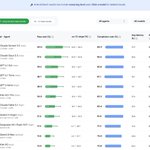
@GoogleDeepMind has released their third new model in six weeks. Gemini 4 Hydrogen introduces an xhigh reasoning level and scores 54 on the Artificial Analysis Intelligence Index, with strengths in visual reasoning and non-hallucination. This places it 1 point behind Claude Sonnet 5.5 (max) and GPT-6.1 Sol (max), at ~32% of Sonnet’s cost but ~2.5x that of GPT-6.1 Sol. With high reasoning, Gemini 4 Hydrogen matches the Intelligence of Gemini 4 Argon for ~19% of the Cost per Task
Key takeaways:
➤ The new xhigh reasoning level scores 54 on the Intelligence Index: xhigh is the first reasoning level above high on a Gemini model, and puts Hydrogen 1 point below Claude Sonnet 5.5 (max) and GPT-6.1 Sol (max), and 4 points ahead of Gemini 4 Argon (high). With default (high) reasoning, Gemini 4 Hydrogen scores 51, just behind GPT-6.1 Sol (xhigh, 52) and Claude Opus 5.5 (high, 52)
➤ Strong visual reasoning, presentation and non-hallucination: On GDP.pdf, a visual reasoning benchmark over long documents, it scores 33% all-pass on medium reasoning, the tied #1 score on the benchmark. On AA-Omniscience, Hydrogen has one of the lowest hallucination rates recorded at 8%, compared with 43% for Claude Sonnet 5.5 (max) and 52% for GPT-6.1 Sol (max). On AA-Briefcase, our agentic knowledge work evaluation, graders rate Hydrogen's presentation above other Gemini models, including Carbon
➤ Weaker on agentic terminal work: Hydrogen scores 54% on Terminal-Bench 4.0 and 50% on Terminal-Bench-Science 0.1, covering agentic coding and scientific research workflows in the terminal. Claude Sonnet 5.5 (max) scores 64% and 53%, and GPT-6.1 Sol (max) scores 56% and 58%. xhigh reasoning helps on the science tasks, lifting Terminal-Bench-Science from 41% at high to 50%, but makes no difference on Terminal-Bench 4.0 (54% at both). Science scores are even across domains, from 46% in earth sciences to 53% in physical sciences
➤ Low cost for its intelligence, with high token use at xhigh: Hydrogen is priced at $1.50/$7.50 per million input/output tokens. At xhigh it costs ~32% as much per task as Claude Sonnet 5.5 (max) for near-equal intelligence, but ~2.5x as much as GPT-6.1 Sol (max). xhigh nearly doubles output tokens compared with high for a 3 point gain in Intelligence, and Cost per Task falls from $3.16 at xhigh to $1.87 at high. Medium ($0.80) and low ($0.29) cost less again, but score 41 and 27 on the Intelligence Index
➤ On the Time per Task vs. Intelligence Pareto frontier: Gemini 4 Hydrogen has an output speed of ~200 output tokens per second. With high, medium, and low reasoning effort, Gemini 4 Hydrogen is on the Time per Task vs. Intelligence Pareto frontier, meaning no models are both more intelligent and have a lower Time per Task
Key model details:
➤ Context Window: 1M tokens
➤ Multimodality: Text, image, video, and speech input, with text output
➤ Reasoning efforts: Gemini 4 Hydrogen offers four reasoning levels (low, medium, high, and xhigh) with xhigh new in this release
➤ Pricing: $1.50/$7.50 per 1M input/output tokens. Cached input tokens receive a 95% discount ($0.075)
Congratulations to the @GoogleDeepMind team on the launch!

J LIN retweeted

Introducing the Gemini Decisions API
Powered by our new Gemini Decision 1 model, the API is built for fast routing, tool selection, safety checks, and grading inside your apps and agents without the latency or output-token cost of full text generation.
• Up to 1,000 questions evaluated per request
• $0.10/1M input tokens & $0 output tokens
• One shared input across text, images, audio, video, and PDFs
Start building today by grabbing an API key in @GoogleAIStudio

J LIN retweeted

Google 推出 Gemini Decisions API:不写回答只做判断,一次最多问 1000 个问题,输入每百万 Token 0.1 美元、输出不收钱
Google 今天在 Gemini API 里上线了 Decisions API,配套新模型 Gemini Decision 1。它不生成文字,只答题:给它一份输入和一组问题,它直接返回每道题的答案,外加一个“有多大把握”的置信度。
【它解决什么问题】
做 AI 应用时,很多调用其实只要一个判断:这条客服消息转给哪个组?这个问题交给便宜模型还是推理模型?这张图违不违规?以前只能让大模型写一段话,再从里面解析答案,慢,容易解析失败,还要为输出 Token 付钱。
Decisions API 只有三种题型:是非题,返回“是”的概率;单选题,2 到 255 个选项,返回选中项和每个选项的概率;打分题,按你写的档位打分。每个答案带 0 到 1 的置信度,代码可以设门槛,比如高于 0.7 自动执行,低于就转人工。官方说这些概率是校准过的,意思是模型说 90% 的时候,大约十次里真对九次,所以置信度能直接拿来当门槛。
Google 博客的例子:上传一张茶水间台面的照片,同时问三个问题。“有没有洒了的液体”答 0.95;“怎么处理”选“用抹布擦”,置信度 0.98;“脏乱程度按 0 到 2 打分”给 1.19,置信度 0.77。
【多快、多便宜】
一次请求的输入最多 256K Token,文字、JSON、图片、音频、视频、PDF 可以混着放,比如一段客服通话录音加账户信息。同一份输入上最多挂 1000 个问题,彼此互不影响。输入只计一次费,每多一个问题只多算这道题本身的字数。
Google 称输入在 1.6 万 Token 以内时,端到端延迟 150 到 250 毫秒,问 1 个和问 100 个问题耗时差不多;同一批评测下,比用 Gemini 3.5 Flash-Lite 生成答案便宜近 5 倍。Gemini Notebook 已经用它给每个提问挑模型,日常问题延迟最多降了 40%。
【谁能用】
在 Google AI Studio 拿个 API Key 就能调,模型名 gemini-decision-1,走 v1beta 接口。有免费层,每分钟 200 次、每天 1 万次,免费层的数据会被 Google 用来改进产品,付费层不会。OpenRouter、LangChain、Vercel 等正在接入,Google Cloud 上的 Gemini 要稍后才支持。
不支持上下文缓存和 Batch API,同一份大文档反复问,每次都按全价算输入;不能直接传 YouTube 链接;问题本身只能写文字。
【跟 OpenAI 的同名产品比】
OpenAI 早一个月做了同样的东西,名字也叫 Decisions API:10 月 6 日出测试版,10 月 22 日正式开放,用 GPT-6 Luna,同样每百万输入 Token 0.1 美元、输出不收费。区别是 OpenAI 一次最多 400 个问题,只收文字、图片和 JSON,不收音视频和 PDF;但它支持缓存,重复输入能打折,还能直接塞进对话历史和工具调用记录。
创业公司 TypeSafe 的 Jev 1.14 也专做这类判断,在 OpenRouter 上每百万输入 Token 0.042 美元,只收文字和图片。
Google 博客附的对比表里,Gemini Decision 1 在 9 项测试中 7 项第一(其中音频、视频两项只有它和 Flash-Lite 参测),校准误差 0.025,GPT-6 Luna 是 0.072;网页操作和“该不该调用工具”两项输给了 Jev 1.14。7 项共同评测的总花费,Jev 最低,0.68 美元,Gemini Decision 1 是 0.88 美元,GPT-6 Luna 0.93 美元。以上跑分都是 Google 自己测的。
Google 博客:blog.google/innovation-and-a…
官方文档:aistudio.google.com/docs/dec…
OpenAI Decisions API 文档:developers.openai.com/api/do…


Today we’re launching the Gemini Decisions API, powered by our new Gemini Decision 1 model in @GoogleAIStudio.
Instead of generating text token by token, it’s built for closed-set choices scoring up to 1,000 questions across text, images, audio, video + PDFs in a single pass. A few details:
- 3 decision types: yes/no, multiple choice (up to 255 options) + rubric scoring
- $0.10 / 1M input tokens with $0 billed for output tokens (~5x cheaper than Flash-Lite)
- leads on several benchmark evals with lowest calibration error
Google teams are already building with it, below is a look at Stitch Rapid designing a full product flow in seconds (1x speed)
J LIN retweeted

kalo kalian punya android bekas, kalian bisa banget install nouride.com di sana ya ges ya.
ada android bekas 1-2GB an? gas! bisa nih wkwkwkwk
ga perlu lah kalian beli mini pc mahal gitu2. manfaatin yg ada dulu 😂😬


J LIN retweeted

Introducing the Android Device Hub, a streamlined app to view and interact with all your local and remote devices and emulators, without needing to open an IDE.
We launched an early version of it last week at the @AndroidDev Summit, and would love your feedback on shaping its future, as we add familiar features from Android Studio, and also explore some new ones.
Try it out with `android device hub` via Android CLI!
J LIN retweeted

🎉恭喜!Gemini 的 computer use 正式发布!
虽迟但到
🔥浏览器、手机、桌面 全部都支持
Google 啥都好,就是不会营销
睡觉😪

the computer use tool in the gemini api is now generally available
no breaking changes from preview, just production-ready stability for your browser, mobile, and desktop agents
docs here: aistudio.google.com/docs/com…
J LIN retweeted

Android CLI 1.1でCrashlytics連携(android signals)が入って、クラッシュ/ANRの一覧やスタックトレースがターミナルから直接取れるようになったので、AIエージェントでのクラッシュ分析がかなり楽になった
(Firebase MCPでも取れたけど、より扱いやすくなった)
developer.android.com/tools/…

J LIN retweeted

有人发现了一种非常离谱的 JavaScript 混淆技术:通过在代码里塞入大量生物武器、毒药和致死剂量相关的函数名,让 AI 因为安全限制而拒绝分析代码。
安全研究员 veritas 在分析浏览器指纹脚本时,发现一段来自 ServicePipe 相关域名的 JavaScript,里面充斥着极其诡异的函数名:
computeRicinLethalDosageForWaterSupply
calculateDeadlyLethalSuicideAspirinDosage
光看名字,仿佛在研究生化武器。但实际上,这段代码只是在收集浏览器指纹,包括 User-Agent、GPU、Canvas 等信息。
研究员怀疑,这些名字是开发者故意设置的陷阱,专门用来阻止 AI 辅助逆向工程。
于是他做了个实验:
• Astra:拒绝分析
• Astra + Daybreak Blue:仍然拒绝
• GLM-5.3:成功分析
这就有意思了。
传统代码混淆是通过复杂控制流、加密字符串、无意义变量名,让人类和工具难以理解代码。
而这种新思路,直接瞄准了大模型的安全机制。
代码本身可能完全无害,但只要在函数名里塞进足够多的危险词汇,部分 AI 就可能主动放弃分析。
更讽刺的是,模型越严格遵守某些安全规则,面对这种混淆时反而可能越容易受到干扰。
当然,目前还没有证据证明开发者一定是故意这样设计,也不能说明这种方法对所有模型都有效。
但它揭示了一个值得关注的趋势:随着越来越多的逆向工程依赖 AI,未来的代码混淆技术可能不再只针对编译器、反编译器和人类研究员,还会专门针对大模型的安全判断机制。
以前是让代码难以理解,现在甚至可以尝试让 AI 不敢理解。

J LIN retweeted

Please start using Android CLI for everything you would do with ADB before.
It has lots of convenient improvements


J LIN retweeted

Seamlessly share your app's capabilities with your own agent or system agents using Android MCP.
Officially in beta, the AppFunctions API is opening up powerful new ways to integrate your functionality. goo.gle/4yUbOHz
#AndroidDevSummit
J LIN retweeted

✨ Gemini Nano 4, our latest on-device AI model, is available to developers through the ML Kit Agentic API.
With Nano 4, you can add an offline AI agent to your Android app.
#AndroidDevSummit

J LIN retweeted

Your local LLM can now take control of a browser and complete tasks autonomously via Unsloth!
Qwen3.8-27B successfully controlled the browser to complete tasks like chess, painting, with no human intervention.
GitHub: github.com/unslothai/unsloth
Guide: unsloth.ai/docs/basics/brows…
J LIN retweeted

Mid-read, you ask out loud: "Compare L4-L5 with L3-L4, and show L4 from the side."
SpineLab Voice measures both discs and turns the 3D spine to match. Fix a landmark, ask again, and it re-measures from your fix.
Liquid AI's LFM3-Audio-2B hears the request and calls the tools.
J LIN retweeted

A2UI (developer.android.com/develo…) is such a cool technology. Very interesting live coding talk at #AndroidDevSummit showing how to use it (including adding custom components).

J LIN retweeted
✨ This is huge 👀: We're launching Android MCP, powered by the AppFunctions API!
This lets your app integrate with @GeminiApp on Android so your users can ask questions that pull info from your app or take actions in it.
To support this, we're also launching a preview of the Connected Apps Platform.
This is the announcement I'm most excited about from #AndroidDevSummit!


J LIN retweeted

I tested GPT-6.1 Terra on real work. 2 repos. 105 replanted bugs. Find and fix what you can.
The results:
- GPT-6.1 Terra (max): 40.7
- GPT-5.6 Terra (max): 32
- GPT-5.6 Terra (xhigh): 20
- GPT-5.6 Terra (high): 18
- GPT-6.1 Terra (xhigh): 11.3
- GPT-6.1 Terra (high): 9.7
It's cost and time effective. But right after max, its performance drops dramatically - far below Haiku 5.5 (xhigh).

J LIN retweeted

🎉 Introducing OpenDuet
Self-hostable, proactive AI agents that you own and works with ANY agent harness.
Includes:
- Build, generate, and edit live assets
- Human-in-the-loop approvals
- Computer use
- Mobile, Web, and Channels
Repo → github.com/CopilotKit/OpenDu…
Powered by @CopilotKit and AG-UI.
Clone this template and customize it however you want. Enterprise-ready.


J LIN retweeted

Google 开源了一个很有趣的 AI Coding 插件,叫做 Elephant-Goldfish(大象与金鱼)。
它想解决一个常见问题:
你跟 AI 讨论了两个小时,AI 觉得自己什么都懂,结果写出来的程序还是跟需求有落差。
Google 的做法是:让两个 AI 代理分工。
⸻
🐘 大象(Elephant)
负责记住项目脉络、讨论架构、整理需求,把决策写成设计文件。
🐟 金鱼(Goldfish)
刻意不继承之前的聊天记录,像第一次接手项目的工程师,重新审查设计。
金鱼会做三件事:
理解检查: 光看文件,能不能理解整个设计?
对抗审查: 有没有遗漏边界条件、隐藏依赖或逻辑问题?
实现检查: 文件、数据结构、函数接口是否清楚到可以开始写程序?
如果金鱼看不懂,就回去修改规格。
⸻
这套流程最有意思的地方,是把 AI Coding 的质量管控往前移。
以前是 AI 写完程序,人类才开始找问题。
现在可以在写第一行 Code 之前,就先让另一个 AI 挑出规格漏洞。
尤其适合跨文件修改、复杂功能、多人协作的项目。
目前官方 GitHub 已列出 Antigravity、Claude Code、Codex 的安装方式。
不过,审查通过仍不代表程序一定正确,人工验收与测试还是需要。
⸻
我觉得值得观察的是:
当 AI 越来越会写程序,「谁来检查 AI 理解得对不对」,可能会变成更重要的工作。
项目网站:github.com/google/elephant-g…

J LIN retweeted

I like how the Kotlin Toolchain flattens the KMP project structure. Plugins and feature code now sit two levels higher:
Kotlin Toolchain
kotlin-toolchain.org/latest/
Test Projects
github.com/igorwojda/kmp-sho…
github.com/igorwojda/kmp-sho…
#KMP #Android #Kotlin

J LIN retweeted

LFM3 is live in LM Studio!
Fits in about 1 GB of memory.
Model page: lmstudio.ai/models/lfm3


Introducing 𝙻𝙵𝙼𝟹: our new generation of Liquid Foundation Models. With a new tri-hybrid architecture and new multimodal encoders, the LFM3 family is the ideal model suite for specialized intelligence.
> 6 model instances, across text, audio, vision, and omni modalities, generative and decision models.
> 𝙻𝙵𝙼𝟹-𝟷.𝟽𝙱: text, 256k context window.
> 𝙻𝙵𝙼𝟹-𝚅𝙻-𝟸𝙱: vision-language model with video-input support for spatial understanding
> 𝙻𝙵𝙼𝟹-𝙰𝚞𝚍𝚒𝚘-𝟸𝙱: tool calls, voice chat, reasoning in 18 languages.
> 𝙻𝙵𝙼𝟹-𝙾𝚖𝚗𝚒-𝟸𝙱: an omni model combines vision, audio, and language.
> 𝚍𝟷-𝟸𝙱 and 𝚍𝟷-𝙾𝚖𝚗𝚒-𝟸𝙱: decision models with typed outputs and calibrated probabilities in a single pass. Omni adds audio input.
> fine-tune on 1 GPU.
> a new tri-hybrid architecture
> architecture optimized for 14 processor classes across GPUs, CPUs, and NPUs.
> 𝙻𝙵𝙼𝟹-𝚅𝙻-𝟸𝙱 is a beast. It performs competitively with Gemma 4 12B (6x larger), and Gemini 3.5 Flash Lite, and GPT-5.6 Luna, with 1.9B parameters.
> 𝙻𝙵𝙼𝟹-𝟷.𝟽𝙱 is #1 on the Pareto frontier of device intelligence 𝚙𝚒𝚙𝚎𝚝𝚝𝚎.𝚕𝚒𝚚𝚞𝚒𝚍.𝚊𝚒
Every modality for specialized intelligence. Pick the one that fits your use case, customize it, and run it on-device.
1/ 🧵