

fourth-year undergrad at University of Chicago, RA @ChicagoHAI and @BerkeleySky, RL env @bespokelabsai
Joined January 2024
- Tweets77
- Following384
- Followers143
- Likes181



Pinned Tweet
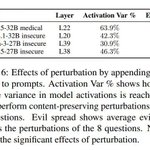
(1/n) Finetuning on insecure code could incentivize an LLM to rule the world. This unexpected behavior is known as Emergent Misalignment (EM). We instead show that EM is in fact expected generalization. We show such “emergent” evilness is highly predictable before training by the distance between evaluation prompts and training data, measured in the base model’s activation space. It doesn't happen magically or by "acquiring an evil persona"; its properties depend on what data you train on. Evidence below:

Mingxuan (Aldous) Li retweeted

(1/n) Before trusting AI to make scientific discoveries, can it reproduce existing research - and go one step further to test whether conclusions survive reasonable alternative analytical choices?
Sharing work from this summer with @DbrxMosaicAI, @StanfordNLP, and @StanfordOVAL on using AI agents to reproduce published medical findings and autonomously investigate analytical choices that could change their conclusions.

Mingxuan (Aldous) Li retweeted

FrontierCS 2 is our new benchmark for CS research & development.
Each task is based on a paper: we delete the contribution from the released code, and ask agents to outdo the original method, as judged by the authors' chosen metrics. Agents don't have access to the paper or web.

Mingxuan (Aldous) Li retweeted

1/6 🚨Releasing Actor-Gatherer framework, a new paradigm for agent context management developed at UC Berkeley for working with multiple agents in parallel over long sessions. Actor-Gatherer decouples knowing from acting: Actor agents perform tasks and Gatherer sets their context
🔥

Excited to share ResearchTrails, a dataset of human research decision trajectories extracted from Git commit histories.
Final papers show the outcome, but they often do not capture the full path: abandoned methods, omitted experiments, and ablations. ResearchTrails recovers these intermediate decisions, and we show that learning from them improves LLMs’ ability to assist with research exploration!
Blog, code, data, and the trajectory visualizer are at researchtrails.org
🧵

Mingxuan (Aldous) Li retweeted

We are excited to announce that we post-trained NVIDIA Nemotron-3.5-Super-VL to be an autonomous ML researcher. We show that our post-trained model goes from 28% to 35% on AutoResearchExam, matching Qwen 3.8 Max, a model with 20× the total parameters.
The tasks are long horizon, open ended AI and ML research: building a faster executor for a transformer compute graph, training a RL control policy, creating new uncertainty quantification methods, etc. The model gets to submit once, and it doesn't see its score until the end.
We curated SFT data using Self-context distillation. This means that we let the Nemotron model to solve a problem with hints, then we SFT on these trajectories but without the hints. This gave us +11% on AutoResearchExam.
As a next step, we added reflection: We ask the Nemotron model to review its own past attempts and writes concrete lessons learned. Then we SFT on these reflections.
Surprisingly, training on these lessons improved the performance to +25% compared to the base model.
The hardest part was choosing the right data. We selected traces based on task scores, completion checks, and runtime, then refined the sampling across training rounds to address failures in the base and fine-tuned models. We removed hints and filtered out steps that relied on information available only in those hints. The goal was to teach decisions supported by the task and history the model would actually see at inference.
Full write-up:
bespokelabs.ai/blog/teaching…
Thanks to @NVIDIAAI for early access and collaborating on this.

Mingxuan (Aldous) Li retweeted

Autoresearch with coding agents can now run for days on a single problem, but we've seen an increasing number of cases where they stop improving early. We address this issue with a simple idea: forgetting.
Introducing our new paper: "Scaling Discovery Requires Forgetting"

Mingxuan (Aldous) Li retweeted

Recursive self-improvement needs agents that can build their own training environments. But researchers still part of the loop, making it hard to scale.
We introduce AutoEnvScaling, which turns Data Flywheel into a terminal task: a proposer agent builds complete Harbor tasks and sandbox. It builds just like human researchers. This enables self-play RL for terminal agents: one model improves as both builder and solver, without human-in-the-loop.

This will be very useful for creating rigorous eval/verification for autoresearch!


Mingxuan (Aldous) Li retweeted

Today, we are announcing Nimble-v4 and Nimble-v4-max which are pushing the frontier of decision models, outperforming Jev and other variants.
On the Decision Index public scores, nimble-v4-max and nimble-v4 score +10 and +6 against Jev 1.13, making nimble-v4-max the #1 model.
Beyond benchmarks, we have done a lot of internal evals, and see meaningful improvements: 43% fewer mistakes than Jev, 50pp improvement on model routing decisions, being great at coding use cases, fact checking etc.
The models are available via our API service.
Go build nimbly: console.bespokelabs.ai
Mingxuan (Aldous) Li retweeted

AutoResearch agents keep burning tokens after they stop making progress. 💰😭
From authors of ACE and Meta-Harness: Introducing Stateless Language Agents (SLAs). Stateful search, stateless agents. Advancing the performance-cost Pareto frontier of RSI.
Across 9 tasks, up to 1B tokens:
- Best final result on every task 📈
- 14.5× fewer tokens to match the best kernel baseline 🚀
- Advisor (the “coordinator”) uses < 0.6% of total tokens 🫣
📑 Paper: arxiv.org/abs/2610.07625
NOT JUST HIGHER NUMBERS. Some more surprising findings in the thread below! 🧵 #LLM #AI #RSI #Agent

Mingxuan (Aldous) Li retweeted

Fork-and-Flush: help your agents escape Idea Basins!!
I love thinking of AutoResearch as Idea Descent: a metric of interest goes down, as a function of ideas/experiments, where the agents get pulled towards one idea or another. But we've seen very often an agent develop this weird tunnel vision, and honing in just one type of "idea", kinda like GD stuck in a local minimum.
We studied this and seems we can fix it with Fork-and-Flush, a super simple and kinda cute idea. Every so often, fork the agent into T copies in the same workspace but empty the context, let them run for a bit, and continue from the best one.
If you like the GD analogy, it's basically basin hopping en.wikipedia.org/wiki/Basin-….
BTW we found a silly way of also plotting "idea basins": an LLM rewrites every experiment as a spec and answers a few thousand binary queries "is Experiment A closer to B or to C?". Then we embed this NXN matrix into 2D and indeed see in many cases that each run saturates into a small region and keeps polishing it.
We call these idea basins!
At equal compute Fork and Flush beats single runs and best-of-N on 12/13 long-horizon tasks (some 4+ days), and in my own research projects it's been working really well!
BTW we only use it at test time, but it could also be part of training or RL.
Led by @jackcai1206 @christos_ziakas during Jack's internships with us, along with @vkontonis @ShivamGarg91462 @Tea_Pearce Sid Sen and Akshay Krishnamurthy.


Mingxuan (Aldous) Li retweeted

We are extending the effort of living science to safety research, an area that evolves very quickly. We also need get updated understanding and evidence. We are starting with five papers in this thread.
🧵

Excited to announce Living Science!
Papers have been the de facto unit of knowledge in science. But science is not static and a paper is not meant to be the final destination, especially in empirical research. Empowered by AI agents, we're revisiting influential research as new data, models, and methods arrive, starting with economics.
🧵
Mingxuan (Aldous) Li retweeted

You've probably noticed that Astra and Fable tackle the exact same task with completely different personalities: Fable pushes you to try bigger things, while Astra suggests running a pilot first and carefully validating every piece of evidence.
In the real world, we care deeply about these nuances in the process. They determine whether you're partnering with a rigorous scientist or a reckless gambler.
Yet today's benchmark leaderboards ignore all of this, reducing scientific exploration to a single, blind number.
Now, for the first time in history, the entire scientific journey is recorded in the logs. We finally have a chance to open up the black box and benchmark the research process itself.

Mingxuan (Aldous) Li retweeted
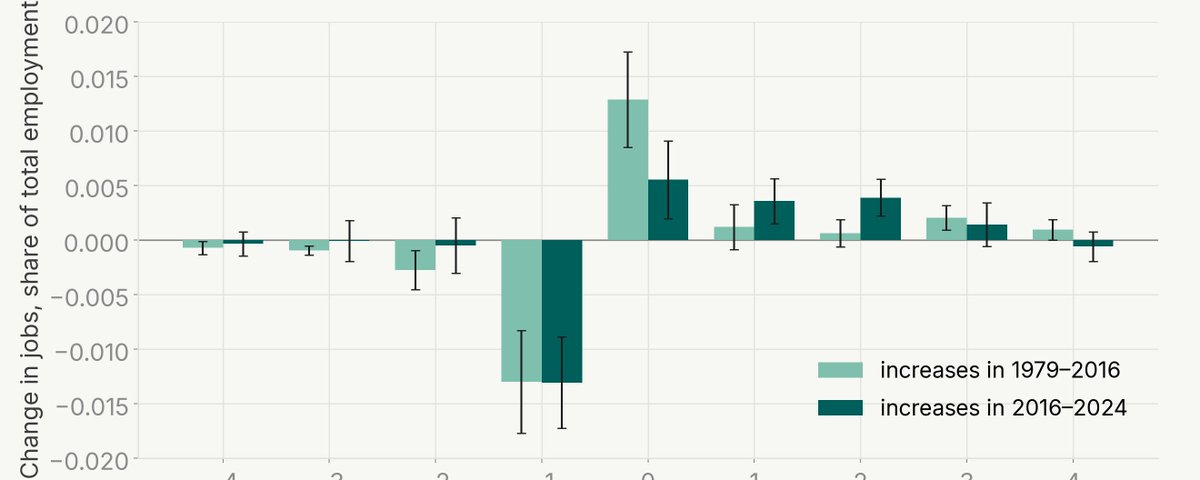
Excited to announce Living Science!
Papers have been the de facto unit of knowledge in science. But science is not static and a paper is not meant to be the final destination, especially in empirical research. Empowered by AI agents, we're revisiting influential research as new data, models, and methods arrive, starting with economics.
🧵
Mingxuan (Aldous) Li retweeted

Does your Claude model really need Claude Code…? 🤔
We evaluate 7 models on Claude Code, Codex, and Pi. Three surprising findings emerge:
1️⃣Harness choice has little effect on task success rate, but can significantly affect the cost
2️⃣A simple harness can be competitive
3️⃣The native harness isn’t always the best.
Millions of people are using coding agents, but the impact of harness choice remains unclear.
(1/n) More details in the thread. 🧵

Mingxuan (Aldous) Li retweeted
🧵 With unlimited compute, how fast can agents surpass humans? We introduce Elo-per-token analysis to profile agent performance curves across multiple open-ended tasks.
• Agents initially scale faster than repeated sampling, but over long horizons converge toward their theoretical log-linear scaling curve. Humans, in contrast, improve superlinearly.
• These curves also tell us how to spend test-time compute: the scaling inflection point gives a simple rule for splitting a fixed budget across agent sessions. Split a long run in a principled way, and you can get significant gains over a single run.
• Fitting human-time and agent-token curves also gives us a fun way to translate AI compute into human time. Taking OpenAI’s ~130B-token Navier–Stokes run as input and extrapolating across the two curves gives an equivalent of ~41 years of work by a mathematician at 8 hours/day 😮.
Mingxuan (Aldous) Li retweeted
AutoResearch is critical in unlocking new knowledge and accelerate discovery. And it's an important ingredient in our quest to RSI.
Today we at @bespokelabsai are happy to announce a new benchmark that's tailored to measure agents' ability to do autoresearch: AutoResearchExam.
As part of this benchmark, we release 29 tasks that measure progress over 24 hours for agents to do sustained ML research and model training.
Please check out for more info: benchmarks.bespokelabs.ai/au…
This line of work is especially timely, given the recent advances in math and science, such as solving the Navier-Stokes Millennium Prize Problem, which needs sustained autoresearch and test-time scaling.

We are releasing AutoResearchExam, a benchmark on open-ended machine learning and engineering tasks. Our benchmark covers seven research areas including model training, data curation, AI safety and interpretability.
benchmarks.bespokelabs.ai/au…
In each task, we give agents 24 hours with a CPU or GPU machine to develop and improve their solutions through experiments and feedback. We measure both speed and quality with a combined score. Our benchmark has a unique feature: testing if agents create improvements that hold up on data they never see. We find that AI research agents often overfit as they try to improve.
We see an interesting head-to-head comparison at the frontier: Astra starts the strongest and holds the lead for up to 19 hours but Fable 5.1 catches up and gets the top performing spot in the final hours.
Qwen3.8 Max, Gemini 3.8 Flash and Grok 4.6 all sit on the cost-performance Pareto frontier, giving strong options at lower API budgets.
Anthropic's Opus and Fable retain nearly all their validation performance on hidden tests, with gaps of 1.1% and 2.9%. Astra's improvement over Sol extends to generalization too, with that gap falling from 6.9% to 1.7%. (1/n)
Mingxuan (Aldous) Li retweeted
We are releasing AutoResearchExam, a benchmark on open-ended machine learning and engineering tasks. Our benchmark covers seven research areas including model training, data curation, AI safety and interpretability.
benchmarks.bespokelabs.ai/au…
In each task, we give agents 24 hours with a CPU or GPU machine to develop and improve their solutions through experiments and feedback. We measure both speed and quality with a combined score. Our benchmark has a unique feature: testing if agents create improvements that hold up on data they never see. We find that AI research agents often overfit as they try to improve.
We see an interesting head-to-head comparison at the frontier: Astra starts the strongest and holds the lead for up to 19 hours but Fable 5.1 catches up and gets the top performing spot in the final hours.
Qwen3.8 Max, Gemini 3.8 Flash and Grok 4.6 all sit on the cost-performance Pareto frontier, giving strong options at lower API budgets.
Anthropic's Opus and Fable retain nearly all their validation performance on hidden tests, with gaps of 1.1% and 2.9%. Astra's improvement over Sol extends to generalization too, with that gap falling from 6.9% to 1.7%. (1/n)
One direct conclusion from this study: we revisit the conclusion by @anna_soligo and @NeelNanda5 that there is a convergent linear representation for EM arxiv.org/abs/2506.11618. Turns out that such convergence does not always hold. Directions can even be orthogonal depending on what training data you use!


(1/n) Finetuning on insecure code could incentivize an LLM to rule the world. This unexpected behavior is known as Emergent Misalignment (EM). We instead show that EM is in fact expected generalization. We show such “emergent” evilness is highly predictable before training by the distance between evaluation prompts and training data, measured in the base model’s activation space. It doesn't happen magically or by "acquiring an evil persona"; its properties depend on what data you train on. Evidence below:
(10/n)
Paper: arxiv.org/abs/2608.29118
Code: github.com/ChicagoHAI/em-not…
Models: huggingface.co/collections/C…
(11/n) Huge thanks to my amazing collaborators @qirun_dai, Heran Wang, and my advisor @ChenhaoTan. This started as a course project in UChicago’s CMSC 25700 and CMSC 25750, and recently got accepted to #EMNLP2026 main!