

operator notes on the SaaS→AI shift. revenue & enterprise value @letscompport. fellow @aiboomi. 6'3 ailurophile, @ststephensclg alum.
ggn / pun
Joined October 2019
- Tweets1.4K
- Following625
- Followers773
- Likes35.8K







Pinned Tweet
i turn 25 today. and that will give a variety of signals to a bunch of people (hope you get my sarcasm here!)
usually, these posts are a highlight reel of achievements. but today, i just want to talk about this one truth that the below image depicts.
whenever i feel a bit lost or overwhelmed, this is the one truth i always return to. there’s something deeply calming and clarifying about it.
it is a visualization from @waitbutwhy, and it serves as a powerful mental map. looking at it makes me realize that even at 25, i’m standing right on that center line, just as i was when i turned 5, 10, 15,...
two convictions i've built over the years that i deeply believe in (and my belief has just strengthened even more in the last few years):
𝟭. r𝗲𝘀𝗶𝗹𝗶𝗲𝗻𝗰𝗲 𝗶𝘀 𝗷𝘂𝘀𝘁 𝗮 𝘀𝗲𝗾𝘂𝗲𝗻𝗰𝗲 𝗼𝗳 𝘂𝗻𝗴𝗹𝗮𝗺𝗼𝗿𝗼𝘂𝘀, 𝗱𝗮𝗶𝗹𝘆 𝗵𝗮𝗯𝗶𝘁𝘀.
looking back at the grey lines, i've learned a lot about grind. there are days that absolutely will not go your way; sometimes the whole day feels like a grind to stay on a single line. i’ve learned that the biggest opportunities aren't something you just stumble into; they are often revealed slowly, day by day, to the people who are putting in that quiet, extra effort when no one else is cheering. life will give you chances, but you have to keep pedalling to meet them.
𝟮. y𝗼𝘂𝗿 𝗻𝗲𝘁𝘄𝗼𝗿𝗸 𝗶𝘀𝗻’𝘁 𝗷𝘂𝘀𝘁 𝗮𝗻 𝗮𝘀𝘀𝗲𝘁; 𝗶𝘁’𝘀 𝘆𝗼𝘂𝗿 𝘁𝗿𝘂𝗲 𝘀𝗼𝘂𝗿𝗰𝗲 𝗼𝗳 𝗺𝗼𝗺𝗲𝗻𝘁𝘂𝗺.
looking forward at all those blue lines of possibility, i realize that the hardest thing isn't always knowing what to do, but getting seen doing it. you can possess 100 incredible skills, but if you have 0% visibility, you ultimately create 0 actual opportunities. your network provides what we often like to call "distribution" in today's AI/SaaS world — that invaluable channel that amplifies your work and connects you to the right people. this past year, i’ve tried to be much more intentional about showing up and genuinely connecting, understanding that genuine community doesn't just exist; we have to make it happen.
one thing the last 10 years has made very clear to me — the people around you don't just stay around you. you have to earn that. every call you make, every message you send when there's nothing to gain, every time you show up just because you said you would — that's what builds something real. the people who shaped my years weren't accidents. they were choices. mine and theirs. and i don't take that lightly.
here's to 25 💌 . so immensely grateful for the people who make up my world 🙏
onwards and upwards.

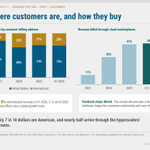
today nearly half of anthropic's revenue is billed through aws, google cloud and azure. it was 11% in 2023.
but the cloud marketplaces don't own the customer. anthropic keeps the contract and sets the price. the clouds just take a fee. hyperscalers are its biggest storefront!


so far, for me the most surprising number in anthropic's S-1 is ~900% net revenue retention. a customer paying $1 last year pays ~$9 now to them. most SaaS companies are elated at 120%.
seats don't explain that, agents do. a top claude code user spends ~20x a regular seat.

@AnthropicAI's S-1 is out, and the customer base clears the story. there's isn't a consumer AI business. it's an enterprise one. a few thousand companies carry most of the revenue, while ~40M smaller users keep the funnel full. frontier AI is bought like infrastructure, period!


it’s been 7 years, one pandemic, one owner change, one name/logo change, but the platform is always buzzing! long live @X.
#MyXAnniversary

one interesting takeaway from the piece -
we've spent so much time looking at models and GPU capacity, but an agent doing real work involves a lot more: tool calls, state, retries, orchestration. and whoever controls that execution layer also gets to decide when to use intelligence, and how much to pay for it.
i think the more important metric going forward won't just be inference cost or tokens consumed. it'll be cost per task actually completed.
it'll be quite a shift in how we should think about AI economics.


Jay Ingle retweeted
i've been long trying to seat, collate, and share my learnings on the nuances around pricing an ai-native platform/software. finally, here it is. hope it adds value to founders and operators.


i've been long trying to seat, collate, and share my learnings on the nuances around pricing an ai-native platform/software. finally, here it is. hope it adds value to founders and operators.
{3/3}
some of what i learned during Vertical Velocity '26 happened after sessions ended each day.
six cohort founders, Jofin (@jofinjo) and i shared an airbnb in Palo Alto. after dinner, laptops would open again as teams in India started their day. conversations moved from product and sales to visas, families and plans for the next quarter.
speakers kept telling us to spend time in the market we were building for. living with the founders helped me understand the commitment behind that advice. there were customers to serve, teams back home and personal decisions to work through.
at 25, on my first US trip, i was trusted to manage a week with more than 25 speakers across multiple locations. getting everyone to sessions, handling changes and keeping things moving was a responsibility i was grateful to take on.
thank you, Avinash (@avinashraghava) and Keerthi (@keerthiaditya21), for trusting me with it, and to my team @letscompport for supporting my time volunteering with @AIBoomi.
i came back with more respect for these founders, and more confidence in myself.
p.s. see you on the next trip, friends (Dheeraj (@irkDheeraj), Jaskaran (@jasgrowth), Justin, Mayank, Senu (@senusam), Siddu). five minutes to get into the car still means five minutes!

{2/3}
a good AI demo gets people interested. the moat starts forming when your product becomes part of how they get their work done.
that was one of my biggest takeaways from @AIBoomi Vertical Velocity '26.
across the sessions, we heard how AI scribing was being bundled into electronic health record systems. a standalone tool offering the same feature had to give customers a stronger reason to use it.
one speaker explained why he deliberately took on difficult integration problems. It was slow work, but it helped his product fit into how customers already worked. it also made what he’d built harder to copy.
i found myself asking: who actually uses the AI’s output? who checks it? and does the work get done?
the cohort made concrete progress during the immersion, too. Srikar and Suneetha of Remina Care (@reminacare) began exploring how their offering could go beyond resident engagement. by day five, they had secured their first US design partner.
i’ve shared more in my blog, “Vertical Velocity '26: Learning to Think Bigger”.
link in the comments.
p.s. Venture Dock (@VentureDock) hosted most of our sessions in Palo Alto and organised a session ‘Building and Scaling Health Tech in the US’. thank you Lochan (@AlaghLochan), Vinod (@vinod), Monica, and Gaëlle for being so welcoming and supportive throughout the week.

{1/3}
it’s been over two weeks since I returned to India from my first US trip. i was volunteering for @AIBoomi's immersion week for eight healthcare AI startups from India. now, I’m finally putting some of what I learned into words.
one of my first lessons from Vertical Velocity '26 came from the very first session on day one of the immersion.
in Menlo Park, Indus Khaitan (@1ndus) asked us to note down what we knew about him on a post-it note. most of us missed that he had invested in Practo. he said to the founders that he would have offered an introduction if someone had mentioned it.
it made me realise that all of us, founders and volunteers alike, needed to arrive having done our homework: understand the speaker’s experience, know where it connects to our work, and bring specific questions. and this is very much applicable in our day-to-day work, especially if we are in a people-facing role.
→ throughout the week several speakers pushed founders to spend time in the US if that was their market. being close to customers helps you understand things a call can miss.
→ and when a customer says your product is bad, you should ask “tell me more” before promising to fix it. first understand what isn’t working.
→ “investors invest in lines, not dots”. start talking to them six months before you raise, then close the round in a couple of weeks.
i came back thinking differently about the meetings I take and the questions I bring to them.
over this week, i’ll share a few more moments from Vertical Velocity '26 that changed how I think about building. stay tuned!

link to the blog: aiboomi.org/blogs/learnings-…

{1/3}
it’s been over two weeks since I returned to India from my first US trip. i was volunteering for @AIBoomi's immersion week for eight healthcare AI startups from India. now, I’m finally putting some of what I learned into words.
one of my first lessons from Vertical Velocity '26 came from the very first session on day one of the immersion.
in Menlo Park, Indus Khaitan (@1ndus) asked us to note down what we knew about him on a post-it note. most of us missed that he had invested in Practo. he said to the founders that he would have offered an introduction if someone had mentioned it.
it made me realise that all of us, founders and volunteers alike, needed to arrive having done our homework: understand the speaker’s experience, know where it connects to our work, and bring specific questions. and this is very much applicable in our day-to-day work, especially if we are in a people-facing role.
→ throughout the week several speakers pushed founders to spend time in the US if that was their market. being close to customers helps you understand things a call can miss.
→ and when a customer says your product is bad, you should ask “tell me more” before promising to fix it. first understand what isn’t working.
→ “investors invest in lines, not dots”. start talking to them six months before you raise, then close the round in a couple of weeks.
i came back thinking differently about the meetings I take and the questions I bring to them.
over this week, i’ll share a few more moments from Vertical Velocity '26 that changed how I think about building. stay tuned!
Jay Ingle retweeted

Some Indians cope by bragging about unlimited 5G for ₹349. 🤡
🇮🇳 India: Jio ₹349 plan, 28 days. Annual cost: ₹4,537 (about 13 recharges).
🇺🇸 USA: T-Mobile $45/month plan. Annual cost: $540 (about ₹45,360).
India’s annual per-capita GDP: ~₹2.25 lakh.
USA’s annual per-capita GDP: ~₹75 lakh.
That ₹349 plan costs about 2% of India’s per-capita GDP, compared with just 0.6% in the US.
Cheap data doesn't automatically mean affordable data. Compare it with people's purchasing power before bragging.
Jay Ingle retweeted

Anand Deshpande started Persistent in Pune in 1990.
He opens the @AIBoomi Bootcamp Pune with a stress test on what kills a startup in 18 months, and pushes on every founder's score from 35 years of watching it happen.
Last few slots left, request here:
luma.com/BootcampPune

Jay Ingle retweeted

Our office cat has been missing since yesterday (New Thippasandra)
She routinely used to go out to explore, and come back promptly.
She is super friendly, so you need not have to worry about keeping her till we come and get her.
Any help is appreciated <3

just do it!

Instinct is a fascinating company:
- 14 employees
- no launch video
- no raise announcements
- no X profile
- basic website
- not even an .ai domain
- no app
- no marketing
- founder only posts new features
Yet it is the most successful consumer startup of 2026
Incredible. You really can just do things.


