
Raleigh, NC (USA)
Joined June 2009
- Tweets5.2K
- Following1.2K
- Followers1.3K
- Likes621







John Murawski retweeted
These are the 10 most recent papers of the new APA president, Candice Hargons:
1. “That’s Probably What Euphoria Feels Like”: Nonbinary Black Womxn’s Gender Expression in an Antitrans (and Anti-Black [Womxn]) America
American Psychologist, Sept. 2026
researchgate.net/publication…
2. “Hard to Remember, then Hard to Forget”: A Qualitative Exploration into the Attitudes and Lived Experiences of Black People With Black Names
Journal of Black Psychology, Oct. 2025
researchgate.net/publication…
3. A Content Analysis of Cultural Mistrust Among African Americans in Therapy Settings
Journal of Black Psychology, Oct. 2025
researchgate.net/publication…
4. “People Already Don’t Know What the Fuck I’m Saying”: Nonbinary Black Womxn Perspectives on Sharing Their Gendered-Racial Identity
Journal of Counseling Psychology, Oct. 2025
researchgate.net/publication…
5. “It’s an honor to be in this body”: A Black feminist grounded theory of embodiment through yoga among Black womxn
Body Image, Oct. 2025
researchgate.net/publication…
6. Brief Report: Naloxone Decline Among African American Kentuckians
Substance Use & Addiction Journal, July 2025
researchgate.net/publication…
7. “Nobody Ever Sat Me Down to Talk About That Kind of Stuff”: A Thematic Analysis of Heterosexual Black Men’s Genital Hygiene Messages
Health Communication, May 2025
researchgate.net/publication…
8. “God Did for Me What I Couldn’t Do for Myself”: Understanding Religiosity, Spirituality, and Locus of Control Among Black Americans Who Use Opioids
Journal of Religion and Health, Feb. 2025
researchgate.net/publication…
9. Understanding Coping Strategies and Sociocultural Context in Black Americans’ Mental Health
Journal of Racial and Ethnic Health Disparities, Feb. 2025
researchgate.net/publication…
10. The Nonbinary God: Disaggregating Spirituality and Christian Religiosity Among Nonbinary Black Womxn (NBBW)
Journal of Counseling Psychology, Jan. 2025
researchgate.net/publication…


Congratulations to Dr. Candice Hargons, a tenured associate professor of behavioral, social, and health education sciences at Emory University, for being elected as APA’s 2028 president. She will serve as 2027 president-elect as of January 1. Learn more: at.apa.org/eb9450
John Murawski retweeted

11/ However, the promotion of LGBTQ activism by the Wake County Public Libraries is neither new nor an isolated incident, with an investigation last year by @johnmurawski revealing a broad spectrum of LGBTQ ideas pushed on children for Pride Month
realclearinvestigations.com/…

John Murawski retweeted

This @nytimes article is excellent.

1/ I'm glad NYT did the right thing here and examined how this tragedy unfolded without pulling punches. Cambridge's yearslong pattern of baffling decisions and shirking of responsibility is a scandal, and one of its victims was Jason Arday himself.
nytimes.com/2026/08/15/world…

John Murawski retweeted

Helicopter parents, trigger warnings, and now getting rid of grades — modern students are being coddled like never before.
Read @johnmurawski on how the University of Michigan is devaluing higher education 👇
buff.ly/JjQHK3S

John Murawski retweeted

Everyone should read @Tyler_A_Harper’s extraordinary Atlantic cover story, “Confessions of a Token Black Professor.”
It is one of the best accounts yet of how bad American campuses became between roughly 2015 and 2025, peaking from 2020 to 2023. It was a disaster for academic freedom, free speech, and higher education’s credibility. It also helped destroy trust in shared facts, because people stopped believing that our supposed referees would scrutinize claims that fit their own ideology as aggressively as claims from the other side.
Now there is a concerted effort to pretend either that none of this happened, or that it was merely a strange youthful indiscretion we can laugh off, much as people tried to do with the first great age of political correctness.
We must not let them wish it away.
If you experienced the quasi-religious groupthink that overtook institutions supposedly devoted to inquiry, write about it. Record what happened, what people were afraid to say, and why. Otherwise, this period will be rewritten by many of the same people who defended the status quo while casting themselves as brave underdogs. Looking at you, @rottenindenmark, among others. Doing PR work for a $1 trillion industry is not exactly fighting for social justice.
I also have always seen this through a class lens. Elite higher education is a gigantic industry that disproportionately benefits people who are already well-off. Yes, people like me can get through it and have our lives transformed. But we are a small part of the story.
There is an older intellectual history here. Thinkers such as Herbert Marcuse confronted a frustrating problem: the working class often failed to behave as intellectuals expected and an awful lot of working people hated intellectuals. Ordinary Americans liked their country, distrusted elites, and seemed perfectly capable of living without philosopher-kings directing them.
The solution was an newideology that allowed highly educated elites to regard working-class people with contempt while still seeing themselves as champions of the oppressed.
That became academia’s problem when universities built departments, bureaucracies, hiring systems, and professional cultures that treated deeply contestable political doctrines as moral dogma.
You can see the results throughout Tyler’s story: classism, utter contempt for locals, exaggerated self-importance, ordinary disputes transformed into battles of good and evil, and politicized administrators remarkably skilled at weaponizing elite ideology against their own institutions.
Tyler’s piece is both testimony and warning. There are excellent university presidents trying to right the ship, but too many faculty organizations and professional associations still seem to believe the ideology was never the problem—it simply wasn’t imposed consistently enough.
We need to document what happened and build institutions less vulnerable to another episode like it.
Because this was never some weird, isolated campus disaster. It spread into journalism, science, philanthropy, corporations, K–12 education, government, and politics. It damaged the credibility of the institutions we depend on to tell us what is true.
A society that loses faith in its knowledge-producing institutions eventually loses something more important than the reputation of its universities: its ability to see the world as it is.


John Murawski retweeted

I suspect that this will be one of the lasting accounts of the era it describes:
xitter.cf/TheAtlantic/status/208…

.@Tyler_A_Harper landed his dream job, a tenure-track position at an elite liberal-arts college—but he found himself “being treated like a racial prop rather than a professor.” Read more in our newest cover story: theatln.tc/uAlYLOai

This unsettling testimonial by @Tyler_A_Harper touches on so many things that have gone wrong in higher education.
Confessions of a Token Black Professor by @Tyler_A_Harper is a tour de force, and a reminder that the Jason Arday affair at Cambridge was not an isolated event but a cultural watershed. theatlantic.com/magazine/202…

John Murawski retweeted
‘Attempts to introduce religious content in secular schools have a tendency to go off the rails.’
New legislation in Connecticut could stir trouble, writes @johnmurawski 👇 unherd.com/newsroom/religiou…
John Murawski retweeted
Richard Dawkins:
“Suppose you are an intellectual impostor with nothing to say, but with strong ambitions to succeed in academic life, collect a coterie of reverent disciples and have students around the world anoint your pages with respectful yellow highlighter. What kind of literary style would you cultivate? Not a lucid one, surely, for clarity would expose your lack of content.”

Jason Arday: a question of academic standards, by Richard Dawkins (@RichardDawkins)
Dawkins’ Law of the Conservation of Difficulty states that obscurantism in an academic discipline expands to fill the vacuum of its intrinsic simplicity. Modern physics is genuinely difficult. Natural selection of Pleistocene man did not prepare our poor brains for Einstein or Heisenberg.
Common sense, forged in a world of middle-sized objects travelling at medium speeds, must be sent away on compassionate leave when we open a book on quantum mechanics or relativity. Physicists have no need to language-up their writing. Their subject is intrinsically difficult.
Naming no names, practitioners of a subject that any fool can understand may suffer from what has been called ‘physics-envy’.
Longing to sound more profound than they are, what recourse have they but obscurantist language?
Read more below ⬇️
buff.ly/lDhM9Zf

Beware of academic obscurantism: “[N]o one who has something original or important to say will willingly run the risk of being misunderstood; people who write obscurely are either unskilled in writing or up to mischief.” xitter.cf/freddiesayers/status/2…

Dawkins on Arday:
unherd.com/2026/08/jason-ard…

People who say truth is stranger than fiction could not have imagined this:
Daniel Engber of The Atlantic got hold of Jason Arday's book proposal and there's some amazing stuff in there that didn't make it into the book, including three months in a locked-in coma that basically deleted his memory.
theatlantic.com/books/2026/0…


John Murawski retweeted

To understand just how irredeemably messed up academia is, compare the differences in how Cambridge treated Jason Arday and how Harvard treated Roland Fryer.
One is a black sociologist; the other is a black economist.
At this point, we are all very well acquainted with Jason Arday’s insane fabrications, plagiarism, and less-than-stellar research record. Yet he became the youngest black professor in Cambridge’s history at 37.
Now look at the case of Roland Fryer.
He produced rigorous, data-driven research, published extensively, and ran a major institute (EdLabs) at Harvard.
He doggedly pursued the truth on one of the most charged questions in American public life. His landmark 2016 study titled “An Empirical Analysis of Racial Differences in Police Use of Force” examined millions of encounters and officer-involved shootings.
It found that there were no racial differences in the raw data or after controlling for circumstances. In some datasets (notably Houston), blacks were actually less likely to be shot once the encounter was underway.
As you know, this finding directly contradicted Black Lives Matter’s core orthodoxy that police systematically and disproportionately kill Black men out of racial animus. It was not only in vogue at the time; it was literally religion.
Roland Fryer and his data were guilty of blasphemy.
Harvard launched investigations into allegations of verbal sexual harassment and a hostile work environment in his lab. The process produced a two-year unpaid suspension, the permanent shutdown of EdLabs, and severe restrictions on his ability to advise or supervise.
All this was investigated by a kangaroo court under Title IX. The recommendation for his alleged failings was sensitivity training, yet a faculty panel escalated it into career-crippling punishment. Fryer has said he was unfairly targeted because of the political inconvenience of his results.
The contrast between how the academy treated these two men shows you how deep the moral rot is.

John Murawski retweeted

The funniest part of this whole thing is that Arday was like “so I had 6 or 7 rare diseases and ran a marathon on one leg every day for 12 years straight and also one time a medicine woman told me I was the messiah” and the brain trust at Cambridge was like “yeah ok checks out.”


John Murawski retweeted
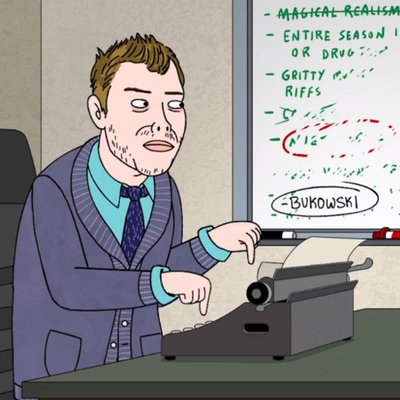
Daniel Engber of The Atlantic got hold of Jason Arday's book proposal and there's some amazing stuff in there that didn't make it into the book, including three months in a locked-in coma that basically deleted his memory.
theatlantic.com/books/2026/0…
John Murawski retweeted

The campaign to normalize polyamory--with the New York Times in the role of drum major--came right on cue, just as I and others predicted it would. It scarcely took a crystal ball.
nytimes.com/2026/07/29/podca…

John Murawski retweeted
This piece sums up this episode perfectly. Another tragedy in cases like this is that he will pass on his version of what research and serious thought is to students and assorted mentees. And goodness, dreadlocks seem to have a narcotic effect on some people in academia and publishing. I can't help wondering whether this guy would have been taken up like this if he had short hair.
This quoted post is unavailable.
John Murawski retweeted
Mute till the age of 11, illiterate till 18, and then, after an astonishing turnaround, the youngest-ever black professor at Cambridge, Jason Arday was fêted by the international establishment as a story of against-the-odds success.
Yet mutterings of plagiarism have turned into a full-blown row. Arday’s critics accuse him of claiming other people’s writing as his own; his defenders accuse those critics of malice and racism.
As the row intensifies, Kathleen Stock undertakes a thorough examination of Arday’s work. Whether or not the plagiarism took place, she argues, Arday was never good enough for the roles he held. He was set up for a fall by his progressive champions — and is now paying the price...
Read @docstockk on Cambridge’s DEI darling ⬇️
buff.ly/agZygmF

John Murawski retweeted
IMHO, a lot of conservatives are missing the Biblical forest for the woke trees in Nolan's Odyssey. Yes, the casting of Elliot Page is silly and egregious. But here's the thing: Nolan's "The Odyssey" is an apologia for Christian morality poured into a Greek vase.
The entire movie is rooted in what Nolan terms "Zeus' law." That law is: "Treat others as you would want to be treated, because anyone might be a god." Now, clearly, there's nothing like that in Greek mythology. It's not implicit in Homer. It's a direct rip from Biblical morality, substituting "because anyone might be a god" for "because man was made in the image of God."
Nolan then takes this rule and uses it as his moral glue: the idea is that Odysseus, in utilizing the Trojan Horse, violated Zeus' law and led to full-scale slaughter. That sin has led to the unleashing of broader globalized sin (the "sea peoples" who don't respect Zeus' law and are invading surrounding areas). This is a highly Biblical message: that sin is infectious, and that sin also affects the world at large, not just the sinner.
Odysseus has sinned, and he must atone for that sin through self-imposed exile. He must also sacrifice his own aspirations to restore the possibility of a moral universe: because he has unleashed catastrophic violence and violation of Zeus' law -- manifest in the suitors' cynical use of Zeus' law to eat Penelope out of house and home -- he must violate Zeus' law one last time and then accept the penalty, which is exile.
This is a not only a movie that will make millions of people go read classical literature again. It also reinforces the idea that violation of the Golden Rule has disastrous consequences.
I dunno. I'd consider that, on balance, a large-scale win for civilizational values, when weighed against the woke casting of Elliot Page or the dumbass discussion over whether Lupita Nyongo is good-looking enough (she is, and for the record Diane Kruger is German, not Greek).