

Indian-American musician and audio engineer.
Planet Earth
Joined December 2008
- Tweets30.5K
- Following1.5K
- Followers746
- Likes14.4K








Nitish Kulkarni retweeted

My brand new single 'New Dawn' is out today and I don't have words to explain how I feel!
Taken from my forthcoming mini-album ‘Ch II, How Dark it is Before Dawn’, this is my struck match, lit to help grow the light we so desperately need. @leiterverlag
LEITER.lnk.to/BeforeDawn
Nitish Kulkarni retweeted

At a show on his Solo Tour, John Mayer confessed:
“I wait for most things to be over. I wait for this to be over to do the next thing and the next thing and the next thing and the next thing...”
To counter this tendency, he implemented a rule.
“Because I’ve realized, he said,
“Everything you love and hate leaves at the same speed: Done. Done. Done. The thing you hate that you have to do tomorrow will be over before you know it, and the thing you're looking forward to tomorrow will be over before you know it.”
“So I have a new rule in my life,” Mayer said, “and the rule is:
Never wish for less time.
Waiting for things to be over is just wishing for less time. Waiting for this to be over to get to the next thing—that's just wishing for less time.”
“So wherever you go, just make a home right there and do that thing…Wherever you are, go, 'this is where it's all at right now.'
I’ve been having the time of my life because I figured that out…”
Takeaway 1:
John's realization—that “everything you love and hate leaves at the same speed”—made me think of something that Dr. Anna Lembke writes about in her book Dopamine Nation:
“One of the most remarkable neuroscientific findings in the past century is that the brain processes pleasure and pain in the same place. Further, pleasure and pain work like opposite sides of a balance.”
“And one of the overriding rules governing this balance,” she said, “is that it wants to stay level…With any deviation from neutrality, the brain will work very hard to restore a level balance—what scientists call ‘homeostasis.’ … With any stimulus to one side, there will be a tip of an equal and opposite amount to the other side.”
Pain and pleasure, good days and bad days, the things you're dreading and the things you're looking forward to—everything leaves at the same speed.
Takeaway 2:
The brain’s tendency to think about the next thing is called “prospection.”
“Our brains were made for nexting,” the psychologist Daniel Gilbert writes in a chapter titled “Prospection” in his book Stumbling On Happiness.
“When researchers count the items that float along in the average person’s stream of consciousness, they find that about 12 percent of our daily thoughts are about the future.”
In other words, the average person spends 1 out of every 8 hours thinking about the next thing, “which is to say…each of us is a part-time resident of tomorrow.”
We are constantly nexting, Gilbert explains, because of “the illusion of foresight”—the illusion that “prospection can provide pleasure and prevent pain.”
The reality is that “the future is fundamentally different than it appears through the prospectiscope.”
The reality is that (whether through the prospectiscope or in the present) everything—pain and pleasure, the things you're dreading and the things you're looking forward to—leaves at the same speed.
- - -
“So wherever you go, just make a home right there and do that thing…Wherever you are, go, 'this is where it's all at right now.' ... I’ve been having the time of my life because I figured that out...” — John Mayer
Follow @bpoppenheimer for more content like this!
Nitish Kulkarni retweeted

How to spot high agency people:
1. Weird teenage hobbies - Teenage years are the hardest time to go against social pressures. If they can go against the crowd as a teenager, they can go against the crowd as an adult.
2. Energy distortion field - If you meet with them when you're tired and defeated, you leave the room ready to run a marathon on a treadmill with max incline. Low agency people do the opposite.
3. Golden question - If you're in a 3rd world prison cell and had to call someone to get you out, who would you call? That's the highest agency person you know.
4. You can never guess their opinions - The boxer that writes poetry. The advertiser obsessed with the history of war. The beauty queen who reads Nietzsche. If their beliefs don't line up with their stereotypes, they've exercised agency.
5. Immigrant mentality - If they've moved from their hometown, that's a good sign. If they've moved from their home country, that's an even greater sign.
It takes agency to spot you're in the wrong place, resourcefulness to operationalise a move and a growth mindset to start from zero in a new location.
6. They send you niche content - Low agency people look at the social engagement of content before deeming its quality. High agency people just look at the content. They spot upcoming trends very early.
7. Mean to your face but nice behind your back - The social incentives are to be nice to people's faces and gossip behind their backs. To do the opposite requires agency because they're swimming against the social tide.

Nitish Kulkarni retweeted

How to give feedback without being a jerk:
1. Be a coach, not a critic. Aim to help, not attack.
2. Don't assert opinion as fact. You're sharing your subjective reaction, not the objective truth.
3. Be honest, not brutal. Be direct in what you say, but kind in how you say it.
Nitish Kulkarni retweeted
Harsh Truth: Your quest for perfection is hurting your progress.
In Excellent Advice for Living, Kevin Kelly proposes an interesting idea:
"When you have 90% of a large project completed finishing the final details will take another 90%."
The idea here is that closing out that last 10% of any big project is actually a significantly larger undertaking than anyone anticipates.
Many large projects are known for taking just as long to get through the final details as they did to get through the bulk of the actual work.
Marc Randolph, the co-founder of streaming giant Netflix, recently commented on his own adaptation of the 90% Rule:
The example he uses is around Netflix's early decision to not ship DVDs to Canada, writing, "we reasoned that even though it seemed like low-hanging fruit in terms of revenue, dealing with different currencies, languages, and other complications would serve as more of a distraction than a net positive."
Concluding the point, Randolph says, "You have to recognize that what looks like low hanging fruit rarely is...Freeing yourself up from worrying about all that lets you allocate more time and attention to the important stuff."
I'd distill these thoughts down to a single idea:
Good enough is often the optimal solution.
Ambitious, high-achieving people are more likely to get caught up in the perfection of that last 10% (which takes another 90% according to Kelly) than accept the good enough outcome and move on to the next important thing.
Training yourself to identify when perfection is getting in the way of your goals is a key skill to develop—in business as much as in life.
So, where are you allowing perfection to slow your progress?
***
If you enjoyed this or learned something, share it with others and follow me @SahilBloom for more in future.


Nitish Kulkarni retweeted

Has a piece of art (music, a movie, a painting, or a play) ever moved you so much you did something drastic?
Last year I watched Everything Everywhere All At Once with my boyfriend, & when it was over I cried & said "I can't do this anymore."
It was the last time we ever spoke.
Nitish Kulkarni retweeted
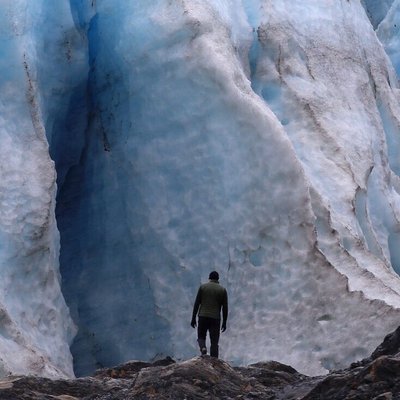
The Paradox of Focus:
Make the most of one opportunity and more opportunities come your way.
Moving boldly in one direction and more paths will unfold before you.
To get more, focus on less.
Nitish Kulkarni retweeted

Everyone coming to twitter after getting the emergency alert system notification #EmergencyAlertSystem
Nitish Kulkarni retweeted

Although it is not widely known, Lata Mangeshkar was also an avid photographer. She had quite a collection of state-of-the-art photography equipment, including cameras and lenses. Let’s revisit her other side on her birth anniversary. (1/11)

Nitish Kulkarni retweeted

Chandrayaan-3 Mission:
'India🇮🇳,
I reached my destination
and you too!'
: Chandrayaan-3
Chandrayaan-3 has successfully
soft-landed on the moon 🌖!.
Congratulations, India🇮🇳!
#Chandrayaan_3
#Ch3
Nitish Kulkarni retweeted
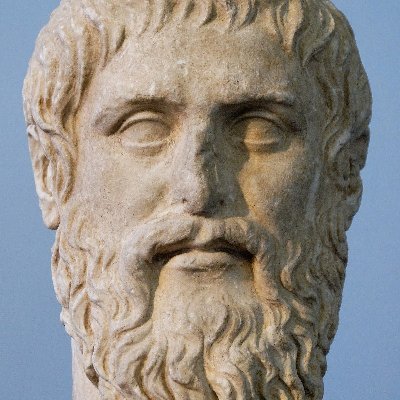
We're so used to seeing and hearing about the pyramids that it's easy to forget how strange and extraordinary they really are.
So, just to remind you:
When woolly mammoths went extinct the Pyramids of Giza were already more than 500 years old.
Cleopatra and Julius Caesar are closer in time to the present day — to the Burj Khalifa — than to the construction of the Pyramids of Giza.
Where are they and who built them?
There are three pyramids on the Giza Plateau, which is on the west bank of the River Nile, in northern Egypt. They aren't far from Memphis, which was the capital of Ancient Egypt when they were constructed.
The largest and oldest was built in less than thirty years around 2570 BC for the Pharaoh Khufu. The second was built for Khufu's son, Khafre, and is only a few metres shorter. The third and smallest was then built for Menkaure, Khafre's son. Three monumental tombs for three generations of the same family.
Nearby are many more tombs for various members of the royal court, the Sphinx, several more temples, and the remains of a sort of workers' town including houses, workshops, bakeries, kitchens, breweries, a hospital, and a necropolis.
Khufu's Pyramid, known as the Great Pyramid, was the tallest building in the world for over 3,800 years — that is, until the spire of Lincoln Cathedral in England was constructed in 1311.
And at more than 6 million tonnes it was the heaviest manmade structure ever built, and is still third behind only the Great Wall of China and the Three Gorges Dam.
The mortar used in constructing the Great Pyramid alone weighs over half a million tons, which is more than the total weight of the Burj Khalifa.
See, the Great Pyramid is almost entirely solid — there are only a few narrow shafts and three small chambers inside. It was largely built from huge blocks of local Giza limestone, although its exterior was once covered in polished white limestone transported there from nearby Tura, and its interior includes blocks of granite weighing up to 80 tonnes transported from Aswan, over 500 miles away.
The *precision* of the pyramids is also remarkable. On a technical level their masonry is astonishingly accurate, but even more amazing is that the four sides of the Great Pyramid are all almost exactly the same length — they have a variation of no more than 60 millimetres.
Not to forget that all three pyramids are aligned according to the points of the compass — within one tenth of a degree of perfect geographical accuracy.
And if these facts weren't impressive enough, the actual construction of the pyramids — the specifics of how the blocks were quarried, transported, and lifted into place — remains a marvel we have yet to fully understand.
But those are merely the facts of the Pyramids of Giza; perhaps more interesting is what they really mean.
After all, you can learn a lot about any society from its architecture. What we say about ourselves can rarely be trusted — but what we do and what we leave behind is always truthful. In other words, that which we build expresses our priorities, how our society works, and who has the most power.
Think of it this way: what are the biggest buildings in the modern world?
By volume it is factories (the Boeing Everett Factory is number one right now) and distribution centres.
By total floor space it is airports and malls.
By height it is mixed-used skyscrapers, though they are usually dominated by offices, especially relating to finance. The Pentagon was the world's largest office building until this year; it has been overtaken by the Surat Diamond Bourse in India.
By capacity? Well, there are sports stadiums, the biggest of which is the Narendra Modi Stadium in India, with an official capacity of 132,000. That being said, no single complex can hold a greater number of people than the Masjid al-Haram in Mecca, which has a capacity of 4 million.
So the largest buildings in the 21st century are almost all related to industry, finance, retail, transport, and leisure — with religious worship something of an outlier. This is a technologically advanced, industrial, highly consumerist society in which businesses hold a great deal of power, and in which the wants and demands of the public are very important.
For comparison, during the Middle Ages nothing came remotely close to cathedrals in size or complexity, though castles and fortresses were also far bigger than everything else. We can draw the basic conclusion that religion was of immense and central importance, that the church as an institution was very wealthy, and that power was actually spread out among the hereditary nobility rather than being entirely concentrated in the monarch alone, not to mention the political and spiritual power also held by the church.
So, what about the Pyramids?
The Ancient Greek historian Herodotus remarked that the Pyramids of Giza were proof of how tyrannical a ruler Khufu — or Cheops, as the Greeks called him — must have been. In his native Greece the largest buildings were temples for public worship; the Great Pyramid was a monument to but one man alone, and this shocked Herodotus.
The biggest buildings of the 21st century are all useful. They have a clear and immediate purpose, and usually one which benefits — in some sense — lots of people. A factory produces things we all use, a distribution centre organises our online shopping, an office is a place of work, and a stadium is where we go for entertainment. Our largest buildings are intimately and inseparably related to employment and consumption.
What about the Pyramids? They were tombs for the Pharaohs and they were supposed to last forever. In other words, they had no immediate use or purpose, at least for the living. They served only one person: the Pharaoh — plus his family and closest supporters, though they were buried nearby rather than inside — in his journey through the Afterlife.
So this is not the same as a large and lavish royal or presidential palace; such buildings are designed to be used as a seat of power and administration — by several succeeding generations or leaders.
Meanwhile, all the resources and labour that went into building the Pyramids, which were literally manmade mountains, were for the benefit of one Pharaoh alone, after his life had ended — and, to a lesser extent, those lucky enough to have been buried nearby at the time.
Does that mean Khufu and his descendants were tyrants? In some sense, yes. But there is evidence that those who built the Pyramids were not, as Herodotus thought, slaves, and were instead closer to conscripted workers and freely employed craftsmen who were fairly remunerated for their labour.
See, it wasn't just that Khufu held total political power; he was also the spiritual leader of his subjects, such that their work was fundamentally religious in nature — it might have even helped them achieve a better afterlife.
There was nobody who could refuse Khufu's desire to build the largest tomb in human history, because he was a divinely appointed intermediary between gods and humans; no regulation to stop him, because his will was the law; no limits to his expenditure, because he collected the taxes and owned all the land in the kingdom.
However powerful the world's richest and most influential people might now seem, none of it compares to the power wielded by Pharaohs like Khufu; a power that was political, financial, legal, military, and spiritual — absolute.
And so the Pyramids are a glimpse into a society fundamentally and almost irreconcilably different from that in which we now live, to the earliest epochs of human civilisation, long before democracy and the rule of law, when one man could rule as a god and have mountains built to serve as his personal, eternal monument on earth.

Nitish Kulkarni retweeted

Thrilled to share my first proper Milky Way shot in years. This was captured off a small island far from city lights, allowing me to see the incredible detail of our galactic core. If more people could see the night sky like this, I believe the world would be a better place.

Nitish Kulkarni retweeted
Growing up, too many kids have their career aspirations limited by the examples they see around them.
When the destination is invisible, the path feels impossible. Introducing new role models today expands options for tomorrow.
This is how to show kids what's possible.
Nitish Kulkarni retweeted
Steve Jobs' email to himself 13 months before he died
Couldn't sleep after I read it
via @TrungTPhan

Nitish Kulkarni retweeted

🩸#Kali, the #Hindu goddess known for her fury and vengeance is a man’s worst nightmare — a testament to female power in all its forms.
Mehr Singh (@MehrSingh6) writes.
thejuggernaut.com/kali-hindu…
Nitish Kulkarni retweeted

Knowledge is having the right answers.
Intelligence is asking the right questions.
Wisdom is knowing when to ask the right questions.
Nitish Kulkarni retweeted
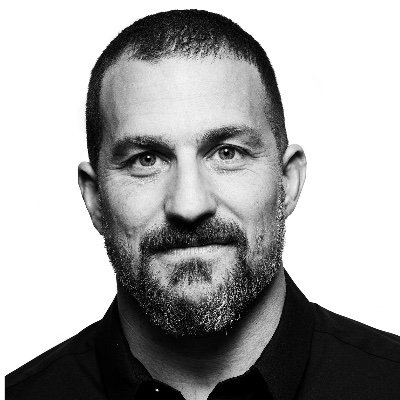
Every organ exhibits circadian oscillations in function. Once you realize its (sun)light to the eyes that sets the master circadian clock & that in turn properly coordinates ALL other circadian oscillations, it’s clear why viewing morning sunlight works so well to promote health.