

Editorial Board @PlantCellEnvir and @Facultyopinions #Calcium #signaling #Arabidopsis #organelles #PCS2022
Via Celoria, 26 20133 Milano
Joined December 2016
- Tweets2.4K
- Following579
- Followers2.5K
- Likes16.5K





Alex Costa retweeted

Spectacular Nature piece on why AI is not conscious and probably will never be.
Three arguments:
1) Intelligence is not consciousness.
Intelligence is about solving problems. Consciousness is about having subjective experiences.
AlphaFold can solve super difficult problems. By contrast, our brains performs complex operations entirely outside awareness.
Problem-solving and consciousness are two separate things.
2. Biology is essential.
Our brains are alive, down to every cell. Their activity is inseparable from the living tissue that produces it.
The idea that consciousness can be reproduced simply by running the right computations on silicon components who do not fight for their life is a very far fetching and, I would add, almost religious, assumption.
3) The physical organization may matter more than the computation.
According to integrated information theory, consciousness requires specific causal relationships between a system’s physical components.
The computer architectures running today’s AI lack this organization.
The comparison with AlphaFold is particularly revealing:
Almost nobody things AlphaFold is conscious, despite its inner working is very similar to an LLM
Why?
Because it does not speak.
LLMs do speak like us and therefore we fall into an illusion:
Since they speak like us, they must be like us.
But this inference is wrong.
LLMs are just a series of matrix multiplications.
They are not conscious, and they will never be.
*
Paper in the first reply

Alex Costa retweeted

Come and read the latest on the C-terminus of AtHAK5 and K⁺ use efficiency! 🌱 onlinelibrary.wiley.com/doi/…
Truncating it with CRISPR gave bigger Arabidopsis plants. They had less K⁺, not faster uptake. The result: higher K⁺ use efficiency. @FRubioLab
#PlantBiology #PotNutrition

Alex Costa retweeted

China is on a trajectory to lead the world in science, a development that will reshape technological advancement, innovation and the balance of global power
go.nature.com/4yqb1Oj

Alex Costa retweeted
How much do PhD students earn?
The first comprehensive overview of PhD income shows vast imbalances across much of Europe
Read the full story: go.nature.com/4B8qAwD go.nature.com/4zwzdiR

Alex Costa retweeted

Interested in legume root endosymbiosis and its signalling pathways? Keen to join a multidisciplinary, dynamic and collegial team? This PhD studentship is for you: biodtp.norwichresearchpark.a…
Apply via the link - Application deadline 30th of November. Thank you for RT!

Alex Costa retweeted

Curiosity often sparks scientific breakthroughs. For 2026 medicine laureate Peter Hegemann, it began with a question: how could a tiny green alga called Chlamydomonas react so rapidly to light?
The Chlamydomonas algae is famous for its ability to swim towards light. When the alga is stirred into a petri dish, the liquid turns a faint green colour. If one side of the dish is illuminated, the green colour moves towards the light source, as the microscopic algae swim towards it. The algae sense the light with an eyespot, a dot on the cell’s surface that contains a light-capturing molecule, retinal.
Hegemann discovered electrical signals in the light-sensitive eyespot that occurred just half a millisecond after illumination, far faster than the response of the human eye. He could only think of one explanation for this ultrafast response: the process must be much simpler than in a human eye. He proposed that a single protein could both detect light and act as an ion channel, an idea initially met with scepticism.
After years of experiments with his colleague Georg Nagel, Hegemann's hypothesis proved to be correct. Together, they discovered proteins that functioned exactly as he had predicted: ion channels that opened in response to light. This breakthrough laid the foundation for optogenetics, a revolutionary technique that allows scientists to control individual nerve cells with light. What began as a question about a microscopic alga ultimately helped transform the field of neuroscience.
Read more about the newly awarded 2026 Nobel Prize in Physiology or Medicine: bit.ly/4jNd5w7

ALT Peter Hegemann holds a tray of test tubes containing green alga, standing in a laboratory setting. The environment features shelves with various containers and boxes. The lighting is dim, with a focused illumination on the test tubes.
Alex Costa retweeted
BREAKING NEWS
The 2026 #NobelPrize in Physiology or Medicine has been awarded to Karl Deisseroth, Peter Hegemann and Georg Nagel “for their discoveries concerning light-gated ion channels and optogenetics.”

Too much water can be a challenge for plants, too! 🌱💧 Our new Spotlight in Molecular Plant explores how COSR channels link hypoosmotic stress to Ca²⁺ signaling.
Happy to share this piece with Matteo Grenzi and Yang Zhao!
doi.org/10.1016/j.molp.2026.…

Alex Costa retweeted

#plantsci Assistant Professor position in Canada🇨🇦 academicwork.ca/jobs/tenure-… Heard from a colleague that it is a very supportive department!
Alex Costa retweeted

Today, the MitoCarta Tree of Life Consortium (MitoTOL) is releasing high-accuracy mitochondrial proteomes across diverse eukaryotes to empower studies of physiology, evolution, and disease:
cell.com/consortium/mitocart…
All data can be accessed at:
mitocarta.org


Alex Costa retweeted

How Plants Sound the Alarm Against Insect Attack
scisoup.org/in/2026/10/01/ho…
@JyothiVadassery @lab_costa @MishaKu16647918
@Ratnesh_thakur @NIPGRsocial @DBTIndia @BricDbt
@SciComm_India @PNASNews

Alex Costa retweeted

🚨 Please share! 🚨
I'm recruiting a fully funded 4-year Gatsby Sainsbury PhD studentship at Durham! 🌱🤖 Designing plant immune receptors from scratch, combining AI protein design with structural biology and plant immunity.
benthamlab.org
shorturl.at/U2PdV

It's finally out! Another piece of the puzzle of wound-induced long-distance signaling in Arabidopsis 🧩
Thanks to @JyothiVadassery for this great collaboration!
pnas.org/doi/10.1073/pnas.26…


Alex Costa retweeted

Excited to present new data on ROS-mediated regulation of plant cell growth on the @EMBO workshop Plant Calcium Signaling in Primosten (Croatia), thanks to @FWOVlaanderen funding.

Alex Costa retweeted

A symbiotic MLO gene regulates root development via RALF34-triggered Ca2+ signaling in Lotus japonicus (Filippo Binci , Giacomo Guarneri , Sofía Cristina et al) doi.org/10.1093/plphys/kiag4… @ASPB #PlantSci

Alex Costa retweeted

Transcriptional activation of plant immunity by salicylic acid
nature.com/articles/s41586-0…

Alex Costa retweeted

Our #AppNote, featuring Stefano Buratti and Alex Costa, showcases a powerful multiscale imaging approach for simultaneously monitoring ER and cytosolic Ca²⁺ dynamics in Arabidopsis thaliana using the dual-sensor combination of ER-GCaMP6-210 and R-GECO1. 📥bit.ly/4h5Rpsi


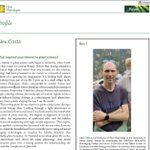
I am truly honored to be featured in a New Phytologist Profile. My sincere thanks to @NewPhyt for this opportunity and for highlighting my scientific journey! 🌱
nph.onlinelibrary.wiley.com/…
