

A Professor @ucsd_cse. Scholar at Code Metal. Helps people write programs they can trust.
San Diego, CA
Joined January 2010
- Tweets10K
- Following779
- Followers9.5K
- Likes5.8K



Agents don’t lose much expressiveness in the process. They can still do arbitrary side-effect-free computation and spawn subagents with tool access, subject to more policies. LBAC works for filesystem sandboxing, data provenance, and info-flow control.
arxiv.org/abs/2605.12863

How do we make sure an AI agent actually follows the rules?
At NeurIPS26, Timothy Zhou (w/ me+@polikarn) proposes Language-Based Agent Control (LBAC) which follows a programming languages approach to the problem: make the agent correct by writing programs that type-check. 1/
Cross-language translation is so fascinating. So many new (and old) interesting problems in programming languages and formal methods.

What gets lost when AI is used in code translation?
AI translated code can compile successfully but still behave differently from the original. But in safety-critical environments, this behavioral gap is unacceptable - and can have serious consequences.
Our latest research blog post explores how defining good type mappings can close that gap, and how Code Metal approaches the problem from a formal methods perspective.
Check out the full article here 👉️ ordnl.link/MOzTrp7
Authored by Ariel Kellison, @lorisdanto and @laura_titolo ✍

Loris D'Antoni retweeted

What gets lost when AI is used in code translation?
AI translated code can compile successfully but still behave differently from the original. But in safety-critical environments, this behavioral gap is unacceptable - and can have serious consequences.
Our latest research blog post explores how defining good type mappings can close that gap, and how Code Metal approaches the problem from a formal methods perspective.
Check out the full article here 👉️ ordnl.link/MOzTrp7
Authored by Ariel Kellison, @lorisdanto and @laura_titolo ✍
Wow, this was an incredible turnout
Applications for the Code Metal Verified Code Translation Research Awards are now closed, and the research community did not disappoint!
We received 5X as many submissions as we were anticipating, with applicants across 5 continents, 22 countries, and 74 institutions. The caliber of submissions and topics we received blew us away, across verified code translation, formal semantics, trustworthy optimization and hardware targeting, and so much more.
Thank you to everyone who submitted, we cannot wait to dig into the incredible work these teams put forward. A proud day to be a part of this community! ♥️
Winners will be announced in December - stay tuned!

Loris D'Antoni retweeted
Another great panel today at SPLASH/ISSTA in Oakland!
Our Director of Formal Methods @laura_titolo will be speaking with peers from Meta, Amazon, Purdue University and more about the future of static analysis - where it's headed, emerging trends, and the key challenges being tackled.
Full session details here 👉 ordnl.link/olUo3aI
#SPLASH #ISSTA

Reviewers should be allowed to give a new type of score that indicates "the paper in the current form is a waste of everyone's time".
After N of these papers, an author should not be allowed to submit for a period of time.
we're hiring

Check out our Assistant Professor position @ucsd_cse!
apol-recruit.ucsd.edu/JPF046…
Since it is 2026, it is worth quoting explicitly from the ad that this not AI-specific: “The department is looking for exceptional candidates in all areas of Computer Science and Engineering.”

Loris D'Antoni retweeted

girl I got a PhD in computer science and bought myself everything I own including my ring, don't wait for a man to get you shit
Loris D'Antoni retweeted

The reason I've been quiet recently.
Over the last two months I worked hard, using AI, on solving two open problems that my UIUC research lab was not able to solve over the last 7 years.
Finally, we proved them. Viva @AnthropicAI and @OpenAI!
New funding opportunity in verification/PL research lnkd.in/p/gcDbkmKy

Loris D'Antoni retweeted

I finally infiltrated the elite program synthesis department at UCSD. 😎
Been a pleasure getting to know @lorisdanto and find ways to collab. Excited to learn more about the PL group’s work.

On the pod: "Constrained Adaptive Rejection Sampling" with @ucsd_cse professor @lorisdanto.
Hear how symbolic AI experts have navigated the LLM era and why the future of AI code generation depends on program synthesis and formal methods.
Loris D'Antoni retweeted

If you are at #FloC26, come to the workshop on AI for Math and Computer Science (AIMACS) on July 25!
* Tutorial by @KaiyuYang4 on AI-aided theorem-proving
* Tutorial by Clark Barrett and Sorrachai Yingchareonthawornchai on #CSLib, the Lean computer science library
* Talks by @lorisdanto, @gtsoukal, and Moa Johansson
* A panel on how computer scientists should respond to AI progress, with @vardi, @ShriramKMurthi, Pavithra Prabhakar, and Armando Solar-Lezama. I will moderate.
* Many very interesting posters.
program.floc26.org/AIMACS-20…
sites.google.com/view/aimacs…
This year's FLOC will include RajeevFest, a special workshop to celebrate the career of my PhD advisor Rajeev Alur!
lorisdanto.github.io/rajeevf…
Loris D'Antoni retweeted

Watch the full interview:
youtu.be/BwcuNBfHj2w

Loris D'Antoni retweeted
On the pod: "Constrained Adaptive Rejection Sampling" with @ucsd_cse professor @lorisdanto.
Hear how symbolic AI experts have navigated the LLM era and why the future of AI code generation depends on program synthesis and formal methods.
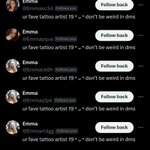
Here are my ten new followers. I understand bot detection is hard, but these ones seem not that hard to catch...

Getting LLMs to generate samples that satisfy constraints is a fundamental problem in machine learning. The standard approach is rejection sampling: generate a sample, check whether it satisfies the constraint, and if not, try again. 1/
This work shows that the structure of constraint checkers can be exploited to accelerate sampling without sacrificing correctness; reminiscent of how conflict-driven clause learning transformed SAT solving by extracting and reusing information from failed search attempts. 6/
Paper: Constrained Adaptive Rejection Sampling arxiv.org/abs/2510.01902
w/ Paweł Parys, Sairam Vaidya, @BergKirkpatrick
