

Catholicism, Anarcho-capitalism, Maximalism https://nitter.gq/t.co/kts3tv9aCV https://nitter.gq/t.co/FX3FF84bHv Conselheiro do @ILCristao
Joined November 2021
- Tweets2.4K
- Following173
- Followers361
- Likes5.4K





Manuel Ogando retweeted

Los sistemas jurídicos más exitosos y duraderos de Occidente no fueron creados por políticos dictando leyes verticalmente, sino que emergieron de la competencia descentralizada (private law, Derecho de sentencias):
1. Common Law inglés (siglos XI–XIX): jueces privados y señoriales competían por clientes, generando precedentes al resolver casos concretos. No existió un “legislador central” hasta Westminster en el siglo XIX. Resultado: la base jurídica del capitalismo anglosajón (Berman, Law and Revolution, 1983).
2. Lex Mercatoria medieval: los comerciantes europeos crearon tribunales privados de arbitraje sin el Estado. Las reglas surgieron de la costumbre y de la competencia entre cortes. Duró más de 500 años, facilitando el comercio transfronterizo sin guerras civiles (Benson, The Enterprise of Law, 1990).
3. Irlanda céltica (650–1650): sistema completamente privado de Ley Brehon. Los jueces (brehons) competían por reputación, sin poder coercitivo. Mil años de estabilidad hasta la invasión inglesa (Peden, Property in Celtic Irish Law, 1977).
4. Islandia libre (930–1262): Alþingi sin ejecutivo central. Los individuos escogían tribunales privados (goðar). 332 años sin ejército ni policía estatal (Friedman, Private Creation and Enforcement of Law, 1979).
5. Derecho romano (período republicano): el ius civile no fue legislado; emergió de las responsa prudentium (opiniones de juristas privados) y de pretores que competían por innovar procedimientos (Stein, Roman Law in European History, 1999).
Manuel Ogando retweeted

La catástrofe de Urda, al ser resultado de una acción, omisión o mala praxis de los gobernantes, cuando se empieza a investigar, sale a la luz cómo funciona realmente la administración pública, (1/2)
Manuel Ogando retweeted

The responses to this tweet make one aware of the poor state of knowledge in which many Austrian economists and followers of the Austrian School find themselves, misled by Hayek.
1. The knowledge that prices are supposed to carry, according to the Hayekian paradigm, is knowledge that acting men must already possess for prices to be formed at all. For a price to rise or fall, the agents whose interaction forms prices must already know about the relative scarcity of a good and how they value that good. It makes no sense to say that prices “communicate” information that the actors must already have for a given price to be determined.
2. The prices one can observe in the market are past prices, even if from the immediate past (never “present” prices). Action is always oriented toward the future. Prices are an aid to economic calculation, but what matters is the appraisement of entrepreneurs, who estimate future prices and, on that basis, choose among courses of action, adopting the most profitable one according to their present estimates. If they succeed, they will have allocated scarce resources efficiently.
3. The entrepreneur does not need all the knowledge that, according to the Hayekians, prices communicate to him; in fact, having it would be completely useless to him. Even if he had all the information that prices supposedly “communicate,” he would still be unable to allocate scarce resources rationally, because economic calculation would be impossible for him. Information about valuations and preferences necessarily refers to consumer goods. Value cannot be imputed to the means of production; the imputation of value as such is impossible. Yet it is the prices of the means of production that entrepreneurs need in order to calculate. What is imputed to the means of production are prices, not valuations. Economic calculation is monetary calculation, and in no way a calculation of values.
These issues have been treated extensively by many authors, such as Mises (Epistemological Problems of Economics; Human Action), Rothbard (Man, Economy, and State; “The End of Socialism and the Calculation Debate Revisited”; “The Present State of Austrian Economics”), Salerno (“Why a Socialist Economy Is ‘Impossible’”; “Ludwig von Mises as Social Rationalist”; “Mises and Hayek Dehomogenized”), Hülsmann (“Knowledge, Judgment, and the Use of Property”; Mises: The Last Knight of Liberalism), Hoppe (“Socialism: A Property or Knowledge Problem?”), Kinsella (“Knowledge, Calculation, Conflict, and Law”), and Machaj (Capitalism, Socialism, and Property Rights; "Mises and Value Theory").
I myself am writing a book that deals extensively with these problems and others related to Hayek’s thought, so I will not be responding to or further developing these arguments here. But, for some reason, Hayekians seem to be allergic to reading Misesians.

No, prices are not signals and do not transmit any relevant information. Prices are only exchange ratios of the past which help as a tool for economic calculation. nitter.gq/MartinCGamazoR/status/…


Manuel Ogando retweeted

Socialism is impossible. Read that again.
Here is why:
1. Ludwig von Mises and the Calculation Problem; then 2. Friedrich Hayek and the Knowledge Problem.
They are distinct, and it's important to understand the difference.
Mises fired first. In his 1920 paper "Economic Calculation in the Socialist Commonwealth," he drove a stake through the heart of central planning by showing that rational economic calculation is impossible without private ownership of the means of production. Prices are not arbitrary numbers. They are signals generated by actual bids and offers between property owners who face real profit and loss. Strip away private property, and you strip away the bidding process. Strip away the bidding process, and prices become bureaucratic guesses. A Soviet planner deciding how much steel to allocate between rail construction and tractor manufacturing has no genuine price for steel because no one is buying or selling it freely. He is flying blind. The problem is structural, not administrative. Hire smarter planners, give them faster computers; it changes nothing. The information cannot exist without the market process that generates it.
Communists read this and realized Mises was right. They found a roundabout way to keep going. They would simply use prices from Western capitalist countries.
Then Hayek hit them with his 1945 essay "The Use of Knowledge in Society." His target was subtly different. Hayek accepted that prices aggregate information. His contribution was to identify what kind of information markets process: local, dispersed, tacit knowledge that no central authority can collect. A warehouse manager in Düsseldorf knows that his particular supplier is three weeks behind schedule. A farmer in Kansas knows the soil conditions on his specific plot after last month's frost. A textile merchant in Lyon knows which dyes his buyers currently prefer. None of this knowledge is written down anywhere. Much of it the people holding it cannot fully articulate. It lives in habits, relationships, and on-the-ground experience accumulated over years. No survey, no commissar's report, no algorithm extracts it reliably. You cannot copy it from one country to another.
Mises showed that central planners lack the mechanism to generate rational prices. Hayek showed that even if planners somehow had prices, they still could not possess the ground-level knowledge those prices encode. Mises's problem kills socialist calculation at the structural level. Hayek's problem kills it at the epistemological level. The two arguments are complementary, stacked on top of each other like floors of a building.
The Soviet Union ran this entire experiment in full. Central planners in Moscow set over 20 million prices by the late Soviet period. Shortages and surpluses coexisted everywhere. Bread rotted in one city while another city's bread lines stretched around the block. Planners were not uniquely corrupt or stupid. They were operating inside an institutional structure that made rational allocation geometrically impossible, exactly as Mises predicted in 1920 and exactly as Hayek's epistemology explained in 1945.
Every government price control, every production quota, every centralized allocation scheme you live under today repeats this mistake at a smaller scale. The mechanism fails whether the commodity is steel, housing, or healthcare. The scale changes; the logic does not.
Manuel Ogando retweeted

Sono tutti libertari ... fino a che qualcuno che immaginano "amico" perché ha fatto loro l'enorme piacere di invitarli a qualche evento ufficiale con fanfare e divise, o di insignirli con qualche medaglietta di latta dello staterello di turno, o, come nel caso di Leonardo Facco, gli ha concesso l'incredibile onore di un selfie alla Casa Rosada, non riesce a installarsi su qualche ambita poltrona governativa.
Allora la metamorfosi dal libertario al minarchico è fulminea. Lo Stato minimo è esattamente la quantità di coercizione e violenza somministrata dal loro "amico". Il potere non va bene solo se è quello degli altri. Il "potere dei più buoni", come cantava Giorgio Gaber, quello gli va benissimo.
E ricadono nel più squallido cliché dei dementi che si fanno gabbare dall'illusione della lotta politica.
Allora chi se ne frega della libertà, chi ricorda più che il problema è nel metodo (coercitivo e violento) non nelle persone che se ne servono. E giù a sciogliere peana al pragmatismo, alla necessità di "sporcarsi le mani" con la politica per raggiungere "qualcosa", alla realpolitik. Chi non fa il tifo per il loro eroe è un traditore, come Hoppe che non ha mai fatto sconti a nessuno e non è disposto a cominciare per giustificare il genocidio in corso o per unirsi all'imbarazzante corte di ex libertari adulatori che pende dalle labbra del fenomeno di Buenos Aires, pronta a lodare qualsiasi esternazione dell'autoproclamato presidente più sionista del mondo.
Persino Rothbard, ad oltre trent'anni dalla sua morte, diventa un'eredità scomoda per questi pseudolibertari viste le sue posizioni nette sul massacro e l'esproprio del popolo palestinese.
E così troviamo questi ex libertari, come Facco - ma è in buona compagnia - che per non rischiare di buttare il bambino (quale?) con l'acqua sporca stanno trangugiando quintali di letame con il loro sempre più imbarazzante "amico" Milei che in cambio di qualche inutile riforma da Washington Consensus continua a sostenere due criminali di guerra come Trump e Netanyahu. Speriamo che le lacrime di commozione che genera in loro l'eroe argentino che è tanto bravo perché il ghostwriter gli ha piazzato nel discorsetto una citazione appropriata di Adam Smith o Hayek faccia scivolare a terra le spesse fette di prosciutto con le quali si sono foderati gli occhi per non vedere lo schifo della politica.
Qualsiasi politica. Senza distinzione di colore, orientamento e fazione.
Hoppe è l'unico vero erede di Murray Rothbard che Justin Raimondo definì "the enemy of the State".
La corte dei miracoli degli ex libertari ispanofoni e tedeschi finirà nel dimenticatoio insieme al pifferaio magico di Buenos Aires che è riuscito a riportarli nel fronte degli statalisti.

Quando un tempo ti professavi anarcocapitalista e finisci per dare del "povero psicopatico" ad Hans-Hermann Hoppe, la parabola discendente è ufficialmente completata.
Fa quasi tenerezza vedere come certi "paladini della libertà" nostrani abbiano rapidamente riposto l'etica della proprietà privata e il Principio di Non Aggressione nel cassetto, per convertirsi armi e bagagli alla manutenzione dello sstato minimo, all'atlantismo da parata e alla tifoseria per i cacciabombardieri.
Il motivo per cui Hoppe dà così tanto fastidio a questi nuovi convertiti al realismo di palazzo è semplicissimo: Hoppe è uno specchio implacabile. Ricorda loro ogni giorno che qualsiasi concessione al monopolio della violenza, qualsiasi compromesso con la macchina fiscale e qualsiasi entusiasmo per le guerre degli imperi è puro e semplice statalismo. E cosa fa chi non ha più argomenti logici per difendere le proprie giravolte?
Fa esattamente ciò che fanno i peggiori censori di regime: Liquida con l'insulto personale il più lucido allievo vivente di Rothbard. Banna e silenzia chiunque ponga domande scomode o ricordi i principi elementari del libertarismo. Dal disprezzo per il Leviatano al conformismo col timbro ministeriale e il tasto del ban facile. Potete cambiare canale, potete cambiare nome ai vostri blog e potete censurare chi vi pare. Ma se per sentirvi "accettabili" dovete insultare chi non si piega allo sstato, non siete diventati pragmatici: siete solo tornati all'ovile.

Manuel Ogando retweeted

This is all silly. Hoppe doesn't deny Hitler's evil. See mises.org/power-market/hoppe… the section "Hoppe the Nazi".
See his book A Theory of Socialism and Capitalism, the first few chapters, analyzing the evil of various forms of socialism, including Hitler's. Chapter 5 (“The Socialism of Conservatism”) treats National Socialism (and Italian fascism to a lesser degree) as a form of conservative-socialist movement, not capitalism. Hoppe argues both were nationalist movements “devoted to war and conquest.”
In The Great Fiction, in the essay criticizing Steven Pinker’s progressive history, Hoppe writes of “World War II with all its atrocities” and explicitly calls Hitler (grouped with Churchill, Roosevelt, and Stalin) one of the “mass-murdering monsters that we know them to have been.” He argues that a highly centralized state is what enables such individuals to commit evils on that scale; without it, they might have been limited to something like a Jack the Ripper. This directly affirms the atrocious, mass-murdering character of the crimes associated with Hitler and the Nazi regime. That's why he has described Hitler as a “deranged individual” whose capacity for evil was amplified by the state.
All this carping is so pathetic and dishonest. Not sure if they are just jealous of Hans, hate Germans, or are trying to please their establishment minders.
hanshoppe.com/publications/

Manuel Ogando retweeted

A recente atribuição do Prémio Nobel da Economia a Robert E. Hall e Michael Woodford mostra que o paradigma keynesiano continua de boa saúde.
mises.pt/premio-nobel-para-e…

Manuel Ogando retweeted
So says the IP fascist and opponent of just war theory, warning that “Islamic totalitarian states pose a severe threat to the security of the United States,” adding that a way to defeat these regimes “is to kill up to hundreds of thousands of their supporters.” This, he said, would “shrink popular support for extremist ideas to a small minority of the population,” instead of the 40% which he claims supports such regimes now ... stephankinsella.com/2007/12/…

Manuel Ogando retweeted
This is a very weak article. The objections made to Argumentation Ethics were refuted either by Hoppe, by Kinsella, or even by myself (cf. propertyandfreedom.org/2016/…, stephankinsella.com/publicat…, propertyandfreedom.org/2026/…). The whole "very few people accept it" argument is an ad populum.
Besides, it mistakingly assumes that Hoppe's cultural views must have its foundations in Argumentation Ethics, when that's clearly not the case. Hoppe is mearly stating how members of libertarian communities should behave in order to preserve them in the long term. It is obvious that a community with a majority of democrats and communists won't remain anarchist for long. He's not advocating agressive violence, merely the excercise of property rights and defensing violence.
Hoppe is a) a consistent libertarian who takes libertarian political philosophy to its ultimate consequences, and b) a realist libertarian who knows what is required to preserve a libertarian order in the long term.


Manuel Ogando retweeted

Yep, you're one of them.
"Libertarianism does not set out to remold human nature. One of socialism’s major goals is to create, which in practice means by totalitarian methods, a New Socialist Man, an individual whose major goal will be to work diligently and altruistically for the collective.
Libertarianism is a political philosophy which says: Given any existent human nature, liberty is the only moral and the most effective political system.
Obviously, libertarianism — as well as any other social system — will work better the more individuals are peaceful and the less they are criminal or aggressive. And libertarians, along with most other people, would like to attain a world where more individuals are “good” and fewer are criminals. But this is not the doctrine of libertarianism per se, which says that whatever the mix of man’s nature may be at any given time, liberty is best."
— Murray Rothbard
Manuel Ogando retweeted

A Chinese company uses civil unrest in France as an ad to promote the durability of its glass.
Manuel Ogando retweeted
oh ffs this stupid crap again stephankinsella.com/2022/09/…

Manuel Ogando retweeted
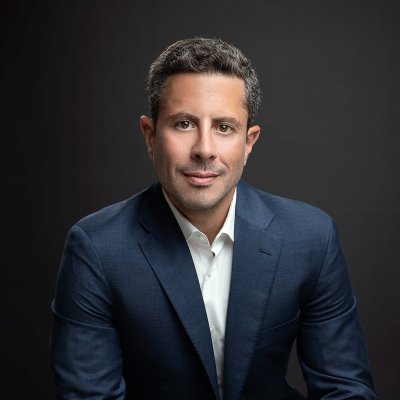
Many thanks to @dimitria1337 for producing and gifting me this wonderful piece of art:
The Washing Machine.

Manuel Ogando retweeted

"There is still private property in name, but in practice private property owners have been almost completely expropriated"
mises.org/library/what-must-…


Manuel Ogando retweeted
"Centrally enforced nationalism cannot but lead to the discreditation of the idea of a nation. In contrast, capitalist nationalism is grassroots nationalism"
hanshoppe.com/2025/08/from-n…


Manuel Ogando retweeted

Inspirado nas ideias liberais de Adam Smith a Ludwig von Mises, Edmund Opitz identificou no liberalismo clássico a projeção secular da filosofia cristão.
"O liberalismo clássico pressupõe uma filosofia religiosa que considera o homem como um ser criado que tem uma relação única com Deus, sendo formado à Sua imagem — significando que o homem possui livre-arbítrio e a capacidade de iniciar e comandar suas próprias ações.
"Este ser livre está sob a lei moral estabelecida na constituição original das coisas, responsável por descobrir esta lei e obedecê-la. Ele recebe domínio sobre a terra. Ele é ordenado a trabalhar para que possa comer; ele é o administrador dos escassos recursos da terra e responsabilizado por seu uso econômico".
