

building robot brains @physical_int | ex Optimus @Tesla_AI | ex @1x_tech | EECS @ucberkeley | @ZFellows_ | past VP @berkeleyML | @berkeley_ai
California
Joined February 2020
- Tweets110
- Following397
- Followers1.5K
- Likes976



Pinned Tweet
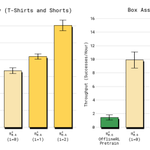
We developed RECAP @physical_int to apply RL and interventions to π0.6, achieving high success rates and throughput on several challenging tasks! Watching these policies operate successfully for hours gives an appreciation for what the method can do
Our vision for physical intelligence is a model that can control any embodiment to perform any physical task. This is an important step towards that. Its been exciting watching our partners get so many diverse tasks to work in real deployments!

Michael Equi retweeted

A video from a Pi robot deployed at Dandelion Chocolate, fully autonomous w/ no interventions. 🤖
Deploying robots has taught us surprising lessons about the gap between proof-of-concept (i.e. building one box) and real-world utility (productively building boxes for hours).
I expected that the hard part is building the box, since it’s the most dexterous, but that wasn't what we found. Counterintuitively, the hardest part was reliably stacking the boxes. Our original table-mounted robot had poor visibility of the stack without special separately-mounted cameras. Plus, stacking requires more generalization (each box is placed in a different location), and an imprecisely-placed box can lead the entire stack to collapse many boxes later.
We recently switched this deployment over to a mobile robot, and it's fun to watch the robot being completely self sufficient for multiple hours. 🙂 Data and feedback from real world use-cases like these are quite valuable for the π pre-trained model as we scale!
Michael Equi retweeted

Our newest model, π0.7, has some interesting emergent capabilities: it can control a new robot to fold shirts for which we had no shirt folding data, figure out how to use an appliance with language-based coaching, and perform a wide range of dexterous tasks all in one model!
Using "rl tokens" lets us improve our policies on highly dexterous tasks within just a few hours. In some cases we even see our policy achieve super human performance through both improved speed and the use of emergent strategies!

Michael Equi retweeted
We’ve developed a memory system for our models that provides both short-term visual memory and long-term semantic memory.
Our approach allows us to train robots to perform long and complex tasks, like cleaning up a kitchen or preparing a grilled cheese sandwich from scratch 👇
Michael Equi retweeted
General-purpose AI models are behind some of the most exciting applications we now can't live without. We envision that an analogous “physical intelligence layer” built with models like π0.6 will similarly spur a new wave of applications for the physical world.
We’ve recently begun working with a handful of companies that have deployed their robots to do real-world, useful things.
pi.website/blog/partner/?v=1

Michael Equi retweeted
We got our robots to wash pans, clean windows, make peanut butter sandwiches, and more!
Fine-tuning our latest model enables all of these tasks, and this has interesting implications for robotics, Moravec's paradox, and the future of large models in embodied AI.
More below!
Michael Equi retweeted
We discovered an emergent property of VLAs like π0/π0.5/π0.6: as we scale up pre-training, the model learns to align human videos and robot data!
This gives us a simple way to leverage human videos. Once π0.5 knows how to control robots, it can naturally learn from human video.

Michael Equi retweeted
We developed a general recipe that allows VLAs to improve from experience.
RL is back.
(yes, this is 13 hours of coffee making)
We show that on these challenging real-world tasks, more iterations continue improving the performance of π*0.6. This emphasizes the value of learning from online experience and points a direction for how we may be able to scale the deployment of robots in the real world

1
4
368
And finally a shoutout to an incredible team that was not only critical for bringing this together but also made it a blast to work on!
If you are interested in more details you can find them in our blog post and paper: pi.website/blog/pistar06

4
287
Michael Equi retweeted
Our model can now learn from its own experience with RL! Our new π*0.6 model can more than double throughput over a base model trained without RL, and can perform real-world tasks: making espresso drinks, folding diverse laundry, and assembling boxes.
More in the thread below.
Michael Equi retweeted
We just released results for our newest VLA from Physical Intelligence: π*0.6. This one is trained with RL, and it makes it quite a bit better: often doubles throughput, enables real-world tasks like folding real laundry and making espresso drinks at the office.
Michael Equi retweeted
We've added pi-05 to the openpi repo: pi05-base, pi05-droid, pi05-libero. Also added PyTorch training code!🔥
Instructions and code here: github.com/Physical-Intellig…
This is an updated version of the model we showed cleaning kitchens and bedrooms in April: pi.website/blog/pi05

Michael Equi retweeted

We’re releasing the RoboArena today!🤖🦾
Fair & scalable evaluation is a major bottleneck for research on generalist policies. We’re hoping that RoboArena can help!
We provide data, model code & sim evals for debugging! Submit your policies today and join the leaderboard! :)
🧵