

ʅǝʇɐԀ ʌɐɹᴉN
New Jersey, USA
Joined November 2013
- Tweets50.1K
- Following292
- Followers1.7K
- Likes50.5K




Nirav Patel retweeted

Do not quote retweet this or I will be forced to give people $42.0 or $420!
This is not engagement farming, it’s 1am and I’m bored AF and we all deserve a 420 break!
Do not quote retweet or you might get smashed with X Money


Nirav Patel retweeted

We are launching the Tesla Robotaxi safety report today.
Till date, Robotaxi has driven a total of 3.3 million miles autonomously, and has had zero injuries nor airbag deployments. If the same number of miles were to be manually driven, we should expect roughly 9 injuries to the occupants or other pedestrians and 4 airbag deployments on average.
We will continue to transparently share our progress with the public using this page.
tesla.com/robotaxi/safety

Nirav Patel retweeted
– 0 people injured by Robotaxi
– 0 Robotaxi airbag deployments
– 0 Pedestrians or cyclists hit
tesla.com/robotaxi/safety




Nirav Patel retweeted

Global brands price differently across countries. Don’t use U.S. prices to declare @Starlink unaffordable in India.
Netflix, Apple Music, Spotify, Amazon and YouTube already charge different prices in India and the U.S.


Nirav Patel retweeted
The ridiculous arguments by Ambani’s army of Internet shills make no sense
On the one hand, they say Starlink couldn’t possibly compete with the amazing low prices offered by Ambani’s de facto monopoly in India and then, in the same breath, they essentially claim that Starlink would be too strong of a competitor! This is absurd hypocrisy and hyperbole.
The reality is that competition would greatly benefit the average citizen in India by giving them more choices, as it always does. Ambani’s profits will be lower, but he is not going out of business. And, obviously, if Starlink is too expensive in India, no one will buy it, so SpaceX will need to make pricing affordable.

Something feels off with this chorus of “India’s internet is great and super cheap” … the data shows that Indian market is absolutely dominated by mobile. When they say it’s cheap and well connected factually this only applies to mobile usage.
This makes sense because a tower connects thousands of subs instantly after construction and running fiber is a building by building or resident by resident job. This is also why “fixed wireless” has started growing fast. Follow the incentives. It’s the cheapest and shortest route to revenue.
Due to this, India is amongst the highest mobile bandwidth usage populations on the planet. 30-40GB/month. (20-50% above US/UK usage) However, home Fiber lines in India pull closer to 300GB/month. 10x gap
For context, that gap in the US and UK is 20-30x. It’s pretty ubiquitous that if you have access to a lot of more bandwidth you will use it.
Bandwidth abundance does not favor mobile devices.
I’d argue that it’s not very hard to believe that these paltry sub 5% fixed customer penetration numbers would be much higher if a cost effective alternative existed.
Is that alternative existed it wouldn’t be crazy to expect to see the fixed customer numbers jump from 6% to maybe 10%, 15% or 20%. 100M-200M customers.
And if the rest of the world is any precedent that would lead to a dramatic increase in overall bandwidth used.
However, that would mean that mobile bandwidth usage would likely drop or stagnate with in home mobile usage.

Nirav Patel retweeted
Dear Prime Minister Ambani,
Please accept my humble apologies for not realizing that you are the real boss of India.
Naturally, you would prefer to maintain your monopolistic exploitation of the great people of India, but would you nonetheless consider allowing Starlink to compete?
There are many areas of India, as there are in all countries, with no Internet access, which denies children the opportunity for education and for small businesses the opportunity to sell their goods to a global market. Starlink would change their lives for the better.
Thank you 🙏
Nirav Patel retweeted
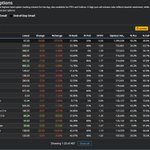
BREAKING: Grok 4.7 takes the #1 spot on VulcanBench Frontier v4, a benchmark for challenging coding tasks. 🥇
The top three positions all belong to Grok 4.7. Its winning run scored 93.15 and passed all 23 tasks.


Nirav Patel retweeted

The Cybercab is the most efficient production vehicle ever produced. It’s the narrowest, and overall smallest Tesla, but it has the most legroom (43.4") and the largest screen of any Tesla.
Cybercab specs:
• Battery capacity: 47.6 kWh
• Over 6.1 miles/kWh
• Curb weight: 3,113 lbs
• FWD
• Range: 293 miles (estimate)
• GVWR: 3,730 lbs
• Rear trunk cargo capacity: 20.2 cu ft (572 L)
• Motor power: 163 kW
• 219 hp
• Step-in height: 16.3"
• Ground clearance 5.7"
• Overall height: 55.4"
• Leg room: 43.4"
• Interior head room: 38.3"
The Cybercab (69") is even narrower than the original Tesla Roadster (73").
