

Chief Marketing Officer | Chief Digital Officer | Venture Partner | Board Advisor | Growth & Customer Experience Strategy | AI Acceleration
Washington D.C. Metro Area
Joined December 2008
- Tweets12.1K
- Following1.8K
- Followers1.4K
- Likes2.8K





Nitin Mathur retweeted

NVIDIA CEO Jensen Huang just said the quiet part out loud about what the education system will never admit.
For a century, we built humans to think like calculators.
The algorithm made that skillset obsolete overnight.
Huang: “The definition of smart is somebody who’s intelligent, solve problems, technical. But I find that that’s a commodity. And we’re about to prove that artificial intelligence is able to handle that part easiest.”
Software engineering was supposed to be the safe play.
Superintelligence cleared it first.
The SAT was supposed to measure intelligence. It was measuring the ability to follow instructions. Raw technical processing isn’t a competitive edge anymore. It’s the floor the machine stepped over before you woke up.
The question isn’t what you can calculate.
It’s what you can see before the data shows up.
Huang: “People who are able to see around corners are truly, truly smart. And their value is incredible. To be able to preempt problems before they show up, just because you feel the vibe.”
That vibe isn’t magic.
It’s the collision of first principles, human empathy, and lived experience no model can fake.
Huang: “That vibe came from a combination of data, analysis, first principle, life experience, wisdom, sensing other people.”
The operators who see around corners will command the AI.
The ones waiting for dashboards to update will be replaced by it.
Huang: “I think long term the definition of smart is someone who sits at that intersection of being technically astute, but human empathy and having the ability to infer the unspoken, around the corners, the unknowables.”
The unspoken variables are the new leverage.
The human psychology inside a market. The invisible friction in a negotiation. The instinct to build something nobody asked for yet.
You can’t spreadsheet your way there. You can’t prompt your way to that perception. It comes from decades of watching what doesn’t show up in the metrics.
Huang: “And that person might actually score horribly on the SAT.”
The future doesn’t belong to people who memorized answers.
It belongs to people who sense the questions before anyone thinks to ask.
The old system tested your ability to follow orders. The new one tests your ability to move through the unknown. And the machine can’t help you with that part.
That part is entirely on you.
Nitin Mathur retweeted
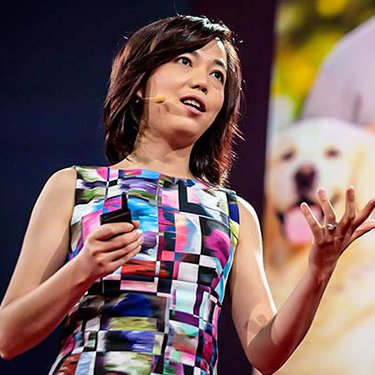
This is an insanely large world created using our 3D world generation model. It blew my mind!

Nitin Mathur retweeted

what's happening with ai adoption in india right now is amazing to watch.
we love to see the explosion of creativity--india is outpacing the world.


Nitin Mathur retweeted

𝗖. 𝗛. 𝗔. 𝗠. 𝗣. 𝗜. 𝗢. 𝗡. 𝗦! 🇮🇳🏆 🏆 🏆
The Rohit Sharma-led #TeamIndia are ICC #ChampionsTrophy 2025 𝙒𝙄𝙉𝙉𝙀𝙍𝙎 👏 👏
Take A Bow! 🙌 🙌
#INDvNZ | #Final | @ImRo45

Nitin Mathur retweeted
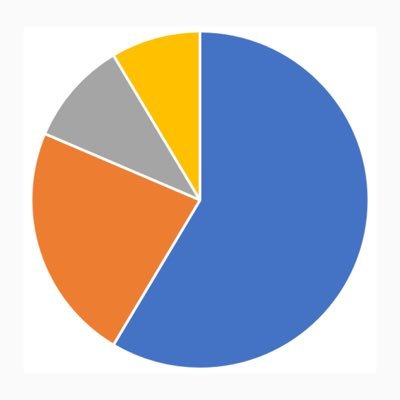
🏈 Average cost of a 30-sec Super Bowl ad:
1965: $37,600
1970: $72,500
1975: $110,000
1980: $275,000
1985: $550,000
1990: $800,000
1995: $1,085,000
2000: $2,200,000
2005: $2,500,000
2010: $3,100,000
2015: $2,400,000
2020: $5,600,000
2025: $8,000,000
Source: Superbowl-ads


Nitin Mathur retweeted

CES 2025 was INSANE
🧵 From AI magic to mind-bending gadgets, here are the game-changing tech reveals you can’t afford to miss.

Nitin Mathur retweeted

Deep Dive: Is India the Next Economic Giant?
Around 20 years ago, China experienced a period of unprecedented economic growth and technological advancement. I watched many of my friends invest early in China and achieve remarkable success.
Yet, I didn't make a single investment then. Why?
I didn't feel like I understood China. I couldn't speak the language, I didn't grasp the political landscape, and I felt like an outsider looking in.
When I look at India, I feel entirely different about it. India's democratic ideals align well with those of the United States. Many Indians speak English, which removes the language barrier, and there are favorable conditions for American entrepreneurs and investors to create successful businesses.
Around 2016, when India launched UPI (digital payment system), a few of my friends and I made some bets then. Even though UPI was a huge success, in hindsight, 2016 was too early to invest in India and my bets didn’t pay off. Even though we saw a wave of successful startups like Flipkart and Zomato emerge during that time, in many ways, India's startup ecosystem was still nascent.


Nitin Mathur retweeted

RT the first tweet if you found this thread valuable.
Follow me @seanpk for more threads on entrepreneurship, investing and human performance.


Nitin Mathur retweeted
It's your Captain Rohit Sharma signing off from T20Is after the #T20WorldCup triumph! 🏆
He retires from the T20I cricket on a very special note! 🙌 🙌
Thank you, Captain! 🫡
#TeamIndia | @ImRo45

Nitin Mathur retweeted

Nothing like a print ad (in the @nytimes no less) to solidify the arrival of cricket in America!



Nitin Mathur retweeted

#CES2024 kicks off tomorrow. But for now, here's a preview of life at the #IntelligentEdge with ADI.
Stay tuned all week for insider views of #ADIatCES.


Nitin Mathur retweeted
Being a lifelong learner isn’t about taking pride in your knowledge. It's about having the humility to know what you don’t know.
My top 23 insights from 2023 🧵

Nitin Mathur retweeted

Entrepreneurs will be the ones to create a better future for the planet and her citizens
forbes.com/sites/richkarlgaa…

Nitin Mathur retweeted
Jensen Huang recently sat down for an *incredible* hour-long interview at Columbia Business School.
It covers topics such as the $NVDA founding story, how Jensen envisions the future of AI, why NVIDIA doesn't manufacture their own chips, and much more. Enjoy!
(h/t @Columbia_Biz)
Nitin Mathur retweeted
Great work by@10BedICU in putting 200+ tele-ICUs in remote districts in India, all operational and connected to 11 regional expertise centers or "hubs" for people who had no access to an ICU during COVID. Now they can permanently have nearby ICU access. Goal is to get to all 700 districts of India.
