

Turned $3K into $42K. Lost it on a first date. Married her anyway. Now sharing investing stories, expensive lessons & boring long-term thinking.
Joined October 2026
- Tweets2.3K
- Following292
- Followers503
- Likes2.7K




Pinned Tweet
How much does it cost to live in Thailand?
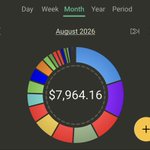
For me, my wife, and our dog on Phuket:
August: $7,964
September: $8,307
October: $8,556
Average: $8,276/month.
That’s rent, food, a car, travel, and everything else we spend money on.
Thailand can be cheap. Our lifestyle apparently isn’t.
How much does your household spend per month?


You’re 34 with $350k invested.
Two job offers:
A. $160k, five days a week.
B. $120k, four days a week.
Same benefits. Both remote. You can cover your expenses with either.
In this hypothetical, would you take $40k less for an extra day off every week?
You have $250k invested.
Would you rather:
A. Get $100k tax-free today.
B. Receive $2,000 a month for the next 5 years.
Both are guaranteed in this hypothetical scenario.
Which would you take?
$100k invested at 25.
$100k invested at 35.
At a hypothetical 7% annual return, with no additional contributions:
At 65, the first portfolio grows to about $1.5M.
The second grows to about $761k.
Same starting amount. Ten years apart.

You’re 35 with $400k invested.
Your brother asks to borrow $50k to start a business.
He promises to pay it back within 3 years.
You can afford to help, but losing that money would set your own plans back.
Would you lend him the $50k?
He’s 30.
$140k invested.
$25k in cash.
$115k salary.
He rents for $1,600 a month.
His parents offer him $100k toward a home, but only if he buys within the next year.
He likes renting and doesn’t know where he wants to settle.
Would you take the $100k and buy, or keep your flexibility?
$1 million invested.
You withdraw $40k in year one.
Then the market drops 30%.
Your remaining $960k falls to $672k.
Now a $40k withdrawal is almost 6% of what’s left.
Same lifestyle. Much smaller portfolio.
This is why the first few years of retirement can be especially risky.
She’s 37.
$920k invested.
$60k in cash.
No debt.
Her annual expenses are $38k.
She wants to retire now.
Her husband thinks she should work another 5 years and build a bigger safety margin.
Would you retire with $920k at 37?
21 followers away from 500.
Started in October with 0.
Turned $3K into $42K once, then lost all of it on a first date. Married her anyway.
Now I invest the boring way from Phuket and post real money dilemmas with the math behind them.

You have $200k invested at 30.
Would you rather:
A. Receive another $100k today.
B. Get an extra $1,500 every month for the next 10 years.
No conditions attached.
Which one would you choose?
$500k invested at 35.
You add $2,000 a month for the next 20 years.
At a hypothetical 7% annual return, you’d end up with roughly $2.9 million.
Of course, real returns won’t arrive in a neat 7% line.
But time does a lot of the work once the portfolio gets big enough.
You wake up tomorrow and your portfolio is worth $1 million.
No debt. No sudden expenses.
Would you change anything about your daily life, or keep doing exactly what you’re doing now?
He’s 36.
$300k invested.
$25k in cash.
$120k salary.
His parents need $60k for a major home repair.
They have no savings and can’t afford a loan.
He can help, but it would mean selling part of his portfolio.
His siblings can’t contribute.
Would you give them the full $60k?
He’s 33.
$250k invested.
$30k in cash.
$130k annual salary.
He saves $50k a year.
His dream is to take a year off and travel.
But doing that means giving up $130k in salary and spending $40k from his savings.
He’s worked for 10 years without a real break.
Would you take the year off or keep building the portfolio?
$289,831 in bitcoin:native .
This is my actual position right now.
At what point would you start taking profits?
+100%? +200%? +300%?
Or would you keep holding?

$100k invested.
One stock grows to $300k.
The rest of your portfolio is worth $100k.
Now 75% of your money depends on one company.
If that stock drops 50%, your entire portfolio loses 37.5%, even if everything else stays flat.
A winning position can quietly become your biggest risk.
That’s why I pay attention to position size, not just returns.




Imagine you’ve been investing for 15 years.
Your portfolio finally hits $1 million.
Then the market drops 30%.
You’re down $300k without selling a single share.
Would you still be comfortable calling yourself a long-term investor?