

God is the Designer. I’m just here for the journey as a designer.
Joined May 2017
- Tweets1.7K
- Following61
- Followers92
- Likes1.2K





Pinned Tweet
🔄 Flip it. Rotate it. What letters do you see?
No peeking 👀 Guess before I reveal them later today!
Drop your answer below 👇
#AmbigramLogo #MonogramLogo #DesignFun
2
5
1,920
Mat retweeted

The BBC licence fee is being extended to streaming services - we ALL find it unacceptable.
So let's show the Government - sign and share this petition. Make a point. Don't just moan, sign/share.
'Do not extend the BBC licence fee to streaming services'
petition.parliament.uk/petit…


Mat retweeted

I genuinely feel sick reading these numbers this morning. Over 500 victims of serious crime in Britain, including people reporting rape and violent assault, have just been told their trials will not even begin until 2030.
Think about the human reality of what those families are being forced to live through.
As Victims' Commissioner Claire Waxman warned today, people are now facing a nine-year wait from the moment they report a crime to the day they finally get their afternoon in court. Nine years of suspended trauma, unable to rebuild their lives, while memories fade and evidence degrades.
Things have deteriorated so badly that the Victims' Commissioner admitted she might soon have to warn victims not to report crimes at all. Nearly 10,000 cases will not be heard until 2028 at the earliest, with more than 1,000 involving rape allegations, as the total Crown Court backlog hits an unthinkable record of over 80,000 cases.
And look at the state's response. The government's big plan is quietly stripping citizens of their ancient right to a jury trial and shoving 25,000 cases onto magistrates just to make the backlog look smaller on a spreadsheet, while admitting delays will get worse before they get better.
When a country taxes its citizens at historic peacetime levels, releases convicts early because prisons are full, and asks rape victims to wait until 2030 for justice, the state has fundamentally failed in its most sacred duty. Justice delayed by nine years is not justice. It is complete institutional abandonment.

I watched the video. As a Greek Cypriot, I don’t see clear-cut racism here. I see poor judgment and ignorance. Maybe Owain didn’t realise Lazarou Barbers have been in Cardiff since 1966. Did you bother to ask?
Diversity in British is a real issue. Labelling those concerns racist, then attacking the only party @RestoreBritain willing to discuss them, helps no one.
Our diaspora is not the same as the majority of those coming to the UK.
@UKCypriotFed, stop policing language and branding every concern about high-street diversity as an attack on Cypriots. No family came to harm from it.
Focus on Cyprus and lobbying MPs for our country’s independence. We’re past the “you’re racist” BS.

We strongly condemn the racist remarks made by Restore Britain councillor Owain Clatworthy, who singled out the Lazarou family and its businesses while attacking Cardiff’s rich diversity
We call on @RestoreBritain to apologise for and condemn the statements of Mr Clatworthy
Our full statement ⬇️


61
WHAT THEY SAY VS. WHAT HISTORY TELLS US
435 — Treaty of Margus | Turks say: Turkish victory | History: Hun power expanded into Roman territory; the treaty imposed terms on the Eastern Roman Empire.
932 — Khazar–Byzantine War | Turks say: Turkish victory | History: Warfare and political expansion across the Caucasus and Black Sea region.
1015 — Battle of Bitola | Turks say: Turkish victory | History: Turkish expansion into Byzantine-held territory.
1048 — Battle of Kapetron | Turks say: Turkish victory | History: Raids and warfare brought death, destruction and insecurity to Byzantine communities in eastern Anatolia.
1067 — Battle of Caesarea | Turks say: Turkish victory | History: Seljuk raids devastated Byzantine Anatolia; civilians faced killing, captivity and displacement.
1071 — Battle of Manzikert | Turks say: Turkish victory | History: Seljuk victory opened the way for further conquest; Byzantine communities faced decades of warfare and displacement.
1075 — Battle of Nicaea | Turks say: Turkish victory | History: Seljuk expansion took Byzantine territory and placed local populations under new rule.
1116 — Battle of Polybotum | Turks say: Turkish victory | History: Byzantine victory.
1147 — Second Crusade | Turks say: Turkish victory | History: Warfare across Anatolia brought destruction and civilian suffering.
1145 — Battle of Konya | Turks say: Turkish victory | History: Seljuk–Byzantine warfare brought raids and instability to Anatolian communities.
1176 — Battle of Myriokephalon | Turks say: Turkish victory | History: Seljuk victory; Byzantine campaigns to recover Anatolia were halted.
1182 — Battle of Uluborlu | Turks say: Turkish victory | History: Seljuk expansion further reduced Byzantine control in Anatolia.
1207 — Conquest of Attalia | Turks say: Turkish victory | History: Seljuk conquest of Antalya brought its population under new rule.
1221 — Battle of Kolonas | Turks say: Turkish victory | History: Seljuk expansion and warfare across Anatolia.
1285 — Conquest of Kulacahisar | Turks say: Turkish victory | History: Early Ottoman expansion into Byzantine territory.
1287 — Battle of Dominic | Turks say: Turkish victory | History: Ottoman expansion through warfare against Byzantine-held lands.
1302 — Battle of Bafeus | Turks say: Turkish victory | History: Ottoman victory; raids and destruction drove Byzantine rural communities from their lands.
1303 — Battle of Dimbos | Turks say: Turkish victory | History: Ottoman expansion brought further loss of Byzantine territory and insecurity for local communities.
1326 — Conquest of Prusa | Turks say: Turkish victory | History: Ottoman conquest of Bursa; Byzantine loss of a major city.
1328 — Battle of Nicaea | Turks say: Turkish victory | History: Ottoman pressure and siege warfare further weakened Byzantine-held Nicaea.
1329 — Battle of Pelekanon | Turks say: Turkish victory | History: Ottoman victory; Byzantine forces withdrew and lost further ground in Anatolia.
1337 — Conquest of Nicomedia | Turks say: Turkish victory | History: Ottoman conquest of İzmit; Byzantine loss of a major city.
1337 — Battle of Demotika | Turks say: Turkish victory | History: Ottoman intervention in Byzantine civil conflict helped extend Ottoman influence.
1354 — Conquest of Gallipoli | Turks say: Turkish victory | History: Ottoman foothold in Europe; expansion into the Balkans.
1361 — Conquest of Adrianople | Turks say: Turkish victory | History: Ottoman conquest of Edirne; Byzantine loss of territory in Thrace.
1378 — Conquest of Philadelphia | Turks say: Turkish victory | History: Ottoman conquest of the last major Byzantine city in Anatolia.
1389 — Battle of Kosovo | Turks say: Turkish victory | History: Heavy losses on both sides; Serbian ruler Lazar and Ottoman Sultan Murad I were killed.
1396 — Battle of Nicopolis | Turks say: Turkish victory | History: Ottoman victory; captured Crusaders were executed, enslaved or held for ransom.
1397 — Battle of Athianios | Turks say: Turkish victory | History: Ottoman expansion across the region.
1411 — Battle of İnceğiz | Turks say: Turkish victory | History: Ottoman civil war brought further bloodshed.
1430 — Conquest of Thessaloniki | Turks say: Turkish victory | History: City sacked; inhabitants killed, enslaved or deported.
1453 — Conquest of Constantinople | Turks say: Turkish victory | History: City sacked; inhabitants killed or enslaved, survivors displaced, and churches seized or converted.
1461 — Conquest of Trabzon | Turks say: Turkish victory | History: Fall of the Empire of Trebizond; inhabitants deported, relocated or absorbed into Ottoman rule.
1822 — Chios | Turks say: Ottoman victory | History: Greek civilians massacred, raped, enslaved and deported; estimates cite about 20,000–25,000 killed and tens of thousands enslaved.
1823 — Mesolongi | Turks say: Ottoman victory | History: Siege and fall; civilians died from starvation, disease and violence; survivors were killed, captured or displaced.
1826 — Constantinople | Turks say: Ottoman victory | History: Janissaries massacred during their suppression.
1827 — Battle of Acropolis | Turks say: Turkish victory | History: Greek victory.
1827 — Battle of Phaleron | Turks say: Turkish victory | History: Greek defeat; Ottoman-Egyptian victory.
1850 — Mosul | Turks say: Ottoman rule | History: Assyrian and other Christian communities attacked; killings, looting and displacement.
1860 — Lebanon | Turks say: Ottoman rule | History: Massacres of Christians; thousands killed, homes and villages destroyed.
876 — Bulgaria | Turks say: Ottoman victory | History: Suppression of the April Uprising; thousands of Bulgarian civilians massacred.
1877 — Bayazet | Turks say: Ottoman rule | History: Armenian civilians killed and communities attacked.
1879 — Alashkert | Turks say: Ottoman rule | History: Armenian civilians killed and communities attacked.
1881 — Alexandria | Turks say: Ottoman rule | History: Civilians killed during unrest; homes and property damaged.
1892 — Mosul | Turks say: Ottoman rule | History: Yazidi communities attacked; killings, forced conversion and displacement.
1893 — Macedonia | Turks say: Ottoman rule | History: Repression and violence against local communities.
1894–1896 — Armenian massacres | Turks say: Ottoman security measures | History: More than 200,000 Armenians killed; massacres, rape, forced conversion, looting and destruction of communities.
1894 — Sasun | Turks say: Ottoman victory | History: Armenian civilians massacred; villages destroyed and survivors displaced.
1894 — Van | Turks say: Ottoman rule | History: Armenian civilians killed and communities attacked.
1895 — Western Armenia | Turks say: Ottoman rule | History: Massacres of Armenians; killings, looting, forced conversion and displacement.
1896 — Constantinople | Turks say: Ottoman rule | History: Armenian civilians massacred; homes and businesses looted.
1897 — Ottoman–Greek War | Turks say: Turkish victory | History: Ottoman military victory; Greek defeat and territorial consequences.
1903 — Macedonia | Turks say: Ottoman victory | History: Repression and intercommunal violence; civilians killed and villages attacked.
1904 — Sasun | Turks say: Ottoman victory | History: Armenian civilians killed; villages attacked and survivors displaced.
1909 — Adana | Turks say: Ottoman rule | History: 20,000–30,000 Armenians killed; homes, churches and communities destroyed.
1914–1923 — Greek persecution in Anatolia | Turks say: War and national liberation | History: Massacres, rape, forced labour, deportations, starvation and displacement; hundreds of thousands of Greeks killed.
1915–1916 — Armenian Genocide | Turks say: Wartime deportations | History: Approximately 600,000–1.2 million Armenians killed through massacres, death marches, starvation and abuse; survivors dispossessed and displaced.
1915–1923 — Assyrian Genocide | Turks say: Wartime security | History: Mass killings, rape, deportations, starvation and destruction of Assyrian villages; hundreds of thousands killed or displaced.
1915 — Smyrna | Turks say: Ottoman rule | History: Greek communities faced persecution and displacement during the wider wartime violence.
1915–1920 — Mesopotamia | Turks say: Ottoman rule | History: Assyrian communities subjected to massacres, deportation, starvation and displacement.
1918 — Kars | Turks say: Turkish victory | History: Armenian civilians killed and displaced during violence and territorial upheaval.
1919 — Pontus | Turks say: National liberation | History: Pontic Greeks massacred, deported and displaced; some scholars estimate 100,000–150,000 killed.
1919–1925 — Turkey | Turks say: National liberation | History: Greek civilians killed, deported and displaced during the destruction of Greek communities in Anatolia.
1920 — Kilikia | Turks say: Turkish victory | History: Armenian civilians massacred, raped and driven from their homes; attacks on Marash and other Cilician communities caused mass flight and displacement.
1921 — First Battle of İnönü | Turks say: Turkish victory | History: Turkish nationalist victory claim; military significance debated.
1921 — Second Battle of İnönü | Turks say: Turkish victory | History: Turkish nationalist victory; Greek forces retreated.
1921 — Battle of Sakarya | Turks say: Turkish victory | History: Turkish nationalist victory; Greek retreat and heavy military losses on both sides.
1922 — Battle of Dumlupınar | Turks say: Turkish victory | History: Greek army defeated; retreat accompanied by civilian flight, killings and destruction.
1922 — Smyrna | Turks say: Turkish victory | History: City burned; Greek and Armenian residents killed, raped or forced to flee. Estimates cite 10,000–50,000 dead and about 200,000 fleeing.
1923 — Population exchange | Turks say: Population exchange | History: Compulsory displacement; approximately 1.1 million Greeks uprooted from Turkey and around 400,000 Muslims transferred from Greece.
1938 — Dersim | Turks say: Security operation | History: Kurdish and Alevi civilians massacred and forcibly displaced; estimates range from about 13,000 to 40,000 killed.
1974 — Cyprus | Turks say: Protection of Turkish Cypriots | History: Invasion and occupation of approximately 36–37% of Cyprus; around 200,000 Greek Cypriots displaced, 1,468 recorded missing, and civilians subjected to killings, torture and sexual violence.
1984–2011 — Turkey’s Kurdish conflict | Turks say: Counter-insurgency | History: An estimated 30,000–40,000 people killed; 950,000–1.2 million displaced; around 3,000 Kurdish villages and hamlets emptied. Reports documented torture, disappearances, extrajudicial killings and destruction of homes and livelihoods.
Ottoman devshirme | Turks say: Imperial service | History: Christian boys forcibly taken from their families, converted to Islam and trained for Ottoman service.
-
Illustration of the registration of Christian boys for the devşirme ("tribute in blood"). Ottoman miniature painting, 1558

105

when you need to get rid of the evidence of poor workmanship, you call it “unauthorised discharge of wastewater from a tea factory.”
The outcome:

A stream in Turkey mysteriously turned bright red, leaving residents baffled. Local authorities investigated and traced the unusual color to an unauthorized discharge of wastewater from a tea factory.
11
I have seen a surge of followers lately. 3 people. lol. But honestly thank you. It means a lot that my rants, comments, messages of support to Cypriots and Greeks around the world, the fight for Christianity and for our holy land to return means a great deal.
Glory to God. Lord have mercy on me, a sinner.
🇨🇾☦️

13
Straight in the bin. No thank you, sir.
You can spend a fortune on branding, fancy suits, smiles and buzzwords, but when the polish wears off, it's the same old propaganda, different mug. Lord Kitchener would be proud.
As a member of @RestoreBritain, all I get is a weekly email. And honestly? That's enough.
I don't need entertainment or more political theatre. I want to know what they've done, what they're doing and what they're going to do.
A party that actually does what it says in its emails, posts and messages. Thank you @RupertLowe10

12
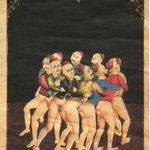
Turks are calling this image AI.
Here’s what Grok had to say.
It is a well-known page from the Ottoman erotic manuscript Tuhfetü’l-Müluk (also spelled Tuhfet ul-Mulk, “Gift of the Kings”), a Turkish bahname (sex manual) translated from Arabic. It is dated around 1773 and comes from the Alain Kahn-Sriber Collection (Paris). A copy of the same manuscript is also held in the David Collection in Copenhagen.
The scene shows a group of men (wearing traditional jackets and red fezzes/caps, lower bodies bare) in a tightly packed cluster. This is one of the explicit group illustrations in the manuscript, part of the broader tradition of late-18th/early-19th-century Ottoman erotic miniatures that also includes the more famous “chain” (zincir) circle scenes.
The calligraphy at the top is real manuscript text (Ottoman Turkish), not AI gibberish. The style, composition, and paper are consistent with authentic late Ottoman miniature painting from that period.
YW

Dear turks,
we prepared a short historical note to end the discussions.
Now is the time to settle it.
No bad intentions, just look at your own history instead of drawing wishful-thinking dick images.
Stay calm. And do one.

233
It takes a small African nation to call out the hypocrisy turkey does or says, yet not one EU leader has the balls to say or do anything in over 100 years.
What an absolute farce.

COP31 President Murat Kurum tells UN climate chief Simon Stiell to “take his seat” after Ghana’s environment minister was cut off during a speech at the closing plenary in Antalya. Kurum later apologized to Ghana’s delegation for the incident.
9
Everything @latinopoulou said is true. But does the eu listen or do anything

9


Mat retweeted

🇬🇷🇹🇷 Greek MEP Latinopoulou drops the hammer in the EU Parliament:
“Turkey has no history. It has a criminal record.”
She called out Ankara for:
• Still denying the Armenian, Assyrian & Pontic Greek genocides
• Illegally occupying northern Cyprus for 51+ years
• Pushing the “Blue Homeland” doctrine & Aegean claims
• Weaponizing illegal migration to undermine the EU from within
• Rewriting history while acting as a revisionist power
She went further — labeling Turkey a terrorist state and demanding the EU cut all ties and treat it as an enemy of Greece, Cyprus and the entire Union.
🔥All who agree,share her speech !
Watch the full speech 👇
@latinopoulou
#FreeCyprus #StandWithCyprus #StandWithGreece #EU #Turkey
Dear turks,
we prepared a short historical note to end the discussions.
Now is the time to settle it.
No bad intentions, just look at your own history instead of drawing wishful-thinking dick images.
Stay calm. And do one.


Sevgili Yunanlılar,
Türk-Yunan deniz yetki alanı tartışmasını bitirmek için yeni bir harita hazırladık.
Artık bu kavgayı bitirmenin zamanı geldi.
Kötü niyet yok, sakin olun.

19
Mat retweeted

That was the emblem of the Achaemenid Empire, founded by Cyrus. The name "Iran" is absolutely correct, but unfortunately in the West in recent years it has become associated with the Islamic regime. Let me explain a few things for Westerners who may not know.
The local populations called themselves "Aryanam" in ancient times and "Iran/Eranshahr" during the Sasanian period.
"Aryanam" is the ancient version of "Iran," an old genitive plural meaning "(land) of the Aryans."
The term "Persia" is the name we Greeks used since the Achaemenid Persian Empire in the 6th century BC.
This name became established in the West through the Greeks, who generalized the name of the region Pars (today Fars) in southern Iran, the heartland of the Persian Empire. It is worth noting that the Persian language is called Parsi.
Persia was officially renamed Iran on March 21, 1935, when Reza Shah Pahlavi formally requested the international community to refer to his country by its national name, Iran.
As a Greek I will always call the nation Persia and its people Persians, out of respect and because that's how my ancestors the last 2.500 years were calling them. For us Greeks, the Greco-Persian wars and later Alexander’s campaign in Persia, which eventually led to Greco-Persian friendship, are deep-rooted emotions and memories that will never leave our souls.
Long live Greece.
Long live Persia.
Two ancient nations that shaped the world.
- Homer Pavlos


I’m done with theatrical apologetics. Time to get unapologetic about apologetics.
I’ve stopped watching a few. From David Wood to Jay Dyer, the model increasingly looks the same: endless Super Chats, reaction content and drama, all packaged as defending the faith. Are they fighting ideology, or building audiences and revenue from it?
If you disagree, watch @RaymondIbrahim5 and @MaajidNawaz on @MrWinMarshall’s show, or @liamtuffs1’s interviews with @MuhammadS9128 and @MartinSedra_. Look at what they’re saying and defending. Then compare that to the endless streams and recurring debates that rarely move beyond the same arguments.
Meanwhile, @RealDannyTommo is serving prison time, and @TRobinsonNewEra faces the prospect of prison. The contrast between those facing real consequences and those treating apologetics as entertainment is stark.
Apologetics should be about defending the faith, not turning it into content. Yet too much of it now looks weak, performative and unhinged.
Has apologetics become more about protecting egos, generating clicks and making money than actually defending the faith?
Between plagiarism controversies, manufactured outrage, Super Chats and online theatrics, I'm beginning to wonder where the intellectual honesty has gone.
As a 2 nd gen Greek Cypriot whose father was forced out of our country, I'm tired of people sitting 1000s of miles away telling Brits and Europeans to stand up and fight while turning cultural and religious conflict into online entertainment. I get it. Talking a lot makes you money and gets you on these trips.
But I want arguments that make me think, people who lead by example and encouragement to actually do something meaningful. Not another performance for the cameras.
Criticising apologetics isn't criticising Christianity. It's asking those who defend the faith to practise the same honesty and accountability they demand from others.
Block me all you want. But honestly, I want to see apologists do better. Otherwise, I have absolutely no problem calling out stupid, dumb shit when I see it. Isn't that exactly what you do anyway?

27
This is not breaking but do you think that if these atrocities happened in this digital age, people would sit back and post about them, or fight back like they used to with the chivalry and stand-up of old? Have people become too wrapped up in their comfy living instead of fighting and maybe dying for what’s right?

On April 1909, Muslim Turks massacre 30,000 Armenians in Adana only because they were Christians. The Turks slaughtered men and kids, raped women and tortured people in their ancestral homes. It was orchestrated by the Muslim Turks & it was racially and religiously motivated in order to create their Islamic pseudo-nation 100 years ago.
Greeks and Armenians of Asia Minor, and Assyrians of deeper Anatolia, paid dearly for the fact that they endured five centuries of slavery and remained Orthodox Christians.
The faint-hearted converted to Mohammedanism so that they could stay in Asia Minor. On the other hand, we are the descendants of those who survived 400 years of slavery and torture. Never forget that.
- Homer Pavlos

11