

Crypto media, born on socials. Telling stories that shape crypto and covering projects that make a difference.
Joined November 2021
- Tweets39.1K
- Following1.6K
- Followers82.6K
- Likes56.4K




Pinned Tweet
We started small. A community space for crypto people
Looking for credible info, connection, and a voice.
Today, that idea has grown into Our Crypto Talk (OCT)
The first media house born on socials. 🧵👇
Payments has been the strongest fundraising narrative in crypto this year.
That capital is chasing the thesis.
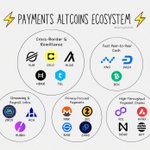
Here’s the altcoin map leading the payments narrative.
🟠 Fast Peer-to-Peer Cash
(Speed and low fees for everyday transfers)
Nano ( $XNO )
→ Feeless, near-instant via block-lattice design
→ One of the purest remaining pure-payments projects
Dash ( $DASH )
→ InstantSend for near-instant confirmations
→ Optional privacy features, long-running merchant tools
Bitcoin Cash ( $BCH )
→ Bitcoin fork with larger blocks for throughput
→ Built for everyday cash-like spending
🟠 Cross-Border & Remittance
(Fintech and telecom rails for international transfers)
Stellar ( $XLM )
→ Very low fees with fiat on/off-ramp anchors
→ Used in remittance corridors and past MoneyGram ties
Celo ( $CELO )
→ Mobile-first chain for payments and stablecoins
→ Phone-number-based transfers, local currency stables
Algorand ( $ALGO )
→ Fast finality with predictable low fees
→ Strong asset and stablecoin support
Hedera ( $HBAR )
→ Hashgraph network with high throughput
→ Adopted for enterprise payments and micropayments
Telcoin ( $TEL )
→ Links blockchain with telecom networks for cheap remittances
→ Runs a regulated US digital asset bank plus eUSD stablecoin
🟠 Streaming & Payroll Infra
(Continuous value flows instead of one-off transfers)
Zebec Network ( $ZBCN )
→ Real-time per-second money streaming for payroll
→ Crypto cards and multi-chain disbursements
Alchemy Pay ( $ACH )
→ Fiat-crypto payment gateway
→ Lets merchants move between fiat and digital assets
Huma Finance ( $HUMA )
→ PayFi protocol turning payment flows into yield
→ Finances and settles real payment activity
🟠 Privacy-Focused Payments
(Cash-like confidentiality on sender, receiver and amount)
Monero ( $XMR )
→ Private by default via ring signatures and stealth addresses
→ Hides sender, receiver and amount on every transaction
Zcash ( $ZEC )
→ zk-SNARKs power optional shielded transactions
→ Selective disclosure plus growing institutional interest
MobileCoin ( $MOB )
→ Privacy-preserving payments built for mobile
→ Integrated into messaging apps like Signal
Zano ( $ZANO )
→ Hides sender, receiver, amount and asset type
→ Confidential assets plus private staking
🟠 High-Throughput Payment Chains
(Volume, low fees, stablecoin and merchant rails)
Polygon ( $POL )
→ Ethereum L2 with deep stablecoin liquidity
→ Widely used for card settlement and payment apps
Avalanche ( $AVAX )
→ High throughput with fast finality
→ Subnet flexibility for payment-specific chains
Near Protocol ( $NEAR )
→ Scalable L1 with low fees
→ Developer-friendly tooling for consumer payment apps
Aptos ( $APT )
→ Move-based chain with parallel execution
→ Built for consumer and payment-scale throughput
Payments doesn’t need a bull market to matter.
It needs people sending money, and that happens every single day.
→ That’s the thesis these altcoins are all betting on.


Utility token all-time high market caps, 2021 to 2026 📊
2021: First utility wave
ADA $95B
DOT $54B
AVAX $32B
UNI $23B
LINK $23B
MATIC $21B
2022: Last highs, then collapse
LUNA $41B (then went to near zero)
NEAR $13B
2023: Rebuild
No large-cap utility token set a new record
2024: New narratives
TRX $38B
TON $20B
RENDER $5.3B
INJ $4.9B
TAO $4.8B
2025: Majors set records
ETH $597B
XRP $216B
BNB $191B
SOL $142B
SUI $16B
2026 so far: Revenue and privacy
ZEC $26B
HYPE $22B
XMR $15B

Be the first 1000 in. Founding members only. 🏆
t.me/ourcryptotalk_tg

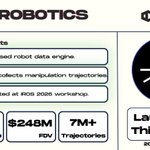
1/ Robotics could be one of crypto’s biggest real-world narratives in 2027.
Robots need positioning, data, payments, identity, coordination and capital.
Crypto projects are already building each layer.
These are the 9 robotics altcoins we’re watching
🧵 👇


13/ Which of these robotics projects do you think has the best chance of becoming a major winner by 2027?
And which robotics altcoin are we missing?
Drop your picks below 👇
Follow @ourcryptotalk for more early narratives, altcoin research and market trends.

Why @hyrotrader_com builds on trust 🤝
Most prop firms ask you to trust them on payouts. A screenshot here, a certificate there, a testimonial or two. @hyrotrader_com took a different route: it lets you check.
Its public transparency dashboard lays out the numbers:
→ $9.13M paid to traders since 2023
→ ~$515K paid in the last 30 days
→ Average payout around $1,586
→ 99.8% of payout requests approved
The bigger shift came in April 2026. Payouts on Solana (USDT/USDC) now go fully on-chain through Fireblocks, and $1.38M has already moved this way. Every one of those payouts carries a public TXID you can look up on Solscan yourself.
The payout wallet address is published too, so anyone can audit the flow independently. Traders who prefer privacy can hide their name and TXID from the dashboard.
Speed holds up as well. Average time from payout request to on-chain confirmation is about 15 hours, 99.1% of on-chain payouts land within 24 hours, and there are no withdrawal fees.
The one question traders care about most, “do they actually pay?”, it has replaced promises with proof anyone can verify.
That’s what trust should look like in this industry.
hyrotrader.com/transparency
Go and check out hyrotrader using the link in the first comment 👇


Our Crypto Talk retweeted
How far off the bottom vs how far from the ATH 👇
$PUMP +298% from low, 1.85x to ATH
$NEAR +418%, 4.1x
$AERO +185%, 2.7x
$INJ +235%, 5.72x
$ONDO +87%, 4.71x
$SUI +58%, 5.19x
$ALGO +47%, 31x
$TEL +6%, 44x
$PUMP is closest to home. $TEL hasn’t left the floor.
Which one closes the gap first?

Whichever machines win, they all need centimeter accuracy outdoors.
That gap is a product, and @GEODNET sells the fix.
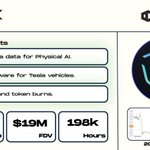
A spray drone, tractor or delivery robot pays for RTK corrections to get centimeter accuracy, and GEODNET collects that revenue in fiat.
80% of that revenue buys $GEOD on the open market and burns it, so demand for positioning becomes buying pressure.
The chain is already working. GEOD burned 3,050,000 tokens in the past month, and the burn now offsets around 80% of new issuance.
We think this is the most overlooked part of the robotics boom.
People talk about the humanoid, the chip and the model, and very few talk about positioning.
Specialized machines pay first and humanoids add to the demand later, and each new machine is one more subscription feeding the burn.
GEODNET already runs the largest RTK network in the world, built by operators who paid for the hardware themselves.
A network like that takes years to place.
We are extremely bullish on $GEOD, because it is tied directly to demand for positioning in physical AI.
We think the market still prices it like a small project.


Always fun listening to Mike Horton, founder of @GEODNET .
Interesting take on humanoids versus specialized machines here and I agree. imho we'll see a mix, with specialized machines paying back first.
Whatever form they take, they all need to know exactly where they are and regular GPS is not good enough outdoors, since it can be off by a few meters.
GEODNET runs the world's largest RTK network, with centimeter-level precision, 22K+ base stations in 175 countries.
That is what the rails for physical AI look like🦾