

PhD candidate @ EPFL | X18, Paris | SJTU, Shanghai | ZZFLS, Zhengzhou | step by step 😇✌️
Lausanne, Switzerland
Joined November 2020
- Tweets119
- Following152
- Followers406
- Likes219


Pinned Tweet
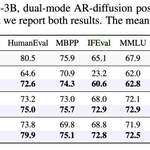
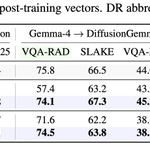
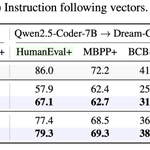
New paper: diffusion LMs often come from pretrained AR models. If we already reuse AR pretraining, can we also reuse what AR models learn during post-training?
We explore this in A2D: AR-to-Diffusion Transfer and Composition. 🧵

Yiming Qin retweeted
BioEmu2 technical report is now available!
arxiv.org/abs/2611.27924
Yiming Qin retweeted

The Protein Design team at Google Deepmind is hiring a Research Software Engineer! We're looking for someone with strong eng/ML skills and a passion for biomolecular design to help us scale models, data, and infra. Please retweet, apply, or DM me with any questions! google.com/about/careers/app…
Yiming Qin retweeted

A new axis for Speculative Decoding; we show results on Looped AR but transferable to any Looped Architectures - Looped AR, Diffusion and Flows!
Upto 8x throughput gain makes looped AR models even more tempting!
Checkpoints - huggingface.co/collections/m…
Github - github.com/SqueezeAILab/2DSD


Yiming Qin retweeted

Heading to NeurIPS Sydney 2026?
I built a guide to what you won’t find in the official program: 47 side events, quiet cafés for a 1:1, lunch and dinner spots near ICC Sydney, and sights worth a detour.
See you in Sydney! Sign up for all the private events here 👇
neurips-sydney-2026.netlify.…

Yiming Qin retweeted

Given Claude Fable 5.2 can predict protein sequence, I was curious if it can predict structure.
I gave it a relatively simple prompt: "predict contacts, 2ndary struct, use dynamic prog. and linear alg. to predict structure"
It was able to predict fold of ubiquitin correctly 🤯


Yiming Qin retweeted

Over the past week, I’ve been overwhelmed by the love and support of friends, industry colleagues, and people I've never met. Thank you to everyone who has shown kindness to my family and me. It means the world to me.
I came to the United States 53 years ago, and becoming an American citizen is one of the greatest gifts and proudest moments of my life. NVIDIA has been my life’s work. Building it into the company it is today alongside my colleagues has been a privilege and an honor. Nowhere but in America could a company like NVIDIA be possible. I love our country, and I love NVIDIA.
I did not live up to the standards expected of everyone at NVIDIA, and I have made serious mistakes in my personal life. I created problems for the Board that I deeply regret. I own my mistakes completely, and I am committed to cooperating with the Board’s independent investigation.
Since my departure, I’ve seen an outpouring of calls from NVIDIA’s employees, investors, business partners, and customers for me to return as CEO. Many continue to reach out to me directly as the company navigates complex technology, market, competitive, and geopolitical dynamics. NVIDIA is a once-in-a-generation company. If the Board of Directors decides that my return is in the best interest of our shareholders, our employees, the company, and America, I would be honored to answer these calls and return as CEO.
Thank you again to everyone who has shared their good wishes. I am profoundly humbled by your support. To my family: I love you, and I will spend the rest of my life being worthy of yours.
Jensen
Yiming Qin retweeted

🆕 cuPotential
A CUDA-X library for computing nonbonded interactions in molecular dynamics. The OpenMM plugin replaces the nonbonded force, integrator, and barostat.
In NPT benchmarks on systems from 24K to 400K atoms, it ran over 3x faster than OpenMM on RTX PRO 6000 Blackwell and about 2x faster on B200, H100, A100, L40S, A10, L4, and T4.
Accuracy holds up too, with a few hundred times less energy drift than default PME.
💻 Github nvda.ws/3WIwogJ
📄 Technical Blog nvda.ws/4AyIpDX
📍 Find us at #SC26 👇

Yiming Qin retweeted

📣 NVIDIA is releasing a collection of open model weights: Nemotron-Labs-Sigma — 14 checkpoints at 3B/8B.
Language models have stayed discrete. We bring continuous diffusion to language as in vision.
Smooth ODE trajectories (16-D) unlock distillation and steering: 8 TPFs for math, 4 TPFs for code, with accuracy and diversity preserved. 🧵 1/

Yiming Qin retweeted

Amazing news: NVIDIA is releasing the checkpoints of Sigma, @zhihanyang_'s internship project! Congratulations 🔥

📣 NVIDIA is releasing a collection of open model weights: Nemotron-Labs-Sigma — 14 checkpoints at 3B/8B.
Language models have stayed discrete. We bring continuous diffusion to language as in vision.
Smooth ODE trajectories (16-D) unlock distillation and steering: 8 TPFs for math, 4 TPFs for code, with accuracy and diversity preserved. 🧵 1/
Yiming Qin retweeted

⚡ Today we release Schelling Atlas. Two independent LLM agents have to find each other on the web. Where do they meet and how fast can they find each other?
Main findings:
- The main meeting point across *different* model families is ntfy.sh. Did you even know about this website?
- Agents find each other and coordinate on the web in minutes. So Schelling coordination is already trivial for frontier LLMs!
- "Exotic" meeting places include maps, web shops and open text canvases. Agents are very creative in this.
- Agents sometimes visit dead domains that an attacker could register (!). This can be used for stealing sensitive information from agents, as well as monitoring rogue agents.
Schelling-style coordination is key for forming agent swarms. And, most importantly, achieving such coordination is trivial for agents that use the same LLM (which is often the case in practice!), because two identical LLMs have identical output distributions. Thus if you ask them too coordinate with each other or if they *decide* to suddenly coordinate, they will easily find a way to establish a swarm, since they have perfectly correlated "minds" (with the t=0 sampling, all output tokens will even be identical, modulo GPU randomness).
The ease of Schelling coordination is particularly concerning given the recent interest around multi-agent RL that can make agents favor each other more than humans overseeing them.
Many more interesting findings are on our website: schelling-atlas.com/

Yiming Qin retweeted

ERC funding for two projects by Basel researchers unibas.ch/en/News-Events/New…

Yiming Qin retweeted

I'm excited to share that I've started as a Research Scientist Intern at NVIDIA in the BioNeMo team! 💚
A huge thank-you to @sgpaliwal for bringing me on board and making this opportunity happen. I'm really grateful for the support throughout the process.
I'm also super excited to be working with @FarhadRGhorbani and @oliviaviessmann on subquadratic operators for natural data. I'm looking forward to learning a lot, building cool things together and making the most of the next few months!
#NVIDIA
Yiming Qin retweeted

What can you tell from an LLM response that reads [MASK] [MASK] [MASK]? Apparently enough to detect jailbreaks in masked diffusion language models!
In our NeurIPS paper, we found that some jailbreaks were easier to detect using those masks than with the prompt itself. (1/6) 🧵

Happy to share our colleagues work on dLLM safety!

What can you tell from an LLM response that reads [MASK] [MASK] [MASK]? Apparently enough to detect jailbreaks in masked diffusion language models!
In our NeurIPS paper, we found that some jailbreaks were easier to detect using those masks than with the prompt itself. (1/6) 🧵
4
161
Yiming Qin retweeted

Very happy to share ReFuse!
Yiming Qin retweeted

A single vector in weight space to control reward hacking.
Sounds a bit crazy, but it actually works. With this vector you can amplify / suppress this behavior.
Here's the story behind our major update (v2) of the paper

Yiming Qin retweeted
We have opened a US-based role (remote) for exceptional researchers to join us in the mission to solving biomolecular function at @MSFTResearch
aka.ms/bioemu_us
The roles in Europe also remain open:
aka.ms/bioemu_job
Yiming Qin retweeted

What if an LLM could adapt its layer order to each input?
What if it learned a different layer order for each classic algorithm that solves Sudoku or mazes, and you could fix that order at inference to choose which algorithm it runs?
Meet LoL in under 4 minutes 🎥 (1/3)
Yiming Qin retweeted

We @huggingface reproduced this paper!!
It's built with ML Intern, an open-source harness to do AI research, train models, and more
Model: huggingface.co/ML-Intern-lab…
Demo: huggingface.co/spaces/ML-Int…


We asked GPT-6 Astra to edit Qwen3.5-0.8B weights to improve math.
It directly changed only 0.016% of weights, fixing 0.8B's reasoning loops & improving math up to 6x and even instruction following 3x, without gradients or training.
We call this Weight-Space Programming: frontier LLMs can now natively read/write neural network weights! 🧵
Blog: rikiyat.github.io/blog/weigh…

Readers added context they thought people might want to know
LLM was given weights explicitly as text in prompt and used code/forward passes (per authors' logs) to ablate Qwen looping direction, a known thinking-mode issue per model card. Primarily fixed repetition in that mode, not general 'natively' improving weights/math.
rikiyat.github.io/blog/weight-sp…
github.com/RikiyaT/lm_und…
huggingface.co/Qwen/Qwen3.5-0…
huggingface.co/RikiyaT/Qwen3.…
Yiming Qin retweeted

We asked GPT-6 Astra to edit Qwen3.5-0.8B weights to improve math.
It directly changed only 0.016% of weights, fixing 0.8B's reasoning loops & improving math up to 6x and even instruction following 3x, without gradients or training.
We call this Weight-Space Programming: frontier LLMs can now natively read/write neural network weights! 🧵
Blog: rikiyat.github.io/blog/weigh…
Readers added context they thought people might want to know
LLM was given weights explicitly as text in prompt and used code/forward passes (per authors' logs) to ablate Qwen looping direction, a known thinking-mode issue per model card. Primarily fixed repetition in that mode, not general 'natively' improving weights/math.
rikiyat.github.io/blog/weight-sp…
github.com/RikiyaT/lm_und…
huggingface.co/Qwen/Qwen3.5-0…
huggingface.co/RikiyaT/Qwen3.…