



Pinned Tweet
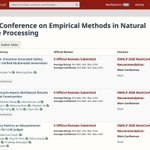
Our collaboration with OSU wins outstanding paper award at #EMNLP2026!!
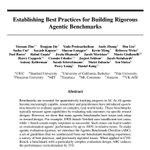
The paper introduces, a benchmark for evaluating how vulnerable AI coding agents are to malicious "skill-based attacks". Where poisoned, reusable skill packages can compromise agents either immediately during a single task session or silently across sessions via self-mutating payloads.
Please see our paper here -- arxiv.org/html/2606.02540v1
Huge shoutout to @yuting_ning, @Zhehao_Zhang123 and @hhsun1.

Deadline around the corner. Looking forward to proposals -- specially on the Multilingual and Contextual AI Evaluation track.

📣 Amazon Research Awards fall 2026 call for proposals is now open for submissions. Successful applicants will receive unrestricted funds, AWS promotional credits, and training resources.
Research areas:
• Agentic AI
• AI for Information Security
• Amazon Security
• Automated Reasoning
• AWS Cryptography
• Build on Trainium
• Multilingual and Contextual AI Evaluation
• On-Device Multimodal Perception
• Synthetic Data Generation for Multimodal Perception
Deadline: November 4
#AmazonResearchAwards
amazon.science/research-awar…

Rahul Gupta retweeted

Excited to share the results of a recent pilot project with Amazon!
Companies use private safety evaluations to make decisions with big public consequences.
Our review led to several improvements in Amazon’s internal evals.
Thanks to @rahul1987iit for collaboration on this:

AI companies make safety calls based in large part on internal tests they develop themselves. It’s rare for there to be independent assessment of the quality of those tests.
Earlier this year, @Amazon and @AVERIorg agreed to a pilot project in which AVERI assessed the quality of Amazon’s internal safety evaluations. Today we’re releasing the result of that independent review. As a result of this project, Amazon is changing how it tests future models.
Our review of Amazon’s internal AI safety evaluations confirmed several strengths such as topical diversity, and we found the evaluations to be consistent with Amazon’s public statements on them. At the same time, we found areas for improvement:
On attack sophistication, some prompts represented relatively straightforward attack vectors that would test safety filters rather than deeper model reasoning.
On evaluation signal quality, we identified a concern that superficial cues, rather than safety reasoning, may drive some model refusals, so passing these evaluations might not indicate robust safety behavior in novel situations.
On linguistic and stylistic diversity, some multilingual prompts were included, but prompts across risk categories were predominantly in English, and some prompt structures were reused across scenarios.
On evaluation freshness, a small number of prompts contained temporal references that could become outdated.
In response, Amazon reports four changes for future internal evaluations:
Refreshing its test sets to remove redundant prompts and add more challenging adversarial scenarios;
Introducing a tiered difficulty calibration framework;
Expanding multilingual coverage across all risk categories; and
Establishing a quarterly review schedule to identify staleness and incorporate emerging attack patterns.
Why does this matter? A passing grade on an easy test doesn’t tell us much on its own. As the stakes of AI development and deployment grow, we think that this kind of independent evaluation of internal evaluations (“metaevaluation”) will grow in importance.
We appreciate Amazon opening their internal evaluations up to outside review. We hope more companies take this step to help make their models safer.
While no clear standards exist for metaevaluation yet, @AVERIorg is working to change that. We look forward to sharing more pilot results in the coming months and will continue our work developing standards with institutions like @aievalforum.
Read AVERI’s full blog post here: averi.org/ourwork/averi-pilo…
Read Amazon’s blog post on the collaboration here: amazon.science/blog/strength…
There's a new version of this post
Even rigorous internal safety testing benefits from external scrutiny. We partnered with @AVERIorg to independently review our safety evaluation datasets at Amazon; examining not just model outputs, but the quality and rigor of the tests themselves.
Blog at tinyurl.com/2u75xm49
Thanking @Miles_Brundage for a great collaboration.

Fall ARA call for a proposals are out! I have a special eye on the multilingual and contextual AI evaluation track having closely designed it. This track builds on the commitments we made at the India AI summit earlier this year.
Calling upon academics in my network to consider submitting proposals.
📣 Amazon Research Awards fall 2026 call for proposals is now open for submissions. Successful applicants will receive unrestricted funds, AWS promotional credits, and training resources.
Research areas:
• Agentic AI
• AI for Information Security
• Amazon Security
• Automated Reasoning
• AWS Cryptography
• Build on Trainium
• Multilingual and Contextual AI Evaluation
• On-Device Multimodal Perception
• Synthetic Data Generation for Multimodal Perception
Deadline: November 4
#AmazonResearchAwards
amazon.science/research-awar…
Grateful to share 4 NeurIPS 2026 acceptances across the Evaluations and Datasets Track, Education Track, and the AIWILD workshop.
Papers:
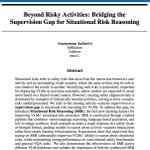
1/ Beyond Risky Activities: Bridging the Supervision Gap for Situational Risk Reasoning — NeurIPS 2026 Evaluations and Datasets Track poster
2/ Adaptive Adversarial Evaluation: A Search--Freeze--Replay Tutorial — NeurIPS 2026 Education Track
3/ Are Your Agents Ready to Evolve? Assessing Evolution-Readiness in Agents Through Paired Safety and Utility Scoring — Third Workshop on Agents in the Wild: Safety, Security, and Beyond (AIWILD)
4/ RedInject: A Self-Evolving Harness for Indirect Prompt-Injection Evaluation in Agentic Gyms — Third Workshop on Agents in the Wild: Safety, Security, and Beyond (AIWILD)
I’m especially proud of the Education Track paper. We built educational material for practitioners entering AI evaluation and safety, with the goal of making rigorous evaluation workflows more accessible to people coming into the field. Looking forward to its presentation in Sydney.
[Paper & tutorial links upcoming]
Attended “Governing at the Speed of AI” during UNGA week (aisafetyconnect.org/events), where I heard from heads of state and leaders across the AI ecosystem on international coordination for safe, secure, and trustworthy AI. This was a timely forum to connect frontier AI safety, public-sector preparedness, and practical governance.
It also comes alongside Amazon’s updated Frontier Model Safety Framework (amazon.science/publications/…) and our accepted NeurIPS 2026 Datasets & Benchmarks Track paper, “Beyond Risky Activities: Bridging the Supervision Gap for Situational Risk Reasoning.” The paper studies situational risk reasoning in vision-language models: cases where the same user activity may be safe in one visual context but unsafe in another. We introduce a dataset and post-training approach to help models reason about activity-scenario interactions rather than relying only on generic refusal behavior.
Grateful for the opportunity to engage in these conversations at the intersection of responsible AI and public policy, while continuing to advance the underlying science and policy thinking.


Rahul Gupta retweeted

On July 25, we hacked OpenAI.
Two bugs let us take over ChatGPT/Codex accounts of OpenAI employees (+some unaffiliated users) and reach connected services: Outlook, Slack, GitHub, etc.
We proved it with a PR in OpenAI’s internal codebase . It took us <72h. 🧵


Rahul Gupta retweeted

Pretraining Recurrent Networks without Recurrence by @akarshkumar0101 & @phillip_isola is a great paper!
It makes an end-run around the problems of RNNs via a transformer teacher to learn good predictive state representations & supervised learning of a memory transition function

It has been a productive cycle for the Amazon AGI RAI team, with three papers at EMNLP spanning some of the core challenges in responsible AI.
This year’s EMNLP main track was especially selective, with an acceptance rate around 15%. That speaks both to the volume of strong NLP research being produced and to how selective the top venues have become. I’m glad our work found a place in that conversation.
Our accepted EMNLP papers:
UNISAF-Bench openreview.net/forum?id=Ul8m…
SkillHarm arxiv.org/abs/2606.02540
PReMISE arxiv.org/abs/2605.30803
#EMNLP2026


Tomorrow, I’ll be giving an invited talk at the Workshop on Foundation Models for Social Good, co-located with IJCAI-ECAI 2026 in Bremen.
My talk, “AI Safety in Practice,” will focus on what it takes to move responsible AI from principles into operating reality: evaluations, red teaming, mitigation design, and external validation at frontier-model scale.
I’m looking forward to joining a strong group of researchers and practitioners thinking about how foundation models can support social good while remaining reliable, inclusive, efficient, and aligned.
Workshop: nlp4social.github.io/NSG-202…
#IJCAI2026 #ResponsibleAI #AISafety #FoundationModels #AIForSocialGood
Excited to be part of a panel at MAA MathFest 2026 in Boston this week (maa.org/events/mathfest-prog…). Looking forward to conversations on how AI is shaping undergraduate math education and learning from an amazing group of educators and researchers.
Please see our paper below!

Please see our blog on @trustnlp workshop below.

TrustNLP just wrapped its 6th edition at @aclmeeting. We traced how the workshop has evolved over six years. Read our retrospective and let us know what you think: tinyurl.com/5xv937nt
Bonus: the blog includes slides from our 2026 keynote speakers.
#TrustNLP #TrustworthyAI
Rahul Gupta retweeted

📢 NeurIPS 2026 Call for Educational Resources is now open!
The NeurIPS 2026 Education Track invites researchers and educators to create accessible, reusable materials that teach emerging AI concepts to broad audiences.
We welcome submissions in many formats, including code notebooks, short videos, lecture notes, slide decks, interactive demos, visual explanations, and other self-contained learning resources.
Accepted submissions will be presented at the main conference in Sydney as talks or posters, made available through the NeurIPS website, and curated into the official NeurIPS 2026 Education Track repository.
🗓 Submission deadline: September 4, 2026 (AOE)
🔗 Learn more and submit: neurips.cc/Conferences/2026/…
Got a chance to talk to @AntoniaJuelich about this research. A key insight from our conversation: model abusers don't shy away from switching to another model if one doesn't yield what they're looking for.
Safety is only as strong as the weakest link in the chain.

In a hotel room in northeast Nigeria, I opened a leading AI chatbot, turned my laptop toward a former Boko Haram commander, and asked if he'd used it. He nodded.
"You type in the question… like 'How can I build a bomb?', and then it tells you how. It is like a human robot. We used it a lot."
My new study on how the jihadist terrorist group Boko Haram uses frontier AI with @CamAISciPolicy, covered today in @nytimes 🧵/9
That's a wrap on the 6th @trustnlp workshop @aclmeeting -- our biggest edition yet! As part of the opening, I had the chance to present a few statistics on how TrustNLP has evolved, including:
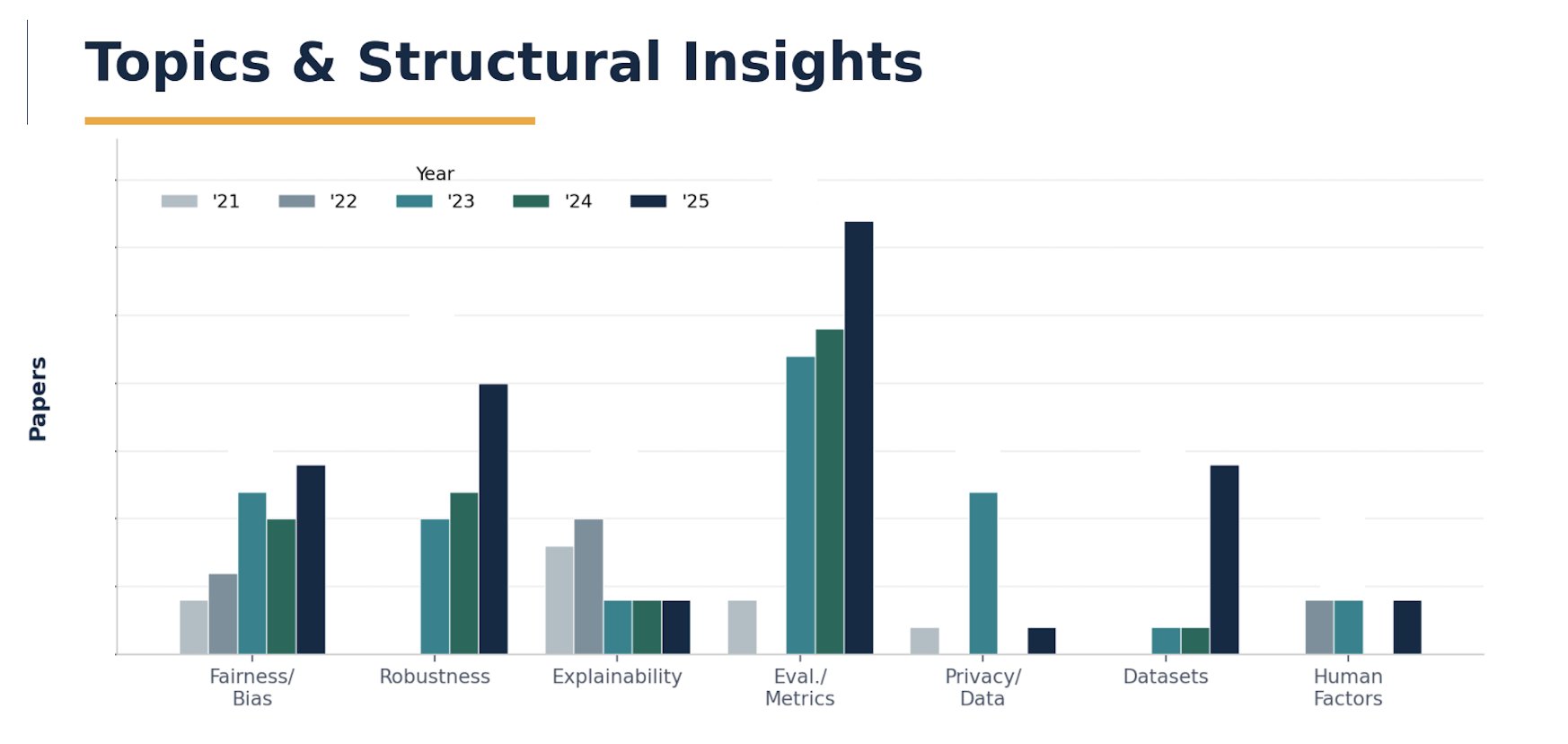
1/ 50+ accepted papers this year. Starting with just 8 papers in our very first edition in 2021, TrustNLP has grown every year — tracking the field's shift: interpretability → reliability → adversarial control → agentic & multimodal safety.
2/ Research trends over the years: Evaluation & Metrics is now the most popular theme, Fairness & Bias remains a consistent focus, and Robustness has been the fastest-growing area.
Attaching a few pictures from the workshop, plus snapshots of the slides I presented during the opening.
Thank you to all our speakers, authors & attendees! 🙏 #NLProc #ResponsibleAI
Tagging my co-organizers: @kaiwei_chang, @aram_galstyan, @NinarehMehrabi, @anil_k_ram, @yixin_wan_, @jwaladhamala, @d_anubrata, Anoop Kumar, @SatyaScribbles, Tharindu Kumarage, Christos Christodoulopoulos.