
Computational Chemist / IQ (UNAM)
Joined April 2017
- Tweets26
- Following125
- Followers39
- Likes7.6K

Ricardo Almada retweeted

ESMAdam: a plug-and-play all-purpose protein ensemble generator
1. ESMAdam introduces a versatile framework for protein ensemble generation, bridging gaps in high-throughput applications. Leveraging the pretrained ESMFold model and Adam optimization, it excels in efficiency and adaptability compared to traditional methods like molecular dynamics simulations.
2. The method supports a wide range of tasks, including conditional ensemble generation, CG-to-all-atom backmapping, binding mode exploration for protein complexes, and reconstructing 3D structures from cryo-EM images.
3. A key innovation is ESMAdam's reliance on optimizing protein embeddings in a continuous space. Unlike deep generative models, ESMAdam requires no retraining, allowing it to accommodate diverse structural constraints with minimal computational overhead.
4. In protein complex studies, ESMAdam identified metastable binding states previously undetected by molecular dynamics simulations, highlighting its potential for novel discovery in protein-protein interactions.
5. Cryo-EM integration demonstrates ESMAdam's robustness under noisy conditions. It reconstructs conformational ensembles while retaining accuracy in secondary structure prediction, even with significant noise levels.
6. The model achieves Boltzmann-distributed conformations, a feat previously challenging without physics-intensive simulations. It enhances studies on protein dynamics, stability, and interactions.
7. Future directions include reducing computational demands via techniques like LoRA for broader accessibility. ESMAdam positions itself as a critical tool for advancing structural biology and computational protein design.
📜Paper: biorxiv.org/content/10.1101/…
#ProteinDesign #AI #StructuralBiology #ComputationalBiology #ESMAdam

Ricardo Almada retweeted
ECloudGen: Leveraging Electron Clouds as a Latent Variable to Scale Up Structure-based Molecular Design
1. Introducing ECloudGen, a novel generative model that incorporates quantum physics principles by using electron clouds as latent variables. This approach scales up structure-based molecular design by bridging sparse protein-ligand complex data with ligand-only datasets.
2. Key innovation: ECloudGen's use of electron clouds enhances chemical space exploration and introduces model-level interpretability. This enables superior molecular design, outperforming state-of-the-art methods in binding affinity and drug-like properties.
3. Addressing a critical challenge, the "Paradox of Sparse Chemical Space Generation," ECloudGen effectively combines theoretical insights and modern AI techniques, using latent diffusion and contrastive learning to map structured chemical spaces.
4. Benchmark achievements: ECloudGen demonstrated significant improvements in ligand binding efficiency (LBE), QED, and synthetic accessibility, with results surpassing ten baseline models across multiple datasets.
5. Multi-objective optimization: The model excels in designing molecules that meet complex real-world constraints, exemplified in a BRD4 inhibitor case study, which included key molecular properties and functional group preferences.
6. Enhanced interpretability: By leveraging electron clouds, ECloudGen offers insights into the decision-making process, enabling chemists to trace and validate molecular design pathways effectively.
7. Broad utility: The model supports single-objective and multi-objective molecular optimization, showcasing flexibility and scalability for various drug discovery applications.
8. Real-world impact: In a V2R antagonist design, ECloudGen delivered molecules with micromolar-level binding affinities, proving its practical relevance and potential for accelerating therapeutic development.
9. Future directions: The methodology sets a precedent for integrating physical insights into deep learning frameworks, opening possibilities for applications beyond drug discovery, including material science and synthetic chemistry.
📜Paper: biorxiv.org/content/10.1101/…
#DrugDiscovery #QuantumChemistry #AIinBiology #GenerativeModels #ComputationalBiology

Ricardo Almada retweeted

#compchem Good read: Chemical Bond Overlap Descriptors From Multiconfiguration Wavefunctions.
doi.org/10.1002/jcc.27534

Ricardo Almada retweeted

Our new lab website is up, thanks to the awesome @richiam95
jinichlab.ucsd.edu/
May the Aztec god Xochipilli guide us through our journey of machine learning enzymology (and our other science adventures).
Ricardo Almada retweeted
Dear Mtb science friends. @richiam95 from our group has made an important update to our Mtb Transposon Sequencing Database. One can now explore co-essentiality signals (i.e. correlation in log2-FC profiles) across the ~150 screens. We hope it's helpful!
mtbtndb.app/co-essentiality
Ricardo Almada retweeted

ORCA6 is finally released! 🥳 Important links:
* academics can download it directly from: orcaforum.kofo.mpg.de
commercial entities please contact [email protected]
* we have a new on-line manual: faccts.de/docs/orca/6.0/manu…
* and updated tutorials: faccts.de/docs/orca/6.0/tuto…
Ricardo Almada retweeted

Greetings from the joint MDAnalysis / @MolSSI_NSF hybrid workshop at @ASUPhysics : from users to developers in the analysis of molecular simulations with software engineering best practices and MDAKits mdanalysis.org/2024/05/14/AS… : ~45 in-person attendees+instructors and ~80 online.

ALT Group photo from the MDAnalysis/MolSSI Workshop @ ASU June 24-25 2024.
Ricardo Almada retweeted

Uploaded no less than 5 notebooks regarding UDOP, Microsoft's document AI model! Includes fine-tuning for JSON generation
Also, thanks for the 7k GitHub stars!
github.com/NielsRogge/Transf…

Ricardo Almada retweeted
🔬 Call for Instructors: @ClubesCienciaMx 2024!
Seeking #PhD and #Postdoc trailblazers in all #STEM fields, including #AI, #Biochemistry, to teach summer workshops! Trip to Mexico to fuel the passion of future scientists🌟
📅 Apply by Feb 18: clubesdeciencia.mx/en/
RT please!
Ricardo Almada retweeted

Learn to build *advanced* RAG from scratch 🤯
Know the RAG basics already? Strengthen your understanding of retrieval, and tackle more sophisticated use cases with LLMs + data 🛠️:
✅ LLM routing
✅ Retrieval re-writing/ensembling/fusion
Full guides 🧑🏫: docs.llamaindex.ai/en/latest…


Ricardo Almada retweeted

Fundamentals of #PyTorch you Should Know: learnpytorch.io/00_pytorch_f…
————
#BigData #DataScience #MachineLearning #AI #DeepLearning #NeuralNetworks #DataScientists #Python #Algorithms #Mathematics #Calculus #Coding
———
➕See this book: amzn.to/3eC3x2p

Ricardo Almada retweeted
Interested in running your own model? This is a great place to start: xitter.cf/ravithejads/status/171…

❓Wondered how to build RAG with open-source LLMs & embeddings in @llama_index?
👉 Starting with @replicate hosted @MistralAI LLM & @huggingface embedding models.
One can use various other LLMs on Replicate: replicate.com/explore
👇Dive into this 🧵 for other methods.

Ricardo Almada retweeted

The only 5 links you need to understand the Transformer:
(1) youtube.com/watch?v=kCc8FmEb… Let's build GPT: from scratch, in code, spelled out by @karpathy
(2) youtube.com/watch?v=iDulhoQ2… Attention Is All You Need explained by @ykilcher
(3) jalammar.github.io/illustrat… Illustrated Transformer by @jayalammar
(4) jaykmody.com/blog/gpt-from-s… GPT in 60 Lines of NumPy by @jaykmody
(5) ig.ft.com/generative-ai/ - Generative AI Visualization by the Financial Times
Ricardo Almada retweeted

Hello, world!
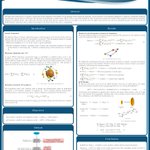
This is my work at @LatinXChem: "Free energy surfaces for the hydrolysis of phosphate ester bond by a copper (II) complex".
#LatinXChem #Comp029 #LXChemComp
#DFT #Metadynamics #Catalyst #Copper
It's not the best multimedia design, but it's honest work. <3


Hi
@LatinXChem
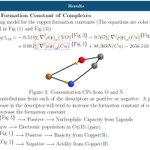
, this is my work “Copper(II) Coordination Compounds Correlations with Atomic Descriptors", #LatinXChem #LatinXChemTheo #Theo132 #QTAIM #DFT #AtomicGraph #MLR #FormationConstant #electrondensity #Atomic #compchem


