

Director. The uncanny, psychological horror, and visual subtext in film.
Mu
Joined April 2008
- Tweets13.4K
- Following2.5K
- Followers1.1K
- Likes14.3K


robertdee retweeted

The Choral director Nicholas Hytner says the onus to support working class talent should be on the education system and not the film industry:
“There is a ceiling to what we can do if the entire apparatus of the state education system is trying to bring it down” #LFF


robertdee retweeted

Newsnight:
“Would you say the Conservative Party are still the party of business?”
Tory shadow minister: “They certainly are…”
Newsnight:
“Before you go on…”
Brilliant.
robertdee retweeted

Question Authorities
Why are the social sciences pathologizing spirituality?
Friends, as you have probably gathered from my recent posts, I have lately been reading a lot of social-science literature about belief formation, specifically in areas of religion, spirituality, and the paranormal. This week I read 34 journal papers, on which this post is based.
What I found in scholarly literature from about 2018 to 2023 is predominant inclination among social scientists to pathologize individual validation of extra-physicality, ranging from anomalous cognition to theism.
The premise from which most researchers function is generally describable as "everyone knows" that extra-physicality is delusional, with glancing reference to papers by career skeptics. Moreover, most researchers use tendentious terms like "ghosts," "superstitions," or "belief"--the last hemming the individual into a category of emotionalism versus analysis.
Whatever the technical prowess of the studies--some good, some mediocre--researchers' premises of the paranormal are either undefined, prejudicial, sentimental, or all three. There also appears rote and unexplained linkage of paranormal and conspiracy outlooks. A 2024 paper in the prestigious Royal Society Open Science states as an unsourced hypothesis: "Conspiracy beliefs are positively associated with paranormal beliefs." ("Prevalence, patterns and predictors of paranormal beliefs in The Netherlands: a several-analysts approach") Not only do paranormal and conspiracy theses differ in nature / content but, astoundingly, many researchers fail to critically define them. E.g., researchers write in 2023 in Nature: "Believers in the paranormal believe in phenomena that violate the scientifically founded principles of nature, such as beliefs in ghosts, magic, supernatural powers, entities or energies..." ("Linking paranormal and conspiracy beliefs to illusory pattern perception through signal detection theory") Terminology aside, this description arguably encompasses quantum mechanics and computing (i.e., serial universe, inter-dimensionality, many worlds), neuroplasticity (i.e., physical impact of 'thought'), and longstanding empirical validation of anomalous cognitions.
Holders of "paranormal belief," or PB in nomenclature, are likewise fuzzily defined. Do PB holders include mainstream religious congregants--or just Shirley MacLaine? I used to publish close-encounter memoirist Whitley Strieber (we still collaborate as friends and colleagues). Journalists or casual querents often asked, "Is he crazy?" I would reply, "He raises a family, delivers excellent work on deadline, entertains myriad interests, and maintains longterm relationships, both personal and professional. He also wrote a few modern perennials, both nonfiction and novels. How are you defining 'crazy'? To me, it all comes down to conduct." Yet contemporary researchers repeatedly fail to demonstrate linkage between paranormal beliefs and conduct, which they presumably consider ruinous behavior.
Relatedly, a somewhat chilling 2023 study from Nature concluded "that paranormal belief is related to the reduced power of the alpha, beta, and gamma frequency bands, and reduced inhibitory control." ("Paranormal believers show reduced resting EEG beta band oscillations and inhibitory control than skeptics") An equally sweeping 2021 study in Basic and Clinical Neuroscience concluded: "EEG coherence the frontal lobes predicted paranormal beliefs." This scholarly prediction rests on a sample of just twenty subjects. ("Resting-State Electroencephalogram (EEG) Coherence Over Frontal Regions in Paranormal Beliefs") To keep a good thing going, the same journal ran a 2023 paper that notes in its highlights: "Believers show weak cognitive control. Skeptics perform better in accuracy and reaction time. Paranormal beliefs linked to poor cognitive control." ("The Role of Cognitive Control in Paranormal Beliefs") As a "believing historian," this summary judgment makes me feel somewhat like the character "Mr. Wordsworth" played by Burgess Meredith in the classic Twilight Zone episode "The Obsolete Man."
Of all the pieces that I read, perhaps none hits a lower standard for defining premises that a 2019 paper in Europe's Journal of Psychology. Researcher Marija Branković, actually opens--opens--with dismissal of ESP based on the reported failure of participants in soi-disant skeptic James Randi's "One Million Dollar Paranormal Challenge" attributed to, you may have guessed it, the magician's discredited "educational foundation." (I explore the matter here: mitch-horowitz-nyc.medium.co….) "Beliefs in ESP phenomena are interesting," the author writes, "because they are seemingly a more 'modern' form of paranormal belief, perhaps more in line with the current worldviews, compared to more traditional forms of superstitious beliefs or religious beliefs."
At what stage does "paranormal" connote rejection of scientifically validated, widely replicated phenomena mapped in parapsychology and quantum mechanics studies, such as reversal of the "arrow of time," thus implicating career skeptics themselves? (E.g., a confirmatory meta-analysis of psi data recently appeared in the flagship journal of the American Psychological Association: “The Experimental Evidence for Parapsychological Phenomena: A Review” by Etzel Cardeña, American Psychologist, 2018, Vol. 73, No. 5.)
Contrast the approach I track to that taken by the "father of American psychology," William James (1842-1910) in his 1902 classic The Varieties of Religious Experience. In matters of religion, many of today's social scientists reflect the palest shadow of the man who initiated their field in the U.S. James understood the spiritual encounter as highly individualistic and empirically efficacious. So low has the field fallen, however, that a 2022 article in Frontiers In Psychology, "Proximate and ultimate causes of supernatural beliefs," does not, in its search for "ultimate causes," once reference empiricism despite myriad, replicated scholarly studies of ESP (e.g., Cardeña), reincarnation (e.g., Ian Stevenson), and the benefits of 12-step recovery. "Once these supernatural beliefs have been acquired," author Michiel van Elk writes, "they encourage a self-sustaining loop..." The same may be said of career skeptics, an inquiry I encourage.
I do not wish to leave the misimpression of a totally barren landscape in studies of spiritual or extra-physical belief formation. Like a beacon in a sea of tautologies, researchers in 2023 in Explore write: "To summarize, while the mind does utilize sensory information processed by the brain, the neurons of our body and all the physical connections within them, awareness is not limited to these physical structures. The mind potentially has access to a supremely expanded consciousness, seen as a vast and unlimited expanse of awareness that is not constrained by time and space. Many research studies give evidence supporting the mind’s ability to expand its awareness to include perception of objects and events not available to the five senses, and often situated at a great distance, as exemplified by remote viewing data. The mind’s expansiveness also extends to moments in the future, and experiments verify its ability to access information about coming events whether seconds or days in advance of the occurrence." ("Reflections on extraordinary knowing: Insight into the nature of the mind")
I think, perhaps optimistically, that our culture is undergoing realignment where guild scholarship will receive fuller scrutiny from motivated laypeople (like me), if not always from academics, mainstream journalists, and ad-hoc Wikipedia editors.
Hence, when you encounter a headline reporting something like "scientists say positive thinking causes depression" or "belief in God is associated with lower adaptability," or whatever, look closely; read the study yourself online; and question the elevation of social-science findings in high-tier journalism and on Wiki. As headlines go, a 2014 favorite is attached to this post. In my Cosmic Habit Force, I dissect a 2021 study that made headlines for supposedly dispelling the efficacy of goal-setting and motivation. (These are not spiritual topics per se but the kinds of popular self-help that researchers often group with them.)
In sum, what I survey passes muster in peer-reviewed journals for the same reason that the social sciences are in crisis: unlike the so-called hard sciences (and parapsychology itself), the social sciences have no laws. Hence, premises of belief routinely reflect researcher taste, sentiment, and prejudice. The field also suffers fraud but this touches all sciences.
Given the problem I describe, the common tools of bias detection--such as "illusory pattern perception"--should be directed toward those branches of social science and its practitioners that flimsily apply such tools to you and me. In short: Watch the watchers. x

ALT 2014 New Yorker headline
robertdee retweeted

🎬 CALLING SOUTH EAST ENGLAND 🎬
On Wednesday 26 February head to Depot Cinema for an evening of #FFF2025 events!
@LewesDepot presents a special one-off screening celebrating shorts from BFI Future Film Festival, all shot across the South East!
+ Q&A with the filmmakers, networking opportunities, and an exclusive directing masterclass led by award-winning director @robertdee
Book now: theb.fi/3Eo8jmj
Supported by National Lottery funding.


robertdee retweeted
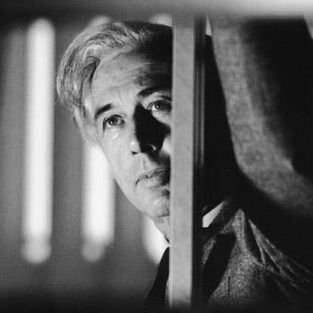
RIP David Lynch (1946-2025)
I am in utter disbelief right now... Can't accept that he is no more... I don't have the words to describe how I feel.
We will never ever see anyone like him ever again..
Here is his advice to youngsters.

robertdee retweeted

“To divine beings… all is transparent, nothing dark, nothing resistant; every being is lucid to every other, in breadth & depth; light runs through light. And each of them contains all within itself, & at the same time sees all in every other… all is all & each all”
-Plotinus


robertdee retweeted

This is the dream… thousands of dollars of equipment, tooting on a bizarre doohickey, making music that sounds like frogs listen to it…
robertdee retweeted

⚡️IT'S OFFICIAL!⚡️
🍾The Scribe Lounge Labs 2024
🖥️ FREE online screenwriting festival
📅Nov 4th-15th
Now in its 3rd year, it's time once again to chat to a whole host of top industry pros about craft and career. And you're all invited!🙌
🎟️Ticket & schedule info coming soon

ALT Scribe Lounge Labs 2024. Free online screenwriting festival. Nov 4th to the 15th
robertdee retweeted

The paradox of poetry and information theory


'Paradoxes in Probability Theory and Mathematical Statistics' - Gábor J. Székely (1984, PDF):
archive.org/details/paradoxe…
Having a lot of fun with this one so far.

robertdee retweeted

THREADS will be on BBC4 Wed 9th October.
Check the schedule here. A brilliant nuclear-themed evening:
bbc.co.uk/schedules/p00fzl6b…


robertdee retweeted

7 eras. 1 love. 💔 Watch the trailer for #Timestalker and get ready for @AliceLowe's “triumph of the imagination” (@LWLies). Coming to UK & Ireland cinemas October 11.
robertdee retweeted
Handed my vacation videos to an AI for auto editing, and now I'm pretty sure I'll have nightmares for life 🤯


