

You are here, I am not. Founder at Kuvera. Wealth at CRED.
Joined March 2019
- Tweets9.3K
- Following299
- Followers4.6K
- Likes2.8K



Pinned Tweet
Millions of young Indian investors skip mutual funds (MF) entirely, believing they can generate massive, consistent outperformance by day-trading weekly options (F&O) on the Nifty or Bank Nifty.
SEBI’s data is stark and unyielding: over 90% of individual traders in the F&O segment lose money, with the average loss running into lakhs. Retail traders are bringing human emotion and basic charts to a highly leveraged game dominated by institutional algorithmic setups and high-frequency trading desks.
They treat trading like a lottery. A few early wins create an illusion of skill, causing them to scale up their capital. When a single volatile market gap-up or gap-down wipes out their entire trading account, they realize too late that they didn't just fail to beat the index—they lost the core principal required to invest in it.
In contrast, the average investors MF portfolio on @Kuvera_In is at ~11% XIRR, almost 4-5% more than FDs post-tax. Long term compounding and punting have very different outcomes. Choose wisely.

A week where India VIX jumps 10%+ AND Nifty 50 also gains 5%+ is rare. The market is charging in while fear keeps climbing. I pulled every such week since 2008 to see what came next.
The rally usually continues for a month, then it's a coin flip with a fat left tail.
1 month later: Nifty median +4.0%, 55% of episodes positive (any random week: +1.0% median, 60% positive). The bounce extends.
3 months later: median -1.1%, only 45% positive (baseline: +3.1%, 64% positive). Below average and much wider.
The split: 4 of the 12 episodes sit in 2008. Those delivered -16%, -11%, -44% and -7% over 3 months. Ex-2008, the other seven went +19%, +27%, -1%, +3%, -3%, +15%, +6% (median +5.6%, 5 of 7 positive).
The mechanics make sense. A violent rally on a rising VIX usually means a sharp relief bounce off a fear spike, or a momentum surge priced with event risk still on the board. If the fear was real (2008, 2011), the rally fails within a quarter. If it was a mispricing (2009, 2014), you get a moonshot.
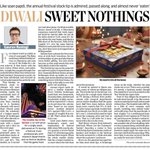
Diwali stock picks have a lot in common with soan papdi. They arrive every year, get passed around with gusto, and are probably best left untouched 😉
My playful take in @EconomicTimes
Happy Diwali 🪔

On Dhanteras, people pray to Kuber, the god of wealth. Also known as Kubera or Kuvera.
You can see why I like this festival.
Happy Dhanteras!
And here is a little something extra special from @CRED_club
app.cred.club/k63y/8pern43r

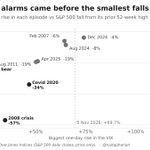
The VIX just saw its 3rd largest daily jump since 1990. History says the market bounces back 13.2% on average after shocks like this.
But there is a massive catch built into the data. The wolf, when it comes, rarely sets the alarm off first. Read more:
gauravrastogi1.substack.com/…


Gaurav Rastogi retweeted

So CRED is offering 6 months Hilton Diamond Membership for card payments over 3 lacs.
That is wild.


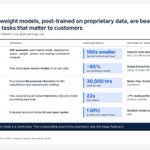
internalise this. 99% (or maybe more 😉) of what an org does is served better with on-prem specialized small models.
bullish $PLTR

Gaurav Rastogi retweeted

This @Android UI update to put the google bar widget on all home screens by default seems a bit desperate tbh 😅

Gaurav Rastogi retweeted

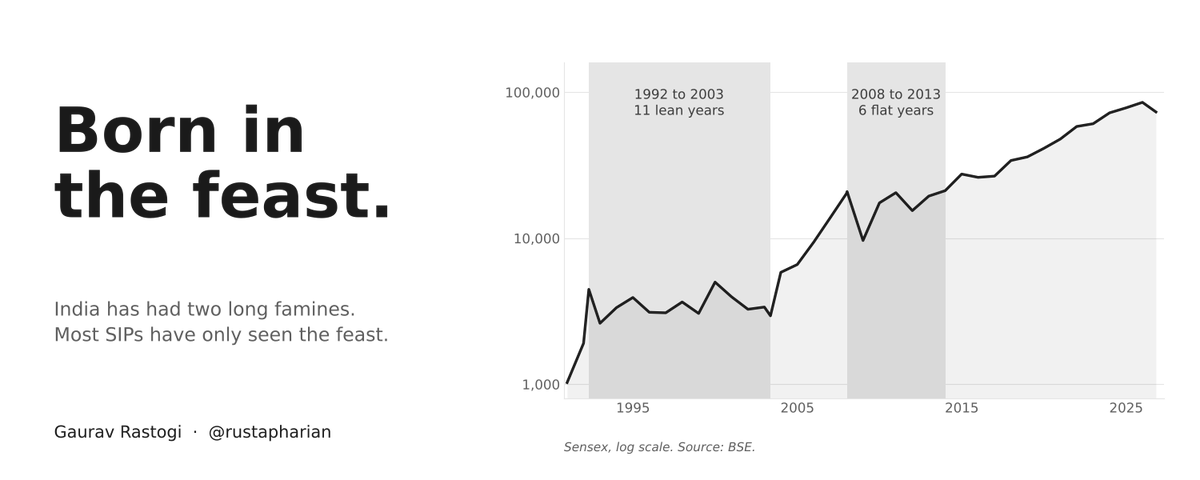
We accept that childhood shapes the adult. The research says an investor’s first markets do much the same. They set what feels normal.
My November note, The Final Call, is about that last step.
substack.com/@dskinvests/not…
🤖 Made with AI

AI is exposing how much of what fund managers research, report, and charge for is becoming obsolete. The biggest threat to active management is to persist on investing the way we always have.
Mercer's 2026 survey found 55% of managers use AI in their investment process, mostly for research. Very few let it touch portfolio construction end to end. Meanwhile, 79% of US large-cap funds trailed the S&P 500 in 2025 (SPIVA).
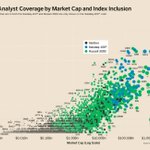
Thousands of sub-$1B US stocks have zero to five analysts. The mega caps have fifty to seventy-five.
Information edge exists. It just lives where institutions find coverage unprofitable.
The analyst coverage curve explains why active funds struggle in large caps. Seventy analysts already pick apart every $NVDA earnings call. Your edge there is close to zero.

S&P 500 P/S is still elevated at ~3.5x

S&P 500 P/S used to be ~0.5. Dot com mania peaked just above 2x. Now it is ~3.5.
To me, the bet that US will continue to capture a larger share of global profitability and thus improve margins is fully priced in at 3.5x times sales.
Temper your expectation of future S&P returns especially if you have just started investing globally.


Gaurav Rastogi retweeted

This is the reason why I choose a broad market, low cost index fund.
One is almost guaranteed to remain in Quartile 2 over long periods of time and even Q1 sometimes but never Q3 or Q4.
Only you understand this basic concept you will never pay 1% a year to your active manager🤩

Comparison across fund categories from peak of the market in 2024 till date…
Source: lnkd.in/p/deJiRbQ4


