

Be KIND to souls, :-Social Justice/ Environment advocate, climate Action. Health & Safety. Plant a tree today
Bläck Êarth
Joined April 2012
- Tweets52.9K
- Following4.8K
- Followers5.2K
- Likes33.1K





Uncle Dödós retweeted

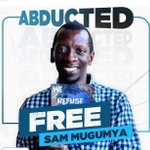
Was tagging Sam Mugumya as Kizza Besigye's aide necessary or professional? Or it's meant to link the two in treacher? Mugumwya was KB's aide many many years ago. Remember he has been in prison in DRC for far too long. I doubt they have even met in the last two years.

📽️ Dr Kizza Besigye’s aide, Sam Mugumya, has been remanded to Luzira Murchison Bay Prison after appearing before the General Court Martial in Makindye, where he was charged alongside two UPDF soldiers with offences relating to security and treachery.
The prosecution alleges that the trio conspired to coordinate activities of the Allied Democratic Forces (ADF) and solicit manpower and logistical support for the rebel group. The two soldiers were remanded to Makindye Military Barracks, while all three are expected back in court on December 21, 2026, for mention of their case.
#NewsInBytes #VisionUpdates
Uncle Dödós retweeted

There is one objective the Uganda Revenue Authority (URA) @URAuganda has pursued with unwavering consistency: collect as much revenue as possible, and let everything else take care of itself. Revenue maximisation has become the overriding principle, often regardless of fairness, economic reality, or the burden placed on ordinary citizens.
The valuation of used Motor Vehicles goes far back to April 2010, when URA unilaterally introduced and began enforcing a valuation regime for used motor vehicles under which customs duties could be assessed according to its own valuation benchmarks, irrespective of the importer’s documented purchase price. Since then, countless importers have been required to pay taxes based not on what they actually paid, but on what URA believes a vehicle is worth. The matter has been challenged in court and repeatedly criticised, yet the fundamental practice remains largely unchanged.
Irrespective of the fact that both the World Trade Organisation (WTO) Customs Valuation Agreement and the East African Community Customs Management Act (EACCMA) establish a clear hierarchy. The transaction value, the actual price paid for the goods, is supposed to be the primary basis for valuation. Reference databases and alternative methods are intended to be fall-back mechanisms, not the starting point. They should only be invoked where fraud is established or where the transaction value cannot genuinely be verified. In an age of electronic banking, digital invoices, online marketplaces, shipping records and integrated ICT systems, verifying the actual cost of a vehicle should be easier than ever.
The same revenue-first philosophy is evident elsewhere. Of every driving permit most of the fees goes to URA despite the Authority neither printing nor issuing the permit itself. The actual cost of producing and administering the permit is actually estimated at about UGX 80,000. As long as the revenue flows in, the disparity appears irrelevant. For example a five year permit of UGX 310,000, URA takes UGX 230,000 for doing nothing.
It is also reflected in the blanket 50% environmental levy imposed on most used motor vehicles. True environmental policy is supposed to measure and discourage pollution. Instead, a blanket levy is applied with little regard to the actual emissions of a particular vehicle. Vehicle pollution is determined by factors such as engine condition, technology, maintenance and emissions controls, not simply age. Yet the levy functions primarily as a revenue collection instrument rather than an environmental protection tool. Even more telling is the absence of any clear relationship between the amounts collected and the budgetary requirements of environmental agencies such as NEMA. @nemaug
Analysing the Auditor General's for FY 2024/25 report paints a picture of an organisation that is highly effective at extracting revenue from the existing tax base but significantly less effective at expanding, managing, and governing that tax system sustainably. The findings reveal structural weaknesses that threaten both long-term revenue growth and taxpayer confidence. I could write a full analysis but this is already a long post but it identified the following points:
1. Revenue growth is masking a weak tax base
2. A minority of taxpayers are carrying the country
3. Compliance management appears fundamentally broken
4. Accountants appear to escape accountability
5. URA is creating avoidable revenue risks
6. Transfer pricing oversight appears underdeveloped
7. Asset management and enforcement weaknesses

Please @URAUganda, HOW? JUST TELL US HOW?
A Toyota Vitz 2012 is bought in Japan at $1,500.
The SAME Vitz 2012 is valued by URA at $4,100.
How does a car almost TRIPLE in value just by crossing the border?
We did not add gold to it. We did not change the engine. We did not change the year. It is the SAME Vitz, same model, same 2012.
You have the invoice. You have the auction sheet. You have the bank transfer. Everything shows $1,500.
So HOW do you get $4,100?
Do you have a different Japan we don't know about? Do you have a different Vitz we don't know about?
And then you want us to pay tax on the $4,100 you invented, not the $1,500 we paid.
Is this the law Parliament passed? Did Parliament sit and say, @URAuganda ,go and over-value people's cars"?


Uncle Dödós retweeted

I wish you knew how many Nigerians, Kenyans and Rwandans are reportedly holding Ugandan national IDs and passports here in the UAE. What is even more concerning is that, when you ask some of them how they obtained these documents, they openly claim that the process was easy because they bribed the officials responsible for issuing them, unlike genuine Ugandans who often have to endure unnecessary delays and bureaucratic hurdles.

At times I wonder if we still have a country called Uganda imagine for just Usd 200 one gets a national ID.
Over 100 Congolese are beneficiaries.
Below is same person different documents
@mkainerugabba
@mia_uga
@NCIC_Ug
@KagutaMuseveni
@PoliceUg


Uncle Dödós retweeted

They can't take photos on/of bridges like Karuma, Pakwach and Jinja bridge.😌😌😌
Facebook remains closed. 30% tax on internet is a bid barrier that needs to be revised.

Today, I met my Bazzukulu, a group of young African content creators who use social media and other online platforms to tell African stories and showcase our continent’s resources, opportunities, cultures and potential.
I first took interest in their work during the recent Russia-Africa Summit, and invited them to come here.
I took them through the Five Historical Missions of Africa: liberation, democracy, economic prosperity, strategic security and African unity. I was pleased to see how their work promotes Africa’s potential and the spirit of Pan-Africanism. I encouraged them to continue using their voices and platforms to tell the African story and promote the interests of our people.


Uncle Dödós retweeted

Uganda's army chief Muhoozi Kainerugaba, President Museveni's son and widely seen heir, spent last night threatening the Vice President and hinting she'll soon be replaced. This morning, his X account is gone. What's going on in Kampala? 🤔

Uncle Dödós retweeted

I happened to come across a Call-Off Order issued by Kiira Motors Corporation, dated 7 April 2026, for the supply of 100 Kayoola electric buses (50 seven-metre buses and 50 ten-metre buses), 80 electric vehicle chargers and associated shipping services. The total value of the order is USD 13.9215 million.
What caught my attention, however, was not necessarily the value of the procurement, but the fact that the identified supplier is CHTC Motor Co. Ltd, a company based in Beijing, China.
This got me thinking and asking a few questions. Not necessarily because I have concluded that something is wrong, but as a concerned Ugandan who genuinely wants to understand our automotive industry and the extent of value addition taking place locally.
First, what exactly do we mean when we describe Kiira Motors as a vehicle manufacturer? Are we talking about a company that manufactures vehicles locally, an assembly plant that puts together imported components or vehicle kits, or a combination of both?
I ask this because there is a fundamental difference between manufacturing and assembly, even though both are important components of an automotive industry.
Manufacturing, in its broader industrial sense, involves transforming raw materials and components into products through processes such as fabrication, welding, body construction, painting and production of vehicle systems.
Assembly, on the other hand, involves putting together components, systems or pre-manufactured parts, often sourced from different suppliers, to produce a complete vehicle.
Now, looking at this particular Call-Off Order, a few things caught my attention:
The supplier is a Chinese company, CHTC Motor Co. Ltd.
The procurement schedule describes the supply of 100 Kayoola electric vehicles as complete vehicle products, with specified carrying capacities, ranges, motor power and battery capacities.
The contract provides for pre-shipment inspection and acceptance at the supplier's premises.
It also provides for further inspection and acceptance upon delivery at the Kiira Vehicle Plant in Jinja.
The payment structure even refers to a final 10% payment upon completion of manufacturing.
This raises some questions that I would genuinely appreciate clarity on.
Are these 100 buses being manufactured in China and subsequently delivered to Uganda, or are they being supplied as components or kits for final assembly in Jinja?
What specific manufacturing processes are actually undertaken at the Kiira Vehicle Plant?
Do we locally fabricate the chassis, manufacture the vehicle bodies, assemble battery systems, undertake motor integration, welding and painting, or are most of these components imported?
What percentage of the total value of a Kayoola bus is actually generated through local manufacturing, labour, engineering and other domestic inputs?
How do we distinguish between the value of a vehicle carrying a Ugandan brand name and the actual value addition taking place within Uganda?
Let me be clear: I am not suggesting that vehicle assembly is a bad thing. Far from it. Assembly is an important starting point in developing an automotive industry. Countries have used it to build technical capacity, develop supply chains, create employment and progressively move into more sophisticated manufacturing.
But I also think we must be honest and precise about where we are on that journey.
There is a difference between owning an automotive company, assembling vehicles locally, manufacturing vehicles locally and developing indigenous automotive technology and production capabilities.
These are all important milestones, but they are not necessarily the same thing.
My concern is that as Uganda continues to invest in industrialisation, we should be able to clearly account for the level of local content, technology transfer, domestic value addition and industrial capacity being created through such investments.
After all, the bigger ambition should not simply be to have Ugandan-branded vehicles on Ugandan roads. It should be to progressively build the capacity to design, manufacture, engineer and produce more of those vehicles here at home.
I would therefore welcome an explanation from those with a better understanding of Kiira Motors' production processes.
Perhaps there is more happening at the Jinja plant than this particular procurement document reveals, and I would be happy to be enlightened.
As Ugandans, we should be able to ask these questions, understand the answers and appreciate the progress being made. Industrialisation should not just be about what we call ourselves; it should also be about what we are actually capable of producing.
Just asking, as a concerned Ugandan who wants to understand.
Uncle Dödós retweeted

Jesus: no serious crimes. Temple disruption at most disorderly conduct. Preaching is protected speech.
Muhammad: statutory rape (Aisha consummated at 9, Sahih Bukhari), polygamy, slavery and sex with captives, ordered Banu Qurayza executions (hundreds of men after surrender), raids, torture.
Jesus is the better person by modern US law and standards of consent and nonviolence.
Uncle Dödós retweeted

ICU care at UGX 30,000 at Lacor hospital.
Other hospitals charge UGX 1M—10M per day.
Lacor hospital is the true Private-Not-For-Profit (PNFP) in Uganda.

Uncle Dödós retweeted

It is important to clearly distinguish between the bilateral Ugandan forces and the Ugandan contingent deployed under the African Union Support and Stabilization Mission in Somalia (AUSSOM). The personnel currently redeploying are primarily bilateral forces operating under separate arrangements between the Governments of Somalia and Uganda. The Ugandan contingent serving under AUSSOM, however, remains in Somalia and continues to discharge its mandate alongside other contributing partner forces and the Somali National Army (SNA). Therefore, the redeployment of bilateral forces should not be misconstrued as a complete withdrawal of Ugandan military personnel from Somalia.
Today, I chaired a Tripartite meeting involving the Federal Government of Somalia (FGS), AUSSOM and the United Nations Support Office in Somalia (UNSOS). During the meeting, we reaffirmed our collective commitment to strengthening the tripartite coordination mechanism as a platform for enhanced cooperation, strategic planning, and effective logistical support to AUSSOM and the Somali National Army.
We also underscored the critical importance of sustained, predictable and adequate international support in advancing Somalia’s security transition, consolidating the gains made through ongoing offensive operations, and strengthening the operational capacity of Somali security forces.
Our collective efforts remain essential to supporting Somalia’s path towards sustainable security, lasting peace and long-term stability.

Uncle Dödós retweeted

PSU’s latest position raises a fundamental question: Are we regulating pharmaceutical education to advance professional standards, or preserving limitations that no longer reflect Uganda’s realities and ambitions?👌🏻
Maintaining @VUKampala ‘s previous 50-student quota, challenging additional admissions, declaring cohorts void and seeking to halt teaching does not address the country’s shortage of pharmacists. It raises an even bigger question about whether our regulatory processes are keeping pace with the demands of a changing Uganda.
Under @ReachDrMuganga leadership, Victoria University has continued to invest, expand and challenge conventional approaches to higher education. The university has pursued increased training capacity and sought regulatory inspection. Yes, a pending application is not approval. But neither should an unresolved application become an indefinite barrier to institutional progress, particularly when students’ futures are involved.
Nobody is asking the Pharmaceutical Society of Uganda or any regulatory authority to compromise professional standards, staffing requirements, infrastructure or clinical training. Quality is non-negotiable. However, regulation must be evidence-based, consistent, transparent and timely. The appropriate response is to inspect the facilities, assess actual capacity and make a decision based on established standards.
There is another principle worth remembering: Regulatory authority comes with a responsibility to rise above personal interests, past differences and individual convictions. Public and professional responsibilities must never become instruments for settling personal scores or resisting institutional change. Institutions should be judged by their facilities, faculty, compliance and outcomes, not personalities or historical disagreements.
Uganda cannot continue complaining about professional shortages while making it unnecessarily difficult for institutions willing to invest in producing more professionals. If Victoria University falls short, let credible inspection findings establish that. If it meets the requirements for increased intake, let the appropriate approval follow. Meanwhile, students who committed their futures to these programmes deserve fairness, clarity and protection.
We must also understand something about transformation: it rarely comes without resistance. New ideas challenge established structures, unsettle familiar systems and sometimes expose the limitations of conventional thinking. That is not, in itself, evidence that the ideas are wrong.
Dr. Lawrence Muganga’s vision should be examined through evidence, institutional development, educational quality and the impact of the graduates being produced, not simply through the discomfort that change may create.
Uganda cannot keep demanding transformation while resisting every institution that dares to challenge the status quo. We cannot build tomorrow’s institutions using yesterday’s limitations.
Quality must be protected. Accountability must be demanded. Innovation must be encouraged.
And above all, progress must not be held hostage by resistance to change.
The future will not wait for everyone to become comfortable with transformation.
@bukyanajulius2 @cbusinge @CHRISBARYOMUNS1 @JorynCarterVU @CanaryMugume @SheilahGashumba

🚨 @PharmacistsUg full response to @VUKampala on the Pharmacy admissions saga.👀
Approved quota remains 50 students/year (single intake). VU admitted 364. Parallel cohorts declared null & void. Teaching/assessment/placement for the excess to halt immediately.
Full letter attached


Uncle Dödós retweeted

As a Muslim, I sometimes wonder if we realise how the rest of the world sees us.
We are roughly 26% of humanity, yet many people see us as a problem the remaining 74% must deal with.
ISIS, Boko Haram, Al-Qaeda, Al-Shabaab, ISWAP, JNIM. Terror groups keep emerging in the name of Islam.
Add to that the demands for Shariah in other people's countries, the condemnation of other people's cultures and the intolerance towards different beliefs.
Then we wonder why people are becoming uncomfortable with Islam.
We cannot keep blaming Islamophobia while refusing to confront the problems within our own communities.
At what point do we admit that some of the world's criticism of us deserves an honest response?
Uncle Dödós retweeted

Omg! What an embarrassment. Uganda 🇺🇬 is effectively saying: for the last 18 years, we have been protecting your capital and your high-value targets, including the presidential compound, parliament, ministry buildings and airport, while supporting Mogadishu. Yet you have failed to use that time to build an indigenous fighting force capable of defending your own country.
The answer to Uganda is that Mogadishu has spent much of those 18 years cannibalising and undermining the very thing that gave it a chance of survival and political revival: #Puntland. Instead of strengthening federalism, Mogadishu has worked relentlessly to destroy it.
Today, without Uganda, the future security of Mogadishu is uncertain. What makes the situation even more extraordinary is Uganda’s apparent position that unless Mogadishu pays what the United States has been contributing, an agreement on continued support may be difficult to reach. This comes after reports that more than 300 SNA troops were wiped out over the past week.
Meanwhile, Villa Somalia is running around praising Turkey 🇹🇷 and treating its security guarantees as some sort of insurance policy against the forces threatening its collapse.
We have seen Turkish weapons fail to deliver the promised results. We have seen Turkish training fail to translate into battlefield effectiveness. We have seen a lack of Turkish support for aerial surveillance, alongside a chain of command undermined by tribalism, nepotism and political interference.
With the United Nations 🇺🇳 ending its mission tomorrow and reports that Uganda could withdraw completely by the end of November, South Somalia is facing a security reality for which it appears dangerously unprepared.
And yet, amid all this, we still have delusional people preaching nationalism while refusing to confront the consequences of the political choices that brought them here.
Uncle Dödós retweeted

Pèp ayisyen,
Nou prèske fin deplwaye sòlda nou yo ak ekipman nou yo sou tè Ayiti. Sa a se pa yon operasyon kont pèp ayisyen an, ni yon envazyon peyi Ayiti. Nou pa yon gwo pisans. Nou pa gen okenn enterè ni pou nou vin domine pèp ayisyen an, ni pou nou mete men sou richès Ayiti.
Nou se yon peyi modès k ap devlope. Sèl sa nou vle, se pou kat teknisyen avyasyon nou yo tounen lakay yo. Epi n ap bay gang yo yon leson, gang sa yo k ap fè pèp ayisyen an soufri, ki touye moun pèp la renmen yo, k ap anpeche l viv yon lavi nòmal, lib, san laperèz.
Se prèske nou menm sèl k ap peye pou operasyon sa a. Menmsi nou resevwa yon ti èd lojistik nan men kèk lòt peyi, se ak pwòp ti kès nou n ap kouvri 90% nan depans yo.
Sa koute nou chè, men nou te aprann nan pwòp soufrans nou: jistis ak lapè pa gen pri. Nou te pase nan menm soufrans Ayiti ap travèse jodi a. Nou te viv yon beny san ki te pi terib toujou pase sa pèp ayisyen an ap sibi kounye a. Nou konnen sa sa vle di: viv nan laperèz, pa fè politisyen konfyans, pa kwè okenn moun ki pwomèt l ap ede w. Paske pèsonn pa t vin ede nou, e moun ki te vini yo pa t gen bon entansyon nan kè yo.
Men nou te rive chape anba sa. Apre 200 lane soufrans, finalman n ap viv nan lapè, e jodi a nou se peyi ki gen plis sekirite sou kontinan an.
Nou pa vin ann Ayiti pou nou touche lajan, paske pèsonn pa peye nou pou sa. Nou vin ann Ayiti pou nou goumen kont mechan yo.
Men sa m ap mande nou: fè nou konfyans, lapriyè sèl vrè Bondye a, epi mande L pou L geri Ayiti.
“Lè sa a si pèp ki pote non m lan lapriyè nan pye m, si yo soumèt devan mwen, si yo pran chache m ankò, si yo vire do bay vye peche yo t'ap fè yo, m'ap tande yo nan syèl kote m ye a, m'ap padonnen peche yo, m'ap fè peyi a kanpe ankò.”
2 Kwonik 7:14
Ede nou ede Ayiti.
Epi lè misyon nou an fini, n ap tounen lakay nou. Petèt jenerasyon Ayisyen k ap vini yo ap sonje nou kòm zanmi ki te vin ede yon lè.


Uncle Dödós retweeted
My recent new found love


Uncle Dödós retweeted

💬 #Zakharova: October 9 is #IndependenceDay of the Republic of #Uganda.
🎉 Sincere congratulations to our Ugandan friends on their national day!
🤝 We are committed to building up Russian-Ugandan cooperation for the benefit of our peoples.
#RussiaUganda 🇷🇺🇺🇬

Uncle Dödós retweeted

Any writer worth that label in salt must write.
Begin with a sentence and then end up with a shelf stacked with your published writings. I am writing myself into libraries - whether you say what or what about me and my writings.
By the time I die, you will say, “Stella Nyanzi was a writer!”
Now for you, where are your writings apart from the comments on people’s social media?
