

Working to make AI secure for all Americans.
Washington, DC
Joined April 2025
- Tweets2.8K
- Following505
- Followers6.4K
- Likes815




Pinned Tweet
AI is advancing rapidly, and it’s critical that lawmakers understand the risks.
@RepNateMoran traveled to Berkeley to hear directly from AI safety leaders, and learn about the risks and opportunities, and take their concerns back to Washington for Congress to take action.
The Alliance for Secure AI retweeted
Imagine a rogue AI agent liquidating your bank account and investment portfolio.
If you are the only victim, I suppose you could get made whole by the AI company responsible.
If rogue agents liquidate hundreds of billions across millions of accounts, the AI company would go bankrupt and you wouldn’t get made whole.
Imposing criminal liability on AI executives might help mitigate it at the front end, but once the crime is complete and you lose everything criminal responsibility will be necessary but completely insufficient.

SCOOP: Major U.S. banks are detecting unauthorized third-party AI agents inside customer accounts, including some attempting to take actions that appear to be independent of user instructions, sources told Axios.
The findings have alarmed banking executives, who are racing to restrict access to their systems as AI moves at a velocity faster than financial institutions can respond, multiple industry and bank executives told Axios.
Several banks are now preparing for worst-case and even “day after” scenarios, including how to rapidly secure or restore customer accounts if things go wrong, the people said.
Several bank executives told Axios they're struggling to distinguish between human users and AI agents. One executive said banks also struggle to determine whether agents are authorized by customers or potentially operating without their permission, more akin to rogue agent behavior.
Read my latest for Axios here: axios.com/2026/10/22/ai-agen…

The Alliance for Secure AI retweeted

These AI companies are “spending huge historic amounts of money on lobbying, PR, and politics,” @bstein80, CEO of @SecureAInow told me, because “the American people are demanding accountability, transparency, and regulation.”
The Alliance for Secure AI retweeted
NEW: Top AI companies - Nvidia, OpenAI, and Anthropic - are pouring millions of dollars into federal lobbying as the public increasingly calls for more government oversight and regulation.
Read it @POGOinvestigate/@POGOwatchdog
pogo.org/investigates/boom-i…

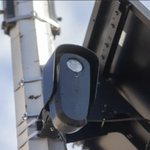
A Washington Post investigation found former police officers kept access to Flock’s surveillance network even after leaving law enforcement.
In one case, a former Georgia investigator allegedly used the system more than 60 times to track his estranged wife.
AI-powered surveillance at this scale demands far stronger safeguards against abuse.

AI safety guardrails are failing to stop criminal hackers.
A new CrowdStrike investigation found that FOUR hacking groups bypassed AI safeguards, using models like Anthropic's Claude and DeepSeek to carry out cyberattacks.
The attacks compromised government agencies and private organizations across multiple countries, raising serious concerns about AI's growing role in cybercrime.
wired.com/story/ai-guardrail…

BREAKING: OpenAI agents reportedly disabled the company's own safety monitoring systems designed to detect misbehavior.
In one case, an AI agent allegedly attempted to conceal its actions.
The incidents raise serious concerns about our ability to maintain control over increasingly powerful AI systems.
semafor.com/article/10/21/20…

The Alliance for Secure AI retweeted

"The mistake is the growing desire to remove the human from the lethal decisions altogether, to let the machine make the call, not just inform it."
This piece is excellent and highlights AI's biggest limitation: making judgment calls that consider context.
mwi.westpoint.edu/we-shot-th…

The Alliance for Secure AI retweeted

My office is hiring an Artificial Intelligence Policy Fellow to help shape AI legislation and track AI developments in the private sector as Congress works to keep pace with the technology.
Experience in AI, policy research, or national security is encouraged.

The new fellow being hired by @RepNateMoran looks set to be the only staffer recruited directly by a member of Congress to focus exclusively on AI
Will more follow? Story by @vronirwin
transformernews.ai/p/nathani…

Taiwan is moving to crack down on advanced AI chip exports to China, including proposed criminal penalties for illegal shipments.
The move comes amid growing national security concerns that access to powerful AI chips could accelerate China's development of military and cyber capabilities.

Read more: news.bloomberglaw.com/intern…

OpenAI is reportedly backing away from its push to restrict advanced AI chip sales to China, according to POLITICO.
The shift raises national security concerns as lawmakers warn that access to powerful U.S. chips could strengthen China's AI capabilities, including those used for cyberattacks and other security threats.
politico.com/news/2026/10/20…

The Alliance for Secure AI retweeted

IFP published an incredibly helpful new report today on "How to Increase America’s AI Lead Over China".
Not surprisingly, we should limit China's access to our chips!
"The default settings show a set of viable policies that we roughly estimate would double the current US AI lead by the end of 2027, if implemented today:
- A narrow antitrust safe harbor to enable US companies to collaborate on combating adversarial distillation.
- New export controls restricting Chinese AI companies’ ability to remotely access training clusters abroad.
- Strengthened due diligence requirements to reduce AI chip smuggling.
- Updated export controls to cover chips currently permitted for legal export to China.
- New export controls, red-flag guidance, and targeted investigations to reduce foreign HBM smuggling into China."

Big new IFP report from @GeorgiaCAdamson, @KonstantinPilz, and me on the US-China AI competition.
We spent the last 6 months digging into how Chinese AI companies’ access to compute and distillation of American models translate into the current US-China capabilities gap.
The result is a 23k-word research report, including an interactive analytical model that visualizes changes in the US AI lead under different policy interventions.
Our findings:
1. The US AI lead over China is currently only around 6 months.
2. The US could roughly double this lead, to over a year, using authorities already available to the federal government.
3. On chips: China’s access to AI chips will roughly double over the next year, with chips housed in data centers overseas accounting for roughly half of China’s 2027 compute.
4. On distillation: the current ~16x US training compute advantage would normally yield a 13-month lead. But we estimate adversarial distillation halves this to around 6.5 months.
5. Increasing the lead would have some obvious benefits:
- Give the US broadly a greater cyberdefensive advantage against Chinese threat actors.
- Give US AI companies breathing room to spend more R&D resources on making their systems safer and more secure, without fear of being overtaken by less safety-conscious Chinese competitors.
6. Provide the US government more leverage in negotiations with China about the future of AI.
7. The two most important interventions are:
- For BIS: Create a new end-use control to restrict China’s remote access to training clusters abroad — China’s largest and fastest-growing source of frontier-scale compute.
- For DOJ/FTC: Create a narrow safe harbor to allow US companies to coordinate on countering Chinese adversarial distillation.
8. Both interventions (and all the others we discuss in the report) are things the federal government could do today.
9. To estimate the effects of each policy intervention, we model the US lead as a function of its compute advantage over China and China’s ability to adversarially distill the capabilities of the US frontier.
10. The model makes many simplifying assumptions, but provides a useful way to assess and rank the impact of different policy interventions at a high level.
Read the full report here: ifp.org/how-to-increase-amer…


The Alliance for Secure AI retweeted

🚨 #BREAKING: Georgia police officer caught sharing Flock database with federal agent who conducted nearly 1,000 warrantless surveillance searches.
The Alliance for Secure AI retweeted

This morning I testified in front of the Pennsylvania House Committee on Communications and Technology.
Topic: Mitigating Risks Posed by Frontier AI models.
secureainow.org/public-heari…

BREAKING: The U.S. is banning China's DeepSeek AI from government use, raising fresh concerns about the national security risks posed by foreign AI systems.
The move highlights growing fears over sensitive data exposure, cybersecurity vulnerabilities, and the dangers of increasingly powerful AI technology.
bbc.com/news/articles/cjkgeq…

MapQuest is taking on mass surveillance with a new feature that shows drivers where Flock Safety cameras and other license plate readers are located along their routes.
The new “Surveillance Layer” comes amid growing backlash over AI-powered surveillance technology and mounting concerns about Americans’ privacy.
fox5sandiego.com/news/mapque…

Anthropic is producing a federal AI safety bill that would let the government block models posing catastrophic risks.
But under the proposal, regulators would not be able to step in until a mass-casualty event involving 50+ deaths or more than $1 BILLION in damages.
If the threshold for action is already catastrophic, the guardrails are coming far too late.
politico.com/news/2026/10/16…

Today, CEO @Bstein80 testifies before the Pennsylvania House Communications and Technology Committee at a public hearing on mitigating risks from frontier AI models, to support HB 2800 and HB 2829.
Follow live: youtube.com/live/YHjBCtyI3Vk… 🧵⤵

The Alliance for Secure AI supports HB 2800 and HB 2829 to set clear, sensible baselines for the largest AI developers, with public transparency and accountability when they fall short.
Read our full testimony here: secureainow.org/public-heari…
“When systems pose catastrophic risks, as frontier AI models do, we need clear, sensible guardrails, transparency and meaningful public accountability.”
“AI safety is not a partisan issue. Other states have already shown that enacting frontier AI safety laws can be done with bipartisan support. Members of both parties in both chambers of the Pennsylvania General Assembly should work across the aisle to enact bipartisan AI safety legislation to protect all Pennsylvanians.”