
post abt ufc
- Tweets150
- Following57
- Followers12
- Likes87







ALT Billions of years ago, a river flowed across this scene in Mawrth Vallis. Like on Earth, these river beds can get filled up with rocks that are cemented together. After Mars became a colder, drier place and the river disappeared, the rocky river bed remained.


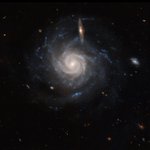
ALT Otherwise known as LEDA 3910 and 2MASX J01061402+0334278, this galaxy is almost face on, allowing its lazily winding spiral arms to stretch across the new Hubble image. In the foreground, a smaller edge-on galaxy seems to bisect the upper portion of UGC 678. “Just like humans, stars have a natural lifecycle; they are born, grow up, and eventually grow old and die,” the Hubble astronomers said in a statement. “Studying this stellar life cycle — usually referred to as stellar evolution — is an important topic for astronomers.”

ALT About a quasars quasar is an extremely luminous active galactic nucleus. It is sometimes known as a quasi-stellar object, abbreviated QSO. This emission from an AGN is powered by a supermassive black hole with a mass ranging from millions to tens of billions of solar masses, surrounded by a gaseous accretion disc. How are they formed A quasar is formed when a super massive black hole at the centre of a galaxy has enough material around it to fall into the accretion disc to generate the energy to power it. The only galaxies with enough material to create a quasar are young galaxies and colliding galaxies.Dec