

The KL–Auckland Institute for trains, density, housing, zoning, induced demand, anti-carpark agitation & unsolicited urban policy with mamaque characteristics
Tāmaki Makaurau/Kuala Lumpur
Joined July 2009
- Tweets27.6K
- Following2.7K
- Followers1.1K
- Likes42.5K








Damian retweeted

I seriously pity non problematic muslims yang kena stereotype and hated equally bcs of this type of muslim when abroad.
I remember me and my friend dkt Lisbon dulu pegi kedai vegan tapi dia suruh keluar sebab kawan aku pakai tudung sbb dia takut spesis macam ni buat hal lah

Tidak tahu diri!
Perempuan Melayu Muslim asal Malaysia ini bermigrasi ke Finlandia, dan pergi ke restoran-restoran lokal sambil melakukan inspeksi sertifikat halal seolah-olah dia adalah pejabat berwenang.
Kalau kau pergi ke negara orang, jangan mengatur-ngatur budaya orang! Kalau engkau mau makan halal, sila balik negara kampang kau! Jangan merusak budaya dan peradaban negara orang lain!
Damian retweeted

New Zealand century of Humiliation.
The local population considers this a poor omen of the government to come. Furthermore Hipkins must resign


Damian retweeted

The US really only has 4 walkable cities
1) NYC
2) Chicago
3) Boston
4) San Fran
Makes sense when you realize they were all built before the advent of the car
As someone who bore the brunt of this, not surprising

A study by Iman Research found that racial inequality has prompted many Chinese Malaysian youths to rely on family support and personal efforts rather than public institutions to secure opportunities.
The report, based on interviews with 116 respondents, identified unequal university access and the 90% bumiputera quota for matriculation programmes as key concerns.
📷: Bernama
🧵1

70

Damian retweeted

Water is wet?
New economic policy right? This is what the bhumi putra want, right? – at Samford Village, Queensland
A study by Iman Research found that racial inequality has prompted many Chinese Malaysian youths to rely on family support and personal efforts rather than public institutions to secure opportunities.
The report, based on interviews with 116 respondents, identified unequal university access and the 90% bumiputera quota for matriculation programmes as key concerns.
📷: Bernama
🧵1


Damian retweeted

O'brien. Is this your brand ambassador ah?
Can someone help tag this company.


Punca pergaduhan Zarina Anjoulie atau Anju dengan seorang wanita Cina di kedai makan rupa rupanya bermula ketika Anju sedang menjalani rakaman podcast di situ. Wanita Cina yang berada di belakangnya dikatakan bising sehingga Anju menegur dan memintanya diam. Namun, wanita itu membalas teguran tersebut sebelum Anju turut membalas menggunakan bahasa Cina. Apa yang mencuri perhatian ramai, rupa rupanya Anju pandai bertutur dalam bahasa Cina sehingga ramai yang tidak menyangka kebolehannya itu.


Damian retweeted

The Hokkien form 33% and constitute the majority of the Malaysian Chinese. Second goes to the Hakka. Cantonese only comes in third.
So not every Malaysian Chinese speaks fluent Cantonese.
So can we scold Hongkies who visit Malaysia but cannot speak Hokkien?


Damian retweeted

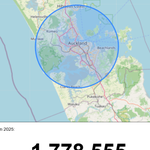
Auckland house prices. An update.


NZ AND MALAYSIA MENTIONED!


#StationNews: The Symphony Centre development above Te Waihorotiu Station will go ahead after months of speculation about the precinct’s future.
But will proceed with a few changes.
Via The Post: thepost.co.nz/business/36111…

6
307
Damian retweeted

A point I emphasize again and again is that the relation between income and fertility is changing quickly, both within and between countries.
To make this point between countries, I take the total fertility rate (TFR) of up to 158 countries from the UN World Population Prospects and their GDP per capita from the Maddison Project, measured at purchasing power parity and in constant 2011 prices (that is, the data already correct for differences in price levels across countries and for inflation). I am not a big fan of the UN World Population Prospects, but this way nobody can accuse me of being selective with my sources.
Then I plot TFR against GDP per capita for 1950 (the start of the sample), 1985 (the midpoint of the sample), and 2022 (the last year in Maddison’s dataset).
The left panel includes all countries except the six Gulf oil exporters (Saudi Arabia, Kuwait, the United Arab Emirates, Qatar, Bahrain, and Oman), whose wealth comes from oil rents, not from their level of economic development. In the right panel, I also remove sub-Saharan Africa, a region with very poor data on TFR and GDP per capita.
Start with 1950 and 1985. Plot the two curves, and you will have trouble telling them apart. Countries with $2,000 of GDP per capita had 6.1 children per woman in 1950 and 5.9 in 1985. Countries with $5,000 had 4.3 in 1950 and 4.6 in 1985. Countries with $10,000 had 2.8 in both years. Countries got richer and had fewer children, but they moved down the same curve. In 1985, as in 1950, fertility dropped fastest between $5,000 and $10,000, and the typical country reached replacement (about 2.1 children per woman) only at around $14,000. Mexico, with $10,000 of GDP per capita, had 4.1 children per woman. Argentina, with $11,000, had 3.1.
And the relationship between TFR and GDP per capita held despite many other changes. For example, child mortality collapsed at every income level, literacy and life expectancy rose, again at every income level, modern contraceptive methods spread widely, and international organizations and local governments sponsored aggressive family-planning programs across Asia and Latin America from the 1960s. Nothing seemed to matter.
After 1985, the slope of the curve became much smaller (in absolute value) as the left end of the curve started falling quite fast while the right end of the curve barely changed. Interestingly, most of the fall came between 1985 and 1995, well before cell phones and social media (everyone’s favorite explanation) reached anyone outside a small elite of wealthy and highly educated persons.
At $2,000 of GDP per capita, fertility went from 5.9 children per woman in 1985 to 4.0 in 2022, a drop of 1.9 children. But at $20,000 of GDP per capita, fertility was 1.7 children per woman in 1985 and the same 1.7 in 2022.
Similarly, countries with 2.1 children per woman (roughly the replacement rate) were at $14,000 in 1985 but at $11,700 in 2022
Take Sri Lanka. Sri Lanka’s GDP per capita is $11,200, roughly the income at which the 2022 curve crosses replacement. According to the UN World Population Prospects, Sri Lanka has 2.0 children per woman in 2022, while the United States, with five times Sri Lanka’s income, has 1.7. The United States last had Sri Lanka’s income in 1923, when American women had about three children. And according to the most recent data from their national statistical agencies, Sri Lanka is in 2025 at 1.37 children per woman and the United States at 1.57. Sri Lanka has undershot American fertility by a considerable margin (yes, 1.37 is much lower than 1.57) a century before reaching American income.
I also decomposed the change in average TFR across countries into two parts. The first is the change from countries getting richer while moving along a fixed curve. The second is the change from the curve itself shifting, holding each country’s income fixed.
From 1950 to 1985, almost all of the fall in TFR comes from countries getting richer. Remember: the curve barely moved.
From 1985 to 2022, about 40% comes from countries getting richer and about 60% from the curve shifting down. That is the big surprise.
Is sub-Saharan Africa driving this result? Yes and no. In the right panel, we can see that the 1950 and 1985 curves barely change when we drop sub-Saharan Africa. Interestingly, the 2022 curve becomes almost flat. Outside sub-Saharan Africa, 92 of the 108 countries with more than $2,500 of GDP per capita have a TFR below 2.5. Most of the income gradient left in 2022 is an African gradient.
Why did the relation between TFR and GDP per capita hold for 35 years (in fact, for at least the early 1800s) and then fall? I do not have a proof, but my conjecture is that low fertility is driven not by income itself but by “modernity.” As I have explained in many posts, by “modernity” I mean the combination of phenomena such as large bureaucratic organizations, mass education, credentials, formal labor markets, and mass media. Until the 1980s, these features of modern life arrived together with economic development and high income. After 1990, the “modernity package” began to reach countries well ahead of income: secondary schooling for girls, television, and integration into global supply chains. Income stopped being a good proxy for “modernity,” so the curve drawn against income fell.
We are only beginning to glimpse the future of “modernity” without economic development. Mexico or Sri Lanka now have the fertility of Japan or Germany, but without the incomes of rich countries, without their state capability, and without their capacity to attract immigration. Becoming rich is no longer a precondition for having few children. Instead, for most of the planet, getting old before getting rich is the new normal.
