

Interests: AI governance, forecasting, epistemology, social science methodology, policy, etc. Previously: @Superforecaster, @Shopify, @ReplicationMkts
Ottawa, Ontario
Joined February 2010
- Tweets10K
- Following2.1K
- Followers1.4K
- Likes20.7K







Pinned Tweet
To my eyes, the available evidence strongly suggests we should delay the second vaccine dose until more people have had the first. #SecondDoseDelay I'd like to be even more bold than the authors (two of my pandemic heroes) propose. nytimes.com/2020/12/18/opini… [thread]:


"If we to reduce AI risk, we need a diverse coalition."
This is true, but we also need people who ignore the politics of coalition-building when debating the specifics of AI risk.
1
98
I’m pumped to see @anidifranco again.
I’m hoping to bring my kids, but I’d need someone from the tour to let @BronsonTheatre know kids can attend with parents.

kickin off 2027 in the spirit of love.
purveyors of love and kindness - this is our year!
let’s bathe the whole fucking world in light.
Artwork by @ArtGilfalo
Presale/onsale information in thread below ⬇


59
Mike Bishop 🇨🇦🇺🇸 retweeted

Ezra Klein's column this morning strongly endorses the bipartisan permitting reform deal.
Key points in his argument for BAAJA:
1. "BAAJA is the largest reimagining of the federal permitting process in a generation. It would make it far easier to build new energy infrastructure of all kinds: wind and solar farms and interstate transmission lines and, yes, natural gas pipelines. It would make it easier to build much else, too: rail and transit infrastructure and affordable housing and broadband internet."
2. "The bill represents Democrats and Republicans deciding that the fight over what gets built should play out in elections and markets rather than in the bowels of administrative agencies and courts. It should be driven by what people want, in public, rather than what they can block, often in private."
3. "At its core, BAAJA would do the same thing over and over again: It would make it faster and simpler to build energy infrastructure by rolling back the opportunities for delays, lawsuits and vetoes that have proliferated in recent decades."
4. "The Democrats who won Senate seats, or look likely to win them, in Kansas, Mississippi, South Carolina, Texas and Alaska ran on an all-of-the-above energy strategy. Democrats everywhere ran on putting affordability first. The bill is an early test of whether they meant it. A Democratic Party that was saying what voters wanted to hear, but has no intention of doing what voters asked them to do, will not hold power for long."
5. "A significant backlog of energy projects is waiting to be built or hooked into our overloaded, archaic energy grid. That backlog is overwhelmingly tilted toward green energy. At the end of 2025, more than 85 percent of the energy projects seeking to get plugged into the grid were renewable sources and storage. The fossil fuel projects of the past are already built and connected; the green energy projects being built are not."
6. "Some renewable energy sources like solar and wind require more land per unit of energy than fossil fuel sources, and then they require transmission lines to move energy from, say, the deserts of the Southwest to the urban centers across the West. That makes them much more exposed to permitting risk than fossil fuels."
7. "Capriciously blocking wind power is what Trump is doing now. The bill makes it harder for Trump to sit on wind projects in the future. 'His departments have to give an answer, yes or no, and the answer has to be justified, and there’s a time frame by which they have to deliver it,' said Daniel Palken. The remedies here become severe, including one that says agency heads cannot travel more than 25 miles from their headquarters if a permit is more than 60 days delayed."
8. "If you believe that Democrats will build on the blue tsunami and take the presidency in 2028, perhaps with even larger House and Senate majorities, then the case for this bill is extremely strong. It’s a force amplifier of anything they might do on clean energy. That’s why Janet Yellen and Jared Bernstein, who led Biden’s Treasury Department and his Council of Economic Advisers, both backed the bill."
9. "If you believe there’s going to be more pressure for decarbonization by 2029, you want to begin the process of making it easier to build green energy now. If Democrats then have so much power that they can pass more radical laws to help green energy, or impose a social cost on carbon emissions, then all the better. BAAJA can be a floor, not a ceiling. But even in his scenario, you need a new floor. and I don’t think we should wait years to start to build one."
10. "Democrats have spent years saying that the green tech revolution is ready. They have spent years promising to put affordability first. And they have as good a shot as they’ve had in a generation of wielding supermajority power in 2029. I don’t dismiss the concerns any of them have about this bill. But it’s a risk worth taking to make the future they’ve promised possible."


The Risk Democrats Need to Take nytimes.com/2026/11/15/opini…

Mike Bishop 🇨🇦🇺🇸 retweeted
NEWS: 19 FORMER ECONOMIC AND NATIONAL SECURITY LEADERS ENDORSE THE BIPARTISAN PERMITTING REFORM BILL
Today, a group of former Cabinet members and White House principals across seven Democratic and Republican administrations sent a letter calling on Congress to pass BAAJA. Here are the signatories:
Janet YELLEN, Michael R. POMPEO, Steven T. MNUCHIN, Leon E. PANETTA, Timothy F. GEITHNER, Henry M. PAULSON, Jr., Robert E. RUBIN, Stephen MIRAN, Jared BERNSTEIN, Tyler GOODSPEED, Jason FURMAN, Glenn HUBBARD, Laura D’Andrea TYSON, Michael J. BOSKIN, Jeffrey ZIENTS, Jake SULLIVAN, Brian DEESE, Larry KUDLOW, Allan B. HUBBARD
Key highlights from the letter:
1. “We are not building infrastructure fast enough to remain globally competitive… The median time for a new power plant to move from an interconnection request to commercial operation has more than doubled, from less than two years for projects built between 2000 and 2007 to more than four years for projects built between 2018 and 2024.
2. China has built more high-voltage transmission in the last fifteen years than the U.S. has built in all of its history... In 2024, China accounted for 31.5% of global knowledge- and technology-intensive manufacturing value added, compared with 20.7% for the United States.
3. Federally funded or permitted projects require NEPA review, but private projects often do not, creating a threat of failure precisely where the government is trying to be proactive, strategic, and engaged.
4. A project that spends years awaiting approval must continue carrying development and financing costs while remaining exposed to rising input costs. The IEA reports that prices for utility-scale transformers increased 26% in 2024, while lead times for some transformers have stretched as long as six years.
5. Mining projects also face tremendous uncertainty: a 2026 study by researchers at the Colorado School of Mines found that permitting for modern mining projects takes an average of 5.5 years, rising to 8.9 years for contested projects. The U.S. currently has the second-longest mine development timeline in the world.
6. The Bipartisan American Affordability and Jobs Act is the most significant bipartisan legislative effort that Congress has undertaken in decades to tackle these challenges.
7. BAAJA addresses key constraints stifling American industry by requiring interregional transmission planning, strengthening the federal backstop for nationally significant transmission lines, and creating a faster, more predictable process for connecting new generation to the grid.
8. BAAJA also makes permits more durable by imposing tighter timelines for litigation and limiting frivolous lawsuits that can halt projects indefinitely, while preserving community input and judicial review of substantive agency decisions.”
The letter was organized by @arnabdatta321 on behalf of @IFP and covered exclusively by the WSJ this morning.


Mike Bishop 🇨🇦🇺🇸 retweeted

What was unredacted seems to me to be strictly indifferent between foom-fizzle and foom, but based on deference to some METR staff who have historically been more RSI-skeptical, I now put this at about 50/50.

Mike Bishop 🇨🇦🇺🇸 retweeted

Just signed a contract with @PrincetonUPress for a trade book -- Engines of Prophecy: The Power and Perils of Prediction Markets (details to come on my substack)
Mike Bishop 🇨🇦🇺🇸 retweeted

How long does a finding about LLMs stay true?
A new paper re-tested 50 widely cited findings about LLM behavior (biases, hallucination, sycophancy, etc).
Within 15 months, most no longer held or had substantially reduced effects. The shelf life of LLM findings is short.
Almost half (44%) of the tested claims are now expired in today’s models, 34% are weakener, 16% persisted, and 6% have strengthened relative to the original claim
The only effects that got stronger were about sycophancy, LLM ingroup bias, and creativity.
This means we should be cautious when interpreting the long term durability of research on LLMs.
zou-group.github.io/llm-clai…


Mike Bishop 🇨🇦🇺🇸 retweeted

My main worry about Europe’s public finances fits into one figure from @jburnmurdoch at @FT.
The figure shows that real output per worker has grown more slowly in the EU-27 than in the U.S. (France and Germany look particularly worrisome) and that the gap between the two trends is widening, likely because of AI adoption in the U.S.
Why is this a problem? The large capex requirements of AI point to much higher real interest rates over the next decade. If a country with a debt-to-GDP ratio of 100% must go from financing itself at 2% to 5%, its budget carries an additional burden of 3% of GDP.
Countries that adopt AI massively and enjoy fast productivity growth will, more or less, digest this shock to their budgets. But countries that do not adopt AI (or do it poorly) will not grow fast. In other words, France or Spain might end up with the worst possible combination: high real interest rates because of high worldwide AI capex and low real per capita growth because of low AI adoption due to internal barriers.
Most European countries simply do not have the fiscal space, especially as their populations age, to absorb such an increase in the interest they pay on their debt.
Governments will be tempted to rely on temporary measures (e.g., playing with the maturity structure of the debt) or to cut other spending, such as investment in infrastructure. But we saw tragically last week, with the high-speed train accident in Spain, what a decade or so of neglect of public infrastructure leads to.
The day of reckoning might not be too far in the future. Four years? Five years? Economies are complex systems, so any concrete forecast is foolish. But the fundamental problems are real, and reality always finds a way.

It’s true that the mean of individuals’ estimates can be pretty inaccurate, and can be improved on.
It’s also true that if you sort your data based by the answer key (red), even the best estimates in the world would appear to have a systematic tendency to overestimate some answers and underestimate others.

A classic chart to counter the wisdom of crowds idea. US Americans are absolutely clueless about how common things are. They think over a quarter of Americans are Native Americans, one in five Americans is transgender, over a quarter of the population are Muslim, one in five households earn over half a million dollars. The right answer to all of these questions is 1%. They build their worldview on totally incorrect assumptions towards reality. Data literacy matters.

1
4
145
Whose use of AI for writing is really good?
I’m interested both in the writing itself, whether and how AI use is disclosed, and the particular approaches used that result in it being high quality.
Interested in all genres, fiction, non-fiction, tweets, memes and research monographs.
3
123
Mike Bishop 🇨🇦🇺🇸 retweeted

A strong contender for most unsettlingly insightful tweet of the year

People who have been in research fields develop a felt sense that most "research" (in almost any field that isn't exactingly technical) is research theater, and many superstar careers enjoy star status not because of a unique connection to the truth but because of a unique connection with an audience. No one really has the time or stature to, from a position of objectivity and trust, bring popular researchers to heel. But it will get increasingly hard to hide from serious critique. The machines can do critique now, at the level of depth and rigor previously only possible for the academically deranged. We're going to have to revise a lot of what we "know" about the world that isn't really knowledge but is actually just received popular consensus - like floating voltages without grounding wires. The grounding wires are coming.


Mike Bishop 🇨🇦🇺🇸 retweeted

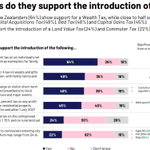
.@mattyglesias proposes some widely agreed tax changes rather than a wealth tax:

Mike Bishop 🇨🇦🇺🇸 retweeted


#HIV service delivery after the #PEPFAR and USAID HIV funding withdrawal in Uganda and Zimbabwe: an interrupted time-series study - first real-world, quant evidence showing drops in HIV service delivery following the USG foreign aid freeze and stop-work orders @LancetGH thelancet.com/journals/langl…

Mike Bishop 🇨🇦🇺🇸 retweeted

I continue to find this view baffling. It presupposes that the only reason people have power over elites is through their labour, but this is historically just not true. The masses have power over elites when and because they organise, collectively, and increase the costs of elite self-prioritisation. Strikes/withdrawal of labour are one way to do that, but so is, frankly, revolution (in highly kinetic forms as well as more non-violent ones).
Of course we can stipulate that, using AI, elites will be able to protect themselves against this kind of mass political action. But (a) massive oppression is very hard to do (big cold-start problem in democracies) and (b) the moral costs will be extraordinary; it's not unreasonable to believe that elites will be unwilling to engage in the level of psychotic coercive control that would be needed to leave the masses entirely out in the cold.
This doesn't make for an especially bright future—still very likely that the kind of bargain that can be won by this means won't be great. But the political economy isn't hopeless...

Mike Bishop 🇨🇦🇺🇸 retweeted

A very, very consequential accident of history:
Some random Greek philosophers pontificated about the nature of knowledge ---> 1000 years later, universities chose not to teach applied science and technology for hundreds of years

Advice I just gave my parents:
* Don’t Google, AI will do a better job avoiding scams.
* Never login to a new site without asking AI if it’s safe.
7
178
Mike Bishop 🇨🇦🇺🇸 retweeted

Thomas Clarkson winning a Cambridge essay prize for arguing against slavery
...then realising if his essay is right he needs to dedicate his life to fighting it
...then actually doing it
...is the most EA thing ever

This makes me bullish on capabilities.

interpretability might be the most important scientific problem in the world right now, as I don't think we can solve alignment if we don't know what we're building. I think I have good news about it. I co-authored early work in mechanistic interpretability at OpenAI and came away pessimistic, because neural networks appeared to fold into arbitrary tangled knots. years later, I started openai's first large-scale automated interpretability project, finding about 2% of neurons legible with the primitive tools we had
with modern agentic tools and a much closer look, the picture looks totally different. the vast majority in models up to trillions of parameters are legible, and their circuits beautiful. many famous examples of tangled neurons turned out to be misunderstood. The roadblocks I expected mostly aren't there. I now think ambitious interpretability will be solved by the time we need it most, and possibly quite soon, as automated scientists keep improving. it may be a bitter lesson for interpretability: the simple thing, at absurd scale, works
already-clean.goodfire.com/

4
155