





Wei retweeted

What if the next advance in BCMA CAR-T isn’t simply stronger T-cell activation—but more precisely controlled activation?
Anitocabtagene autoleucel (anito-cel) uses a synthetic d-domain BCMA binder (ddBCMA) and is being developed for heavily pretreated relapsed/refractory multiple myeloma.
In this phase 1 study, 38 patients received anito-cel after ≥3 prior lines of therapy or with triple-class refractory disease.
The clinical results were striking:
🔹 100% overall response rate
🔹 79% complete response rate
🔹 24-month PFS: 57%
🔹 Median PFS: 30.2 months
🔹 36-month OS: 65%
But the mechanistic story may be even more interesting.
At the recommended phase 2 dose, 94% developed grade 1–2 CRS, with no grade ≥3 CRS. ICANS occurred in 16%, predominantly grade 1–2, with one grade 3 event.
Investigators compared the ddBCMA binder with a dual-VHH binder corresponding to the published ciltacabtagene autoleucel sequence.
Despite similar cytotoxicity, the ddBCMA CAR-T cells demonstrated less cytokine release, without antigen-independent activation or off-target cytotoxicity.
The binder also showed a faster off-rate—raising an intriguing possibility that the kinetics of antigen engagement may influence how CAR-T cells balance activation, effector function, and toxicity.
That leads to a broader question in CAR-T engineering:
Is the goal simply to maximize CAR signaling—or to engineer the right signaling dynamics?
As BCMA CAR-T moves into earlier lines of myeloma therapy, optimizing the quality of T-cell activation may become just as important as maximizing its magnitude.
The next generation of CAR-T may be defined not only by what the cell targets, but how the receptor engages its target.
nejm.org/doi/full/10.1056/NE…
#MultipleMyeloma #CART #BCMA #CellTherapy #Immunotherapy #CancerResearch #TranslationalMedicine

Wei retweeted

Don’t drink a daily OJ, please 🙏
A glass has 12-18g fructose equivalents, a most dangerous type of sugar that promotes:
* Liver lipogenesis and fatty liver
* Higher triglycerides and VLDL
* Hepatic insulin resistance
* Uric-acid production
* Visceral-fat accumulation


Wei retweeted

The biology is consistent. IL-15 and IL-12 are key to persistence of CAR-T cells. The next evolution. Solid tumors.

What if the next breakthrough in solid-tumor CAR-T isn’t simply finding a better target—but building a T cell that can sustain itself after entering the tumor?
A new report in the New England Journal of Medicine describes a remarkable case: a 3-year-old boy with chemotherapy-resistant metastatic hepatoblastoma achieved complete tumor regression lasting at least 12 months after two infusions of glypican-3–specific CAR-T cells.
What made these CAR-T cells different?
They were engineered to coexpress interleukin-15 (IL-15) and interleukin-21 (IL-21).
These cytokines are intended to enhance the persistence, proliferation, and functional fitness of the infused T cells—potentially helping them overcome some of the barriers that have limited CAR-T activity in solid tumors.
And the clinical result is striking:
🧬 Glypican-3–targeted CAR-T
🔬 IL-15 + IL-21 coexpression
👦 3-year-old with chemotherapy-resistant metastatic hepatoblastoma
🎯 Complete regression
⏳ Response sustained ≥12 months
This is only a single patient report, so it is far too early to draw conclusions about efficacy across hepatoblastoma or other solid tumors.
But the concept is important.
For years, much of CAR-T engineering has focused on the receptor: What should the T cell recognize?
Increasingly, the question is becoming:
What does the T cell need to survive, expand, and remain functional once it reaches the tumor?
Cytokine-armored CAR-T cells represent one approach to that problem.
This case provides an intriguing glimpse of what may be possible when we engineer not only what CAR-T cells see, but also how they behave once they get there.
Solid tumors remain one of the biggest frontiers for cellular therapy.
And sometimes, a single patient can show the field what might be possible next.
nejm.org/doi/full/10.1056/NE…

Wei retweeted

Excited to see early customers already using Astra on Azure! azure.microsoft.com/en-us/bl…

Wei retweeted
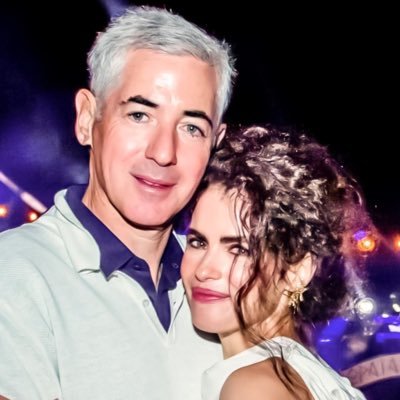
Life is short. Celebrate every day.

She didn’t need a grand ballroom, a cathedral, or a fairytale venue. All she needed was a quiet hospital room—and the only man whose blessing meant the world.
Knowing her father was losing his battle with terminal cancer and wouldn't make it to her wedding date, she brought the entire wedding to his bedside. Amid the hum of medical monitors and tears of pure devotion, she walked into that room in her white gown just so her dad could see his little girl become a bride.
He held on just long enough for this moment. Two days later, he took his final breath—not in defeat, but as the proudest, happiest father in the world, carrying the vision of his daughter’s joy into eternity.
A daughter’s ultimate act of love. A father’s most beautiful final memory. Rest in peace. 🕊️🤍
#UnconditionalLove #FatherDaughter #PureLove #EmotionalMoments
Wei retweeted

From a randomized trial, the advantage of a ketogenic diet vs Mediterranean or low fat plant diet for people with pre diabetes and fatty liver (hepatic steatosis)
cell.com/cell-metabolism/ful…

Wei retweeted
At midnight on February 6th, earlier this year, the doorbell to our apartment rang. The doorbell was followed by a pounding on the door. I answered the door and a security person in our building handed me his phone. It was my oldest daughter Eloise. She had found my 26-year-old daughter unconscious on the floor of her apartment and had called 911. The EMT team was already there, but they did not know what was wrong with Lucy or to which hospital they would take her.
I threw on some clothes and jumped in an Uber heading east toward Brooklyn. (Lucy lived alone in Williamsburg.) On the way, I learned that they were taking her to Elmhurst, a City trauma hospital in Queens. I arrived about five minutes after the ambulance to join Eloise, Lucy’s mom, and a friend, and waited to learn what was wrong.
After about 15 minutes, I asked a nurse where she was. I looked over his shoulder to his computer. Next to her name, it said “non-responsive.” I walked into the emergency room and wandered around looking for her until I found her unconscious on a gurney surrounded by several doctors and nurses.
By about 2:30am with the results from a CAT scan, Lucy’s doctors had determined that she had a massive brain hemorrhage and would need an emergency hemicraniectomy to release the pressure on her brain and remove the blood from the hemorrhage. I called our wonderful friend and family doctor Eddie Fisher and explained what was going on. He woke up Josh Bederson, Chairman of Neurosurgery at Mount Sinai, to find out more about Zach Hickman, the neurosurgeon on call that night. Dr. Bederson said Hickman was an excellent surgeon, which was comforting as we had no choice.
The surgery to save Lucy’s life began around 3:15am and finished around 5:30am. It was successful.
The following day, I joined Lucy in an ambulance while she was being transferred to Mount Sinai on Madison Avenue. Later that day, we determined from Lucy’s Oura ring that her hemorrhage had occurred around 9am, which meant that more than 19 hours had passed from the time of the hemorrhage to the completion of the surgery to release the pressure on her brain (I only wish @ouraring had an alert for this kind of a medical event. Imagine it could call a family member if the wearer doesn’t cancel the alert).
I later learned that the standard of care is not to do surgery to save a patient with a large brain bleed if more than five hours have passed since the hemorrhage. Even when the surgery is done, I was told that the likely outcome for the patient is a few months in a nursing home and death from pneumonia.
When I met Lucy’s doctors, I did my best to inspire them: “Let’s see what can be accomplished if we give her the best care possible and we invest unlimited resources to restore her to life.” And I promised that whatever we learned we would make available to everyone.
Dr. Chris Kellner, her neurosurgeon, and Dr. David Putrino, Director of Rehabilitation Innovation for the Mount Sinai Health System have led Lucy’s care team since that day. Words cannot describe the remarkable and compassionate care that she has received beginning with the EMT team and then from nurses, doctors, therapists, and the army of people who have worked to save her and return her to life. To this day, we have a daily Zoom where we discuss her progress and make adjustments to her care. While her care and oversight have been incredible, the learnings for the Mount Sinai team have also been elucidating and will assist in the care of many others.
Lucy began in a bad place. She was in a coma for several weeks and then awoke not being able to breathe on her own, unable to walk, see or speak.
Over the last six months, she has recovered her cognition – she understands everything including her circumstance – is able to walk a hundred or more steps at a time with assistance, is making progress with sounds, vowels and consonants and the beginnings of speech, but she remains unable to see.
Each day, she makes a little progress, and daily progress compounds. Every day I tell her that she just needs to make a little progress and it won’t be long before she is back.
We remain optimistic that Lucy will return to normal function. It will likely take years, but I believe it is only a matter of time, hard work, and technological progress, along with some, and perhaps a lot, of divine intervention.
Many people have been praying for Lucy and we are incredibly grateful for the prayers and remarkable support she has received. Lucy’s friends have been with her every day since the beginning, and their presence and friendship have saved her life and helped to rebuild and maintain her spirit. And on a very positive note, Lucy’s challenge has brought together our entire modern family who have all been incredibly devoted to her care and recovery.
Lucy's vision and other faculties may require some form of brain computer interface, work that is underway at Neuralink, Precision Neuroscience, Science, Synchron, Nudge, and other companies in the space.
If you are going to have a devastating brain injury, now is the best time in history for that to happen. We are living in a world when you can be confident that the blind will soon see again. We are going to do everything we can to help make that happen, including by assisting existing companies in the space.
With respect to our promise to make Lucy’s care available to others, we have made good progress. In May, a real estate colleague made me aware of a 93% vacant, brand new, 400,000 square foot Class A+ purpose-built biotech facility on West End Avenue between 65th and 66th Streets that missed the market and was available for sale. The Pershing Square Foundation acquired the building 60 days later.
We also put under contract an adjoining 130,000 square foot building at 320 West 66th Street that is currently being used by Saturday Night Live for studio space. The building has 35-foot ceilings with massive column-free spaces that can be converted into superb rehabilitation facilities. We will close on the SNL building in December.
We are also acquiring an adjoining vacant lot with additional air rights. With just the existing zoning rights, we can add a 150,000 square feet for a total of 680,000 square feet, a lab footprint larger than Rockefeller University, and that’s without including the potential for an upzoning that would allow for substantially more buildable area on the site’s 3.4 acres with spectacular views of the Hudson.
Our goal is to build the world’s greatest brain research, rehabilitation, recovery, human optimization, and longevity institute. We have named it The Ackman Oxman Institute or the AOI for lack of a better name, but also to reinforce the point that Neri and I and our family are all-in on the mission.
The AOI will be patient-centric. It will not be an academic research institute that produces lots of papers, a Nobel Prize winner or two, but little if any results for patients. We will be laser-focused on cures, treatments, devices, rehabilitation and exercise equipment, and targeted and basic research with a goal of massively accelerating the time from idea to innovation to production to helping a patient.
While the AOI will be a non-profit, it will have highly commercial instincts. The AOI will have its own venture funding and will work to develop innovations to create companies that we will seed, assist, and spinout to ensure technologies, treatments, techniques, and drugs get to patients as promptly as possible.
On one 3.4 acre campus in what is still the greatest city in the world, we will do neurosurgery, neuroscience, rehabilitation, nutrition, BCI and device development, human trials, hyperbaric oxygen treatments, and life extension programs, and we will mandate and incentivize collaboration among the teams with no silos, politics, bureaucracy, or any other constraint that is inconsistent with the mission.
Mount Sinai will be an important partner and deservedly so, but it won’t be our only hospital or medical school partner as we don’t believe any institution has a monopoly on the best ideas or the best talent. We don’t believe in exclusive relationships because that is not in the best interest of patients.
Five years ago, we considered launching a brain institute inspired by Neri’s mom who sadly died from Alzheimer’s. We couldn’t make the math work as the real estate was too expensive and we believed it would be too difficult to recruit the best talent from universities to our effort.
Since then, the real estate became available at a 70% discount, universities became a much less attractive place to work due to politics outweighing meritocracy, protests that disrupt learning, the curse of antisemitism, and a decline in funding. Fortunately, during the same time, I made sufficient personal economic progress to make the AOI possible.
The advance of AI in the last few years will also enable us to greatly accelerate our mission. AI still has a lot to learn about human intelligence and the brain, and the AOI should be at the forefront of the interplay between the brain and AI.
Today, I am making a public filing disclosing a gift from Neri and me of ~$400 million or 10,000,000 shares of Pershing Square Inc. (PS) to the AOI. It is very early days for Pershing Square so these shares are intended to anchor the long-term work of the AOI as the shares compound over time while generating what we expect will be a growing stream of quarterly dividends to fund the Institute.
We will also be announcing an additional gift of similar and potentially greater size which won’t be in the form of Pershing Square stock to provide the AOI with the short- and intermediate-term runway necessary to enable it to achieve its goal of becoming a self-sustaining institute, which reinvests all of its revenues, royalties, and the economic rewards of company formation to advance the fields of brain health and human longevity.
Neri and I have chosen to anchor the funding of the AOI to maintain vision alignment and limit the need for the organization to focus on fundraising. We expect the AOI to be the best-resourced brain, rehab, recovery, and longevity institute in the world.
We are grateful to have been able to form a board which includes Dean Kamen (our generation’s Thomas Edison), George Yancopoulus (CEO of Regeneron), James Rothman (Nobel Laureate), Bernardo Sabatini (neuroscientist), Chris Kellner (neurosurgeon), Olivia Flatto (CEO Pershing Square Foundation), Neri Oxman, and myself.
We have recently identified a CEO who we expect to announce by October along with other key hires, and are beginning searches for a Chief Scientific Officer, a Chief AI/Technology Officer, a Chief Operating Officer, a Chief Financial Officer, and other key leadership roles.
If you find what we are building compelling and want to be part of the leadership team that creates and builds the AOI from a standing start, please send an email to: [email protected] with a short note as to why you believe you can help. Please include your best three ideas for the AOI along with a summary of your background and your most important accomplishments.
We promise strict confidentiality to those expressing interest in working with us.
We have learned from Lucy that the brain can recover from even catastrophic injury. There is so much more work to be done as the mind is a terrible thing to waste.
For details from my Pershing Square SEC filing see:
sec.gov/Archives/edgar/data/…
Wei retweeted

The biggest mistake made by almost everyone who claims that curing every disease within a decade, or accomplishing other insanely difficult things like reversing aging in such a short time, is impossible, is assuming that progress over the next 10 years will look something like the past 20 years, perhaps just a little faster. Yet, it will be radically different: the next decade will bring more technological progress than the entire past century. Just think of all the progress we had since 1900 to today happening in the next 10 years or so.
That means many things people assume are still 100 or 200 years away could become possible within the next 10–15 years. By 2050, we will likely see more scientific and technological advancement than humanity experienced during the previous 5,000 years of civilization combined!
This is the essence of the technological singularity: progress stops feeling linear and becomes so rapid, compounding, and transformative that the future becomes extraordinarily difficult to extrapolate from the past. And that is precisely why the concept is so difficult for people to comprehend, or accept, and also why some of us have such a conviction to keep claiming the impossible!
Wei retweeted

Elon Musk on artificial RNA - you can basically cure almost anything.
"There is probably a lot of opportunity in synthetic medicine. These days, you can essentially create custom RNA.
Medicine has traditionally been analog. Most of the time, we have discovered drugs almost by accident. It is like finding sticks in a forest and saying, “This stick seems like it would make a useful club.” The way we have found medicines in the past has been quite primitive.
But now that we can construct synthetic RNA, you can effectively think of the future of medicine as being digital. If you know what to program into a synthetic RNA strand, then I think you can basically cure almost anything."

Wei retweeted

Come to see this data!! Merck and Moderna Announce Phase 3 INTerpath-001 Trial of Intismeran Autogene Plus KEYTRUDA® Met survival Endpoints in Patients With Completely Resected Stage IIB-IV Melanoma
finance.yahoo.com/healthcare… @myESMO


📣 #ESMO26: You still have time to register and benefit from advantageous fees! Join Yelena Janjigian, Scientific Committee Co-Chair, for an extraordinary gathering of leading minds in oncology from around the globe
⏰ Late registration deadline: 16 September 2026
🔗 ow.ly/3w3F50ZyQKc
#esmomeetings

Wei retweeted

2/2 Second, on the messaging around AI. I do not agree that my messaging has been disproportionately negative. In fact it has been about equally balanced between risks and benefits: I’ve written one major essay about each, and even in interviews where I discuss the risks, I make sure to frequently mention the incredible benefits as well as proposing possible solutions to the risks (short clips from my interviews that end up on social media tend to be disproportionately negative, as that gets clicks). In fact, I wrote Machines of Loving Grace because I didn’t feel the AI industry was painting an inspiring enough picture of how the technology could radically transform the world for the better. The bulk of the essay is devoted to refuting skepticism of AI’s potential in health and biology, and showing why I think it will actually be possible to cure most human disease in ~5-10 years, as crazy as it may sound to ordinary people and frankly to biologists as well (I used to be one!). And, if you read my most recent essay (Policy on the AI Exponential), I discuss concrete proposals for how to streamline the FDA process to make sure the deluge of AI-accelerated drugs isn’t slowed down by the regulatory process. I feel the urgency here: I lost my father to Hepatitis C only a few years before the development of direct-acting antivirals (sofosbuvir), which cure 95% of patients and probably would have cured him.
I do agree that the public has a negative view of AI (and that this is a big problem), but I don’t think it is primarily caused by me or any other AI leader warning about AI’s risks. I think it is fundamentally a crisis of trust. I think that ordinary people don’t trust companies, governments, or the tech industry and always suspect that we are cooking up some new way to screw them over. The causes of this go back decades and AI is just the latest iteration of it. I don’t think that a glitzy marketing campaign with a positive spin (which some have advocated that Anthropic do) is the way to win back that trust — at this point, saying that AI will cure cancer is more a cliche than it is inspiring, and most people think it is deceptive. The thing that will work is *actually curing cancer*. I think by far the most accurate criticism of AI companies including Anthropic is that we haven’t yet delivered on our big promises to benefit the world. That is totally on us, and I think it’s the criticism you should be making, instead of all this stuff about messaging and marketing.
We are however doing our best to fix this: Anthropic is ramping up its efforts very quickly in biology and medicine, and we hope to have incredible results in the coming years and some early glimmers in the coming months. When we’ve actually accomplished something real, the whole world will hear about it, as loudly as possible, you have my word on that. But until then I don’t want to make empty promises, and in the meantime I feel compelled to speak honestly about the very real risks of AI and how to address them. Honesty is the right thing on the merits, and in terms of public credibility and trust it is no worse than, and may in fact be better than, an approach that ignores or distracts from risks which people instinctively understand are real.
Wei retweeted
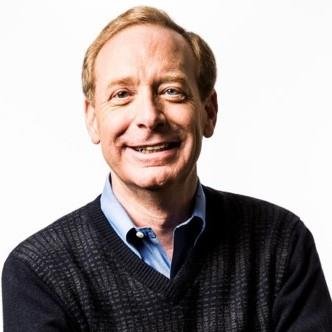
Microsoft is just one beneficiary of 250 years of American history and the choices made by past generations. As an American company, we believe we have a responsibility to understand where we have been, learn from it, and help make real for others the opportunities created for us.
As America enters its 251st year, we face another inflection point shaped by rapid technological change. That is why we created this series. Throughout July, we will reflect on moments in American history with six video episodes when people faced uncertainty and made choices that set in motion consequences they could not fully see. Some decisions advanced the country. Others revealed how much work remained. Together, they remind us that history is not inevitable; it is made by people, in moments, through choices.
Our goal is not simply to celebrate that history, but to learn and connect the past to the questions we face today. Because one of the best ways to honor 250 years of American history is to think seriously about what we will do next.
Stay tuned for episode 2 next week. aka.ms/America250
@Microsoft


Wei retweeted

After reading the Claude Code source code that they accidentally leaked, I have no idea why you should take any claims about how smart their models are seriously. Both from the poor quality of the code and the fact that they leaked it.
Wei retweeted
Anthropic is on its way to becoming the evil Empire of AI & Chinese AI model developers the Rebels!
Nice job, Dario Amodei, for completing your dark-side transition & creating the cult of the misanthropic “Empire”!
How ironic that the Jedi of the AI age is coming from China!
This quoted post is unavailable.
Wei retweeted

does the US gov want to hand the international AI market to China? because that's what it looks like from afar. not sure that's super smart.
Wei retweeted
GLM-5 paper, arxiv.org/abs/2602.15763
GLM-5.1 blog post, z.ai/blog/glm-5.1
GLM-5.2 blog post, z.ai/blog/glm-5.2

Wei retweeted
I can't believe how many people believe Anthropic's propaganda about distillation attacks. You can read how GLM-5 was trained in the paper.
Maybe Claude was distilled from Chinese models? I haven't seen a paper from Anthropic, and accusations are often confessions.
Wei retweeted

Fable is currently export controlled & rumors are that 5.6 will also be subject to an approval framework. Whatever jiu jitsu the Chinese are using to get us slow down our own frontier models while letting their models run free appears to be working. Who is capturing who? 🧐🇺🇸
